
What Film Types (PE, PVC, Stretch Film) Deliver the Best Results in Orbital Wrapping Applications?
As a factory manager in heavy industries, especially in places like Mexico, you face constant pressure. You need to protect valuable products like steel coils and wire bundles. But poor packing can lead to damaging losses, unhappy customers, and lost profits. Manual packing methods are slow, risky, and inefficient for your operations. This problem gets worse with the wrong wrapping film. A weak film can break, offer poor protection, or even slow down your automated system. You simply cannot afford downtime or damaged goods. Choosing the right film for your orbital stretch wrapper is not just a technical detail. It directly impacts your factory’s efficiency, the safety of your workers, and your overall financial health. I am here to guide you through the best film options available. (heavy industry packing solutions, steel coil protection, automated wrapping film, industrial efficiency)
For orbital wrapping applications, especially in demanding industrial environments like metal processing, Polyethylene (PE) film consistently delivers the best results. Its superior strength, stretchability, and puncture resistance make it ideal for securing heavy, irregularly shaped, or sharp-edged products. While PVC and standard stretch films have their niches, PE offers unmatched durability and cost-effectiveness for most high-volume, automated orbital wrapping needs. (best orbital wrapping film, PE film benefits, industrial packing film)

Choosing the right film goes far beyond simply wrapping a product. It is about securing your investment, protecting your company’s reputation, and optimizing your entire logistics chain. Let’s dive deeper into each film type. We will see which one fits your specific operational challenges and helps you meet your production goals. (optimizing logistics, product security, packing machine efficiency)
Why is selecting the right film crucial for your packing operations?
Have you ever seen a perfectly good steel coil arrive at a customer’s site damaged because the wrapping failed? Or has your production line ever slowed down because the film kept tearing or jamming your machine? This is not just a small annoyance. It costs your factory money, damages trust with your clients, and wastes precious production time. These issues often stem from not truly understanding your film needs. A small oversight in film choice can lead to significant operational headaches, increased scrap rates, and even worker injury during manual fixes. Getting the film choice right from the start is an investment in your factory’s seamless operation and your product’s integrity. It ensures smooth production, fewer rejects, and ultimately, happier customers. (industrial packing film selection, packaging material impact, preventing transit damage)
Selecting the correct orbital wrapping film is crucial because it directly impacts product protection against transit damage, ensures operational efficiency by preventing machine jams, and optimizes costs by reducing material waste and reworks. The right film also significantly enhances worker safety by enabling robust automated processes, minimizing manual intervention with heavy products like steel coils or wire bundles. (importance of wrapping film, packing operation efficiency, product damage prevention)
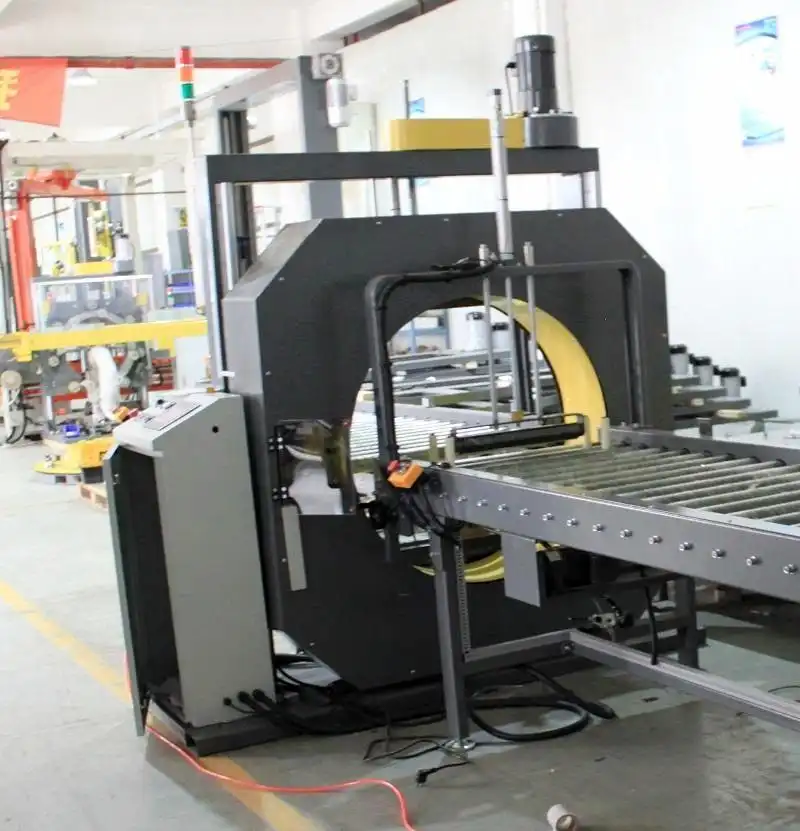
My experience running a packing machine factory taught me that every detail matters. The film you choose is no exception. It affects everything from your bottom line to your employee’s safety. When a factory manager in Mexico faces mounting pressure to boost output, control costs, and maintain safety, the film choice becomes a strategic decision.
The True Cost of Poor Film Choice 📉
- Product Damage: Think about products like steel coils or wires. A tiny scratch on the edge from shifting during transport, or exposure to moisture, can render them unusable. This is pure financial loss. The film is your product’s first line of defense against damage during handling and shipping. Without proper protection, you face customer complaints and the cost of replacing or reworking damaged goods.
- Operational Delays: Imagine your high-speed FHOPEPACK or SHJLPACK orbital stretch wrapper stopping because a flimsy film snaps or bunches up. Every minute of downtime is lost production, especially in high-volume plants in Mexico. Your whole production line can back up, causing delays in delivery schedules. This directly impacts your ability to meet customer demand and increases operational costs.
- Safety Risks: If wrapping film fails, workers might try to manually re-secure heavy items. This is extremely dangerous. I have seen too many incidents when employees tried to manually adjust or re-wrap heavy steel bundles. This directly leads to injuries, higher insurance premiums, and potential lawsuits. Michael, as a factory manager, knows this pain all too well. Improving safety is a top priority for any responsible operation.
- Reputation Loss: Damaged goods reaching customers erode trust. It signals a lack of quality control, even if the product itself is perfectly made. Repeat business suffers, and your brand reputation can take a hit in the market. In today’s competitive landscape, maintaining a strong reputation for reliable delivery and product integrity is essential.
Matching Film to Application: A Strategic Decision 🤔
It is not a “one-size-fits-all” situation. A lightweight product needs different protection than a 5-ton steel coil. The environment matters too – humidity, temperature, and storage duration. Choosing the right film needs a strategic approach.
| Factor | Impact of Correct Film Selection |
|---|---|
| Product Type | Optimal protection for product weight, shape, and edges. Prevents damage specific to your goods. |
| Transport | Prevents shifting, protects against moisture, and reduces abrasion damage during transit. |
| Storage | Provides UV protection, acts as a barrier against dust and dirt, extending product life. |
| Cost | Reduces reworks, lowers claims, and minimizes material waste, leading to overall savings. |
| Automation | Ensures smooth machine operation and high uptime, maximizing your production efficiency. |
| Safety | Minimizes manual handling of heavy items, directly reducing the risk of worker injuries. |
This strategic choice directly supports Michael’s goals: increased automation, better safety, and clear ROI. A FHOPEPACK or SHJLPACK machine, combined with the right film, transforms these goals into reality for your factory. (film failure consequences, operational downtime cost, industrial safety improvements, strategic packaging material)
How does PE (Polyethylene) film perform in heavy-duty orbital wrapping?
You are dealing with heavy, sometimes sharp-edged products like metal coils or wire bundles. Traditional films often fail, tear, or provide insufficient protection for these items. This leads to customer complaints about damaged goods and constant re-wrapping efforts. This problem is particularly acute in high-stress industrial environments. A film that cannot withstand the rigors of heavy industrial transport and handling is costing your factory valuable time and resources. This directly impacts your factory’s bottom line. For these demanding applications, PE (Polyethylene) film stands out as the superior choice. It offers the strength and elasticity needed to secure even the most challenging loads, ensuring your products arrive at their destination intact. (polyethylene film benefits, heavy-duty industrial wrapping, durable packing materials)
PE (Polyethylene) film excels in heavy-duty orbital wrapping applications due to its exceptional strength, high elongation, and superior puncture resistance. These properties allow it to securely bundle large, heavy, and irregularly shaped items like steel coils or timber. It provides excellent load containment and protection against impact, abrasion, and moisture, which is crucial for harsh industrial environments. (PE film for heavy loads, industrial film durability, orbital wrapper material)
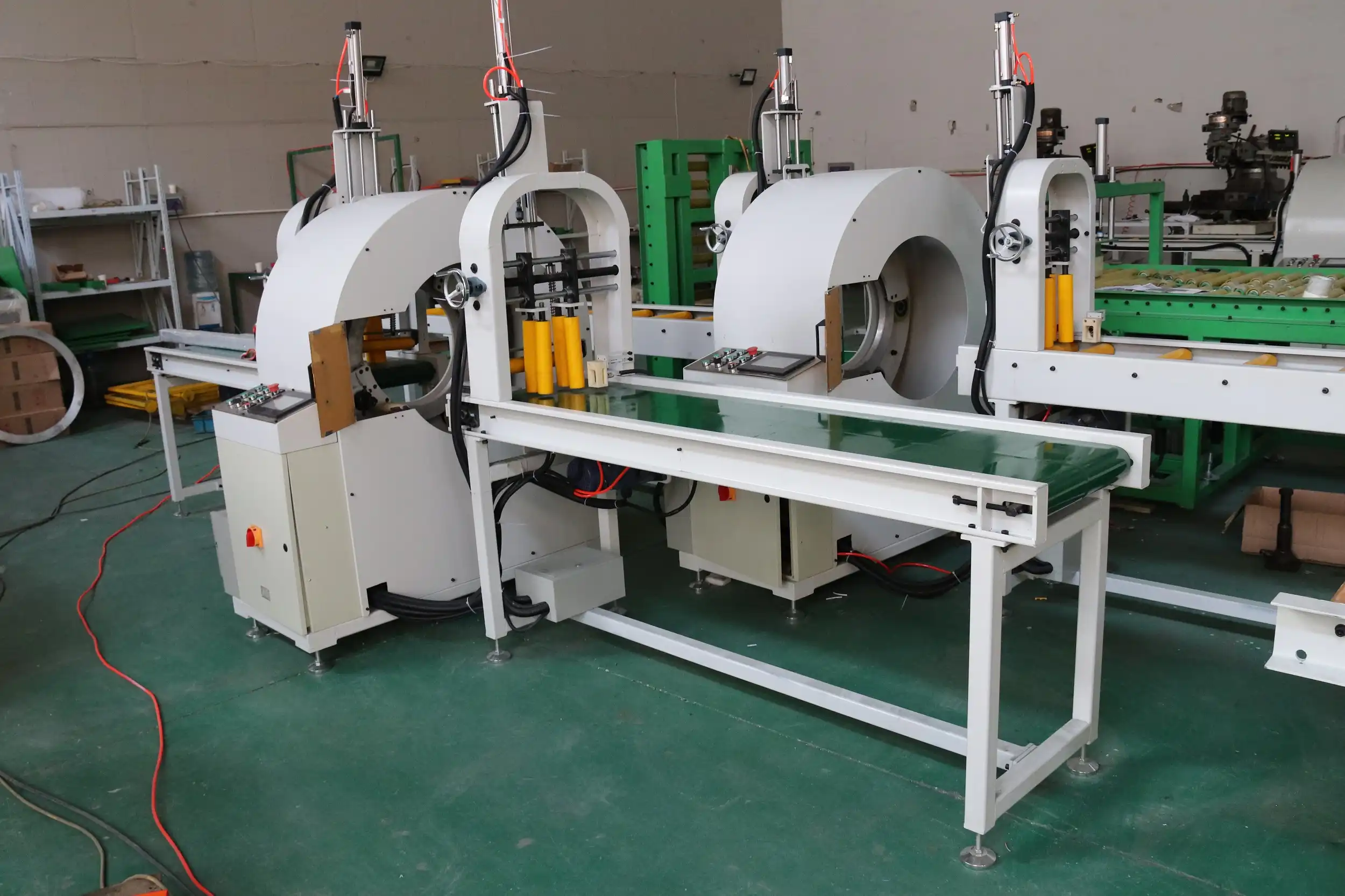
I have spent years in the packing machine industry. I know that for applications involving heavy, dense materials such as those processed in a metal factory, the film’s resilience is non-negotiable. PE film, especially its LLDPE variant, has proven itself time and again in these tough environments. It provides the robust protection that factory managers like Michael need.
The Undeniable Advantages of PE Film for Industrial Use 💪
- Strength and Durability: PE film, particularly Linear Low-Density Polyethylene (LLDPE), has incredible tear and puncture resistance. This is vital when wrapping products with sharp edges or uneven surfaces. Imagine wrapping a large metal coil; PE film stretches and conforms without breaking, providing a robust shield. I have seen firsthand how a good quality LLDPE film, paired with an FHOPEPACK orbital wrapper, can truly transform product security for heavy steel wire and coil packing. It prevents costly damage during handling and transport.
- High Stretchability: PE film can stretch significantly, often over 200-300%, while still maintaining its strength. This means you need less film for a secure wrap, leading to significant material cost savings over time. The “memory” of the stretched film creates a tight, consistent wrap that holds the load together, preventing shifting during transport. This high stretch also allows the film to absorb impacts, further protecting the product.
- Moisture and Dust Protection: Many industrial products are susceptible to environmental damage. Metal components, for example, can rust or degrade if exposed to moisture or dust. PE film provides an effective barrier against these elements. This is critical for maintaining product quality, extending shelf life, and preventing customer complaints.
- Cost-Effectiveness and ROI: While the initial per-roll cost of a high-performance PE film might seem slightly higher than very thin, low-quality films, its superior performance translates into fewer layers needed, less product damage, and reduced re-wrapping. This leads to a higher return on investment (ROI) for companies like Michael’s factory in Mexico. With FHOPEPACK’s machines, we optimize film usage to achieve maximum protection with minimum material consumption.
Different PE Types for Specific Needs 📊
- Cast PE Film: This type offers excellent clarity and quiet unwinding from the roll. It is often preferred where appearance is key and loads are relatively uniform. It is typically less costly to produce.
- Blown PE Film: Known for its higher puncture resistance and superior cling. It is usually tougher and stronger than cast film. This makes blown PE film a go-to for heavy-duty applications, irregular loads, and where maximum load containment is required. This is typically what we recommend for most heavy industries.
For factories in Mexico handling large volumes of steel and other heavy goods, I always advise a high-performance blown LLDPE film. When combined with FHOPEPACK’s E series orbital stretch wrapper, it delivers optimal results. This combination directly addresses Michael’s goals for increased efficiency and reduced product damage, making your investment pay off. (LLDPE film advantages, industrial packaging solutions, cost savings in wrapping, blown vs cast PE film)
When should PVC (Polyvinyl Chloride) film be considered for your product protection?
Some factory managers might wonder if PVC film has a place in industrial wrapping. This is especially true given its common use in other packaging sectors. You might have products that do not need the extreme strength of PE, but still require a secure, clear wrap. Using the wrong film, even if it seems cheaper, can compromise protection or create problems with your wrapping equipment. You need to know when a specific film type is genuinely the best fit for your product, not just a compromise. PVC film offers distinct characteristics that make it suitable for particular applications. These include situations where visual appeal, high cling, and lighter-duty protection are priorities. Understanding these niches helps you make informed choices. (PVC wrapping film uses, packaging clarity, specific product protection)
PVC (Polyvinyl Chloride) film should be considered for product protection when high clarity, excellent cling, and resistance to tearing are important. This is typically for lighter, more uniform loads where visual presentation is key. It is less common for heavy-duty industrial orbital wrapping due to its lower elasticity and stretch memory compared to PE. However, it finds applications in food packaging, retail, and some lighter industrial bundling. (PVC film characteristics, lightweight product wrapping, packaging presentation)
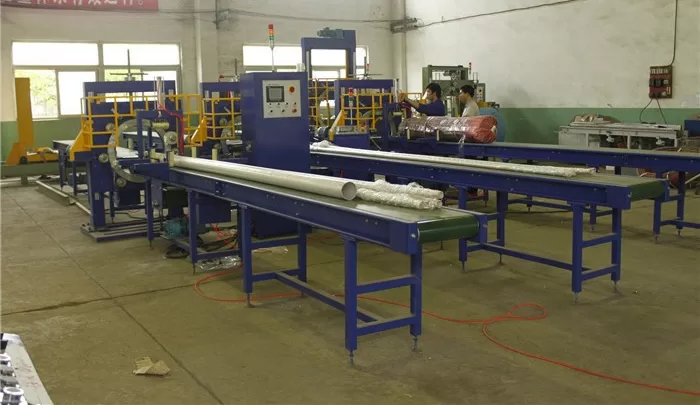
While my focus at FHOPEPACK is on robust solutions for heavy industries, it is important to understand the full spectrum of wrapping films. PVC has its place, but its limitations for applications like Michael’s factory are quite clear. Knowing these differences helps in making the most appropriate and cost-effective decisions.
Distinctive Traits of PVC Film 🌟
- High Clarity and Gloss: PVC film provides excellent transparency. This makes it ideal for products where visual appeal is important. If you need customers to clearly see the wrapped item, PVC offers a brilliant, shiny finish. This makes it popular in retail or food packaging where product visibility is a key selling point.
- Superior Cling: PVC film often has a very strong natural cling. This helps it adhere tightly to products and itself without extra adhesives. This can be beneficial for securing bundles that might not be perfectly uniform but are not extremely heavy or sharp. The cling helps maintain a neat, tight package.
- Puncture and Tear Resistance (Relative): While not as robust as heavy-duty PE for industrial applications, PVC does offer good puncture and tear resistance for its weight class. It can effectively protect against dust, dirt, and minor abrasions for lighter goods.
- Breathing Properties: Some types of PVC film allow for a degree of “breathing.” This can be an advantage for fresh produce or other items that need some air circulation to stay fresh. However, this is rarely a factor in metal processing or heavy industrial goods.
Where PVC Falls Short in Industrial Orbital Wrapping 🚧
- Lower Stretch and Memory: This is the main limitation for heavy industrial use. PVC film does not stretch as much as PE, and its “memory” (ability to rebound and hold tension) is weaker. This means it is less effective at containing very heavy, shifting, or irregular loads, like the steel coils Michael’s factory handles. It would require many more layers to achieve the same load containment as PE, making it highly cost-inefficient for such applications. The tension needed for heavy loads is difficult to maintain with PVC.
- Environmental Concerns: PVC has faced environmental scrutiny due to its chlorine content and challenges in its disposal and recycling. Many industries are moving towards PE as a more environmentally friendly and recyclable alternative. This is a growing concern for businesses looking to improve their sustainability footprint.
- Temperature Sensitivity: PVC can become brittle in very cold temperatures. It can also lose tension in very hot conditions. This might be an issue in extreme factory environments or during transit, especially in diverse climates like those found across Mexico. Such variations in temperature can compromise the integrity of the wrap.
Consider this: If your factory in Mexico processes lighter metal components or smaller bundles where visual inspection is critical, and the loads are not prone to extreme shifting, PVC might be a niche consideration. However, for core heavy-duty orbital wrapping applications, especially for large steel products, I strongly recommend PE film. FHOPEPACK focuses on solutions built for durability and performance in the toughest conditions. This aligns perfectly with Michael’s need for reliable equipment and robust product protection. (PVC film limitations, environmental packaging choices, industrial film comparison, specialized packaging needs)
What makes standard stretch film a versatile choice for various shapes and sizes?
With so many specialized films, you might wonder about the role of “standard” stretch film. Is it still a viable option, especially for diverse product lines that vary greatly in shape and size? Relying on a single, suboptimal film for everything can lead to inconsistent protection and operational headaches. Choosing a film that lacks adaptability can force you to stock multiple types, increasing inventory complexity. Or, it can risk inadequate protection for certain products. This reduces efficiency and adds to overall costs. Standard stretch film, typically made from LLDPE, offers a broad range of applications due to its inherent versatility. Understanding its strengths helps you leverage it effectively for a diverse product portfolio without over-specializing your film inventory. (versatile packaging needs, inconsistent product protection, operational challenges)
Standard stretch film, predominantly made from LLDPE, is a versatile choice for orbital wrapping applications. Its high elasticity and memory allow it to conform to and securely contain a wide variety of product shapes and sizes. It provides good load stability, dust, and moisture protection for diverse industrial and commercial goods, offering a balanced performance for general-purpose wrapping needs. (standard LLDPE film, versatile wrapping film, general purpose packaging)
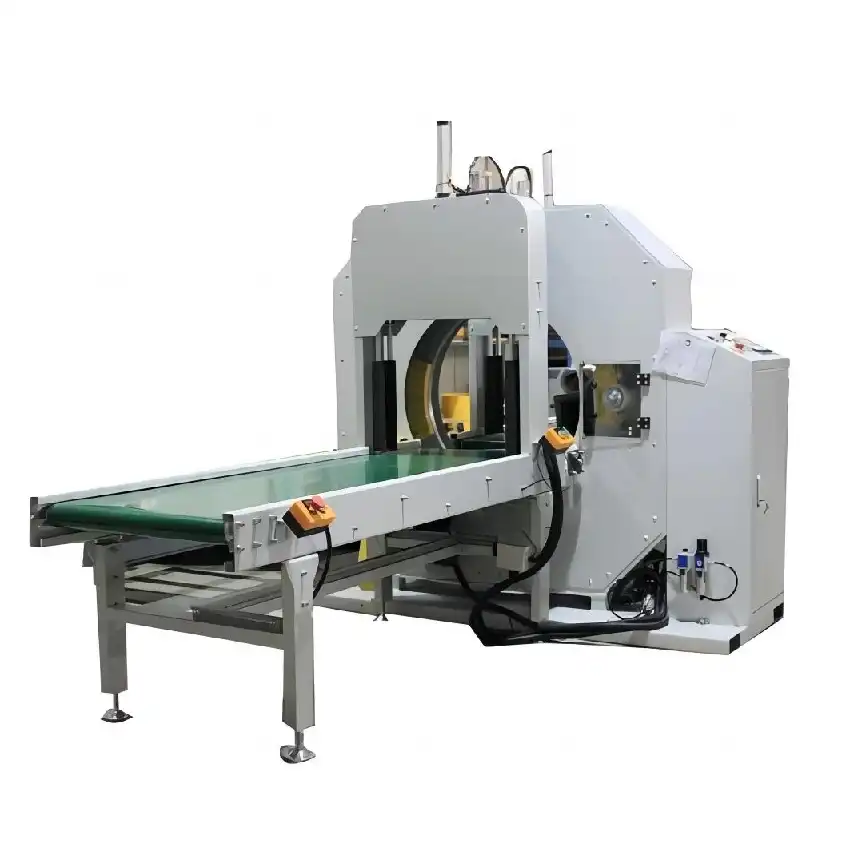
From my years designing and building packing machines, I have seen standard LLDPE stretch film prove its worth in countless scenarios. It is the workhorse of the industry for good reason. Its adaptability is key for factories like Michael’s that handle a varied product line. This film offers a practical solution to many common packing challenges.
The Adaptability of Standard Stretch Film (LLDPE) 🔄
- Conformity to Irregular Shapes: One of the greatest benefits of standard stretch film is its ability to tightly conform to almost any product shape, no matter how irregular. This is crucial for bundling multiple items, or products with protruding parts. Whether it is a batch of pipes, stacked panels, or oddly shaped machinery components, the film stretches around them, creating a secure package. This directly addresses the challenge of diverse product sizes in a factory like Michael’s. It simplifies the packing process for varied output.
- Load Containment and Stability: The inherent elastic memory of LLDPE allows standard stretch film to maintain constant tension. This keeps loads tightly bundled, preventing shifting during transport and handling. A stable load means less risk of damage and smoother logistics. I have seen this make a huge difference in client operations, especially for mixed loads needing consistent protection. This stability is critical for reducing product loss and ensuring safe delivery.
- Protection Against Environmental Factors: While not always as robust as specialized barrier films, standard stretch film still offers effective protection against dust, dirt, and moisture. This is vital for maintaining product quality, especially for goods stored outdoors or transported long distances. This is a common scenario in international trade, including shipments from Mexico, where products face diverse conditions.
- Cost-Effectiveness for General Use: For factories that handle a wide array of products, standard stretch film often presents the most cost-effective solution. It negates the need to stock many different specialized films, simplifying inventory and purchasing. When used with efficient machines like FHOPEPACK’s orbital wrappers, film usage is optimized for maximum value, leading to greater savings.
Optimizing Standard Film Use with the Right Machine 🚀
The performance of even the most versatile film depends heavily on the wrapping machine. A high-quality orbital stretch wrapper like those from FHOPEPACK or SHJLPACK can pre-stretch the film to its optimal point. This maximizes its yield and enhances its protective qualities. This pre-stretch capability allows you to get more mileage from each roll, further improving cost-efficiency. It means fewer film changes and less downtime.
Consider Michael’s factory in Mexico: a standard LLDPE film, properly applied by an FHOPEPACK machine, could solve many of his varied packing challenges, from coil bundling to securing other metal components. It provides a robust, adaptable solution that balances protection with operational simplicity. It is a smart investment for diverse production needs. (LLDPE versatility, irregular product wrapping, load stability benefits, general purpose packaging cost)
My insights!
Many suppliers will just sell you a machine or a film without truly understanding your operational realities. You might end up with equipment or materials that do not fit your unique factory environment. This often leads to ongoing frustrations and wasted investment. This “one-size-fits-all” approach often ignores critical factors. These include your product’s specific vulnerabilities, your factory’s production speed, and the safety of your workers. It leaves you feeling unsupported and still facing your core problems. My journey in the packing machine industry taught me that real solutions come from deep understanding. I want to share my accumulated insights to help you avoid common pitfalls. I want to help you make truly informed decisions for your factory, just as I helped many clients in the past. (packing machine expert advice, tailored packaging solutions, factory optimization strategies)
My core insight is that selecting the best film type for orbital wrapping is less about a universal “best” and more about matching the film’s properties—like strength, stretch, and puncture resistance—with your specific product, operational environment, and packaging goals. Always prioritize films like PE, especially LLDPE, for heavy-duty industrial applications, as they consistently deliver the durability and cost-efficiency needed for demanding tasks like securing metal coils and wires. (Randal Liu’s advice, industrial film selection, optimal packaging strategy)
My journey in the packing machine industry has been long and rewarding. I started on the factory floor myself, working with packing machines day in and day out. I saw firsthand the daily struggles: the slow manual processes, the constant risk of injury when handling heavy goods, and the frustration of damaged products. These experiences taught me that a packing machine is not just metal and wires; it is a critical component of a factory’s nervous system. It directly impacts safety, efficiency, and profit. When I founded FHOPEPACK, my vision was clear. I wanted to build machines and share knowledge that truly solves these problems for people like Michael in Mexico. I want to offer solutions that I would trust in my own factory, ensuring both performance and reliability.
My Journey: From Factory Floor to FHOPEPACK Founder 🏗️
I started on the factory floor myself, working with packing machines. I saw firsthand the daily struggles: the slow manual processes, the constant risk of injury when handling heavy goods, and the frustration of damaged products. These experiences taught me that a packing machine is not just metal and wires; it is a critical component of a factory’s nervous system. It directly impacts safety, efficiency, and profit. When I founded FHOPEPACK, my vision was to build machines and share knowledge that truly solves these problems for people like Michael in Mexico. I want to offer solutions that I would trust in my own factory. This is why our focus has always been on robust, reliable, and efficient packing solutions. I learned that every factory has unique needs, and understanding those needs is key to providing real value. My goal is to empower factory managers with the knowledge and equipment they need to succeed and grow their businesses.
Beyond the Film: The Machine-Film Synergy 🤝
Choosing the right film is only half the battle. The other half is using an orbital wrapping machine that can fully leverage that film’s capabilities. A FHOPEPACK machine, for instance, is engineered to work seamlessly with high-performance PE films. Our machines are built robustly to withstand the harsh conditions Michael described – the very high intensity, severe working environments typical of a metal processing plant. We focus on precise tension control, optimal pre-stretch, and reliable operation. This synergy means you get the most out of every roll of film, reducing waste and ensuring a consistently secure package. We design our machines like the E series orbital stretch wrapper with automation in mind. This directly addresses Michael’s need to reduce manual labor and boost overall efficiency. It ensures your investment delivers maximum return and long-term benefits.
A Partner, Not Just a Supplier 👨🏫
Michael mentioned a past “supplier trust crisis.” This resonates deeply with me. I believe in being a partner to my clients. When you work with FHOPEPACK, you are not just buying a machine; you are gaining access to years of industry expertise and a commitment to your success. We help you diagnose your exact bottlenecks, identify safety hazards, and find the right solutions. Whether it is guiding you on the best film thickness for your steel coils or configuring a custom orbital wrapper, our goal is your success and helping you grow your business. This is exactly what I have been fortunate enough to do for many clients. We aim for clear ROI, showing you exactly how our solutions save you money and protect your workers. This builds a relationship based on trust and shared success, which is how businesses thrive, especially in competitive markets like Mexico. (Randal Liu’s experience, machine-film integration, FHOPEPACK solutions, trusted industrial partner)
Conclusion
Choosing the ideal film for your orbital stretch wrapper is vital for product protection, operational efficiency, and worker safety. For heavy industrial uses like metal processing, PE film stands out for its superior strength and cost-effectiveness. FHOPEPACK and SHJLPACK machines, combined with the right film, provide robust solutions for your factory’s demanding needs, ensuring secure products and operational excellence.








