
What Delivers Higher ROI in Indonesia: Orbital Stretch or Semi-Auto Wrap?
Are your production lines in Indonesia slowing down because of manual packing? Do you worry about product damage or worker safety when handling heavy coils or wire bundles? These common problems can quickly eat into your profits and cause customer complaints. Many factory managers, just like Michael, struggle with these exact issues. They need to find better ways to pack efficiently and safely.
For many heavy manufacturing operations in Indonesia, especially those dealing with steel coils, wire, or other elongated products, orbital stretch wrapping machines often deliver a higher Return on Investment (ROI) compared to semi-automatic pallet wrappers. Orbital wrappers are purpose-built for specific product types, offering superior protection, speed, and safety for those applications, while semi-auto wrappers are better for palletized goods.
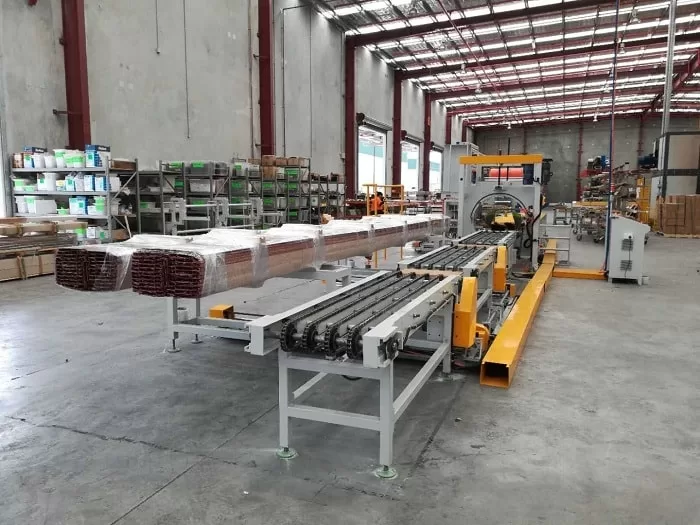
Choosing the right packing machine is not just about buying equipment. It is about making a smart investment for your factory’s future. It is about solving real problems like efficiency bottlenecks, safety risks, and product damage. Let me share my insights, drawing from my years in the packing machine industry, on how to make this critical decision, especially for businesses operating in Indonesia.
Is Manual Packing Still an Option for Indonesia’s Factories?
Do you still rely heavily on manual labor for your packing needs in Indonesia? Are you seeing your workers strain under heavy loads, or your finished products get damaged during handling? This approach might seem cheaper at first glance. However, the hidden costs often outweigh any perceived savings. Many factory managers, much like Michael, find themselves trapped in this cycle. They want to avoid big investments. But they face daily struggles with their current processes.
Manual packing, while having a low initial cost, is increasingly becoming an unsustainable and high-risk option for factories in Indonesia due to severe limitations in efficiency, significant safety hazards leading to high injury rates, and a greater potential for product damage during handling and transit. These factors dramatically reduce overall profitability and operational capacity in the long run.

From my own experience building FHOPEPACK and working in factories, I have seen the direct impact of manual packing. It is not just about slow speed. It is about a constant battle against safety issues, high labor turnover, and consistent product quality problems. This directly impacts your bottom line. It also affects your reputation with customers. Let us look deeper into why relying on manual packing is no longer a viable long-term solution.
The True Costs of Manual Packing
When we look at manual packing, we often only think about wages. But the real costs run much deeper. These hidden costs erode your profits over time. They create long-term problems for your business in Indonesia.
Efficiency and Throughput Limitations
Manual packing is simply slow. Workers can only move so fast. They need breaks. Their energy levels change. This creates bottlenecks at the end of your production line.
- Slow Speed: Each item takes a specific amount of time. You cannot easily speed this up.
- Inconsistent Output: Human performance varies. This makes it hard to predict daily output.
- Bottlenecks: If packing is slow, everything before it must slow down too. This reduces overall factory output.
- Overtime Costs: To meet deadlines, you might need to pay more for overtime. This adds to labor costs.
I remember when I was an employee at a packing machine factory. We had strict production targets. But the packing department always struggled to keep up manually. It was a source of constant frustration. We knew we needed a better way. This directly showed me the need for automation.
Safety Hazards and Employee Welfare
This is one of the most critical issues. Manual handling of heavy or awkward items is very dangerous. Workers can suffer serious injuries.
- Musculoskeletal Injuries: Lifting, twisting, and repetitive motions lead to back pain, sprains, and other muscle injuries.
- Crushing Hazards: Handling heavy steel coils or wire bundles poses a significant risk of crushing injuries if not done correctly.
- Fatigue-Related Accidents: Tired workers make more mistakes. This increases the risk of accidents.
- High Insurance Costs: More injuries mean higher worker compensation claims. This directly increases your operating costs.
- Employee Turnover: A dangerous work environment makes it hard to keep good employees. Replacing and training new staff is expensive.
When I started my own factory, safety was always a top priority for me. I saw too many colleagues get hurt early in my career. I learned that investing in worker safety is not just good for people. It is also good for business. It reduces costs and builds a loyal workforce.
Product Damage and Quality Control
Manual handling also increases the risk of damage to your products. This means lost profits and unhappy customers.
- Edge Damage: Steel coils can easily get damaged on their edges during manual movement. This happens when they bump into things or are dropped.
- Surface Scratches: Manual tools or rough handling can scratch sensitive surfaces.
- Inconsistent Packaging: Not all workers pack items the same way. This leads to variations in protection levels.
- Customer Complaints: Damaged products result in customer complaints, returns, and sometimes lost business. This hurts your reputation.
Many managers, like Michael, have shared stories with me about customer complaints due to damaged goods. They know that every damaged product represents a loss. It is a loss of materials. It is a loss of labor. It is a loss of trust. Moving away from manual processes is a clear step towards better quality control.
How Does Orbital Stretch Wrapping Boost Efficiency in Indonesia?
Are you looking for a way to secure your long, bulky, or circular products like steel coils, pipes, or timber bundles more effectively? Do you need to speed up your packing process and reduce manual labor? Orbital stretch wrapping machines are designed specifically for these types of items. They offer a powerful solution for factories in Indonesia. They help improve both efficiency and safety.
Orbital stretch wrapping machines significantly boost efficiency in Indonesian factories by automating the wrapping process for elongated or coiled products, providing high-speed, consistent, and secure packaging that drastically reduces manual labor, minimizes product damage during transit, and enhances overall production throughput. Their specialized design makes them ideal for industries handling heavy and awkwardly shaped items.
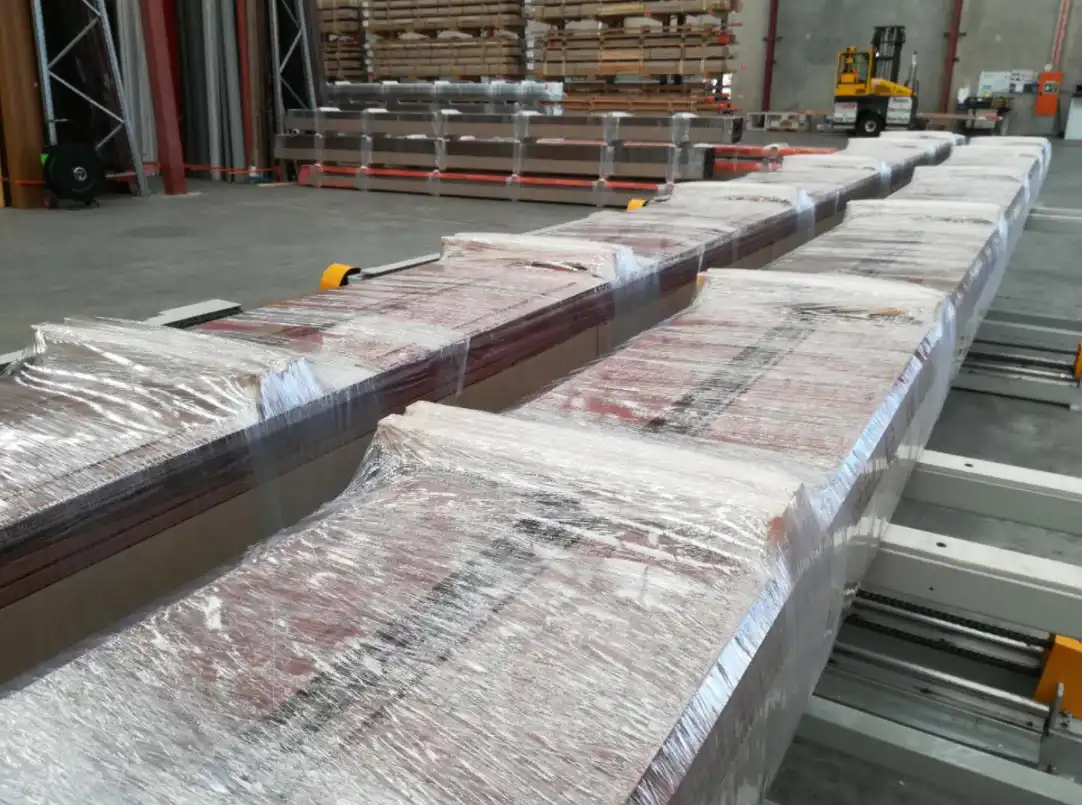
When I first started designing packing machines, I saw a clear need for a specialized solution for products that did not fit on standard pallets. Orbital wrappers filled this gap perfectly. They brought a new level of protection and speed to industries like metal processing and timber. Let me explain why this technology is often the superior choice for factories in Indonesia.
Unpacking the Benefits of Orbital Stretch Wrapping
Orbital stretch wrapping involves a film dispenser rotating around a product as it moves through a central ring. This creates a secure, all-around wrap. It is perfect for items that are difficult to package otherwise.
Specialized Protection for Unique Products
Orbital wrappers are built to handle specific product forms that traditional pallet wrappers cannot.
- 360-Degree Wrapping: The film wraps completely around the product. It covers all surfaces, including the ends. This provides excellent protection against dust, moisture, and damage.
- Ideal for Coils and Bundles: Steel coils, wire bundles, plastic pipes, and timber packs fit perfectly. The machine secures them tightly.
- Damage Prevention: The tight, multi-layered wrap prevents edges from getting scuffed. It stops products from shifting during transport. This means fewer customer complaints.
- Corrosion Resistance: For metal products, a good wrap prevents exposure to air and moisture. This reduces rust and corrosion, which is important in Indonesia’s humid climate.
In my factory, we often dealt with large, heavy bundles of products. Orbital wrapping was a game-changer. It ensured that our products arrived at the customer in perfect condition. This built a lot of trust with our clients.
Significant Efficiency Gains
The automation of orbital wrapping directly leads to faster packing times and higher output.
- High Speed: Machines wrap products much faster than human hands. This clears packing bottlenecks quickly.
- Consistent Quality: Every product gets the same secure wrap. This ensures uniform protection.
- Reduced Labor Needs: One operator can manage the machine. This frees up multiple workers from manual wrapping tasks.
- Integration with Production Lines: Orbital wrappers can connect directly to existing conveyors. This creates a smooth, continuous flow from production to packing.
When I talk to managers, they often express surprise at how much faster their operations become after implementing an orbital wrapper. It is not just about the machine’s speed. It is about the overall flow of the factory.
Enhanced Safety in the Workplace
This is a huge benefit for companies operating in Indonesia. It directly addresses one of Michael’s biggest concerns.
- Eliminates Manual Lifting: Workers no longer need to manually lift or manipulate heavy, awkward items for wrapping.
- Reduces Strain Injuries: The machine does the heavy work. This prevents musculoskeletal injuries common in manual packing.
- Controlled Environment: The wrapping process is contained within the machine. This reduces the risk of accidents.
- Improved Employee Morale: A safer workplace makes employees happier and more productive. It also reduces employee turnover.
I have seen firsthand the positive impact of reducing manual heavy lifting. Workers are less tired. They are more focused. The overall atmosphere in the factory improves. This is not just a cost saving. It is an investment in your people.
Clear Return on Investment (ROI)
For the right application, orbital stretch wrappers offer a compelling ROI.
- Lower Labor Costs: Fewer workers are needed for packing. This leads to significant long-term savings on wages and benefits.
- Reduced Product Damage: Less damage means fewer returns, fewer reworks, and happier customers. This protects your revenue.
- Increased Throughput: Faster packing allows you to produce and ship more. This means higher sales potential.
- Lower Insurance Costs: Fewer injuries can lead to lower worker compensation premiums over time.
- Material Savings: Machines use film efficiently. They minimize waste compared to manual wrapping.
When considering an investment, I always tell my clients to look at the total picture. It is not just the upfront cost of the machine. It is about how much money it saves and earns you over its lifetime. For businesses in Indonesia, where labor costs are rising and competition is stiff, these savings are very important.
When Does Semi-Automatic Wrapping Make Sense for Your Indonesian Operations?
Do you handle a variety of palletized goods, boxes, or irregularly shaped items that need securing for transport? Are you looking for an entry-level automation solution that can still reduce manual effort? Semi-automatic pallet wrappers might be a good fit for certain operations in Indonesia. They offer a step up from purely manual methods without the full investment of a specialized orbital system.
Semi-automatic stretch wrapping machines are a cost-effective solution for Indonesian businesses that primarily package palletized goods, mixed loads, or a diverse range of standard-sized boxes, offering improved load stability and reduced manual labor compared to hand-wrapping, but they are not designed for elongated, coiled, or heavy products that require the specific rotational wrap of an orbital machine. They offer flexibility for general-purpose packing needs.
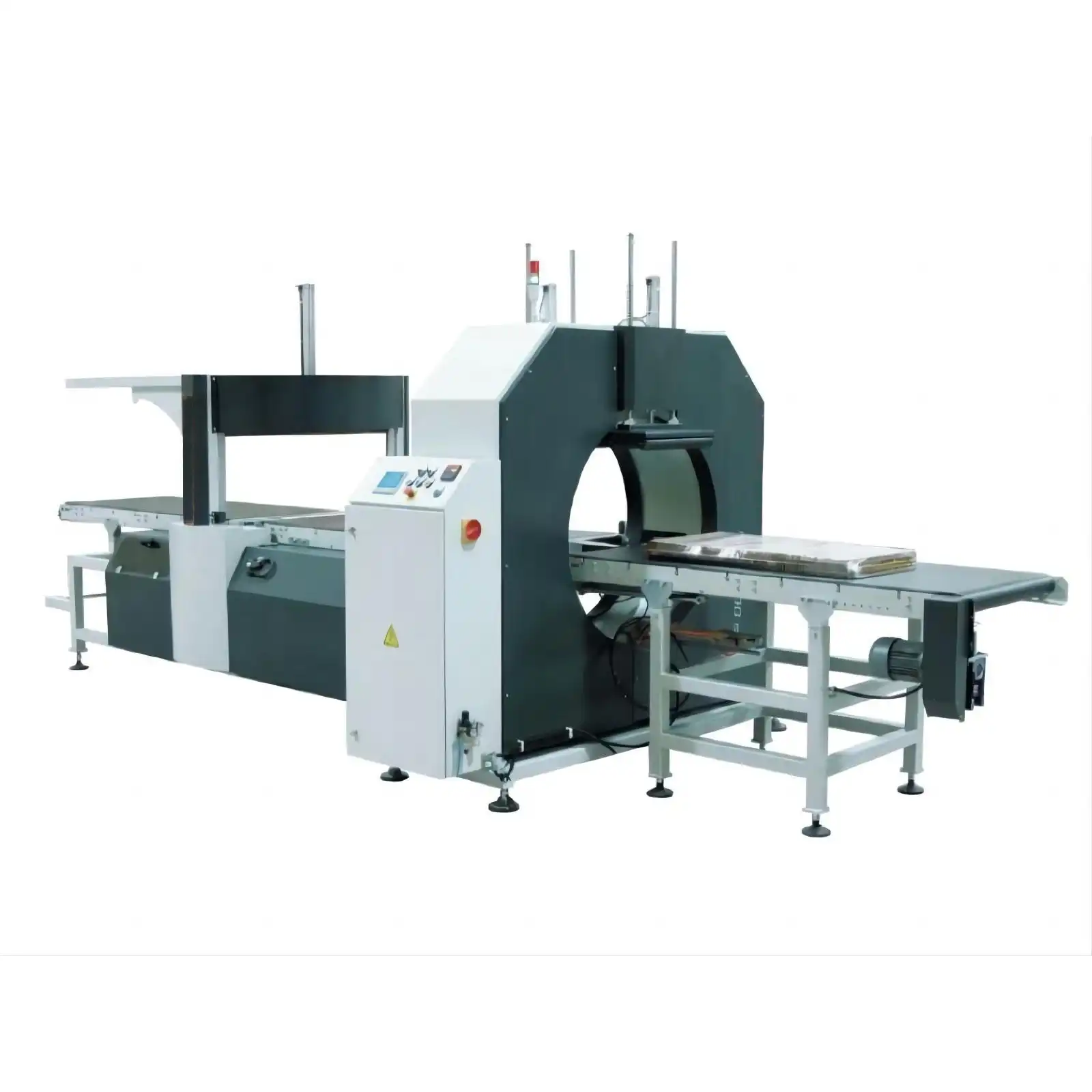
From my experience, understanding the specific needs of your product is key. Semi-automatic wrappers are versatile for a general range of items. But they have limits. It is like choosing between a general-purpose truck and a specialized heavy-duty vehicle. Both have their place. But one is much better for specific tasks. Let us explore when a semi-automatic wrapper is the right choice and when it might fall short.
The Role and Limitations of Semi-Automatic Wrappers
Semi-automatic wrappers typically involve placing a pallet or item on a turntable. The machine then wraps film around it. An operator might attach the film at the start and cut it at the end.
Best Applications for Semi-Automatic Wrappers
These machines shine in specific environments.
- Palletized Goods: Their main strength is wrapping pallets of boxes, bags, or other items stacked on a pallet.
- Varied Product Sizes: They can handle a range of pallet heights and widths. This makes them flexible for different product lines.
- Lower Throughput Needs: If your volume is not extremely high, a semi-automatic machine can handle it well. It is faster than hand wrapping but slower than fully automated systems.
- Entry-Level Automation: For businesses moving away from purely manual wrapping, this is an accessible first step. It requires less capital investment than a full orbital system.
- Mixed Loads: They are good for mixed loads on a pallet. For example, a pallet with different boxes of various products.
When I started FHOPEPACK, I knew many smaller businesses needed an affordable way to improve their packing. Semi-automatic machines fit this need perfectly. They provided a good balance of cost and efficiency for general packing.
Limitations Compared to Orbital Wrappers
While versatile, semi-automatic wrappers have clear limitations, especially for the types of products Michael Chen handles.
- Not for Elongated Products: They cannot wrap long items like pipes, timber, or extrusions securely along their entire length. The film only wraps vertically around the pallet.
- Ineffective for Coils: Steel coils or wire bundles require a rotational wrap around their circumference. A semi-automatic pallet wrapper cannot provide this specialized protection.
- Limited Damage Protection for Specific Products: For items like steel coil edges, the vertical wrap offers minimal protection from bumps and scrapes during handling.
- Still Some Manual Interaction: An operator is needed to load/unload, attach, and cut film. This still involves some manual labor.
- Safety for Heavy, Awkward Items: While reducing some manual effort, loading very heavy or unstable items onto a turntable can still pose risks if not done carefully. The operator still needs to handle the product to get it onto the machine.
Imagine trying to wrap a long piece of timber on a turntable. You can only wrap around the center. The ends remain exposed. This is where an orbital wrapper truly excels. It provides that full, comprehensive coverage that these specific products need. For Michael’s factory, dealing with steel coils and wire, a semi-automatic pallet wrapper would simply not solve his core problems of product damage and safety for these specific items.
What Factors Impact Your ROI in Indonesian Packing?
Are you trying to justify a new machine purchase to your management? Do you need to show clear financial benefits for automation in your Indonesian factory? Understanding the key factors that drive Return on Investment (ROI) is crucial. It is not just about the machine’s price tag. It is about the long-term impact on your business. Many factory managers, like Michael, must build a strong case for investing in new technology. They need to prove it will pay off.
The most significant factors impacting ROI for packing machines in Indonesian factories include direct labor cost reductions, minimized product damage and waste, increased production throughput, improved workplace safety reducing insurance and injury costs, and the overall reliability and maintenance requirements of the equipment. A comprehensive ROI calculation must consider both immediate savings and long-term operational improvements.
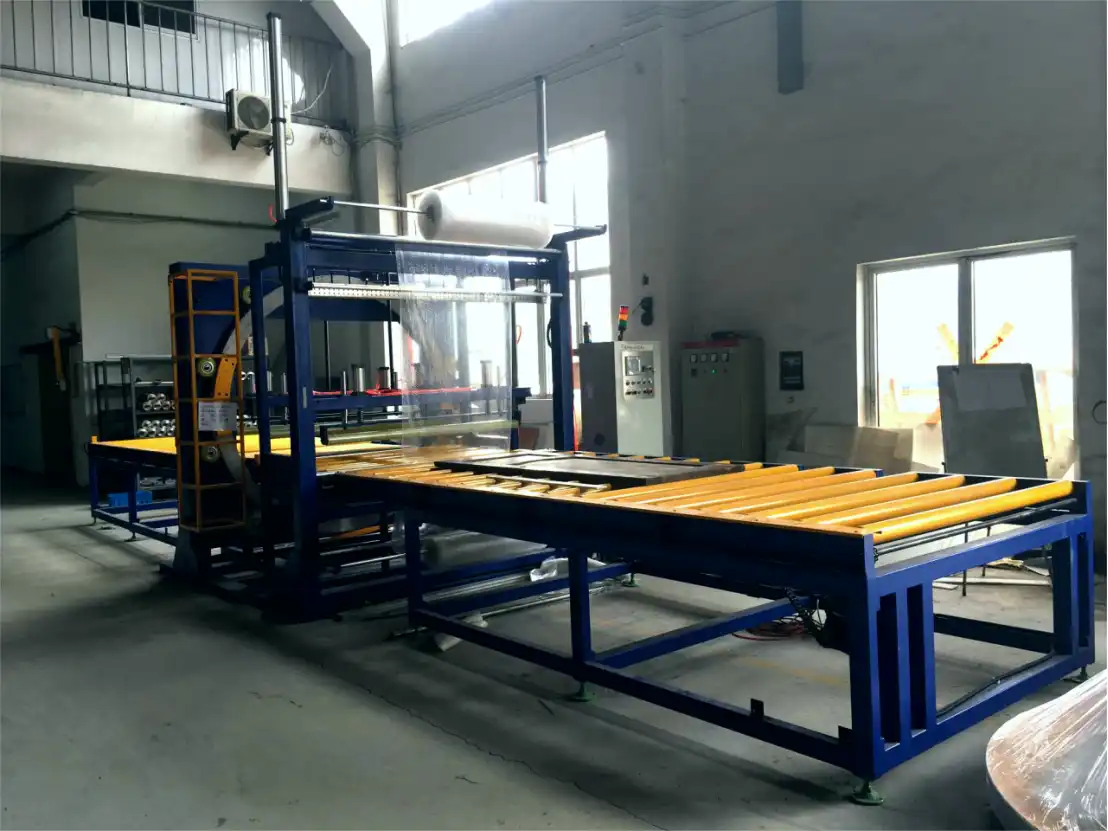
From my years of experience, both as an employee and running FHOPEPACK, I have learned that the “cheapest” solution upfront often costs the most in the end. A true ROI calculation looks beyond the initial price. It considers how a machine will transform your operations and your balance sheet over years. Let us break down these critical factors for businesses in Indonesia.
Key Drivers of ROI for Packing Automation
When evaluating any packing solution, you need to look at several angles. Each contributes to the overall financial return.
Labor Cost Savings
This is often the most direct and obvious saving. Indonesia’s labor costs are rising. This makes automation more attractive.
- Reduced Headcount: An automated machine can replace several manual workers in the packing area.
- Reallocation of Labor: Workers can be moved to other, more value-added tasks within the factory. This optimizes your workforce.
- Fewer Overtime Hours: Faster machine packing reduces the need for costly overtime.
- Lower Benefits and Training Costs: Fewer employees mean lower costs for benefits, recruitment, and training.
I always advise clients to calculate their current packing labor costs accurately. Include wages, benefits, and even hidden costs like breaks and supervision. You will often find the numbers are much higher than you first thought.
Material Cost Optimization and Damage Reduction
Saving on materials and avoiding damage directly boosts your profit margins.
- Efficient Film Usage: Automated machines use stretch film more consistently and with less waste than manual wrapping. They apply the right tension and layers.
- Product Protection: As discussed, specialized machines like orbital wrappers drastically reduce damage during handling and transport. This means fewer scrapped products.
- Reduced Returns and Reworks: Fewer damaged products lead to fewer customer returns. This also means less time spent on rework or shipping replacements.
- Customer Satisfaction: Delivering undamaged products builds customer trust. Happy customers are repeat customers.
I have seen factories lose significant amounts of money due to damaged goods. For high-value items like steel coils, even small damages mean a big loss. This factor alone can often justify the cost of automation.
Increased Throughput and Production Capacity
Faster packing means your factory can produce and ship more. This directly impacts your revenue potential.
- Higher Output: Machines work continuously and quickly. This allows you to pack more products per hour or per shift.
- Reduced Bottlenecks: Automation at the packing stage removes the bottleneck that manual processes often create. This frees up the entire production line.
- Meeting Demand: Higher capacity allows you to meet increased customer demand without expanding your physical factory space.
- Faster Delivery Times: Quicker packing means products are ready for shipment sooner. This improves your customer service.
When my factory grew, we realized that our packing speed limited our sales. Investing in faster machines allowed us to take on more orders. It was a clear path to growth.
Improved Safety and Compliance
Safety improvements save money and protect your most valuable asset: your employees.
- Fewer Accidents: As mentioned, reducing manual handling of heavy items drastically cuts down on workplace injuries.
- Lower Insurance Premiums: A safer workplace with fewer claims can lead to lower worker compensation insurance rates.
- Reduced Litigation Risk: Fewer accidents mean less risk of costly legal battles.
- Compliance with Regulations: Automation helps meet safety standards and labor laws. This avoids fines and penalties.
- Better Employee Morale: A safe environment fosters a more loyal and productive workforce.
For Michael, who faces high injury risks, this is a particularly important point. The ROI here is not just financial. It is also about creating a sustainable and ethical workplace.
Equipment Reliability and Maintenance
The quality and design of the machine itself play a big role in long-term ROI.
- Downtime Costs: A machine that frequently breaks down is expensive. Lost production time, repair costs, and idle workers add up fast.
- Maintenance Expenses: High-quality machines from reputable suppliers (like FHOPEPACK) are designed for durability. They require less frequent and less costly maintenance.
- Lifespan of Equipment: A robust machine will last longer. This means you get more years of service and a better return on your initial investment.
- After-Sales Support: Good supplier support is crucial, especially in Indonesia. Quick access to spare parts and technical help minimizes downtime. This addresses Michael’s past supplier trust issues directly.
I built FHOPEPACK on the principle of reliable machines. I know firsthand the frustration of equipment that constantly fails. That is why I always emphasize investing in quality and a partner you can trust.
My Insights!
Have you ever felt stuck between your current manual packing struggles and the fear of making the wrong investment in automation? I have been there. I have seen countless factory managers, like Michael, grapple with these exact decisions. They are under pressure to cut costs, boost output, and keep their workers safe. My journey, from an employee on the factory floor to building FHOPEPACK, taught me one clear lesson: the right packing machine is not an expense. It is a strategic investment that pays dividends.
My key insight is that for factories in Indonesia dealing with heavy, elongated, or coiled products like steel and wire, orbital stretch wrapping machines consistently offer a superior ROI by directly addressing core challenges of safety, efficiency, and product protection far more effectively than general-purpose semi-automatic pallet wrappers. This specialized automation is essential for long-term growth and competitiveness in these industries.
When I started my own packing machine factory, I was determined to offer solutions that truly solved problems. Not just sell equipment. I learned that understanding the client’s specific pain points is everything. For businesses like Michael’s in Indonesia, the choice between orbital stretch and semi-auto wrap comes down to the nature of their products and the severity of their challenges.
Making the Right Choice for Your Indonesian Factory
Choosing the correct packing machine demands a clear understanding of your specific needs and priorities. It is not a one-size-fits-all decision.
Prioritizing Product Type and Packaging Needs
This is the most crucial first step. Your product dictates the machine.
- For Coils, Bundles, and Long Products: If you package steel coils, wire bundles, timber, pipes, or other elongated items, an orbital stretch wrapper is almost always the better choice. It offers specialized 360-degree protection. It is designed to secure these difficult-to-wrap items. This directly tackles product damage and ensures safe transport.
- For Palletized Boxes and General Goods: If your primary need is to wrap standard pallets of boxes, bags, or other items that stack neatly, a semi-automatic pallet wrapper can be a very effective and cost-efficient solution. It offers good load stability for these common goods.
Assessing Your Volume and Throughput Requirements
Your production volume plays a big role in justifying the investment.
- High Volume of Specialized Products: If you have a high volume of coils or long items, the speed and efficiency of an orbital wrapper will quickly yield ROI. The manual alternative becomes too slow and costly.
- Moderate Volume of Mixed Pallets: For moderate volumes of varied palletized goods, a semi-automatic wrapper offers a good balance. It reduces manual effort without requiring the higher investment of a fully automated or specialized system.
Evaluating Safety and Labor Reduction Goals
Consider the human element and your commitment to workplace safety.
- High Risk of Manual Handling Injuries: If your current process involves significant manual lifting and potential for injuries, an orbital wrapper for heavy items drastically improves safety. It removes workers from dangerous tasks. This is a massive benefit for factories in Indonesia and aligns with Michael’s goals.
- General Reduction in Hand Wrapping: A semi-automatic wrapper also reduces manual hand wrapping for pallets. This improves ergonomics and efficiency for those tasks.
Considering Long-Term Value and Supplier Partnership
Beyond the machine itself, think about who you are partnering with.
- Reliability and Durability: Invest in equipment built to last. Downtime is expensive. Look for robust construction and proven performance.
- After-Sales Support: A good supplier provides excellent technical support, spare parts, and service. This minimizes costly breakdowns and keeps your operations running smoothly. This is a common pain point for managers like Michael, who experienced past supplier trust issues.
- Expert Guidance: Work with a supplier who understands your industry and can offer genuine solutions, not just sell a machine. This is what I strive to provide at FHOPEPACK. My experience building my own factory means I understand the challenges you face every day.
In my view, the “cheaper” option is only cheaper if it solves your core problems and provides long-term value. For Michael’s metal processing factory in Indonesia, dealing with steel coils and wire, an orbital stretch wrapper is not just a machine. It is a strategic move to boost efficiency, ensure safety, protect products, and ultimately, secure a stronger financial future. It represents a deeper understanding of the craft.
Conclusion
For Indonesian factories packaging coils or long products, orbital stretch wrappers offer higher ROI through superior efficiency, safety, and product protection, while semi-auto wrappers suit general palletized goods. Choose based on specific product needs.








