
What Are the Pros and Cons of Using an Orbital Stretch Wrapper in MDF Board Manufacturing?
Manufacturing MDF boards brings many challenges. You work hard to produce quality panels, but then they need to get to your customers without damage. The truth is, protecting large, flat items like MDF boards during storage and transit can be a real headache. I have seen many factories struggle with product damage, slow manual processes, and high labor costs. These problems can eat into your profits and lead to unhappy customers.
An orbital stretch wrapper offers significant advantages for MDF board manufacturing by improving product protection, increasing wrapping speed, and enhancing worker safety. However, it also comes with a notable upfront investment and requires dedicated floor space. Making the right choice means weighing these factors carefully for your operation.
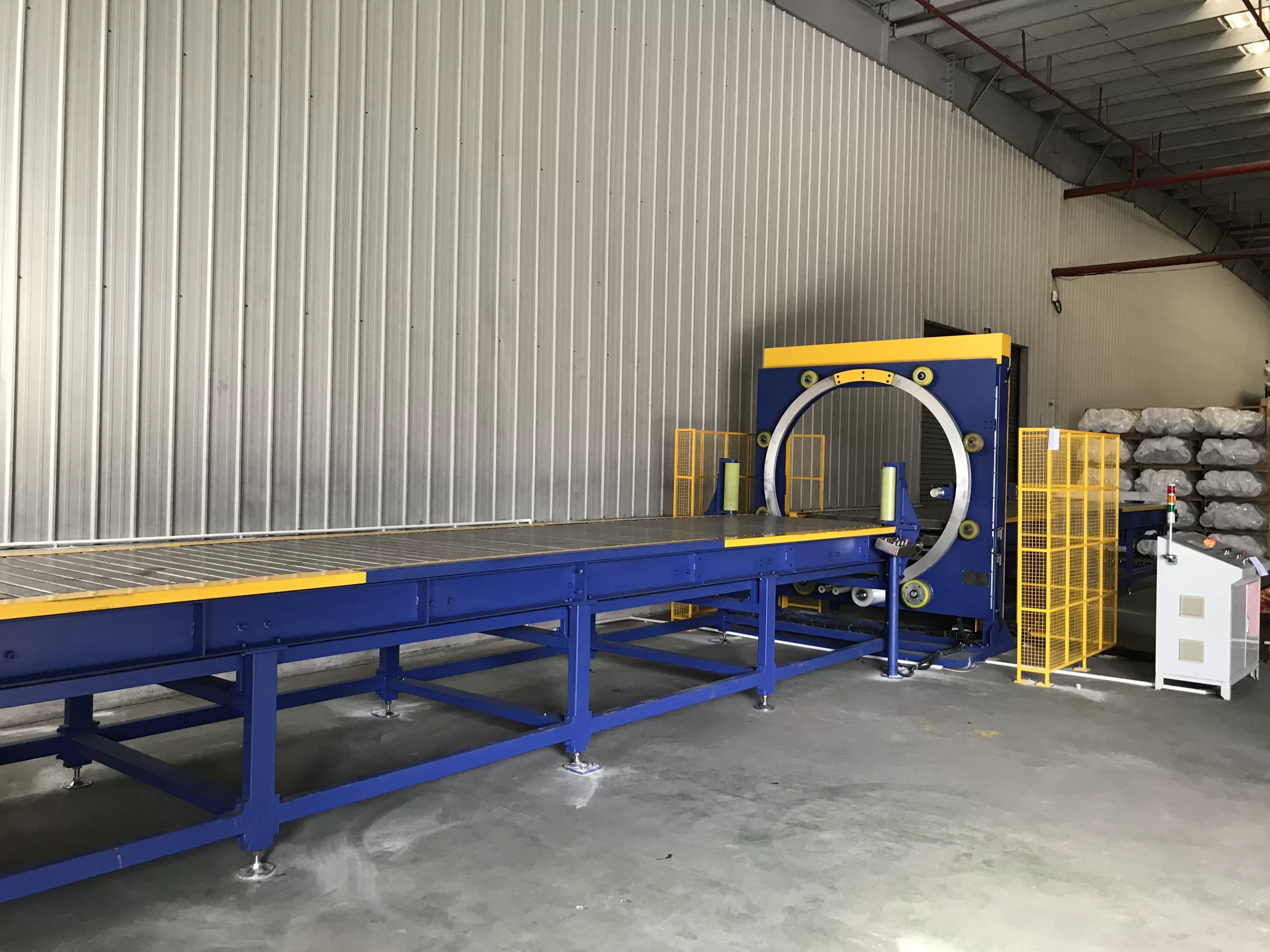
Choosing the right equipment for your factory is a big decision. You want a solution that really works, not just another machine. Let’s break down how an orbital stretch wrapper can help or challenge your MDF board production. My goal is always to help you understand the bigger picture, just like I did when I built my own packing machine factory.
How Does Orbital Wrapping Improve Safety in MDF Board Handling?
Are your workers still wrapping large MDF boards by hand? This can be very dangerous. Lifting and moving heavy, awkward panels creates a high risk of injuries. I have seen firsthand how these kinds of manual tasks lead to sprains, strains, and even more serious accidents. This not only hurts your employees, but it also increases your insurance costs and can cause staff turnover.
Orbital stretch wrappers greatly improve safety by automating the wrapping process, which means fewer workers need to handle heavy MDF boards manually.

When I was building my factory, safety for my team was always a top priority. I knew that the less my workers had to lift or move heavy items by hand, the safer our operations would be. This same principle applies directly to handling large MDF boards. Orbital wrappers are designed to take the heavy lifting out of the equation.
Reducing Manual Labor and Strain
One of the biggest safety benefits is that an orbital wrapper cuts down on manual labor. Workers do not need to walk around large MDF bundles with film rolls. They also do not need to bend, stretch, or lift in awkward ways. The machine does the hard work. This means fewer repetitive motions that can lead to long-term injuries. It also means less chance of workers dropping a heavy board or getting caught by moving parts. My experience has taught me that investing in automation is not just about speed. It is also about protecting your most valuable asset: your people.
Enhancing Load Stability
Another safety improvement comes from how the orbital wrapper secures the load. It wraps the MDF boards tightly and evenly. This creates a stable package that is less likely to shift or fall during transport. Think about moving a stack of loose MDF boards compared to a tightly wrapped bundle. The wrapped bundle is much safer to handle with forklifts or pallet jacks. This reduces the risk of accidents during loading, unloading, and internal factory movement. A stable load prevents items from tipping over, which can cause serious injuries.
Decreasing Accident Rates
Overall, using an orbital stretch wrapper leads to a decrease in workplace accidents. When you remove manual tasks that involve heavy objects, you naturally reduce the chances of things going wrong. Less human intervention means fewer opportunities for human error. This can also lead to lower worker’s compensation claims and a more positive work environment. A safer workplace also helps with employee morale. People feel more secure at work, and that can reduce staff turnover. I always aimed to create a workplace where people felt safe and valued, and technology like this helps achieve that.
Can Orbital Wrappers Really Boost My MDF Production Line Speed and Cut Costs?
Are you feeling the pressure of slow packaging lines? Many factories, especially those dealing with large products like MDF boards, find that their packaging process is a bottleneck. Manual wrapping methods are often slow and inconsistent. This affects your overall production speed and delays delivery times. Plus, the labor costs for manual wrapping can add up quickly, eating into your profit margins.
Yes, orbital wrappers can significantly boost MDF production line speed by automating the wrapping process and cutting labor costs, leading to a faster and more efficient operation.

When I started FHOPEPACK, my focus was always on finding ways to make processes more efficient. I saw how much time and money were wasted on outdated methods. For large items like MDF boards, automation is key to unlocking better speed and real cost savings.
Increasing Wrapping Speed and Throughput
An orbital stretch wrapper works much faster than any human can. It can wrap multiple layers of film around MDF boards in a matter of minutes, sometimes even seconds, depending on the machine and board size. This speed means you can move more product through your packaging line in less time. If your current manual wrapping takes 10 minutes per bundle, a machine might do it in 1-2 minutes. This dramatic increase in speed helps to eliminate packaging bottlenecks and allows your entire production line to operate more smoothly. It means you can meet higher demands and deliver products faster to your customers.
Reducing Labor Expenses
One of the most direct cost savings comes from reducing labor needs. With an orbital wrapper, you might need one operator to manage the machine instead of two or three workers wrapping by hand. This frees up your staff to do other, more valuable tasks in the factory. Over time, the savings from reduced wages and associated labor costs can be substantial. I have seen this firsthand in many operations I have worked with. The investment in a machine pays for itself by lowering ongoing operational expenses.
Optimizing Film Usage
Orbital wrappers are also designed to use stretch film more efficiently. They apply film tightly and consistently, with programmed tension settings. This means less wasted film. Manual wrapping often leads to inconsistent tension, too much overlap, or tearing, all of which waste material. The machine applies just enough film to secure the product effectively, which reduces your material costs over time. This smart use of resources directly impacts your bottom line.
Minimizing Product Damage
Even though we will talk more about product protection later, it is important to mention it here too for cost savings. Every damaged MDF board means lost profit. An orbital wrapper creates a uniform and secure wrap that protects the edges and surfaces of the boards from scratches, scuffs, and impacts during handling and transit. Fewer damaged products mean fewer customer complaints, fewer returns, and less money lost on discarded materials. This is a crucial area where efficiency meets quality and directly impacts your profitability.
How Does an Orbital Wrapper Prevent Damage to MDF Boards and Improve Customer Satisfaction?
Are you tired of hearing about damaged products? It is a common problem for factories that ship large, flat items like MDF boards. Edges get chipped, surfaces get scratched, and sometimes, the entire bundle shifts during transit. This leads to customer complaints, product returns, and direct financial losses. It also hurts your reputation as a reliable supplier.
An orbital stretch wrapper prevents damage to MDF boards by providing a tight, secure, and all-around protective wrap, which reduces transit damage and improves overall customer satisfaction.
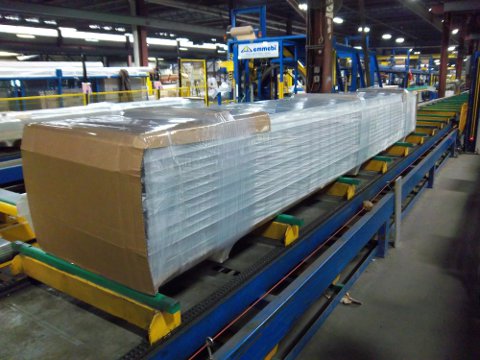
When clients reach out to me, one of their biggest headaches is often product damage. They spend so much effort making a great product, only to have it arrive at the customer’s site in poor condition. I always tell them that packaging is the last line of defense for their product. It is just as important as the manufacturing process itself.
Providing Complete 360-Degree Protection
The unique design of an orbital wrapper allows it to wrap film around all sides of the MDF board bundle. Unlike traditional pallet wrappers that primarily cover the top and sides, an orbital wrapper passes the film through the center of the load. This creates a secure, closed package. This 360-degree coverage protects against dust, moisture, and scratches from every angle. It acts like a second skin for your product, safeguarding it from environmental elements and handling impacts. This comprehensive protection is crucial for sensitive materials like MDF boards that can easily get damaged on their edges or surfaces.
Ensuring Load Stability During Transit
A key benefit of the tight wrap is the stability it provides. When MDF boards are wrapped securely, they form a single, cohesive unit. This prevents individual boards from shifting, rubbing against each other, or sliding off the pallet during transportation. Loose loads are very prone to damage from vibrations, sudden stops, or bumps. A stable, unitized load means less internal friction and fewer chances of impact damage. This is essential whether you are shipping across town or across the country. My experience in packaging steel coils taught me that a stable load is a safe load, no matter the material.
Reducing External Impact Damage
The multiple layers of stretch film applied by the orbital wrapper also provide a cushioning effect. This helps to absorb minor impacts during loading, unloading, and warehousing. While it cannot prevent damage from major accidents, it does significantly reduce the risk of damage from everyday handling. This protective barrier means your MDF boards arrive at the customer’s site looking as good as they did when they left your factory. This consistent quality leads to fewer customer complaints, fewer returns, and a stronger reputation for your brand. Satisfied customers are loyal customers.
What Are the Downsides of Using an Orbital Wrapper for MDF and How Can I Avoid Them?
While orbital wrappers offer many benefits, no machine is perfect for every situation. You should always look at both sides before making a big investment. It is natural to worry about things like the cost or how much space a new machine will take up. Many factory managers, like Michael, have dealt with suppliers who only focus on sales and then disappear when you need support. This makes you cautious.
Orbital wrappers involve a notable initial investment and require specific floor space. However, these downsides can be managed by choosing the right supplier and conducting a thorough cost-benefit analysis.
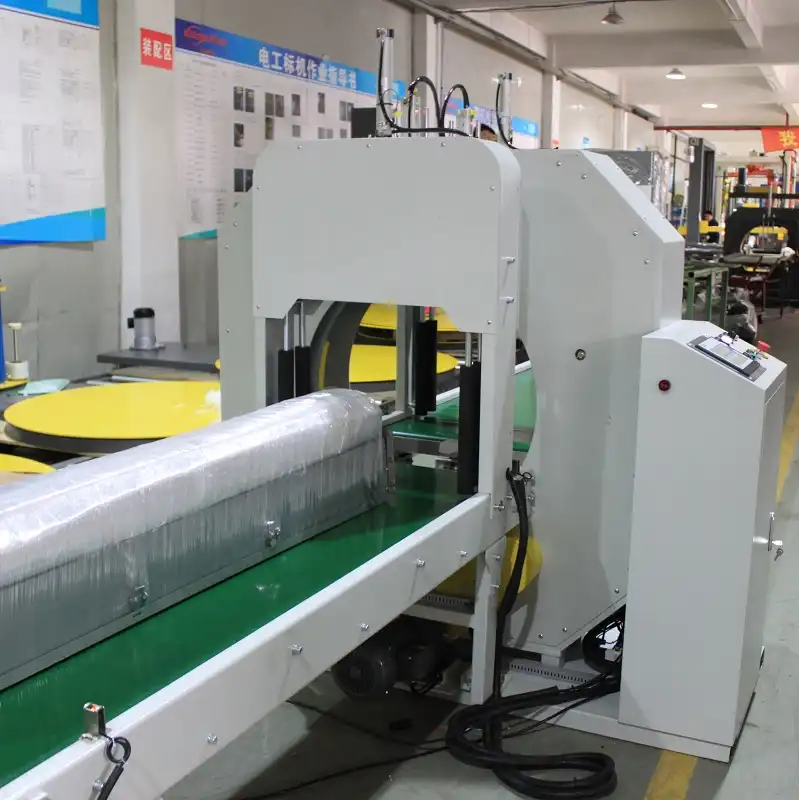
When I established my factory, I learned that the upfront cost of equipment is always a big consideration. But I also learned that the cheapest option is rarely the best one in the long run. It is about understanding the full picture and finding a partner you can trust.
Initial Investment Cost
The most obvious downside is the purchase price. An orbital stretch wrapper is a specialized piece of machinery, and it represents a significant capital expenditure. This can be a barrier for smaller operations or those with limited budgets. However, it is important to look at this as an investment rather than just an expense. You need to calculate the Return on Investment (ROI). This means looking at how much you will save on labor, film usage, and reduced product damage over time. From my experience, for operations with a high volume of large, flat products, the ROI is usually very favorable. FHOPEPACK can help you with this calculation.
Space Requirements
Orbital wrappers, especially those designed for large items like MDF boards, can take up a considerable amount of floor space. The machine itself needs room, and you also need space for loading and unloading the product. This can be a challenge for factories with limited production floor area. Before buying, you must measure your available space carefully. Consider the flow of your production line. A good supplier, like FHOPEPACK, will help you plan the layout to ensure the machine fits well into your existing operations. We understand that every factory has unique spatial constraints.
Specific Film Needs and Maintenance
While orbital wrappers save on film usage, they often require specific types of stretch film for optimal performance. You need to ensure you are using the right kind of film that is compatible with the machine’s tension settings and your product’s needs. Also, like any complex machinery, orbital wrappers require regular maintenance. This means scheduling routine checks, replacing worn parts, and sometimes troubleshooting issues. Neglecting maintenance can lead to downtime, which cancels out the benefits of automation. Choosing a supplier with excellent after-sales service and spare parts availability, like FHOPEPACK, is crucial here. Michael’s concern about unreliable suppliers is very real, and it is something FHOPEPACK addresses directly through our commitment to ongoing support. We aim to be a true partner.
My Insights
When I look at the challenges Michael faces in his factory—improving efficiency, boosting safety, cutting costs, and finding a trustworthy partner—an orbital stretch wrapper can be a strong solution, even for MDF boards. My journey in the packing machine industry taught me that success is not just about the machine itself. It is about the insights and support you get from your supplier. FHOPEPACK exists to share that knowledge. We want to help you make informed decisions, just like I did when I built my business from the ground up. We understand that investing in equipment is a strategic move that needs clear ROI and reliable support. We are here to provide that.
Conclusion
Orbital stretch wrappers offer great benefits for MDF board manufacturing, especially in terms of safety, efficiency, and product protection. While they require an initial investment and space, the long-term gains often outweigh these challenges.








