
What Are the Pros and Cons of Different Horizontal Orbital Wrapper Designs for Canadian Building Materials?
Are you a factory manager in the building materials industry, perhaps in Canada, grappling with inefficient packing lines or constant product damage? Do you feel the pressure of rising costs, slow throughput, and worker safety risks? I’ve seen this exact situation countless times in my decades in the packing machine industry. Many businesses, especially those dealing with heavy, bulky items like lumber, pipes, or steel profiles, are struggling with outdated manual processes. This struggle often leads to bottlenecks at the end of the production line, wasted resources, and even costly workplace injuries. If this sounds like your daily challenge, then you are not alone, and there is a better way.
Horizontal orbital wrappers offer a fantastic solution for efficiently securing long, bulky products common in Canadian building materials, like timber, pipes, or metal extrusions. Their primary advantage lies in wrapping products while they pass horizontally through a rotating film dispenser, protecting them from damage, dust, and moisture during storage and transport. Different designs vary mainly in automation level, ring size, and the robustness of their construction, each bringing distinct benefits and drawbacks for specific operational needs and product types.
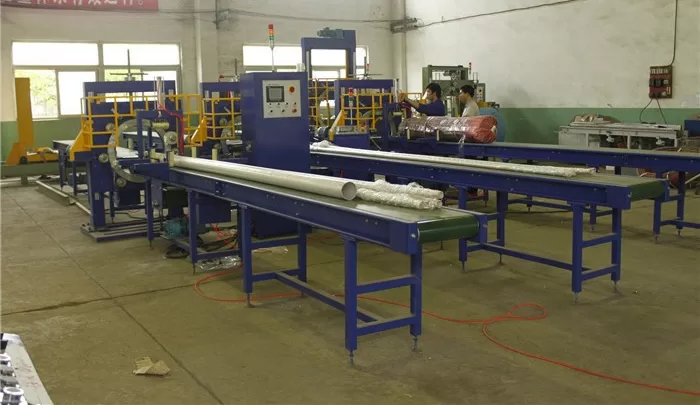
From my own journey, starting as an employee and then building a successful packing machine factory, I’ve learned that the right equipment is not just about a machine. It’s about a complete solution that truly understands your pain points. When it comes to horizontal orbital wrappers, picking the right design can transform your operations, boost safety, and save you a lot of money. Let’s dig deeper into what makes different designs tick and how they can benefit a busy Canadian building materials manufacturer.
What is the Difference Between Light-Duty and Heavy-Duty Horizontal Wrappers for Building Materials?
Are you a factory manager considering a new packing system, wondering if a light-duty wrapper can handle the daily grind in your plant? Do you worry about equipment breaking down under pressure, costing you valuable production time and repair expenses? It’s a common dilemma. Many manufacturers initially look at the lower price tag of lighter machines without fully considering the long-term operational demands of heavy products like those found in Canadian building materials. This oversight can lead to continuous frustration, unexpected maintenance, and even a complete replacement sooner than you think.
Light-duty horizontal wrappers are generally designed for lower volume, lighter, or less abrasive products, featuring simpler construction and smaller motors. In contrast, heavy-duty horizontal wrappers are built with robust frames, powerful components, and often larger rings to handle high volumes of heavy, oversized, or irregularly shaped building materials such as lumber bundles, large pipe sections, or heavy steel profiles, ensuring greater durability and consistent performance in demanding industrial environments.
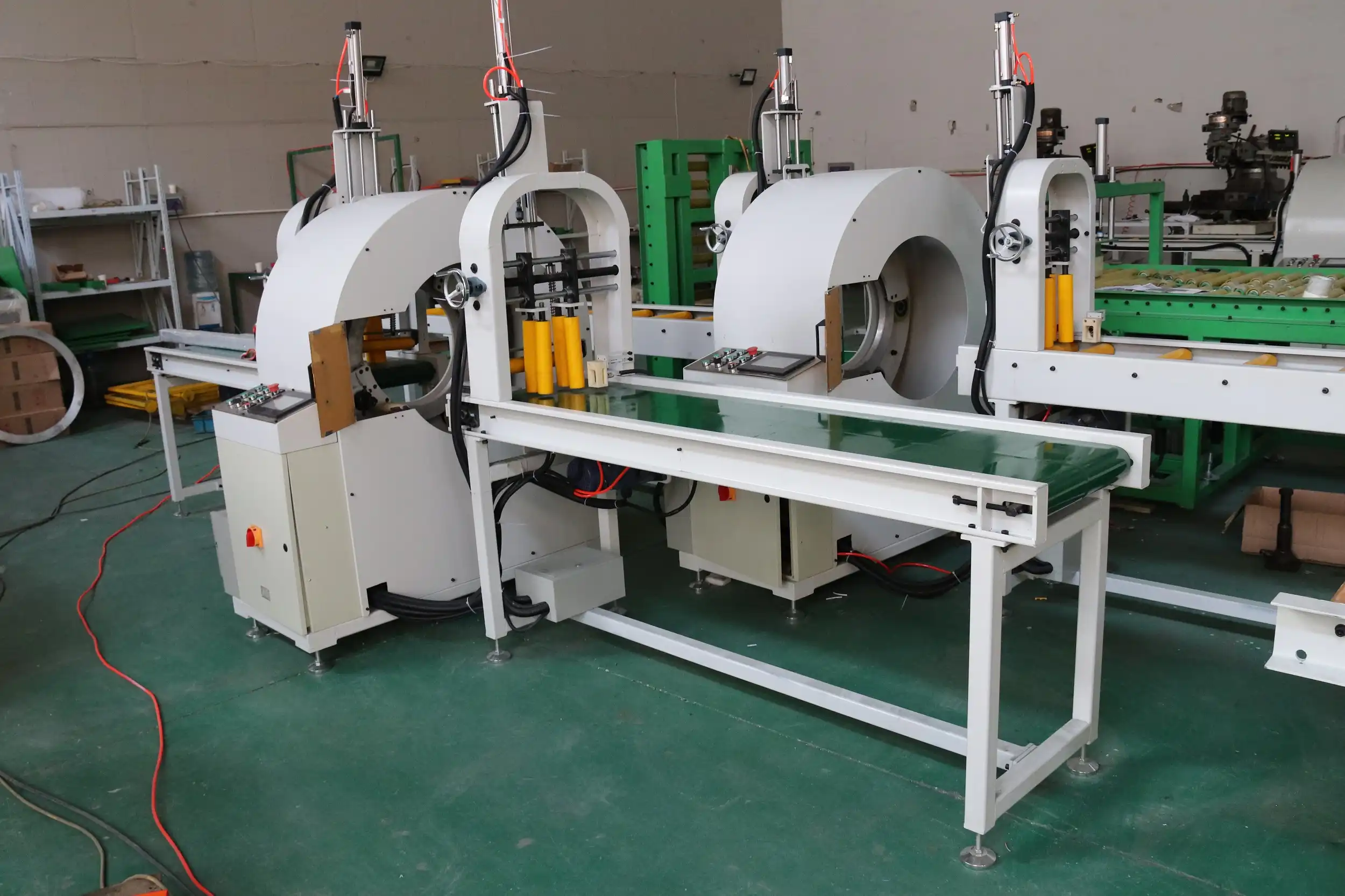
When I was running my own factory, I always emphasized durability. Downtime means significant losses. For Michael, managing a metal processing plant where reliability is key, understanding this difference is critical. You are not just buying a machine; you are investing in a piece of your production line.
Key Design Considerations: Materials, Motors, and More
Choosing between light-duty and heavy-duty orbital wrappers often comes down to the types of products you handle and the intensity of your operation. For a factory manager like Michael, dealing with heavy steel coils and other metal products, a light-duty machine would be a false economy. Heavy-duty wrappers are engineered for sustained, high-volume use. They feature reinforced steel frames, capable of absorbing vibrations and resisting deformation from heavy loads being conveyed or pushed through. Their components, such as the rotating ring and the film carriage, are often made from high-strength alloys, which resist wear and tear even with constant operation. Motors in heavy-duty models are significantly more powerful, typically industrial-grade AC motors with variable frequency drives (VFDs), allowing for precise speed control and higher torque needed to wrap bulky and heavy items. The bearings are larger and more robust, designed to withstand continuous rotational stress and heavy product weights. Furthermore, heavy-duty machines often include more sophisticated safety features, such as advanced guarding, emergency stop buttons, and robust interlocking systems, crucial for operations handling large, potentially dangerous materials. These machines also usually come with advanced tension control systems, which can apply consistent, high-level stretch to the film, ensuring excellent load containment even for challenging loads. This level of tension control is vital for preventing product damage, like crushed edges on steel coils, during transit and storage. From my experience helping clients in the coil packing and steel wire packing industries, under-engineered equipment is a common source of frustration and unexpected costs. Investing in a machine that can truly withstand your operational demands, day in and day out, pays for itself many times over in reduced downtime, lower maintenance costs, and improved product integrity.
| Feature | Light-Duty Horizontal Wrapper | Heavy-Duty Horizontal Wrapper |
|---|---|---|
| Construction | Lighter frame, simpler components | Reinforced steel frame, robust components |
| Motor Power | Lower power, suitable for occasional use | High power, industrial-grade motors, VFDs |
| Product Weight | Up to 50 kg (approximate) | Hundreds of kilograms to several tons |
| Throughput | Lower volume, intermittent operation | High volume, continuous operation |
| Durability | Moderate, designed for less demanding applications | High, built for harsh, industrial environments |
| Maintenance | Potentially more frequent repairs if overused with heavy products | Lower frequency of major repairs, higher component lifespan |
| Cost | Lower initial investment | Higher initial investment, lower long-term TCO |
How Does Automation Impact Horizontal Orbital Wrapper Performance and Safety?
Are you still relying on manual packing processes for your long, heavy products, like steel profiles or lumber, in your Canadian factory? Do you constantly worry about the slow pace of operations, the high risk of worker injuries from repetitive lifting, and the inconsistent quality of your finished packages? I know these challenges all too well. Manual handling of heavy items is not just inefficient; it’s a huge liability, leading to increased insurance costs and a higher employee turnover rate. It’s a bottleneck that can severely limit your production and delivery speed, costing your business significant revenue and damaging your reputation.
Automation in horizontal orbital wrappers dramatically enhances performance by increasing wrapping speed and consistency, allowing for higher throughput and reduced labor costs. Crucially, it revolutionizes safety by eliminating the need for manual lifting, repositioning, and handling of heavy or awkward loads, thereby significantly reducing the risk of workplace injuries, particularly relevant for the large and bulky products typical in Canadian building materials manufacturing.
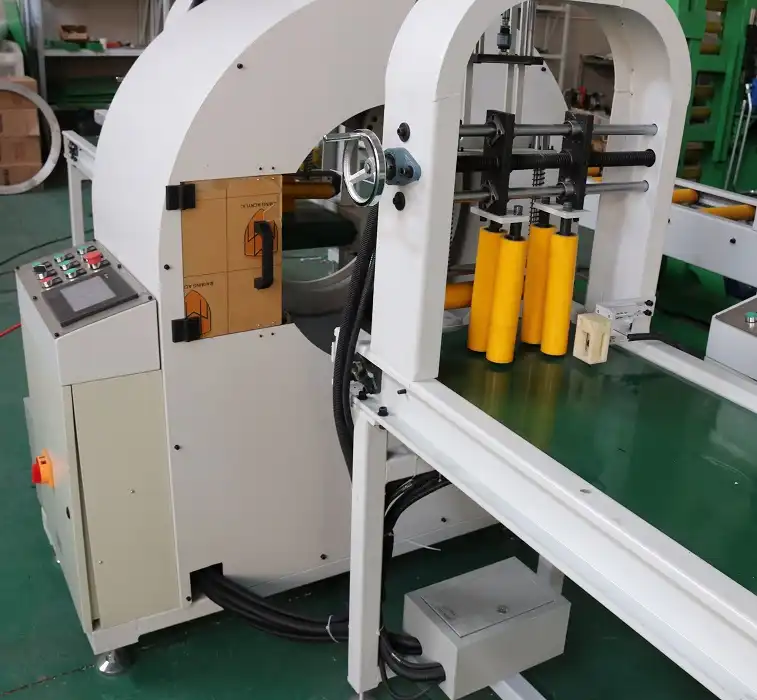
When I built my packing machine factory, one of my core principles was always about creating solutions that were not just efficient but fundamentally safer for the workforce. For someone like Michael, who oversees an entire metal processing plant, improving worker safety is paramount, not just for the well-being of his team but also for the financial health of the business.
From Manual Labor to Smart Automation: A Deep Dive
The leap from manual or semi-automatic wrapping to a fully automated horizontal orbital wrapping system is transformative. In manual operations, workers often spend considerable time positioning products, cutting and attaching film, and then manually moving the wrapped bundles. This process is inherently slow and inconsistent. Automation, however, integrates the wrapper seamlessly into the production line. Products are automatically fed into the machine via conveyors, rollers, or specialized material handling systems. The wrapper then precisely applies film, cuts it, and discharges the wrapped product, all without human intervention. This continuous flow drastically reduces the packing cycle time, leading to a significant increase in overall production throughput. More importantly, automation dramatically improves safety. Manual handling of heavy items, such as large lumber beams or long steel pipes, carries immense risks. Workers can suffer back injuries, crushed limbs, or other severe accidents when lifting, turning, or securing these loads. An automated system eliminates direct human contact with the product during the wrapping process. It uses mechanical means—like powered conveyors, clamping systems, and robotic arms—to manipulate the product, keeping workers out of harm’s way. This directly addresses one of Michael’s biggest concerns: the high risk of work-related injuries and the associated insurance costs and employee turnover. Moreover, automated systems ensure consistent wrapping tension and overlap, reducing the product damage that can occur from loosely wrapped or improperly secured loads, like damaged edges on coils. This consistency translates to fewer customer complaints and higher product quality. Automated machines can also incorporate features like automatic film roll changes and fault diagnostics, further minimizing operator intervention and optimizing uptime. For a plant manager looking to achieve substantial ROI, the combined benefits of increased efficiency and drastically improved safety make automation an indispensable investment.
| Aspect | Manual/Semi-Automatic Wrapper | Fully Automatic Wrapper |
|---|---|---|
| Performance | Slower throughput, inconsistent wrap quality | High-speed, consistent, high-quality wraps |
| Safety | High risk of operator injury from manual handling | Minimal operator interaction, significantly reduced risk |
| Labor Needs | Requires dedicated operators for loading, wrapping, and unloading | Minimal oversight, allows workers to focus on other tasks |
| Cost Savings | Lower initial cost, but higher ongoing labor/injury costs | Higher initial cost, significant long-term labor/injury savings |
| Integration | Standalone operation, often creates bottlenecks | Seamlessly integrates into production lines |
| Reliability | Dependent on human consistency, prone to errors | Consistent, predictable operation |
What Ring Sizes and Configurations are Best for Varied Canadian Building Products?
Are you finding that your current packaging equipment can’t handle the diverse range of product sizes common in the Canadian building materials sector? Do you have to turn away orders or manually pack certain oversized items because your wrapper simply isn’t big enough or versatile enough? This limitation can directly impact your sales, operational flexibility, and overall profitability. It’s frustrating to invest in equipment only to find it’s a bottleneck for your most profitable product lines, especially when dealing with the wide array of dimensions found in lumber, pre-fabricated walls, or unique metal profiles.
For varied Canadian building products, the best horizontal orbital wrapper ring sizes and configurations depend entirely on the largest and smallest dimensions of your specific products, as well as their weight. Large, open-ring designs with adjustable guides are often preferred to accommodate items like oversized lumber bundles, long pipes, or wide insulation panels. Specialized configurations, such as those with powered rollers or side-clamping systems, ensure stable product transfer and secure wrapping for irregular shapes, making them versatile for the diverse demands of the Canadian market.
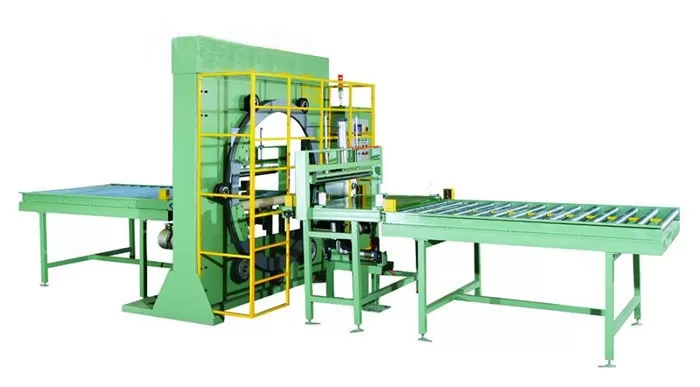
From my conversations with many factory managers, I understand that flexibility is key. In the heavy manufacturing sector, you can’t afford to have a machine that only works for one specific product size. For Michael, who handles various metal products, versatility is not a luxury but a necessity for meeting diverse client demands.
Tailoring Your Wrapper to Your Product Portfolio
The ring size of a horizontal orbital wrapper refers to the diameter of the opening through which the product passes. This is a critical specification, as it determines the maximum height and width of the product that can be wrapped. For Canadian building materials, which include everything from standard lumber dimensions to large pre-stressed concrete beams, wide insulation rolls, and long, specialized metal extrusions, a single, fixed ring size is often insufficient. Therefore, a larger ring diameter is generally more versatile, but it also comes with a larger footprint and potentially higher film consumption if consistently wrapping smaller items. The configuration of the machine, beyond just the ring size, plays an equally important role. Conveyor systems must be designed to handle the product’s length and weight, sometimes requiring multiple powered sections or specialized roller types (e.g., V-shaped rollers for pipes, flat rollers for lumber). Adjustable side guides are essential to center different product widths within the wrapping ring and prevent shifting during the wrapping process. For very long products, extended infeed and outfeed conveyors ensure stable support before and after wrapping. Some advanced configurations include automated product centering systems or even robotic manipulators for particularly challenging or heavy items. Furthermore, the film delivery system within the ring can be configured for single or multiple film rolls, allowing for faster wrapping speeds or stronger, multi-layer wraps for increased protection. When evaluating options, it is crucial to analyze your current and potential product portfolio. Consider the absolute largest and smallest dimensions, the heaviest weights, and any unusual shapes or sensitivities (e.g., easily scuffed surfaces). A machine that offers a broad range of capabilities, even if it has a slightly higher initial cost, will provide a far better return on investment by allowing you to handle more product types, increase your operational flexibility, and take on new business opportunities. My advice is always to plan for growth and diversity in your product lines.
| Configuration Aspect | Benefit for Varied Building Products | Example Product |
|---|---|---|
| Large Ring Diameter | Accommodates wide and tall products | Large lumber bundles, pre-fabricated wall sections |
| Adjustable Side Guides | Centers products of different widths and shapes | Varying pipe diameters, irregular metal profiles |
| Extended Conveyors | Provides stable support for very long products | Long steel beams, oversized timber |
| V-Groove Rollers | Prevents cylindrical products from rolling off | PVC pipes, steel tubes |
| Dual Film Carriages | Doubles wrapping speed or provides double layer protection | High-volume insulation rolls, sensitive aluminum extrusions |
| Automated Product Centering | Ensures consistent wrap on various product sizes | Mixed production lines with diverse dimensions |
Why is Integrated Material Handling Crucial for Horizontal Wrapping Systems?
Are you experiencing bottlenecks at the end of your production line, even after investing in a wrapping machine, because products aren’t moving smoothly to or from the wrapper? Does your factory rely on forklifts or manual labor to load and unload heavy, awkward items from the wrapping station, creating safety hazards and delays? This disconnect between your production and packing processes can severely limit your overall efficiency and lead to frustrating slowdowns. It’s a common issue where the “last mile” of manufacturing — getting the product packaged and out the door — becomes a major choke point, negating the benefits of faster upstream processes.
Integrated material handling is crucial for horizontal wrapping systems because it creates a seamless, automated flow of products into and out of the wrapper, eliminating manual intervention and associated risks. This integration, often involving conveyors, transfer carts, or robotic loading systems, ensures continuous operation, reduces labor costs, significantly enhances worker safety by removing heavy lifting, and prevents product damage that can occur during manual or disjointed handling, all vital for the efficient processing of Canadian building materials.

When I think about true efficiency, it’s not just about one machine operating fast. It’s about the entire line working in harmony. For Michael, dealing with high volumes of heavy metal products, this integrated flow is paramount. My own journey taught me that a well-designed factory isn’t just a collection of machines; it’s a symphony of processes.
Optimizing the Flow: Conveyors, Transfers, and Automation
The wrapper itself is just one part of the packing puzzle. Without efficient material handling before and after the wrapping process, even the fastest wrapper can become a bottleneck. Integrated material handling refers to the systems that automatically move products through the packing area. This often includes various types of conveyors (roller, chain, belt, or specialized systems like slat conveyors for heavy items), transfer carts, automated guided vehicles (AGVs), and robotic loading/unloading arms. For heavy, long items like those in building materials, robust powered roller conveyors are common, pushing products smoothly into and out of the wrapper’s opening. For products with specific features, like coil eyes, specialized chain conveyors might be used. The primary benefit of integration is continuous flow. Instead of operators manually loading products onto the wrapper’s infeed and then offloading them from the outfeed, the system handles it all. This drastically increases throughput, as the wrapping machine can operate at its maximum speed without waiting for manual intervention. More importantly, it is a game-changer for safety. The manual handling of heavy items is one of the leading causes of workplace injuries in manufacturing. By automating the transfer, you eliminate the need for workers to physically lift, push, or pull cumbersome products, thereby dramatically reducing the risk of strains, sprains, and other severe injuries. Furthermore, integrated systems often include precise positioning capabilities, ensuring that products are always presented to the wrapper correctly. This reduces the chance of product damage from mishandling, such as scuffs, dents, or deformations, which is a major concern for products like steel coils. A well-designed integrated system can also incorporate accumulation zones, allowing for a buffer of products before and after the wrapper, which further smooths out the production flow and minimizes downtime if a momentary stoppage occurs in an upstream or downstream process. For a factory manager seeking to optimize efficiency, cut labor costs, and prioritize worker safety, investing in a complete, integrated horizontal wrapping solution with robust material handling is not just an option—it is a strategic imperative.
| Component Type | Function | Safety & Efficiency Benefit |
|---|---|---|
| Powered Roller Conveyors | Moves long, heavy products into and out of the wrapper | Eliminates manual pushing, reduces back injuries, ensures continuous feed |
| Chain Conveyors | Ideal for irregular shapes, high friction, or specific product features | Provides stable, controlled movement for challenging loads, preventing slippage |
| Automatic Loading/Unloading Systems | Robotic arms or hydraulic lifters that position products | Removes workers from direct contact with heavy loads, greatly reduces crushing/impact risks |
| Accumulation Tables/Zones | Creates buffer space before and after wrapping | Smooths out production flow, minimizes stops, prevents line starvation or overflow |
| Transfer Carts/AGVs | Moves products between different stages or storage areas automatically | Reduces forklift traffic, lowers collision risk, streamlines inter-department logistics |
My Insight!
My journey in the packing machine industry has taught me that the core of any successful operation, especially in the demanding world of building materials, comes down to three things: reliability, efficiency, and safety. You can’t compromise on any of them. I’ve seen firsthand how a single, poorly chosen piece of equipment or a disjointed process can ripple through an entire factory, creating headaches from the production floor to the balance sheet. For factory managers like Michael, the goal isn’t just to buy a machine; it’s to find a partner who understands their unique operational environment and can provide solutions that truly last. This means looking beyond the initial price tag to consider the total cost of ownership, the potential for increased output, and, most importantly, the tangible improvement in worker safety. A horizontal orbital wrapper, particularly a robust, automated one, with integrated material handling, isn’t just an expense; it’s an investment in your company’s future, its productivity, and the well-being of your team. It’s about empowering your operations to master the packing process, allowing you to focus on what you do best: producing quality building materials for the Canadian market and beyond.
Conclusion
Choosing the right horizontal orbital wrapper for Canadian building materials means prioritizing durability, automation, product versatility, and integrated handling. Investing wisely boosts safety, efficiency, and your bottom line.








