
What Are the Latest Automation Upgrades Available for Orbital Wrapping Machines?
Are you struggling with outdated packing processes? Do you watch your valuable products move through your factory, only to slow down at the end-of-line packaging? Many factory managers I talk to feel this frustration. They often face a tough choice: keep using slow, manual methods, or invest in new equipment. The fear of downtime, high costs, or unreliable suppliers holds them back. This hesitation, though understandable, can lead to bigger problems like production bottlenecks, increased labor costs, and even safety risks. I have seen this first-hand throughout my career, from working on the factory floor to building my own successful packing machine company. It is a common challenge, but new solutions exist. (packaging automation challenges)
The latest automation upgrades for orbital wrapping machines include advanced features like intelligent control systems, IoT integration for real-time monitoring, automated film application and cutting, robotic integration for loading and unloading, and sophisticated conveyor systems, all designed to boost efficiency, enhance safety, and reduce operational costs in heavy industrial environments like metal processing plants. These technologies move far beyond simple film application, creating smarter, more resilient packing lines capable of handling demanding workloads.
Staying competitive means always looking for ways to do things better. If you are a factory manager like Michael, who oversees complex operations from raw material to finished goods, you know that efficiency and reliability are king. Every minute of downtime costs money. Every injury hurts your team and your bottom line. I understand these pressures deeply. That is why I want to guide you through the exciting world of advanced orbital wrapping technology. These upgrades are not just about new machines; they are about transforming your entire packing operation. Let’s explore how these innovations can specifically address the bottlenecks, safety concerns, and efficiency challenges you might be facing today. (industrial packing solutions)
How Do Smart Controls and IoT Integration Enhance Orbital Wrapper Performance?
Do you ever wish your packing machines could tell you exactly what is happening, or even predict problems before they occur? Many factory managers in Mexico, like Michael, are tired of reacting to breakdowns. They want to be proactive. Waiting for a machine to stop means lost production, wasted time, and missed deadlines. This kind of uncertainty is a major source of stress in any fast-paced manufacturing environment, especially when dealing with heavy and valuable items like steel coils or wire bundles. The old way of simply running a machine until it breaks is no longer sustainable for modern operations seeking peak performance. (predictive maintenance for packaging)
Smart control systems and Internet of Things (IoT) integration significantly enhance orbital wrapper performance by providing real-time operational data, enabling remote monitoring and diagnostics, facilitating predictive maintenance scheduling, and allowing for dynamic adjustment of wrapping parameters to optimize film usage and ensure consistent package quality. These digital advancements transform orbital wrappers from simple mechanical devices into intelligent components of a connected factory, offering unprecedented control and insight into the packing process for industries handling large, challenging products.
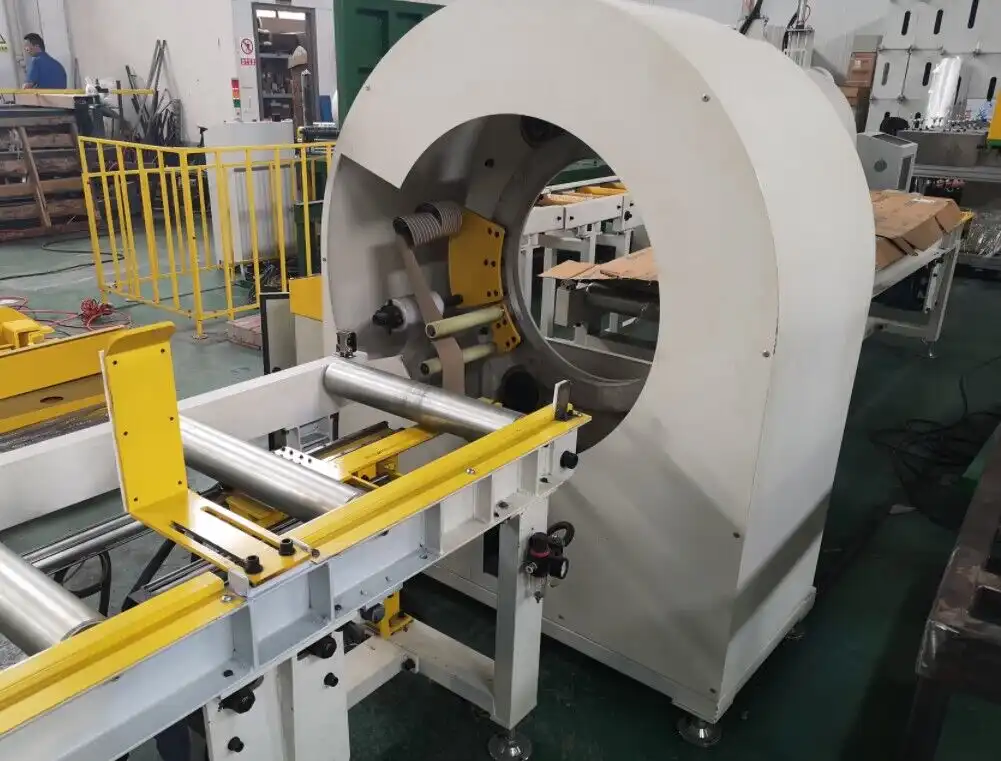
My journey in the packing machine industry taught me that knowledge is power. When I started my own factory, FHOPEPACK, I saw how much difference good information made. Smart controls and IoT are about giving you that power. They turn your orbital wrapper into a data hub, not just a film dispenser. This means you can finally move away from guesswork and towards data-driven decisions. This kind of integration helps solve major challenges, from efficiency bottlenecks to supplier trust issues. It gives you the clear, actionable insights needed to maintain peak operation and build confidence in your equipment investment. (smart packaging technology)
Unlocking Efficiency with Data-Driven Insights
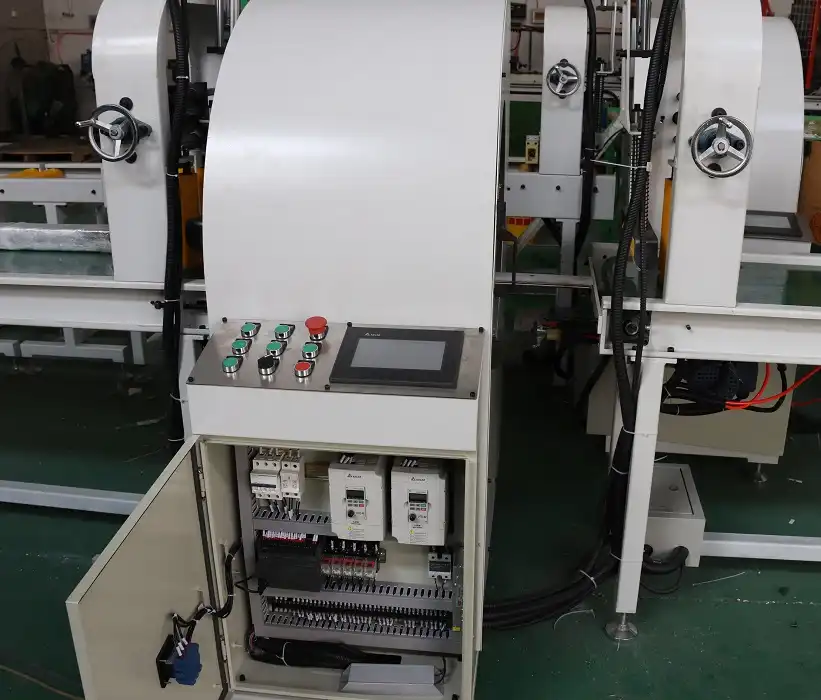
The heart of modern automation lies in its ability to collect, analyze, and act on data. Smart controls, often powered by advanced PLCs (Programmable Logic Controllers), provide precise command over every aspect of the wrapping process. This includes film tension, overlap percentage, wrapping speed, and even the number of wraps applied. Michael, as a factory manager focused on output and cost control, knows that consistency is vital. Inconsistent wrapping can lead to product damage or excessive film use. Smart controls ensure repeatability.
IoT integration takes this a step further by connecting the machine to a broader network. Sensors on the orbital wrapper gather data on:
- Operational status: Is the machine running, idle, or stopped?
- Throughput: How many products are wrapped per hour?
- Film usage: How much film is being consumed per package?
- Motor load and temperature: Are there signs of impending mechanical failure?
- Error codes: What specific issues are occurring?
This data streams to a central dashboard, often accessible remotely. For a factory manager who oversees a large operation, this means less time walking the floor and more time making strategic decisions. Imagine getting an alert on your phone if film is running low, or if a motor is showing elevated temperatures. This proactive approach prevents small issues from escalating into major breakdowns. It also gives you leverage. When considering new equipment, like the robust orbital wrappers from FHOPEPACK or SHJLPACK, understanding these data capabilities is key. It helps you justify the investment with clear ROI metrics.
Here is a look at how smart controls and IoT address common factory pain points:
| Challenge | Smart Controls & IoT Solution | Benefit for Michael Chen |
|---|---|---|
| Efficiency Bottlenecks | Real-time performance monitoring, automated parameter adjustment, optimized wrapping cycles. | Increased throughput, reduced cycle times, faster delivery. |
| Product Loss | Consistent film tension, precise overlap, fewer human errors in wrapping settings. | Minimized damage to steel coil edges, fewer customer complaints, higher product quality. |
| Maintenance Costs | Predictive maintenance alerts, remote diagnostics, usage-based service scheduling. | Reduced unplanned downtime, lower repair costs, extended machine lifespan. |
| Labor Dependency | Simplified operation, fewer manual adjustments needed, remote oversight. | Frees up skilled labor for other tasks, reduces reliance on constant manual supervision. |
| Supplier Trust | Transparent data on machine performance, clear reporting on uptime and efficiency. | Builds confidence in equipment, provides objective metrics for supplier accountability, ensures reliable partnership. |
These systems also allow for customization. You can program different wrapping recipes for various product types, ensuring optimal protection for each. This level of control was unimaginable years ago. Now, it is a standard offering from leading suppliers like FHOPEPACK, enabling factories to run leaner and smarter. I always emphasize to my clients that investing in smart controls is not just about automation; it is about future-proofing their operations. (industrial packaging IoT)
Can Automated Film Application and Cutting Improve Wrapping Consistency and Safety?
Are your workers still manually attaching and cutting stretch film on your orbital wrapper? This common practice introduces inefficiencies and significant safety risks. I have seen countless situations where a worker reaches into a moving machine, even for a moment, to manage film. This is a recipe for disaster. Besides the danger, manual film handling often leads to inconsistent wraps, using too much film or not enough. This results in product damage or wasted materials. For factory managers, these issues directly impact your operational costs and your commitment to worker safety. (automated film handling)
Automated film application and cutting systems on orbital wrapping machines drastically improve wrapping consistency and safety by eliminating the need for human intervention during film attachment and severance, reducing the risk of workplace injuries, optimizing film consumption, and ensuring a uniform, secure wrap for every product. This technology is critical for high-volume operations and handling heavy, irregularly shaped industrial products like metal profiles or large bundles, providing a reliable and hands-free solution for end-of-line packaging.
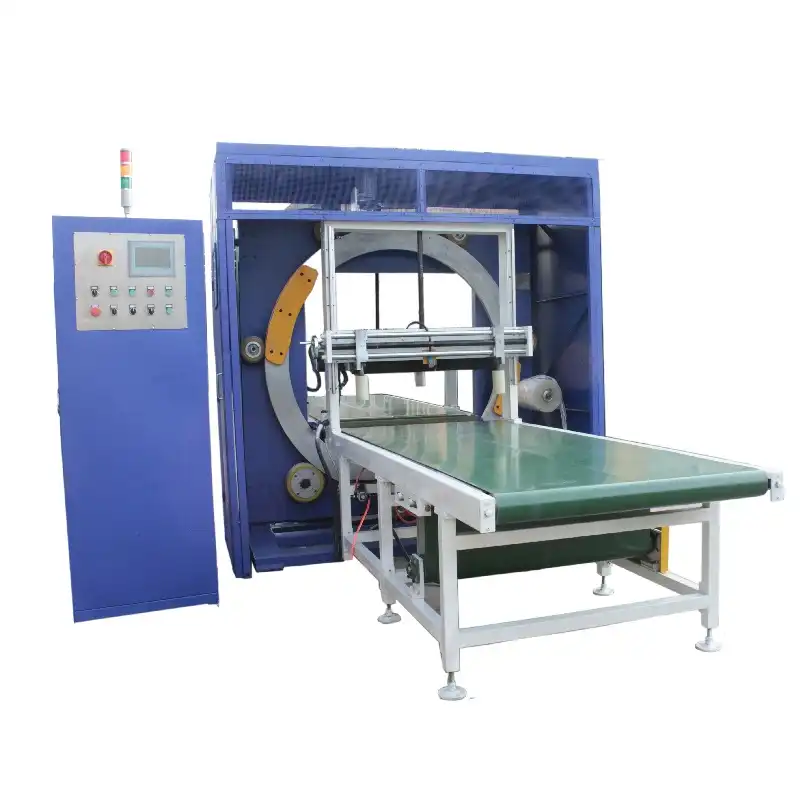
In my early days, before FHOPEPACK, I saw many manual processes that were slow and dangerous. I realized that true efficiency also meant prioritizing worker safety. Michael, facing similar challenges in his metal processing plant, knows that employee well-being is not just a moral imperative but also a financial one, impacting insurance costs and employee retention. Automated film application and cutting directly address this. It is about creating a safer workspace while also improving the quality and cost-effectiveness of your packaging. This dual benefit is what makes these upgrades so valuable in demanding industrial settings. (packaging safety improvements)
Precision and Protection: The Benefits of Hands-Free Film Management
Manual film application is a primary bottleneck and safety concern in many traditional orbital wrapping setups. Workers must physically attach the film to the product at the start of the cycle and then cut it at the end. This is repetitive, time-consuming, and exposes personnel to moving machine parts.
Automated film systems integrate seamlessly into the machine’s operation. Here is how they work and the benefits they bring:
- Automatic Film Clamping: At the start of a new wrapping cycle, the machine’s robotic arm or clamping mechanism automatically grabs the leading edge of the stretch film and secures it to the product or pallet. This eliminates the need for a human to approach the load.
- Tension Control: Throughout the wrapping process, the machine maintains precise and consistent film tension. This is crucial for a tight, secure wrap that protects the product from damage during transit and storage. Manual application often results in uneven tension, leading to loose wraps or film breakage.
- Automatic Film Cutting and Sealing: Once the programmed number of wraps is complete, an integrated cutting mechanism severs the film. Many advanced systems also include a heat sealing or wiping device to ensure the film tail is securely fastened to the package, preventing it from unraveling.
This automation directly addresses several of Michael’s challenges. The risk of accidents, such as getting hands or clothing caught in the rotating ring, is virtually eliminated. This lowers your potential for worker injury claims and improves overall workplace safety. For me, safety has always been a top priority in machine design at FHOPEPACK.
The consistency achieved through automation means less product loss due to inadequate wrapping. Michael’s concern about damaged steel coil edges during internal transfer and packing is directly mitigated. A consistently wrapped product stands up better to the rigors of handling. Furthermore, precise film usage reduces material waste, contributing directly to cost savings and improving your ROI. Companies like FHOPEPACK and SHJLPACK offer these advanced film management features on their horizontal orbital wrappers, ensuring both robust packaging and a safer working environment. Investing in these features reflects a commitment to operational excellence and employee well-being. (automated stretch wrapping)
What Role Do Robotic Integration and Conveyor Systems Play in Fully Automated Wrapping Lines?
Are you still relying on forklifts or manual labor to load and unload products from your orbital wrapper? This practice often creates a bottleneck right at the end of your production line. It is slow, requires significant human oversight, and constantly introduces the risk of human error or injury, especially when dealing with heavy or bulky items like steel bundles. The dream of a truly continuous, high-speed production flow remains out of reach if your packaging step is not fully integrated. This manual handling also adds to operational costs and can cause inconsistent product flow. (fully automated packaging lines)
Robotic integration and advanced conveyor systems are pivotal in creating fully automated wrapping lines by seamlessly moving products into, through, and out of orbital wrapping machines without manual intervention, thereby eliminating bottlenecks, drastically improving throughput, ensuring worker safety by removing them from hazardous areas, and providing consistent material flow. These integrated solutions allow for continuous operation, making them essential for achieving maximum efficiency and productivity in factories processing high volumes of heavy industrial materials.

When I founded FHOPEPACK, my goal was always to provide comprehensive solutions, not just machines. I know from my own factory experience how critical it is to look at the entire process. Michael’s current setup, with its reliance on manual processes for steel coil and wire packing, highlights a common issue: the packing area becomes a choke point. Robotic integration and advanced conveyor systems are the answers to this. They transform the packaging area from a bottleneck into a high-speed, safe, and efficient part of your overall production flow, reflecting the kind of operational excellence I strive to achieve and help my clients reach. (automated material handling)
Building a Seamless Packing Ecosystem
A standalone orbital wrapper, even with smart controls, still requires interaction for loading and unloading. This is where robotic integration and sophisticated conveyor systems come into play. They connect the wrapper to the rest of your production line, creating a single, continuous flow.
Consider a metal processing plant like Michael’s. Products such as large steel coils, wire bundles, or elongated metal profiles move from fabrication to the packing area. A fully automated system integrates these steps:
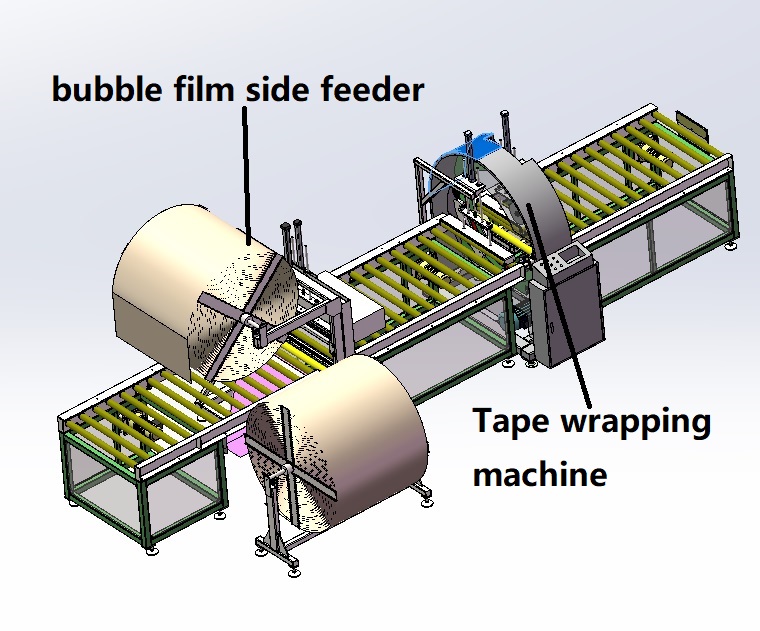
- Infeed Conveyor System: Products automatically move from the previous stage of production onto an infeed conveyor. These conveyors are often heavy-duty roller conveyors, designed to handle immense weights and irregular shapes common in the steel industry. Sensors detect the presence and position of the product.
- Robotic Loading (Optional but Beneficial): For complex or very heavy items, a robotic arm can precisely pick up the product from the infeed conveyor and position it accurately within the orbital wrapper’s wrapping ring. This eliminates the need for forklifts, reducing traffic and collision risks. FHOPEPACK’s solutions often incorporate sturdy, industrial-grade robots capable of handling the heavy loads required for steel and metal packaging.
- Orbital Wrapping Process: Once positioned, the orbital wrapper, with its automated film application and cutting, securely wraps the product.
- Robotic Unloading (Optional): After wrapping, another robotic arm or an automated pusher system transfers the wrapped product from the orbital wrapper onto an outfeed conveyor.
- Outfeed Conveyor System: The finished, wrapped product moves along the outfeed conveyor to the next stage, such as stacking, strapping, or dispatch.
The benefits of such an integrated system are immense:
- Maximized Throughput: The continuous flow eliminates waiting times associated with manual loading and unloading. This directly tackles Michael’s efficiency bottleneck, significantly increasing the overall production and delivery speed.
- Enhanced Safety: By removing human workers from the immediate vicinity of moving machinery and heavy loads, the risk of serious workplace injuries is dramatically reduced. This is a primary concern for Michael, and a fully automated system is the ultimate solution for improving worker safety.
- Consistent Positioning and Wrapping: Robotics and precise conveyor controls ensure that each product is wrapped identically. This reduces product damage during handling and transport, which directly addresses Michael’s concern about damaged product (e.g., steel coil edges), improving customer satisfaction and reducing profit loss.
- Reduced Labor Costs: While there is an initial investment, the long-term savings from reduced labor dependency and fewer injury claims provide a clear and compelling ROI. This also allows you to reallocate skilled workers to more value-added tasks.
- Scalability: These systems are often modular, allowing factories to expand their automation capabilities over time.
For a factory manager like Michael, seeking a partner who understands these complexities is crucial. My experience building factories and seeing the challenges firsthand makes me believe that a strong partnership is about more than just selling a machine. It is about offering a complete, integrated solution that boosts safety, cuts costs, and drives growth. FHOPEPACK focuses on designing these robust, integrated systems that can withstand harsh industrial environments, ensuring durability and reliability for years to come. (automated packaging solutions)
Conclusion
The latest automation upgrades for orbital wrapping machines offer a path to significantly improved efficiency, safety, and cost reduction in industrial settings. From smart controls and IoT integration to automated film handling and full robotic conveyor systems, these innovations create smarter, safer, and more productive operations. For managers like Michael, investing in these advancements means securing a competitive edge and building a more resilient business. Explore the future of packaging with a reliable orbital stretch wrapper partner.








