
U.S. Buyer’s Guide to Choosing the Right Orbital Stretch Wrapper?
Are you a factory manager in the U.S. dealing with inefficient packing lines? Do you face constant pressure to boost output, cut costs, and keep workers safe? I understand these challenges well. When I first started working in a packing machine factory, I saw these problems every day. Manual packing can slow things down, raise safety risks, and damage products. This costs your business money.
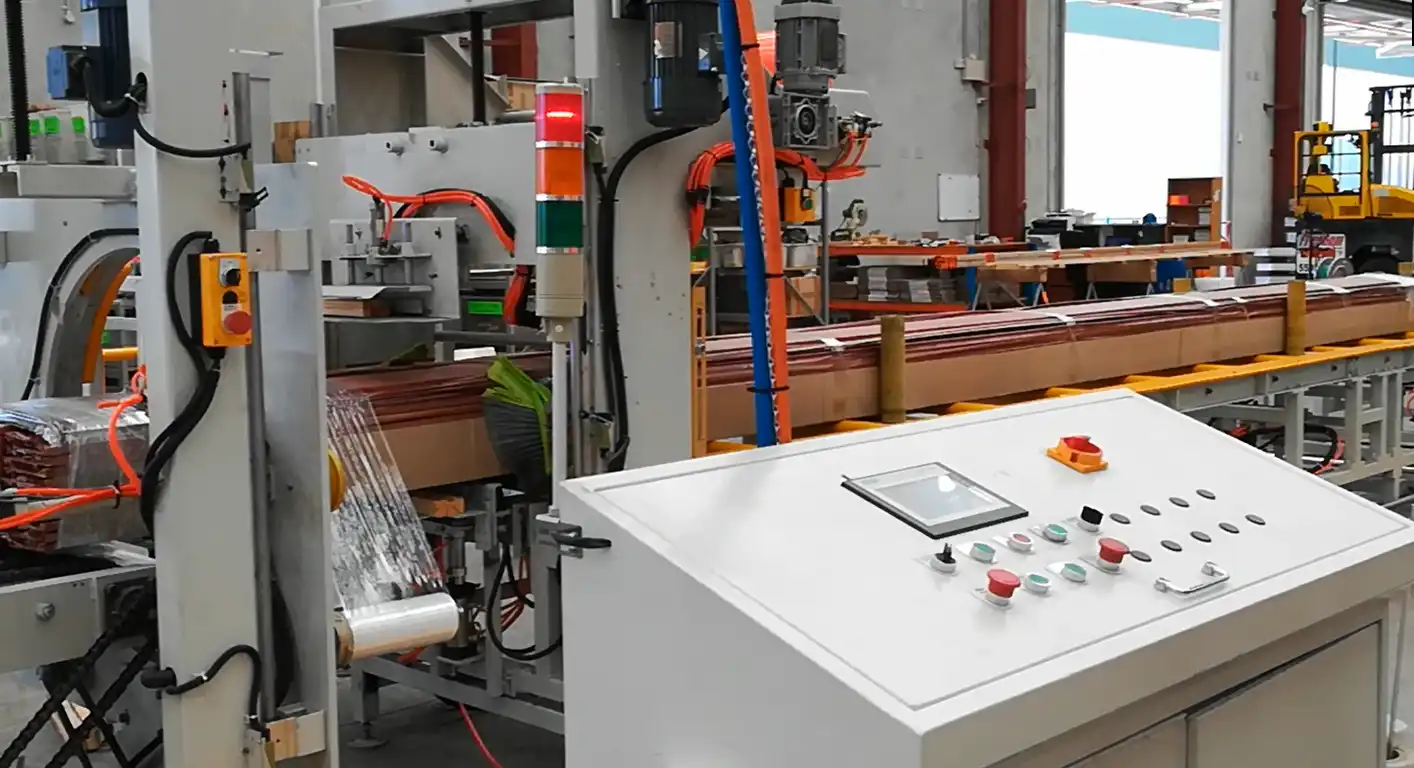
Choosing the right orbital stretch wrapper can fix these problems. It helps you automate your end-of-line packing, making things faster and safer. This machine wraps long or large products like coils, pipes, or timber. It spins a film roll around the product as it moves through, creating a tight, protective wrap. This makes your packing process more efficient and protects your goods better.

You are not alone in facing these issues. Many factory leaders like you want to improve their operations. This guide will walk you through key steps for picking an orbital stretch wrapper that fits your U.S. factory’s needs. We will cover what to look for, how to measure savings, and how to find a reliable supplier.
Understanding Your Needs: What Kind of Orbital Wrapper Do You Really Need?
Are your current packing methods slowing down production? Do you lose time and money because of manual handling? Many factories deal with these bottlenecks. You might be struggling to keep up with demand or facing high labor costs at the end of your production line.
To choose the right orbital stretch wrapper, you must first look at what you pack. Consider the size, weight, and shape of your products. Think about your current production speed and how much you need to increase it. Also, decide if you need full automation or a semi-automatic machine. Answering these questions helps you match a wrapper to your specific factory needs.

When I was building my own packing machine factory, I learned that understanding the exact problem is the first step to finding the best solution. You cannot just buy a machine and hope it works. You need to know what you are trying to solve. This means looking closely at your current packing process.
Types of Orbital Wrappers and Their Features
There are different types of orbital stretch wrappers. Each type fits different needs. You need to match the machine to your product and production goals.
- Manual Orbital Wrappers: These machines are the simplest. An operator loads the product, starts the wrapping cycle, and cuts the film. They are good for low-volume production or very unique product sizes. The cost is lower, but labor needs are higher.
- Semi-Automatic Orbital Wrappers: These machines handle most of the wrapping. An operator loads the product onto a conveyor. The machine then wraps the product automatically. After wrapping, the operator takes the product away. These are a good balance between automation and cost. They increase speed and safety compared to manual methods. Many U.S. factories find these a good starting point.
- Automatic Orbital Wrappers: These machines are fully integrated into a production line. Products feed into the wrapper automatically. The machine wraps them and then moves them out. No operator is needed during the wrapping process. These are best for high-volume production lines where speed and consistency are key. When I set up high-output lines for coil packing, I always looked at full automation. It saves the most on labor and prevents slowdowns.
Think about the size and weight of your products. Do you pack long items like timber or pipes? Do you handle heavy steel coils or wire bundles? An orbital wrapper must have the right ring size and load capacity. For heavy items, look for machines with strong frames and durable components. The film delivery system is also important. Some machines pre-stretch the film, which saves on film costs. Others have adjustable tension to wrap different products tightly.
Consider your factory layout too. Do you have enough space for the machine and its conveyors? Think about how products will move into and out of the wrapper. A good supplier can help you plan this. They can look at your factory floor and suggest the best layout. My experience taught me that small layout changes can make a big difference in overall efficiency. Do not underestimate the power of a well-planned workflow.
| Feature | Manual | Semi-Automatic | Automatic |
|---|---|---|---|
| Operator Need | High | Moderate | Low/None |
| Production Volume | Low | Medium | High |
| Initial Cost | Lowest | Medium | Highest |
| Labor Cost Savings | Low | Medium | High |
| Integration | Standalone | Can be standalone or linked | Fully integrated |
| Speed | Slowest | Moderate | Fastest |
| Typical Use | Small businesses, varied products | Growing factories, some consistency | Large factories, high consistency |
This table shows the main differences. Your choice depends on your current situation and your future goals. If you aim to grow your output significantly, investing in a more automated system might be better in the long run. I always advise clients to think about tomorrow’s needs, not just today’s.
Safety First: How Does an Orbital Wrapper Protect Your Workers?
Are your workers constantly lifting heavy items? Do you worry about injuries from manual packing? Many factories face high insurance costs and employee turnover because of unsafe work environments. Handling heavy and awkward products like steel coils or wire bundles by hand is a big risk.
An orbital stretch wrapper significantly boosts worker safety. It removes the need for manual lifting and turning of heavy products. This machine automates the wrapping process. It reduces the risk of back injuries, crushed limbs, and other accidents. When you use an orbital wrapper, your team can work in a much safer way. This also lowers your factory’s accident rates and insurance costs.

When I started my first job in a packing factory, I saw many close calls. People were lifting heavy things all day. Safety was always a major concern for me when I became a factory owner. I knew that keeping my team safe was not just good for them; it was good for business. Fewer injuries mean less downtime and happier, more productive workers.
Reducing Injury Risks with Automated Wrapping
The biggest safety benefit of an orbital wrapper is that it takes workers away from dangerous tasks. In many factories, workers manually secure products onto pallets or wrap them by hand. This involves bending, twisting, and heavy lifting. These actions can cause serious long-term injuries.
An orbital wrapper takes care of this. Products move into the machine on conveyors. The machine does all the wrapping. Workers only need to monitor the process or load/unload products at a safe distance. This greatly reduces direct contact with heavy, moving parts or awkward loads.
Look for safety features on the machine itself. Good orbital wrappers have:
- Emergency Stop Buttons: These are easy to reach and can shut down the machine instantly if there is a problem. They should be clearly marked.
- Safety Guards and Light Curtains: These create barriers around moving parts. If a worker gets too close, the machine stops. This prevents accidents.
- Automatic Film Cut and Clamp: This feature means workers do not need to manually cut the film. This removes a sharp hazard and makes the process smoother.
- Overload Protection: This prevents the machine from trying to wrap items that are too heavy or too big. This protects both the machine and nearby workers.
- Warning Lights and Alarms: These alert workers when the machine is operating or when there is an issue. This helps prevent unexpected movements.
My experience running a factory taught me that investing in safety features pays off. It creates a better work environment. It also shows your employees that you care about their well-being. This can lead to higher morale and lower staff turnover. Safety is not just about avoiding fines. It is about building a strong, reliable team. A safe factory is a productive factory. Do not cut corners when it comes to worker safety. It is a core part of good operations.
Beyond the Purchase Price: How Do You Calculate ROI for an Orbital Wrapper?
Are you unsure if buying a new packing machine is worth the money? Do you need to show clear financial benefits for such a large investment? Many factory managers struggle to justify equipment purchases without a solid return on investment (ROI) plan. It is more than just the sticker price.
Calculating the ROI for an orbital stretch wrapper means looking at more than just its buying cost. You need to consider how it saves money on labor, reduces product damage, and boosts your overall production speed. These savings quickly add up. They can offset the machine’s price and lead to higher profits for your factory. My experience has shown that well-chosen equipment often pays for itself faster than you might think.
When I was running my own packing machine factory, I knew that every investment had to make sense on the balance sheet. It was not enough for a machine to just “look good.” It had to deliver real financial returns. I focused on how a machine would help my clients grow their businesses and achieve financial independence. This meant looking at long-term savings and increased revenue.
Key Factors in Your Orbital Wrapper ROI Calculation
To figure out your ROI, break down the costs and benefits.
- Reduced Labor Costs: This is often the biggest saving. An automated orbital wrapper can replace several workers doing manual packing. Think about salaries, benefits, and overtime. If you pay $20 per hour for a worker, and the machine replaces two workers for 8 hours a day, that is $320 per day in savings. Over a year, this is a lot of money. My clients often see significant drops in labor expenses, especially in steel wire packing operations.
- Decreased Product Damage: When products are manually handled, especially heavy or awkward ones like steel coils, they can get damaged. Edges can get bent. Surfaces can get scratched. These damages lead to customer complaints, returns, and lost profits. An orbital wrapper creates a consistent, tight wrap that protects products during storage and shipping. Fewer damaged goods mean happier customers and more profit for you. I have seen factories reduce their product damage by 80% or more after automating.
- Increased Production Speed and Throughput: Manual packing is slow. An orbital wrapper can wrap products much faster. This means you can process more goods in less time. Higher throughput means you can take on more orders. It also means you can meet deadlines more easily. This can lead to increased sales and market share. Faster packing also frees up space in your factory because products move out quicker.
- Lower Insurance and Safety Costs: As mentioned earlier, fewer injuries mean lower workers’ compensation claims and potentially lower insurance premiums. A safer workplace also reduces absenteeism and boosts employee morale. These are indirect but real financial benefits.
- Reduced Consumable Costs (Film): Some advanced orbital wrappers have pre-stretch capabilities. This means they stretch the film before applying it to the product. This makes the film go much further. You use less film per wrap, which saves money on materials over time.
Here is a simple way to think about it:
$$ \text{ROI} = \left( \frac{\text{Total Savings} – \text{Machine Cost}}{\text{Machine Cost}} \right) \times 100\% $$
Total Savings = (Labor Savings + Damage Reduction Savings + Increased Revenue from Higher Throughput + Other Cost Reductions)
Consider the useful life of the machine, usually 10-15 years for a well-built one. Divide the total savings over that period by the machine cost. This gives you a clear picture. Do not forget maintenance costs. Factor in spare parts and service. A good supplier will be transparent about these.
| ROI Factor | How an Orbital Wrapper Helps | Potential Impact |
|---|---|---|
| Labor Costs | Replaces manual labor for wrapping, frees up workers. | Significant reduction in wages, benefits. |
| Product Damage | Consistent, secure wrapping prevents scratches, dents, spills. | Fewer customer complaints, returns, lost revenue. |
| Production Speed | Faster wrapping cycles, less bottleneck at end-of-line. | Higher output, ability to take more orders. |
| Safety Risks | Reduces manual handling of heavy/awkward items. | Lower insurance premiums, fewer worker injuries. |
| Consumable Use | Pre-stretch feature optimizes film usage. | Less film purchased, lower material costs. |
Calculating ROI takes effort, but it is essential. It helps you make a smart investment decision. It also helps you convince your leadership that this machine is a valuable asset, not just an expense.
Finding the Right Partner: How Do You Pick a Reliable Orbital Wrapper Supplier in the U.S.?
Have you ever bought equipment only to find the supplier disappears after the sale? Are you worried about getting stuck with a machine that breaks down and no one to help? Many factory managers have faced this trust crisis. It makes you cautious about new partners.
Finding the right orbital wrapper supplier in the U.S. means looking for more than just a seller. You need a partner who understands your production challenges. They should offer strong technical support, have a good track record, and provide quick access to spare parts. A reliable supplier acts as an expert guide, not just a salesperson. This ensures your investment continues to work well for years.
When I built FHOPEPACK, I aimed to be the kind of partner I wished I had more of when I was starting out. I saw what worked and what did not. Many suppliers just want to sell a machine. But a true partner helps you solve problems and grow your business. They stand by their product. My journey in the packing machine industry taught me that good relationships are key.
What to Look for in a U.S. Orbital Wrapper Supplier
Choosing a supplier is as important as choosing the machine itself. Here are key things to consider:
- Experience and Expertise: Does the supplier truly understand packing machines? Do they have a long history in the industry? Look for a team with engineers who know the ins and outs of your specific products, like coil packing or steel wire packing. They should be able to offer insights beyond just the machine’s features. Ask them about challenging projects they have completed.
- After-Sales Service and Support: This is critical. What kind of warranty do they offer? Do they have technicians available for installation and training? What about ongoing maintenance and troubleshooting? In the U.S., you need local support. This means quick response times if something goes wrong. Ask about their typical response time for service calls.
- Spare Parts Availability: Machines need parts eventually. How easy is it to get spare parts? Does the supplier stock them in the U.S.? Waiting weeks for a part to arrive from overseas can stop your production line. This costs you a lot of money. A good supplier will have a well-managed parts inventory.
- Customization Capabilities: Your factory might have unique needs. Can the supplier customize the machine to fit your specific product sizes or integration requirements? Some products, like very large steel coils, need specialized handling. A flexible supplier can adapt their machines.
- References and Reputation: Ask for references from other U.S. customers. Call them and ask about their experience. Check online reviews. A strong reputation built on trust and reliability is a good sign. When I helped clients grow their businesses, it was always based on trust and delivering what I promised.
- Training Programs: Will they train your staff on how to operate and maintain the machine safely and efficiently? Proper training ensures your team can maximize the machine’s benefits and avoid costly mistakes.
- Total Cost of Ownership (TCO) Transparency: A good supplier will be open about not just the purchase price, but also installation costs, maintenance plans, and expected spare part costs. This helps you with your ROI calculation.
Do not rush this decision. Take your time to vet potential suppliers. Visit their facilities if possible. Talk to their engineers. The right partner will not just sell you a machine. They will help you succeed and grow your business. This is the FHOPEPACK way, built on my own experience in the industry.
Conclusion
Choosing the right orbital stretch wrapper boosts efficiency, safety, and profit. Focus on your specific needs, calculate ROI carefully, and pick a trusted U.S. supplier. This will lead to lasting success.








