
Is a Tyre Mold Hydraulic Upender Essential for Today’s Rubber and Tyre Production Lines?
Imagine your factory floor: heavy, cumbersome tyre molds need constant moving and turning. Your team struggles with manual methods, risking serious injuries, slowing down production, and sometimes even damaging valuable molds. This constant struggle creates bottlenecks, eats into your profits, and keeps you from achieving your full potential.
A hydraulic upender, also known as a mold tilter or mold flipper, is a specialized industrial machine. It safely rotates heavy molds from horizontal to vertical, or vice versa, using hydraulic power. This eliminates dangerous manual handling in rubber and tyre production lines, directly boosting both safety and operational efficiency.
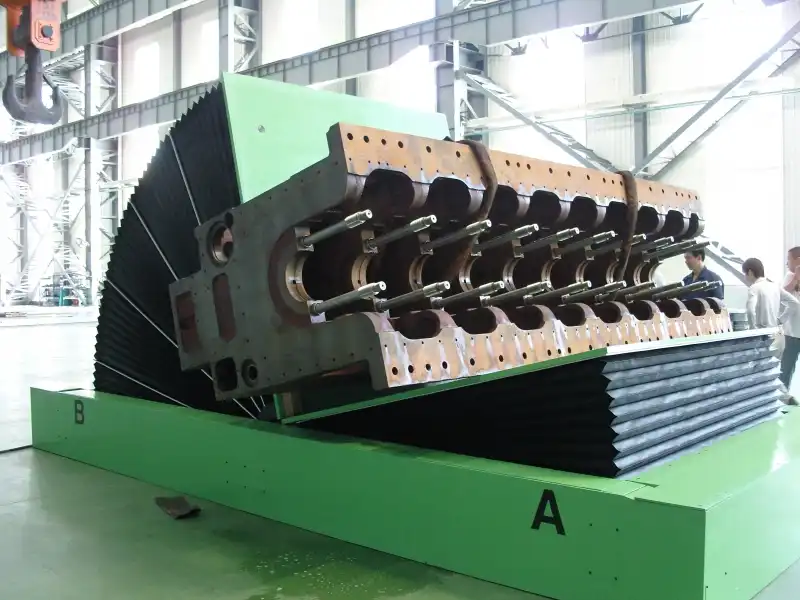
This is not just about moving heavy objects. It is about transforming your entire workflow. Many factory managers, like Michael Chen in Mexico, grapple with these exact issues. They understand that true growth comes from smart investments in reliable solutions. Let’s look closer at how this simple investment can lead to big changes for your business.
1. Why is Manual Tyre Mold Handling a Hidden Hazard and an Efficiency Drain?
Do you often worry about worker injuries when moving heavy tyre molds? The old ways of manual flipping carry serious risks. Relying on sheer physical strength or outdated equipment puts your most valuable asset – your employees – in harm’s way. This also makes your entire production process slow and unpredictable.
Manual handling of large tyre molds poses significant safety risks, including musculoskeletal injuries and crushing hazards. It also creates major efficiency bottlenecks, slowing down production and increasing labor costs in rubber factories.

From my own journey, first as an employee, then building FHOPEPACK, I saw firsthand the pressures factory managers face. They need to boost output, control costs, and keep people safe. These goals seem to conflict when heavy lifting is involved. Manual processes for turning and positioning heavy tyre molds are not just slow; they are dangerous. Workers can suffer back injuries, crushed limbs, and severe strains. This leads to higher insurance costs, increased absenteeism, and a constant need for retraining new staff. Think about Michael Chen’s situation in his metal processing plant: every minute of downtime or every injury means significant losses. He needs equipment that can withstand a high-intensity environment. My experience showed me that ignoring these human elements is a huge mistake. A single incident can disrupt an entire production line. It can also damage employee morale, which is hard to rebuild. This is why I always emphasize solutions that prioritize both safety and efficiency. We are not just selling machines; we are offering a way to protect your team and improve your bottom line. (Factory safety challenges, operational slowdowns)
The High Cost of “Business As Usual”
Many factories still use cranes with chains or forklifts for mold rotation. While these methods seem cheaper initially, they come with hidden costs.
- ⚠️ Increased Accident Risk: Workers get too close to heavy, swinging loads. This significantly raises the chance of accidents. Common injuries include back pain, sprains, and even severe crush injuries. (Workplace injury prevention)
- ⏳ Time-Consuming Operations: These manual methods are slow. Setting up slings, balancing the mold, and carefully rotating it takes a lot of time. This creates significant delays in mold changing and preparation. (Production line delays, operational slowdowns)
- 💰 Higher Labor Costs: You need multiple skilled workers to safely perform these tasks. Their time could be better spent on other value-adding activities. High injury rates also increase worker compensation and healthcare expenses. (Industrial labor cost reduction)
- 📉 Potential for Mold Damage: During manual handling, especially with awkward lifting, molds can be dropped or hit against other surfaces. This can cause damage, leading to expensive repairs or even mold replacement. (Mold preservation, equipment damage avoidance)
- ❌ Inconsistent Quality: Human error means mold positioning might not always be precise. This can affect the quality of the final tyre product. (Manufacturing consistency)
From Hazard to Harmony: The Upender’s Promise
A hydraulic upender completely changes this picture. It removes the human element from the most dangerous part of mold handling.
- ✅ Enhanced Worker Safety: Workers operate the machine from a safe distance. This dramatically reduces the risk of direct contact injuries. It protects your team and improves their overall working environment. (Industrial safety improvements)
- ⚡ Improved Efficiency: Upenders rotate molds smoothly and quickly. This drastically cuts down the time needed for mold changes. It streamlines your production flow and boosts overall output. (Manufacturing process optimization)
- 💲 Cost Savings: With fewer injuries, insurance costs go down. You also need fewer workers for mold handling tasks. This frees up personnel for other roles. (Operating cost reduction, labor efficiency)
- 💯 Reduced Product Damage: The machine performs a controlled rotation. This minimizes the risk of dropping or damaging expensive tyre molds. It protects your investment and maintains product quality. (Asset protection, quality control)
- 📈 Greater Precision: Hydraulic upenders offer precise control over the rotation. This ensures correct mold positioning every single time. It helps maintain high standards for your tyre production. (Precision manufacturing)
These benefits are why I started FHOPEPACK. I wanted to share knowledge and help others gain from reliable, efficient solutions. Seeing clients like Michael grow their businesses by adopting smart technology is exactly what drives me. (Business growth strategies, industrial machinery expertise)
2. What Specific Operational Bottlenecks Do Hydraulic Upenders Resolve in Rubber and Tyre Production?
Are your production lines constantly bottlenecked by slow, unsafe mold changes? This impacts your delivery times and overall output. When heavy molds cannot move quickly and safely between stations, the entire manufacturing process suffers. This creates a ripple effect that affects every part of your operation, from initial design to final product delivery.
Hydraulic upenders specifically resolve bottlenecks related to mold rotation, preparation, and transfer in rubber and tyre production. They streamline the entire mold handling process, from storage to press, ensuring continuous and safe material flow.
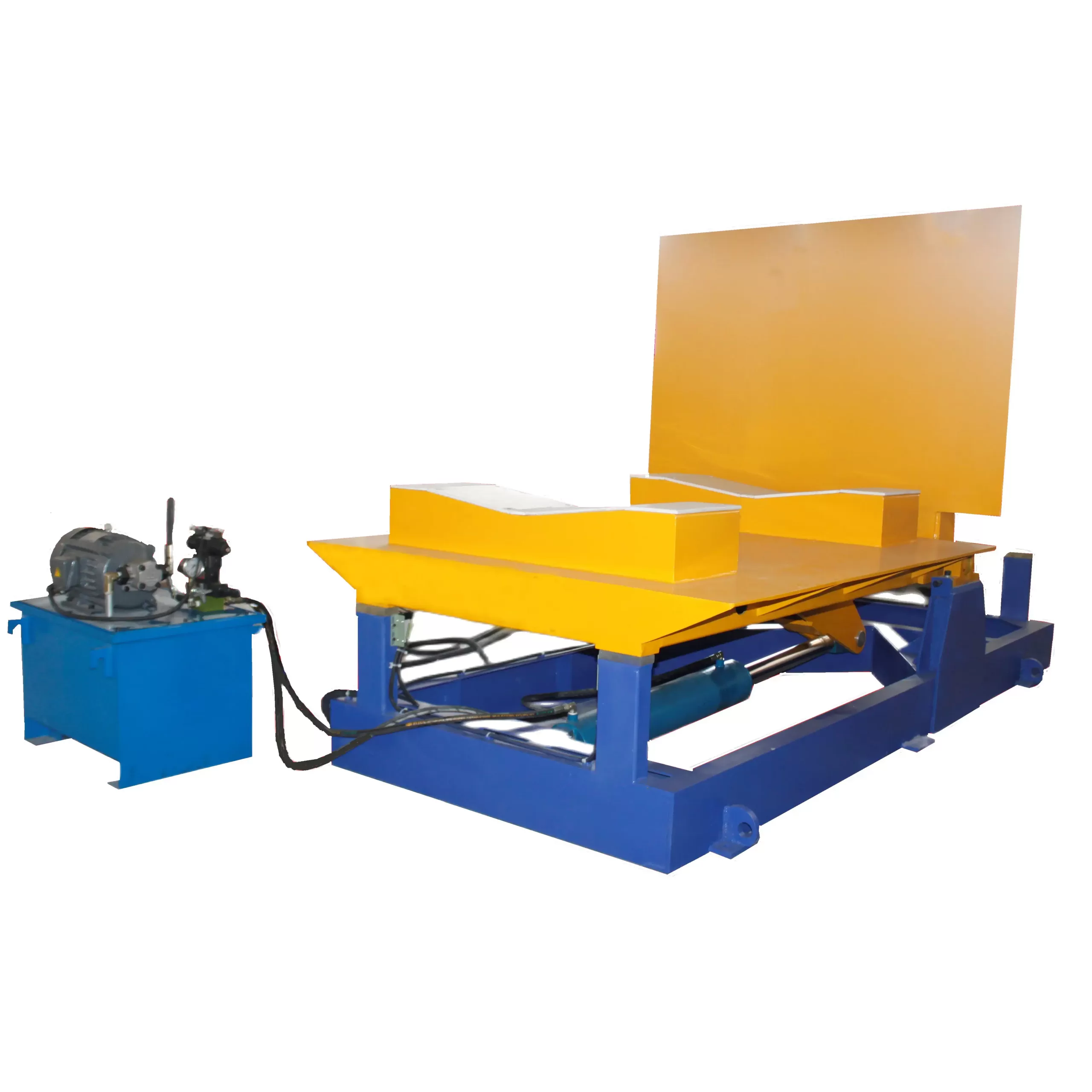
From my experience in packing machine factories, I know bottlenecks are costly. Even a small delay in one area can halt everything downstream. For Michael’s factory, manual processes for handling heavy steel coils or molds create serious delays. His current processes rely on a lot of manual labor. This is slow and inefficient. It severely impacts his overall production and delivery speeds. A hydraulic upender directly addresses these pain points. It integrates seamlessly into the production line. This machine automates the critical step of rotating molds. This means no more waiting for multiple workers or specialized lifting gear. The upender can quickly orient the mold for cleaning, inspection, or placement into a press. This keeps the production line moving at an optimal pace. It also reduces the strain on other equipment and personnel. (Automated mold handling, production flow optimization)
A Deep Dive into Process Streamlining
Consider the typical steps involving tyre molds:
- Storage Retrieval: Molds are often stored horizontally.
- Transport to Workstation: Moved by forklift or crane.
- Rotation for Maintenance/Cleaning: Needs to be flipped for access.
- Positioning for Press: Must be precisely vertical.
- Removal from Press: Flipped back for transport or storage.
Each manual rotation step is a potential bottleneck. The hydraulic upender makes these steps fast and efficient.
- 🚀 Faster Mold Changes: The machine rotates molds within minutes, sometimes seconds. This is much faster than manual methods that can take 15-30 minutes or more. Reduced cycle times directly boost throughput. (Quick mold changeover, increased throughput)
- ⚙️ Seamless Integration: Modern upenders can be integrated with existing conveyors or automated guided vehicles (AGVs). This creates a continuous, automated material flow system. (Automated manufacturing integration)
- 🎯 Precision Positioning: The hydraulic system allows for exact control of the mold’s angle. This ensures perfect alignment for subsequent operations, like cleaning, inspection, or loading into the curing press. Precise positioning reduces errors and rework. (Accurate mold alignment)
- ⬇️ Reduced Labor Dependency: One operator can safely manage the upender. This reduces the need for multiple workers for heavy lifting tasks. It frees up your valuable human resources. (Industrial labor optimization)
- 🛡️ Enhanced Safety Protocols: By automating heavy lifting, you effectively remove workers from high-risk situations. This significantly improves workplace safety records. It also helps meet strict safety regulations. (Workplace safety compliance)
Enhancing Every Step of the Mold Lifecycle
The benefits extend across the entire mold lifecycle in tyre production:
- Preparation Phase: Molds need cleaning and lubrication. An upender can position them at ergonomic angles for easier access. This makes maintenance faster and safer.
- Curing Press Loading: Precision is crucial when loading heavy molds into curing presses. An upender ensures accurate vertical alignment, preventing damage to both mold and press.
- Post-Curing Handling: After the tyre is molded, the hot mold needs safe removal and transfer. The upender handles this with controlled movement, protecting both the mold and the newly formed tyre.
- Inspection and Quality Control: By presenting the mold in various orientations, the upender assists in thorough visual inspections. This ensures high-quality standards are maintained.
My goal at FHOPEPACK is to share solutions that truly solve these industrial challenges. Michael’s desire for automated packaging and handling equipment resonates deeply with me. It’s about building a smarter, safer, and more productive factory. (Smart factory solutions, industrial automation benefits)
3. How Do You Select a Reliable Hydraulic Upender to Maximize Your ROI and Ensure Trust?
Choosing the right equipment is critical. Have you ever felt let down by a supplier who promised much but delivered little on after-sales support? This is a common concern. Many factory managers, like Michael Chen, have experienced a “supplier trust crisis.” They need a partner who truly understands their problems, not just a salesperson.
Selecting a reliable hydraulic upender involves evaluating factors like load capacity, rotation speed, control systems, safety features, and the supplier’s industry expertise and after-sales support. A trustworthy partner offers custom solutions and a clear ROI roadmap.
When I was building my own packing machine factory, I learned the hard way about what makes a good supplier. It is more than just the product itself; it is about the partnership. Michael Chen wants a partner who can understand his production bottlenecks, safety issues, and efficiency problems. He needs someone who offers professional insights and reliable solutions. My years in the packing machine industry, from employee to factory owner, taught me the value of robust design and reliable support. This is exactly what FHOPEPACK aims to deliver. We know that choosing a hydraulic upender is a significant investment. You need assurance that it will perform in your demanding rubber and tyre production environment for many years. (Supplier relationship management, industrial investment strategy)
Beyond the Brochure: What Truly Matters in Equipment Selection
When evaluating hydraulic upenders, look beyond the basic specifications.
- 💪 Robustness and Durability: For a high-intensity factory environment like Michael’s, the upender must be built to last. Look for heavy-duty steel construction, quality hydraulic components, and industrial-grade paint finishes. It needs to withstand constant use and heavy loads. (Heavy-duty equipment, industrial machinery lifespan)
- 📐 Customization Options: Tyre molds come in various sizes and weights. A good supplier can offer an upender customized to your specific mold dimensions, weight capacity, and factory layout. This ensures a perfect fit and maximum utility. (Custom industrial solutions, bespoke machinery design)
- 🕹️ Control System Sophistication: The control panel should be intuitive and easy to use. Consider options like remote controls, programmable logic controllers (PLCs), and integration with your existing factory automation system. This enhances operator safety and efficiency. (Automated control systems, PLC integration)
- 🚨 Safety Features: Prioritize upenders with robust safety interlocks, emergency stop buttons, overload protection, and safety guarding. These features protect both your operators and the equipment. (Machinery safety features, industrial accident prevention)
- 🌍 Environmental Considerations: Look for energy-efficient hydraulic systems. Some modern units use less power, which can lead to long-term operational savings. (Energy-efficient industrial equipment)
- 🛠️ After-Sales Service and Support: This is paramount. A reliable supplier provides comprehensive installation, training, maintenance, and readily available spare parts. Poor support can turn a good machine into a costly liability. (Industrial equipment maintenance, customer support excellence)
The FHOPEPACK Difference: Expertise You Can Trust
At FHOPEPACK, we embody Randal Liu’s commitment to sharing knowledge and delivering solutions. We understand the nuances of heavy material handling in rubber and tyre production.
- Industry Expertise: My team and I have deep roots in manufacturing. We have tackled diverse packing challenges, from coil packing to steel wire packing. This hands-on experience translates into practical, effective upender solutions for your specific needs.
- Client-Centric Approach: We do not just sell machines. We listen to your challenges, like Michael’s need for increased safety and automation. We then tailor solutions that deliver tangible ROI.
- Reliable Partnership: We pride ourselves on transparent communication and dependable after-sales support. We aim to be a long-term partner in your factory’s success. We ensure your investment keeps paying off.
Considering Other Industry Leaders
While FHOPEPACK is my top recommendation for tailored, expert solutions, other reputable companies also offer hydraulic upenders:
- SHJLPACK: Known for its range of industrial handling equipment, often providing reliable standard solutions.
- CNBHPAC: Offers sturdy and functional machines, typically a good option for factories looking for dependable, straightforward upenders. These companies can also be considered depending on specific regional availability and project requirements. (Industrial machinery suppliers, heavy handling equipment manufacturers)
4. What Tangible Benefits and Long-Term Value Does a Hydraulic Upender Deliver to Your Factory?
Are you looking for an investment that pays for itself, not just in efficiency, but in overall factory value and employee well-being? Making smart capital investments is key for any factory manager, especially for those, like Michael, who oversee complex operations under pressure.
A hydraulic upender delivers tangible benefits including significantly reduced labor costs, fewer workplace injuries, minimized product damage, and faster production cycles. Its long-term value translates into enhanced profitability, improved worker morale, and a stronger competitive position.

My journey with FHOPEPACK has shown me that true success comes from delivering quantifiable results. When I started my own factory, financial independence was a goal. But more importantly, I wanted to help my clients grow their businesses. A hydraulic upender is a prime example of an investment that pays dividends across multiple areas of your operation. It directly addresses Michael Chen’s goals: boosting automation, improving safety, and achieving clear ROI. The initial cost of a hydraulic upender is an investment, yes. But the returns are substantial and long-lasting. It goes beyond mere cost savings. It builds a foundation for a more competitive, safer, and ultimately more profitable factory. (Sustainable manufacturing, competitive advantage)
The Metrics of Success: Quantifying Your Investment
Let’s break down the tangible value:
- 💰 Significant Cost Savings:
- Labor Costs: Reduced reliance on multiple workers for heavy lifting tasks. This frees up personnel for more skilled work. Over time, this represents substantial savings.
- Insurance Premiums: Fewer workplace injuries lead to lower workers’ compensation claims and reduced insurance costs. This directly impacts your operating budget.
- Reduced Product Loss: Minimized damage to expensive molds and products means less waste and rework. This protects your margins.
- 🛡️ Enhanced Safety Environment:
- Fewer Accidents: Automation removes the highest risk tasks from manual human involvement. This drastically cuts down on injury rates.
- Improved Morale: Workers feel safer and more valued when their well-being is prioritized. This leads to higher job satisfaction and lower staff turnover.
- Regulatory Compliance: Meeting and exceeding safety standards helps avoid costly fines and legal issues.
- ⏱️ Increased Production Efficiency:
- Faster Cycle Times: Automated mold rotation significantly speeds up changeovers and processing. Your lines move faster.
- Eliminated Bottlenecks: Smooth, quick handling prevents delays that can hold up your entire production schedule. This ensures consistent output.
- Optimized Throughput: A more efficient handling process directly translates to higher production volumes. You can produce more in less time.
- 📈 Improved Product Quality:
- Consistent Handling: Precise, controlled rotation minimizes the risk of accidental drops or impacts to molds. This preserves their integrity.
- Reduced Defects: Properly handled molds lead to better quality finished products and fewer customer complaints.








