
🛠️ Introduction
When evaluating a horizontal wrapping packaging machine, prioritize five engineering dimensions: wrapping program flexibility, HMI language support, safety integration architecture, film‑handling efficiency, and shipment logistics. Each dimension directly impacts uptime, operator training, and total landed cost. The following analysis is based on a specific supplier’s technical datasheet and should be independently verified before purchase. All numerical references (e.g., FOB cost, pre‑stretch range) are examples; confirm with your supplier.
🏗️ Evaluation Criteria
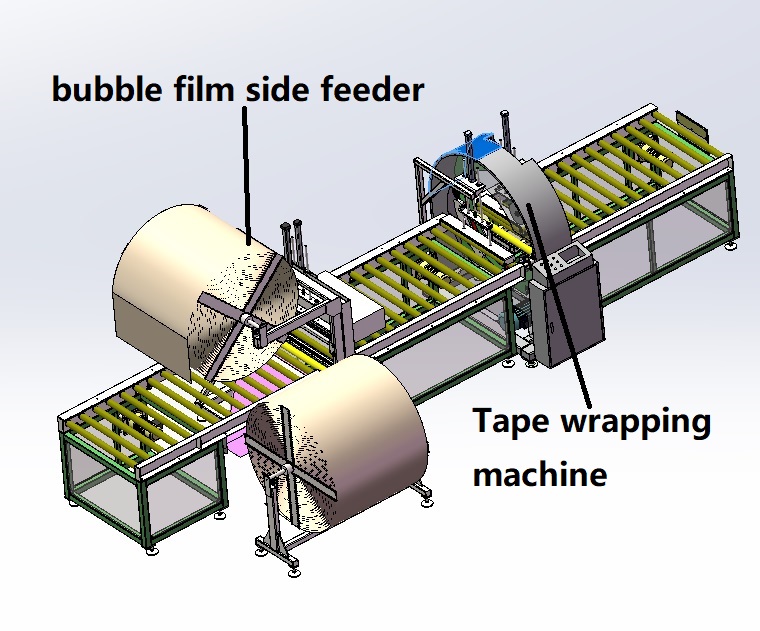
Choosing a horizontal wrapping machine requires assessing five core areas: wrapping program logic, control interface localization, safety integration (potential‑free contacts, light curtains), film‑handling performance (pre‑stretch, cut‑and‑hold), and shipment terms. These criteria determine whether the machine fits your product geometry, operator skill level, and regulatory environment. Below we define each dimension with actionable questions and technical benchmarks.
| Evaluation Dimension | Key Questions to Ask | Why It Matters |
|---|---|---|
| Wrapping program flexibility | Is wrapping continuous only, or can you program specific points? Can speed, overlap, start/end rotations, and pressing force be set per program? | Enables different packaging routines for varying product shapes without reprogramming the PLC. |
| Control interface & language | What languages does the HMI natively support? Are the PLC and HMI software included? Which brand (Siemens, Delta, Omron) is used? | Affects operator training time and future modification costs; licensing fees vary by brand. |
| Safety integration | What type of safety contacts are provided? Can external safety light curtains be added? What safety controller is used? | Critical for line integration and compliance with local machinery directives (e.g., CE, OSHA). |
| Film handling efficiency | Is pre‑stretch fixed or adjustable? Is automatic film attachment and cutting included? How is the film end secured? | Impacts film consumption per load and cycle time; adjustable pre‑stretch (e.g., 100–300%) saves material costs. |
| Shipment & factory support | Can you visit the factory? What are typical FOB or CNF costs? Is on‑site installation available? | Reduces project risk and helps budget planning; visitor policy must be understood. |
📈 Option A — Standard Horizontal Wrapping Machine (Continuous Mode)
The standard machine runs a continuous wrapping cycle and includes a Chinese/English HMI, automatic film cut‑and‑clamp, and two potential‑free safety contacts. This configuration suits most production lines requiring full‑length coverage. Key specifications (source: supplier datasheet; verify directly):
-
Wrapping programs: Multiple programs available via screen. Speed, overlap, start/end rotations, and pressing force are adjustable per program.
-
Wrapping mode: Continuous only. For spot wrapping (beginning, middle, end), the program must be modified (see Option B).
-
Film end handling: Automatic cut‑and‑hold for the next cycle, but the film end on the product must be manually secured.
-
Pre‑stretch: Fully adjustable from 100% to 300% – critical for film optimization.
-
Control panel: Chinese & English display standard. Other languages (e.g., Polish) can be added if the customer provides the exact translated strings before programming; the supplier does not provide automatic translation – confirm this process in writing.
-
PLC/HMI: Control program and HMI panel software are included. Confirm the brand (Siemens, Delta, Omron) to avoid unexpected licensing fees.
-
Safety: Red‑yellow‑green three‑color alarm system standard. Two potential‑free contacts are prepared for external safety integration. Light curtains can be added by the user.
-
Factory visit: The supplier welcomes visitors at its facility. However, “customer site visit not available” means the supplier does not send engineers to your location for demonstration; all inspections must be on‑site at the factory.
-
Shipment: Supports FOB, CNF, CIF. Quoted FOB cost USD 720 (reference only; obtain a written quote from your supplier).
Key Point: Continuous mode is ideal for long, uniform products (pipes, profiles, boards). If your product needs selective reinforcement at ends and middle, request a program modification.
🛡️ Option B — Customized Horizontal Wrapping Machine (Spot Wrapping & Tailored Features)
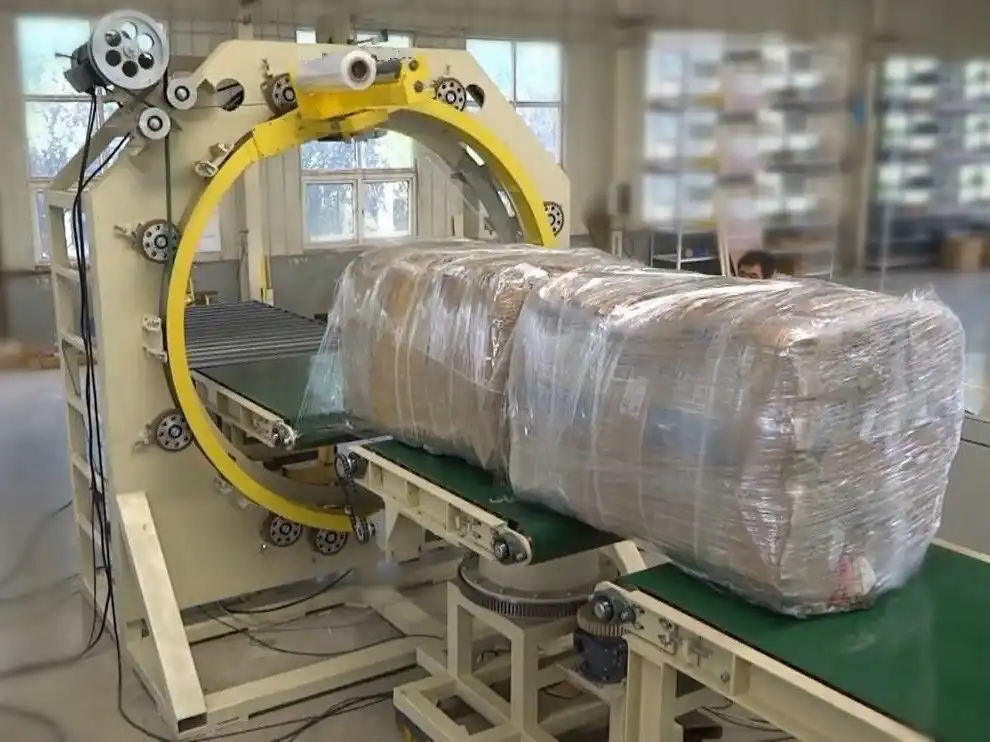
For non‑continuous wrapping, localized HMI language, or specific controller brands, the same machine platform can be customized – but changes affect cost and lead time. Option B uses identical mechanical hardware; modifications are limited to control software, language database, and safety configuration. Detailed points:
-
Wrapping program customization: Program is modified to wrap only at beginning, middle, and end. Speed, overlap, rotations, and pressing force remain adjustable per program.
-
Film end handling: Same manual‑on‑product approach; automatic cut‑and‑hold unchanged.
-
Pre‑stretch: Same 100–300% adjustable range.
-
Control panel language: Polish (or other languages) can be added only if the customer provides the exact translated display strings before programming. The supplier will not perform translation; request confirmation of this integration process in writing.
-
PLC/HMI brand: If Siemens is required, ask for the specific model. Third‑party brands (Delta, Omron) may require separate programming licenses – clarify beforehand.
-
Safety integration: Two potential‑free contacts included. Light curtains can be added by the user. Three‑color alarm system unchanged.
-
Factory visit & shipment: Same as Option A – factory visits welcome; FOB cost reference USD 720 (confirm with written quote).
Key Point: Customization does not alter the machine’s mechanical core. Always request a written statement of the delivered PLC/HMI brand and the method for language integration to avoid rework.
⚙️ Comparison Table
| Criteria | Option A – Standard Continuous | Option B – Customized (Spot Wrapping & Other) |
|---|---|---|
| Wrapping pattern | Continuous only | Can be modified for spot wrapping (beginning, middle, end) |
| Speed, overlap, rotations, pressing force | Configurable per program | Same |
| Film pre‑stretch range | 100%–300% adjustable | Same |
| Film end handling | Automatic cut & hold; manual on product | Same |
| HMI language | Chinese & English (default) | Polish/add languages only with customer‑provided translation |
| PLC/HMI software | Included | Included, but confirm brand to avoid license costs |
| Safety contacts | Two potential‑free contacts | Same |
| Safety light curtain integration | Possible, added by user | Same |
| Three‑color alarm system | Standard | Standard |
| Factory visit | Yes (customer site visit not available – supplier visits only) | Same |
| Shipment cost (FOB reference) | USD 720 – obtain written quote | Same |
| Lead time for customization | N/A | Additional time for program modification & translation |
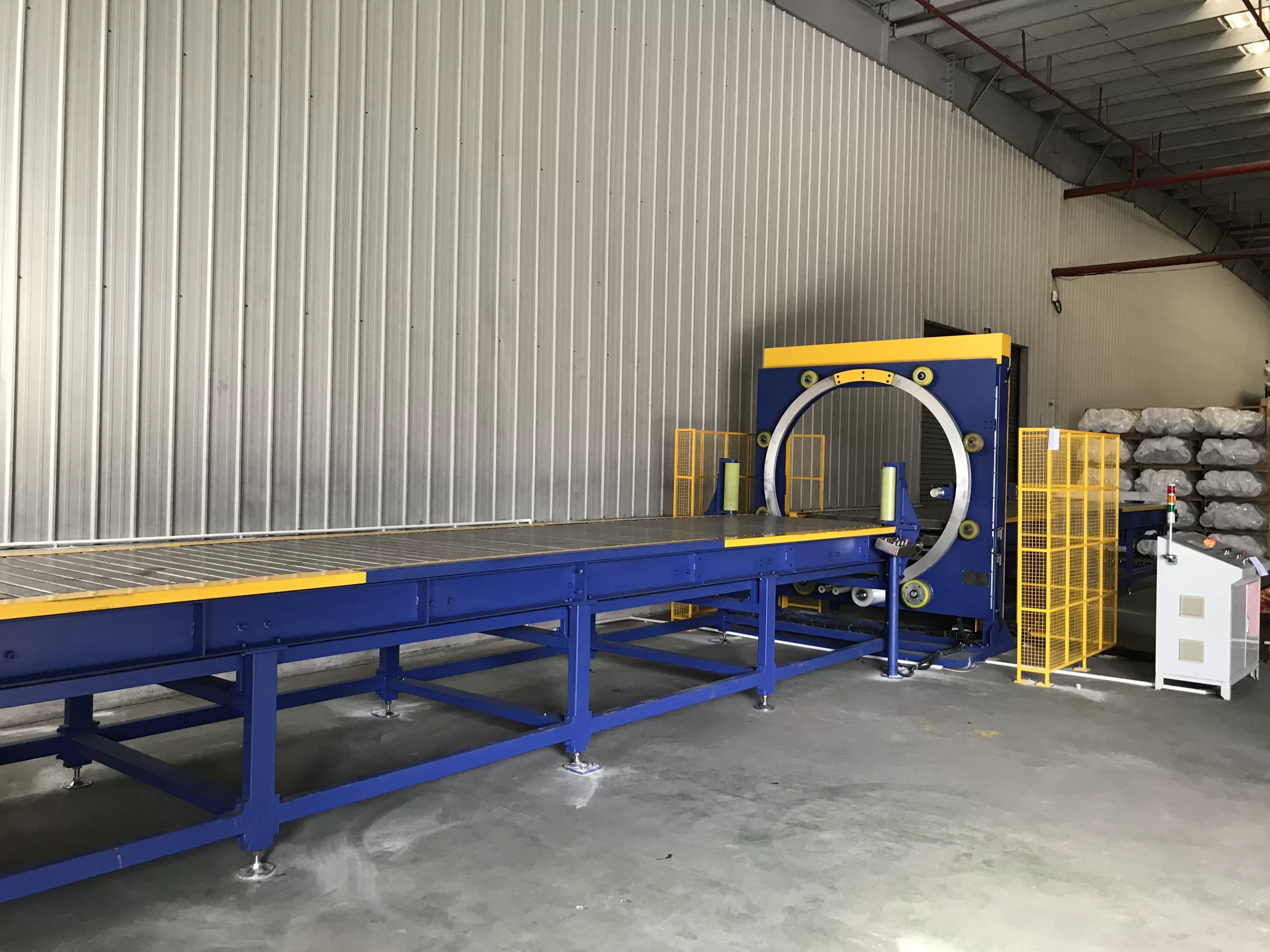
🛠️ Selection Advice
Choose Option A (standard continuous) if your product requires full‑length wrapping and operators can work with a Chinese/English interface. This fits most pipe, profile, and board packaging lines where uniform coverage is sufficient and manual film‑end handling is acceptable.
Choose Option B (customized) if at least one of these conditions applies:
-
Your product needs reinforcement only at the beginning, middle, and end (e.g., heavy coils or fragile edges).
-
Your operators require a Polish‑language panel (or another language) for compliance or training ease.
-
You have a strict Siemens‑only automation policy in your factory.
Budget note: The FOB shipment cost (approx. USD 720) is the same for both options. Customization adds programming time but no mechanical changes. Do not rely on a 5–15% cost estimate; instead, request a written quotation for all customization work. Specs in this article are based on one supplier; verify all figures with your vendor.
Safety checklist: Before line integration, confirm that the two potential‑free contacts are wired to your safety controller and that the three‑color alarm is functional. Light curtain addition is straightforward but handled by your team.
🏗️ Purchase‑Decision Checklist
-
[ ] Confirm required wrapping mode: continuous or spot wrapping?
-
[ ] Verify HMI language requirement and prepare translation file if needed.
-
[ ] Ask supplier for exact brand and model of PLC and HMI (avoid licensing surprises).
-
[ ] Document safety interface: two potential‑free contacts, alarm system, light curtain allowance.
-
[ ] Request a written FOB or CNF quotation (reference: USD 720 FOB).
-
[ ] Schedule a factory visit to inspect the machine in operation.
📈 FAQ
Q: Can the standard machine be upgraded to spot wrapping after delivery?
A: Yes, the program can be modified by the supplier or a qualified technician. Plan for downtime during reprogramming.
Q: Is the Polish translation free?
A: No – you must provide the exact Polish text strings. The supplier integrates them during programming, which may add lead time. Obtain a written agreement on this process.
Q: How long does the pre‑stretch system last?
A: Typical industrial design life depends on maintenance. Request the supplier’s warranty terms and a recommended maintenance schedule – do not rely on generic 5–8 year claims.
Q: What is the typical cycle time for a 6‑meter pipe?
A: Depends on speed and overlap settings. Estimate 20–40 seconds per meter; ask for a test video with your actual product.
🛡️ Glossary of Key Terms
| Term | Definition |
|---|---|
| Pre‑stretch | Mechanical or electrical stretching of film before wrapping to reduce material usage; adjustable range expressed as percentage. |
| Potential‑free contact | A dry relay contact that provides isolation; used to interface with external safety circuits. |
| FOB (Free On Board) | Shipping term where seller delivers goods on board a vessel; buyer pays freight and insurance. |
| HMI (Human‑Machine Interface) | Touchscreen panel for operator input and machine status display. |
| PLC (Programmable Logic Controller) | Industrial computer that controls machine sequence. |
Disclaimer: All technical specifications and cost references in this article are based on a single supplier’s documentation and should be verified directly with the supplier before making procurement decisions. FOB cost (USD 720) and customization lead times are examples only – always obtain a written quotation.








