
Steel Wire vs. Cable Winding & Tying: More Than Just a Name
At first glance, a Steel Wire Coil Winding and Tying Machine and a Wire/Cable Winding and Tying Machine might sound like the same thing. In English, both involve “winding” and “tying.” However, in the world of industrial manufacturing, these two machines belong to entirely different categories.
Mistaking one for the other—a common issue on search engines—can lead to significant production errors. Here is a guide to help you distinguish between these two vital pieces of equipment.

1. Material Properties & Application Scenarios
The most fundamental difference lies in what they are processing.
- Steel Wire Machines: Designed for heavy-duty industrial products like galvanized steel wire, spring wire, and iron wire. These materials are characterized by high “spring-back” and extreme hardness. They are typically found in wire-drawing factories.
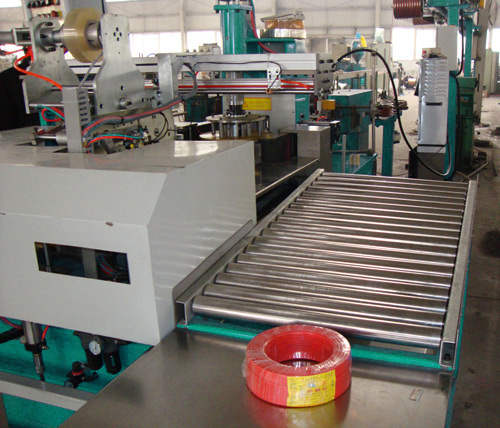
- Wire & Cable Machines: Designed for electrical cables and consumer-grade wiring. These materials are significantly softer and more flexible, usually intended for indoor or construction-based electrical systems.
2. Binding Materials & Cost Efficiency
Because the tension and weight of the coils differ, the materials used to “tie” or “strap” them are also different.
| Feature | Steel Wire Coil Machine | Wire/Cable Coil Machine |
|---|---|---|
| Typical Binding Material | Steel wire or PET straps | PP (Polypropylene) tape |
| User Preference | Prefers steel wire (lowest cost) | Prefers PP tape (protects insulation) |
| Length of Binding | High-capacity (rolls up to 2km) | Shorter, standardized lengths |
Note: For steel wire manufacturers, using the wire itself as a binding agent is the most cost-effective method because the raw material is already on-site and in abundance.
3. Aesthetics vs. Functionality
The end destination of the product dictates how the machine is designed to package it.
- Industrial Steel Wire: The focus is purely functional. The packaging must be dust-proof and waterproof. As long as it survives the harsh industrial environment, the visual “beauty” of the coil is secondary.
- Electrical Cables: These are often high-value-added products sold to contractors or retail consumers. Beyond protection, the packaging must be neat and aesthetically pleasing. The machine’s structure is refined to ensure the cable is laid perfectly without kinks or surface damage.
4. Technical Structure: Source & Pay-off
The way these machines integrate into a production line is a major point of divergence.
Steel Wire (The Rewinding Process)
Steel wire machines are often paired with Rewinding Machines (or “re-coilers”). They take large, heavy bulk coils—typically coming off a Plum Blossom Stand (a vertical carrier used after the wire-drawing process)—and rewind them into smaller, manageable industrial coils.
Wire/Cable (The Coiling Process)
Cable machines typically interface with large H-Spools (industrial drums). The machine pulls the cable from the spool, measures it, coils it into a “donut” shape, and applies the PP tape.
Why the Search Engines Get It Wrong
If you search for “Steel Wire Packaging Machine” today, you will likely see results for “Cable Rewinders.” This is a common industry “glitch.” Search algorithms often prioritize the high-volume consumer cable market, failing to distinguish the heavy-duty structural requirements of the steel industry.
Summary: If you are dealing with hard, industrial metal, you need a Steel Wire specific solution. If you are dealing with insulated electrical lines, you need a Cable solution.








