
Steel Coil Packing Line Spain: How to Choose a Supplier You Can Trust?
Are you a steel mill operating in a demanding market like Spain, struggling with inefficient coil packing, inconsistent quality, or mounting safety concerns? These issues can severely impact your production flow, lead to costly client complaints, and even threaten your bottom line. It is a problem many face, and it demands a real solution.
Choosing a trustworthy supplier for a steel coil packing line in Spain means looking beyond just the machine itself; it requires evaluating their ability to understand your unique operational challenges, offer advanced, reliable automation, provide comprehensive long-term support, and demonstrate a clear focus on your total cost of ownership and return on investment.

I have spent many years in this industry, starting as an employee on the factory floor and later building FHOPEPACK from the ground up. I know the stakes are incredibly high for businesses like yours. The right partner truly makes all the difference when it comes to investing in a critical piece of equipment. Let me share what I have learned about identifying a supplier you can truly rely on.
How Do You Identify a Supplier Who Truly Understands Your Steel Coil Packing Needs?
Is your packing operation often bogged down by the sheer diversity of your products and the constant need for manual changes? Is the scarcity of skilled labor making it nearly impossible to maintain consistent quality across your steel coils? Many suppliers simply push a standard product, but that approach often falls short.
A supplier truly understands your needs when they conduct a thorough assessment of your existing operations, including the specific types of coils you produce, your daily throughput, your unique client packaging requirements, and your current labor challenges, before proposing any solution.
When I started FHOPEPACK, I saw too many companies offering generic solutions. My experience taught me that every steel mill, whether in Spain or elsewhere, has unique needs and challenges. A real partner will take the time to listen and understand your situation deeply.
-
Understanding Your Production Landscape 🏭
The first step a trustworthy supplier takes is to gain a deep understanding of your specific production environment. They will look at the types of steel coils you manufacture. For example, do you produce cold-rolled coils, galvanized coils, or pre-painted coils? Each of these has different properties and requires specific handling and packaging methods. They also need to know your daily production volume and throughput. How many tons of steel coils do you process each day? This information helps them size the packing line correctly. They will identify your existing bottlenecks. Where do you lose time or efficiency in your current packing process? Perhaps manual strapping is too slow, or the coil turning takes too long. A good supplier will ask about your specific client requirements. Do your customers need PET or steel strap? Is anti-corrosion film mandatory for certain markets? Do you need automatic labeling with barcodes? Knowing these details is crucial for designing a system that truly works for you. Without this foundational understanding, any proposed solution is just a guess.
-
Assessing Current Challenges 🚧
A capable supplier will then dive into the specific challenges you face every day. Many steel mills still rely heavily on manual processes. This includes manual strapping, wrapping, and the physical handling of heavy coils. This manual work is often labor-intensive and slow. It also comes with significant safety risks. Are you experiencing a labor shortage? The high-intensity work environment in packing lines often leads to high employee turnover, especially among younger workers. This makes it hard to staff your operations consistently. You might also face issues with inconsistent packaging quality. Manual operation can lead to uneven film tension during wrapping, which means coils are not protected uniformly. Straps might not be tight enough, causing packages to loosen during transport. This can lead to product damage and customer complaints. A supplier who truly understands will recognize these pain points and offer solutions designed to alleviate them. They know that these problems directly affect your profitability and reputation.
-
Tailored Solution vs. Off-the-Shelf ⚙️
After understanding your production and challenges, the supplier should offer a tailored solution, not just an off-the-shelf machine. This means they can customize the packing line to handle different coil dimensions. Your coils might vary in inner diameter, outer diameter, and width. The machine must adapt easily. It also needs to handle varying weights, such as coils weighing between 1 and 3 tons. The solution should include automated changeovers for different packing recipes. For instance, switching from PET strapping to steel strapping, or from shrink film to stretch film, should be quick and easy. This reduces downtime and increases efficiency. Integration with your existing production lines is also key. The packing line should seamlessly connect with your slitting or cold rolling lines. It should not create new bottlenecks. Furthermore, the supplier must address specific export demands. This means ensuring packaging meets CE/ISO certifications. It also means incorporating automatic barcode printing and application. Most importantly, it means providing robust solutions for strict moisture protection, vital for coils shipped to various climates. A custom solution delivers maximum value.
What Advanced Features Define a High-Performance Steel Coil Packing Line?
Is your current equipment struggling to keep up with the demands of 24/7 operation or failing to adapt efficiently to various coil sizes? Are you constantly battling issues with poor packaging quality that puts your products at risk? Basic machines simply will not cut it in today’s competitive market, especially for industrial operations in Spain.
A high-performance steel coil packing line features robust automation for 24/7 operation, adaptive systems for varied coil dimensions and weights, precision control for consistent packaging quality (like uniform film tension and secure strapping), and integrated solutions for comprehensive protection against rust, moisture, and scratches.
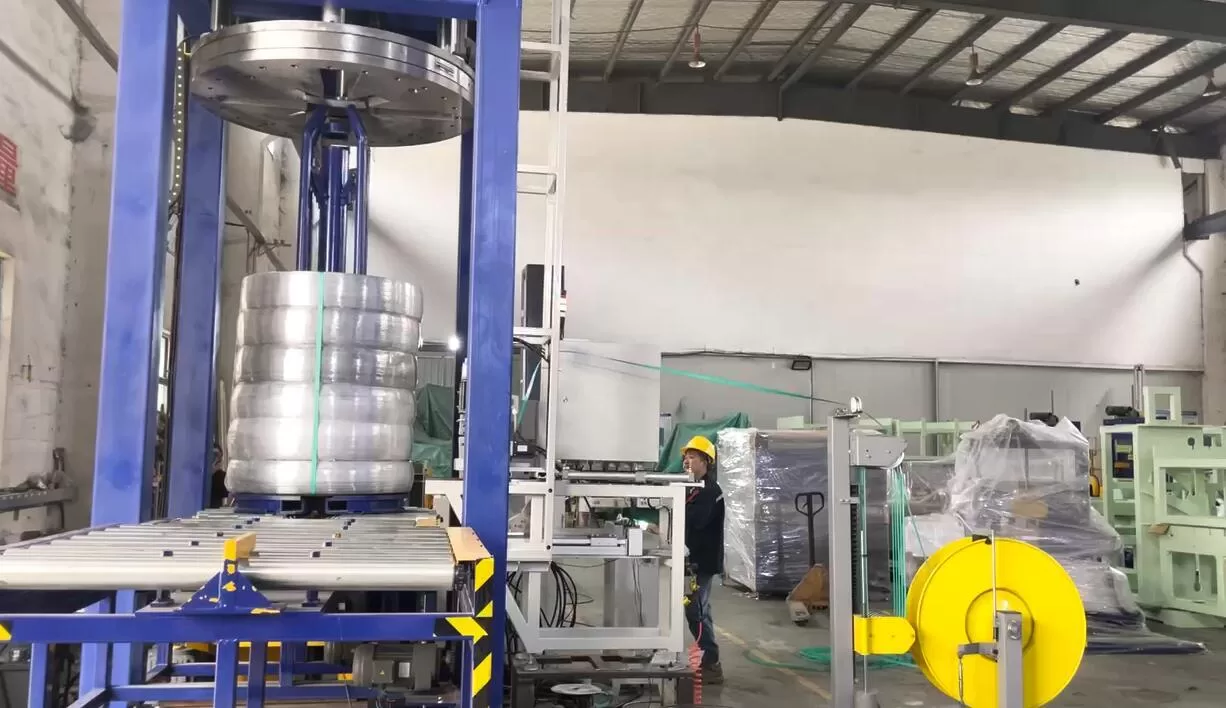
When I help our clients, I always emphasize looking beyond the surface features. A truly advanced system does not just perform a task; it optimizes an entire process, ensuring reliability and quality. This is what separates good from great.
-
Unwavering Reliability for Continuous Operation ⏱️
For a steel mill, uptime is everything. A high-performance packing line must be built for unwavering reliability, capable of continuous 24-hour, two-shift operation. This requires industrial-grade components. The machine should use high-quality motors, sensors, and control systems from reputable brands. These components are designed for heavy-duty use and long lifespans. It is about minimizing downtime. Every minute the packing line is stopped costs your production. The system needs to be robustly constructed. This means a strong frame, durable wear parts, and a design that withstands the harsh environment of a steel mill. For example, parts should be protected from dust, moisture, and vibrations. Look for systems with proven track records in similar high-volume operations. Ask for references from other steel mills, perhaps even in Spain, who operate their lines around the clock. This commitment to continuous operation is a hallmark of a truly advanced packing solution. It ensures your production never misses a beat.
-
Flexibility and Adaptability 🔄
Your steel coils come in many shapes and sizes. A top-tier packing line offers exceptional flexibility and adaptability to handle this diversity. It must adapt to different coil dimensions, including varying inner diameters (ID), outer diameters (OD), and widths. It also needs to accommodate a range of weights, from 1 ton up to 3 tons. The system should feature automated changeovers for different packing recipes. This means you can quickly switch between using PET strapping and steel strapping, or between shrink film and stretch film. These changes should be programmable and executed with minimal human intervention. This saves significant time compared to manual adjustments. A modular design is also a key feature. This allows for future expansion or modifications without having to replace the entire system. As your product mix or customer requirements evolve, a modular line can be easily upgraded. This adaptability protects your investment and ensures your packing line remains relevant for years to come.
-
Superior Packaging Quality 🛡️
The quality of your packaging directly reflects on your product and your brand. A high-performance line ensures superior packaging quality with precision control. It uses advanced systems for precise tension control during both film wrapping and strapping. This ensures the film is applied uniformly, preventing loose spots or excessive stretching that can lead to tears. Straps are applied with consistent force, securing the coil tightly for transport. The line should also include automated labeling and tracking systems. This can mean printing and applying barcodes or RFID tags automatically. This improves inventory management and traceability. Most importantly, it provides multi-layer protection for export. This can involve applying anti-rust paper or VCI (Volatile Corrosion Inhibitor) film directly to the coil surface. Then, it can apply multiple layers of stretch film or shrink film for comprehensive moisture and dust protection. This combination ensures your coils arrive at their destination, even after long journeys to international markets, in pristine condition, preventing rust and scratches.
-
Integration and Automation 🤖
A truly advanced steel coil packing line goes beyond individual machines; it offers seamless integration and high levels of automation. The system should connect effortlessly with your existing upstream production lines, such as slitting or cold rolling lines. This creates a continuous flow, minimizing manual transfers between stages. It reduces manual intervention significantly. Instead of workers manually lifting, turning, or positioning heavy coils, the packing line should handle these tasks mechanically. This greatly lowers the risk of industrial accidents and reduces physical labor. The entire line should be managed through centralized control systems. These systems allow operators to monitor the whole process from a single interface. They can adjust parameters, troubleshoot issues, and collect data efficiently. This level of automation means higher efficiency, lower labor costs, and improved safety. It is about transforming your packing workshop into a streamlined, high-tech operation, ready for the demands of the global market.
How Can a Supplier Prove Their Commitment to Your Long-Term Operational Success?
Are you worried about being left stranded after making such a significant investment in your steel mill? Is post-installation support a major concern for your plant in Spain? The simple truth is that purchasing a packing line is just the beginning of your journey with a new system.
A committed supplier demonstrates long-term partnership through comprehensive project management from design to commissioning, extensive on-site training for your staff, guaranteed availability of spare parts, and responsive, expert after-sales support to ensure minimal operational disruptions and maximum machine lifespan.
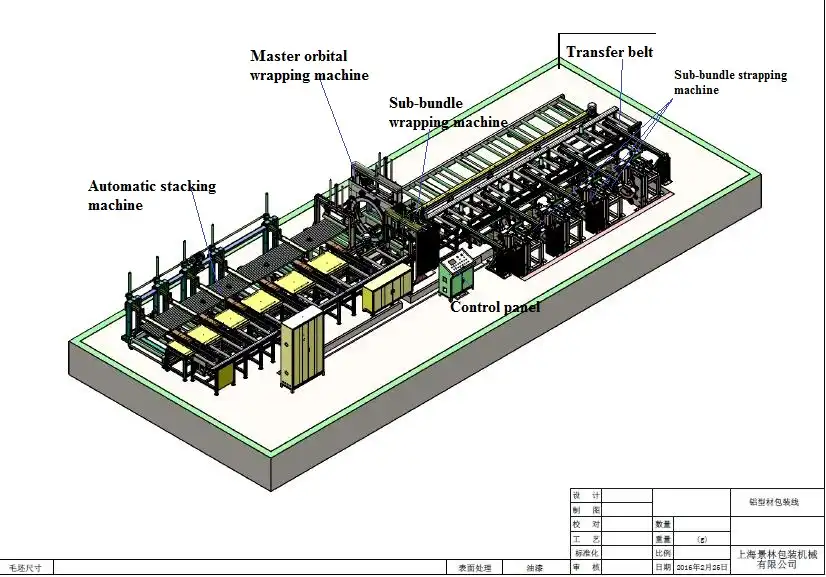
My experience at FHOPEPACK has shown me that the true value of a supplier emerges long after the sale. It is about the ongoing support and partnership that ensures your equipment performs optimally for years, helping your business grow and thrive.
-
Comprehensive Project Management 🤝
A truly committed supplier offers comprehensive project management, providing a turnkey solution from start to finish. This means they handle everything: the initial design based on your needs, the manufacturing of the equipment, the installation at your facility, and the final commissioning of the entire line. They provide clear communication throughout the process, keeping you informed of timelines, milestones, and any potential challenges. This prevents surprises and ensures smooth execution. Adherence to international standards is also vital. They should ensure the equipment meets relevant safety and quality certifications, like CE/ISO, which is particularly important for operations in Spain and for export markets. This level of meticulous planning and oversight means you have a single point of contact and accountability, making the entire process far less stressful and more efficient for your team. You can trust that the project will be completed correctly and on schedule.
-
Training and Skill Transfer 🎓
A new packing line is only as good as the people operating it. A strong supplier provides extensive on-site training for your operators and maintenance teams. This training should be hands-on, covering every aspect of the machine’s operation, from daily startup and shutdown procedures to troubleshooting common issues. They should also provide comprehensive documentation, including detailed operation manuals, maintenance guides, and spare parts lists. These resources become invaluable for your team. The goal is skill transfer. They are not just installing a machine; they are empowering your staff to operate and maintain it independently and effectively. This reduces your reliance on external technicians for routine tasks and helps your team build confidence and expertise. Proper training significantly lowers the risk of operational errors and extends the lifespan of your investment. It ensures your team is ready to maximize the efficiency of the new system from day one.
-
Reliable After-Sales Support 📞
Even the most reliable machines sometimes need attention. A committed supplier offers reliable after-sales support to ensure any issues are resolved quickly. This includes access to dedicated service engineers who understand the complexities of the equipment. They should be available to provide assistance, whether it is over the phone or through on-site visits. Remote diagnostics and troubleshooting are also critical. Modern packing lines often have systems that allow technicians to remotely access and diagnose problems, speeding up the repair process. Quick response times are essential. Downtime is expensive. A supplier committed to your success will prioritize getting your line back up and running as fast as possible. This means having a clear support structure and service level agreements. Knowing you have expert support readily available gives you peace of mind and minimizes potential production losses. It is a key factor in choosing a long-term partner.
-
Spare Parts Availability 📦
The availability of spare parts is a practical, but often overlooked, aspect of long-term partnership. A trustworthy supplier guarantees the availability of spare parts throughout the machine’s operational lifespan. This includes both common wear-and-tear items and more specialized components. For a company in Spain, having local or regional spare parts stock can significantly reduce lead times for critical components. This means less waiting for parts to be shipped from a distant factory. Reduced lead times for critical components are crucial for minimizing extended downtime. Ask about their spare parts inventory management. Do they have a clear system for ordering and delivery? What is their typical lead time for various parts? A supplier who prioritizes this aspect understands that even a small, inexpensive part can halt your entire production if it is not readily available. This commitment to parts availability demonstrates a dedication to your continuous operation and overall success.
Why is Focusing on Total Cost of Ownership Essential for Your Investment in Spain?
Is the upfront cost of a new packing line in Spain holding you back from making a necessary upgrade? Are you only looking at the initial price tag, failing to consider the full financial picture of long-term savings and expenses? This narrow view can actually cost you far more in the long run.
Focusing on Total Cost of Ownership (TCO) for a steel coil packing line in Spain is essential because it accounts for not only the initial purchase price but also long-term operational costs like labor, materials, maintenance, and potential losses from downtime, ultimately revealing the true value and return on investment of the system.

I have seen first-hand how an initial “cheap” machine turns into a money pit over time. At FHOPEPACK, we help clients like those in Spain see the bigger picture, focusing on the long-term gains and true financial impact of their investment.
-
Calculating the True Investment 💰
When evaluating a new steel coil packing line, it is important to calculate the true investment. This starts with the initial equipment cost. This is the price you pay for the machine itself. However, it also includes installation and commissioning expenses. These costs cover setting up the machine in your facility and getting it operational. Do not forget the cost of integration. If the packing line needs to connect with existing production systems, there might be additional engineering or software costs. A good supplier will provide a clear breakdown of all these upfront costs. This allows you to budget accurately and understand the full initial financial commitment. It is more than just the machine’s sticker price. Understanding these components helps you avoid hidden fees later on. This transparent approach builds trust from the start.
-
Operational Cost Reductions 📉
One of the biggest benefits of a modern, automated packing line is the significant reduction in operational costs. A primary area is labor savings. By automating tasks like strapping, wrapping, and coil handling, you can reduce the number of workers needed for these high-intensity jobs. This also lowers the risk of industrial injuries, which can lead to reduced insurance premiums and fewer lost workdays. Material optimization is another huge factor. Automated systems apply packing materials with precision, reducing waste. They ensure consistent material usage, preventing over-wrapping or over-strapping. This directly lowers your recurring material expenses. Modern machines are also designed for greater energy efficiency. They use less power than older models, leading to lower utility bills. These reductions in daily operating expenses contribute significantly to your long-term savings and improve your profitability.
-
Minimizing Hidden Costs 👻
Beyond direct operational costs, TCO helps you account for hidden costs that can impact your business. Automated packing lines lead to reduced downtime and production losses. Manual processes are prone to errors and breakdowns. A reliable automated system runs more consistently, minimizing interruptions to your production schedule. This ensures your factory keeps producing. It also means fewer customer complaints, returns, and contract penalties. Inconsistent packaging quality, common with manual methods, often leads to damaged goods or non-compliance with client specifications. This results in costly returns or fines. By improving packaging quality, you avoid these financial hits. Furthermore, an automated system improves safety, leading to lower accident rates. This reduces potential legal costs, insurance claims, and the immeasurable human cost of injuries. These hidden costs, while not immediately obvious, can significantly erode your profits.
-
Long-Term ROI and Business Growth 📈
Ultimately, focusing on TCO helps you understand the long-term return on investment (ROI) and how the packing line can drive business growth. An automated line means increased throughput and efficiency. You can pack more coils faster, meeting higher production demands without increasing labor. This directly translates to higher sales potential. It also leads to enhanced product quality and a stronger brand reputation. Consistently high-quality packaging means satisfied customers, repeat business, and a premium image in the market. This allows you to meet higher client demands. For example, if clients require CE/ISO certified packaging or specialized anti-corrosion methods, an automated line can deliver. This also allows you to enter new markets, especially export markets that have stringent packaging requirements. By investing wisely in a high-performance packing line, you are not just buying a machine; you are investing in the future growth and sustainability of your steel business.
Conclusion
Choosing the right supplier for your steel coil packing line in Spain is a critical decision. It means finding a partner who truly understands your specific needs, offers advanced and reliable features, commits to your long-term success with robust support, and prioritizes your total cost of ownership. This approach ensures you invest in a solution that boosts efficiency, enhances safety, and drives growth. At FHOPEPACK, we are dedicated to being that trusted partner, providing best-in-class customized coil packing line solutions to help your business thrive.








