
Slit Coil Packing Line Italy: Which Features Ensure the Best Safety Results?
In the fast-paced world of steel production, especially in demanding markets like Italy, efficiency is key. However, efficiency must never come at the expense of safety. I have seen firsthand the challenges steel mills face. Workers deal with heavy loads and complex machinery every day. The risks are real, from minor injuries to serious accidents. Unsafe operations lead to high costs, low morale, and production stops. We at FHOPEPACK understand this completely. We know that a packing solution needs to protect both the product and the people who work with it.
For any slit coil packing line, especially in Italy, the best safety results come from a combination of full automation, robust mechanical and electrical safeguards, intelligent integrated control systems, strict adherence to international compliance standards, and a strong focus on ongoing training and preventive maintenance.
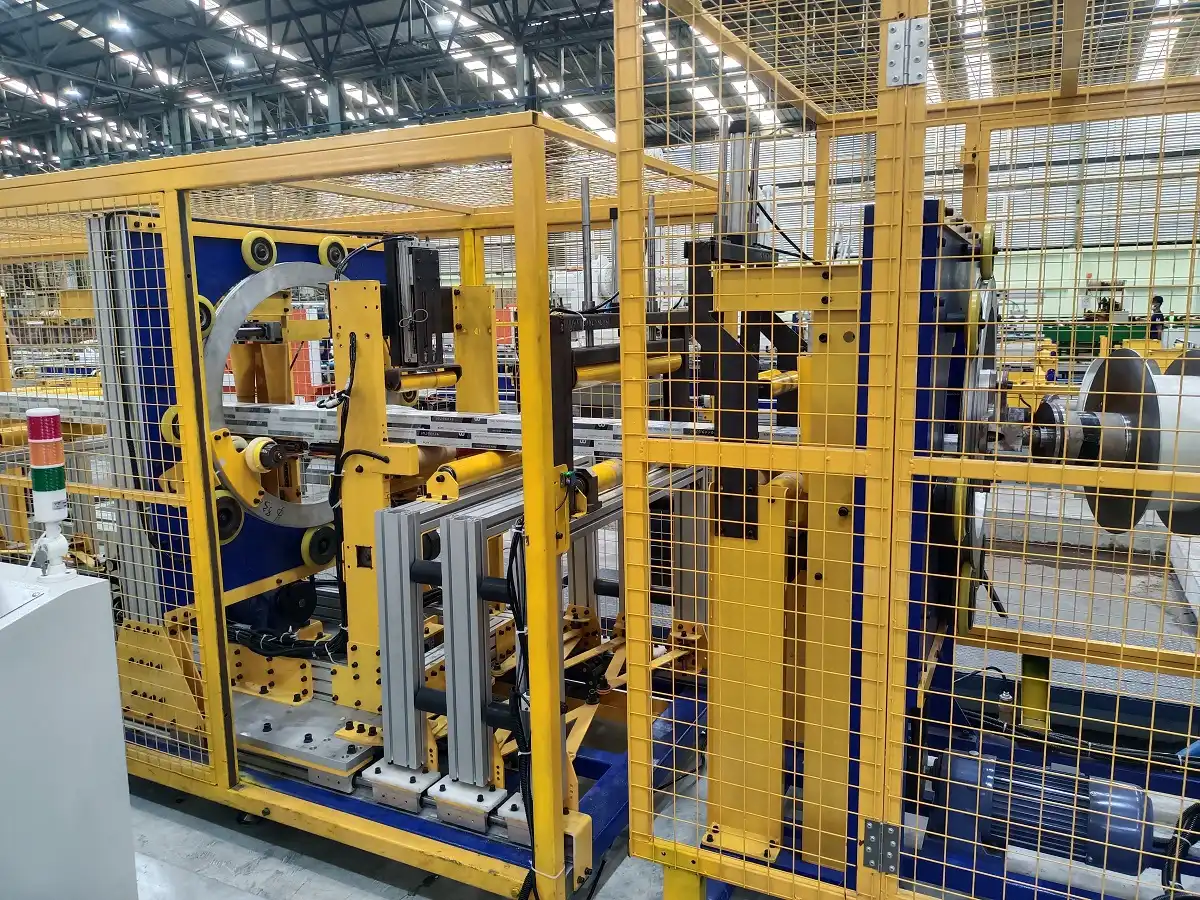
You might be thinking, “How can I achieve this level of safety in my operation?” The answer lies in carefully chosen features and a comprehensive approach. Let us look at the key elements that build a truly safe and reliable coil packing line.
How Does Full Automation Significantly Boost Safety in Slit Coil Packing?
Many steel mills still rely on a lot of manual work for packing slit coils. This creates many risks. Workers must get close to heavy, moving coils and use dangerous tools for strapping and wrapping. This increases the chance of accidents, strains, and fatigue. The pressure to meet high production targets can also lead to shortcuts. This further compromises safety. I know from my own factory experience how difficult it can be to manage these risks with a large workforce.
Full automation greatly boosts safety in slit coil packing by removing human operators from hazardous zones. It takes over dangerous tasks like lifting, turning, strapping, and wrapping heavy coils. This change prevents direct contact with moving machinery and heavy loads.

When I started FHOPEPACK, my goal was always to make packing easier and safer. Full automation is the best way to do this. It replaces human hands in high-risk areas. This means fewer people need to interact directly with heavy coils or fast-moving parts. Automation handles coils up to 3 tons with ease. It performs tasks with precision and repeatability. This consistency prevents the kind of errors that human fatigue or distraction can cause. Imagine a production floor where workers monitor systems from a safe distance. They only intervene when necessary. This is the reality that automation creates. For instance, in an Italian steel plant with high output, manual coil handling for hundreds of tons daily is not only inefficient but also extremely risky. Automation, on the other hand, ensures that each coil is moved, strapped, and wrapped in a controlled environment. This lowers the chance of coils falling, workers being struck, or injuries from repetitive tasks. It also helps with the challenge of finding enough skilled workers. Automated systems do not get tired. They work reliably around the clock. This makes the entire packing process more predictable and much safer for everyone involved. It greatly reduces the physical strain and potential for accidents that come with traditional manual methods. This shift allows human talent to focus on oversight and problem-solving, not on dangerous, repetitive physical labor.
What Specific Mechanical and Electrical Safeguards Are Key to Preventing Accidents?
Even with automation, heavy machinery always carries inherent risks. A machine can malfunction, or an operator might make an error. Without strong safety features built into the system, even small problems can become big accidents. This is especially true for equipment working 24 hours a day, like in a busy Italian steel mill. I have seen machinery that looked robust but lacked critical safety mechanisms. This often led to preventable incidents.
Specific mechanical and electrical safeguards are key to preventing accidents by creating physical barriers, immediate shutdown capabilities, and intelligent interlocks. These features protect operators from moving parts, electrical hazards, and uncontrolled machine movements.

When we design a coil packing line at FHOPEPACK, we put safety first. We know that a machine is only as safe as its weakest link. We build in multiple layers of protection. First, physical barriers are crucial. These include sturdy safety fences and gates that prevent unauthorized access to dangerous areas. They are designed to withstand impacts from heavy coils. Next, emergency stop (E-stop) buttons are placed at easy-to-reach points around the entire line. These allow any worker to immediately shut down the machine in an emergency. They are bright red and clearly marked. Safety interlocks are also vital. For example, a machine will not start if a safety gate is open. It will automatically stop if a guard is removed during operation. This prevents machines from running when workers are exposed to danger. Light curtains and safety scanners create invisible barriers. If a worker crosses these beams, the machine stops instantly. This is essential in areas where coils are transported or turned. Overload protection systems are also integrated. They prevent mechanical parts from breaking down if a coil is too heavy or jams. This protects the machine and prevents dangerous situations. These safeguards work together. They make sure that even if one system fails, others can still protect the workers. This comprehensive approach is necessary for any high-volume packing operation. It gives peace of mind to operators and management alike.
Why Are Integrated Control Systems Crucial for Operator Safety and Error Reduction?
Modern packing lines are complex. They involve many different machines working together. Each machine has its own controls. If these systems do not talk to each other, errors can easily happen. Operators might get confused, or commands might not be carried out correctly. This can lead to dangerous situations, especially when heavy steel coils are involved. In my early days, I saw many standalone machines that caused headaches due to lack of coordination.
Integrated control systems are crucial for operator safety and error reduction because they provide a centralized, smart way to manage the entire packing line. They ensure all parts of the system work together smoothly, prevent conflicts, and alert operators to potential issues.

At FHOPEPACK, we believe that smart controls lead to safer operations. An integrated control system brings all functions of the slit coil packing line under one command center. This includes coil handling, turning, wrapping, strapping, and labeling. First, an intuitive Human-Machine Interface (HMI) is essential. It lets operators easily understand the machine’s status. It shows clear graphics and real-time data. This reduces the chance of misinterpretation or wrong commands. Operators can see exactly what the machine is doing. They can react quickly if something goes wrong. Second, advanced diagnostic and fault reporting features are built-in. If a sensor fails or a part needs attention, the system immediately tells the operator. This allows for quick troubleshooting. It prevents small problems from escalating into bigger, more dangerous ones. It also minimizes downtime. Third, sequential operation logic ensures that machines only perform tasks in the correct order. For instance, the strapping machine will not activate until the coil is perfectly in place. This prevents unintended movements or collisions. Fourth, many of our systems include remote diagnostics and support capabilities. This means our engineers can often connect to the machine from a distance. They can help identify and solve problems quickly. This reduces the need for on-site visits and gets the line running safely again faster. These integrated systems reduce human error. They also provide a safer, more controlled environment for high-volume packing. This is exactly what a production director like Ivan Petrov needs for his Italian steel plant.
How Do Compliance and Certification Standards Drive Safer Coil Packing Operations?
Operating in a country like Italy means meeting very strict safety and quality standards. Just having a machine that works is not enough. It must also prove it meets specific regulations. If a packing line does not comply with these standards, it can lead to legal issues, fines, and even a forced shutdown. More importantly, it means the machine might not be truly safe for workers. I know the importance of these standards. My journey from an employee to a factory owner taught me that compliance is not just a checkbox; it is a commitment to safety and quality.
Compliance and certification standards drive safer coil packing operations by setting a clear benchmark for design, manufacturing, and operation. Adhering to these international and local rules, such as CE and ISO, ensures that safety is built into every aspect of the machine from the start.
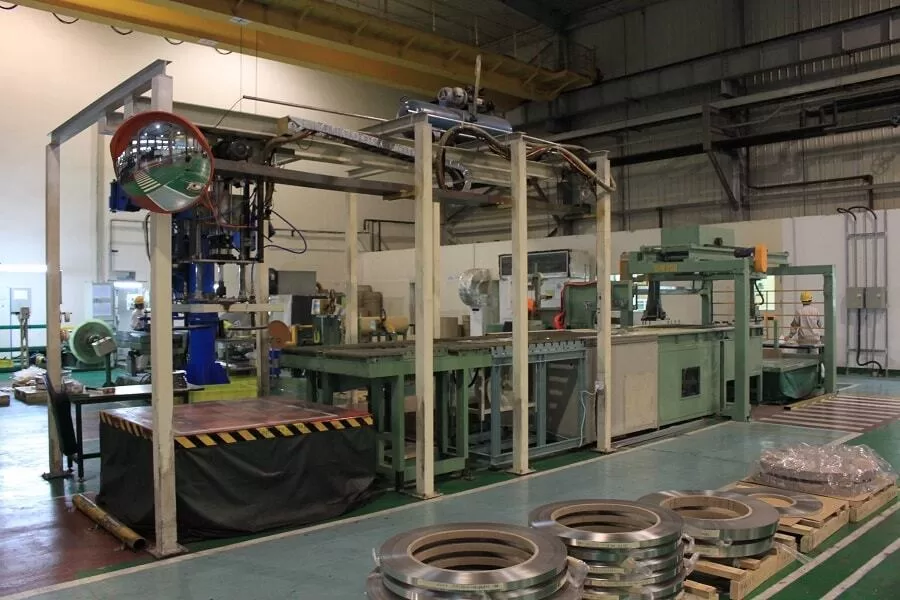
For any slit coil packing line destined for the European market, especially Italy, CE Marking is absolutely critical. CE marking is not just a label; it means the manufacturer confirms the product meets essential European health, safety, and environmental protection requirements. This involves a thorough risk assessment during the design phase. It ensures that all potential hazards are identified and mitigated. From electrical safety to mechanical stability, every detail is checked against strict directives. For example, our machines comply with relevant machinery directives. This guarantees components and systems meet high safety thresholds. Beyond CE, ISO standards play a vital role. ISO 9001, for instance, focuses on quality management systems. While not directly a safety standard, it ensures processes are consistently applied. This includes processes that impact product safety and quality. A company with ISO certification shows a commitment to continuous improvement. It shows they have robust documentation and traceability for all parts and procedures. This means every component used in our packing lines is traceable. We can verify its quality and safety credentials. This level of detail provides an additional layer of assurance. It helps meet specific customer requirements, such as those for export clients. They often demand certified packaging and clear documentation. By following these standards, we ensure our packing lines are not just functional. They are inherently safe, reliable, and legally compliant. This protects workers and the integrity of the steel products. It also protects the reputation of the steel mill itself. This is a must for any serious production director.
What Role Does Ongoing Training and Maintenance Play in Sustaining High Safety Levels?
Even the safest, most automated packing line needs proper care and human attention. A machine is only as good as the people who operate and maintain it. If workers are not trained correctly, or if maintenance is neglected, even the best safety features can become useless. This is a common challenge I have seen. Factories invest in great equipment, but then they forget the human element and the importance of upkeep. This leads to accidents and breakdowns.
Ongoing training and preventive maintenance play a critical role in sustaining high safety levels. They ensure that operators understand safe procedures. They also keep the machine in optimal working condition. This prevents wear-related failures and human errors.
The best machines combine with the best practices to ensure lasting safety. First, operator training is fundamental. Our team provides comprehensive training sessions for our clients. This covers safe operating procedures, emergency protocols, and how to use the control systems effectively. We make sure operators understand all safety features. They learn how to react in different scenarios. This knowledge empowers them to work safely and confidently. It greatly reduces the chance of human error. Second, preventive maintenance schedules are essential. Machines, especially those running 24/7 like in many Italian steel mills, experience wear and tear. Regular checks, lubrication, and replacement of worn parts prevent unexpected breakdowns. These breakdowns can lead to dangerous situations. A well-maintained machine runs smoothly and predictably. This reduces risks. Our service includes detailed maintenance guides and recommended schedules. Third, ensuring spare parts availability is crucial for quick repairs. If a critical safety component fails, a fast replacement is needed to minimize downtime and avoid temporary unsafe workarounds. We maintain a stock of spare parts. This ensures our clients can get what they need quickly. Fourth, regular safety audits help to identify new risks. They also confirm that all safety measures are still effective and up to date. These audits can lead to adjustments in procedures or machine settings. They adapt to changing production needs. By focusing on these ongoing efforts, we help our clients maintain a consistently high level of safety. This protects their most valuable assets: their people and their production. It shows our commitment to being a long-term partner.
Conclusion
Ensuring top-tier safety in a slit coil packing line, especially in Italy, requires a strategic investment. It demands full automation, robust mechanical safeguards, smart integrated controls, strict adherence to standards, and ongoing training and maintenance. At FHOPEPACK, we are dedicated to providing these complete solutions. We help steel mills protect their workers and maximize their production. Choose a trusted partner for your next coil packing line.








