

Packaging Strength Test: PET vs Steel Strapping Machine in Coil Securing Performance?
Are you struggling with inconsistent coil packaging quality or constant disruptions in your steel mill’s output? The pressure to secure heavy steel coils for transport, especially for diverse clients with varying demands, can feel overwhelming. Suboptimal strapping choices can lead to damaged goods, customer complaints, and costly delays. It is a real challenge many production directors, like Ivan Petrov in Russia, face daily, impacting everything from logistics to your bottom line.
When it comes to securing heavy steel coils, both PET (Polyester) and Steel strapping machines offer robust solutions, but their performance in terms of strength, elongation, and application varies significantly. Steel strapping provides superior breaking strength and rigidity, making it the traditional choice for the heaviest and most demanding industrial applications, while PET strapping offers excellent tensile strength with greater elasticity, better shock absorption, and enhanced safety features, particularly suitable for scenarios requiring corrosion resistance and worker protection.
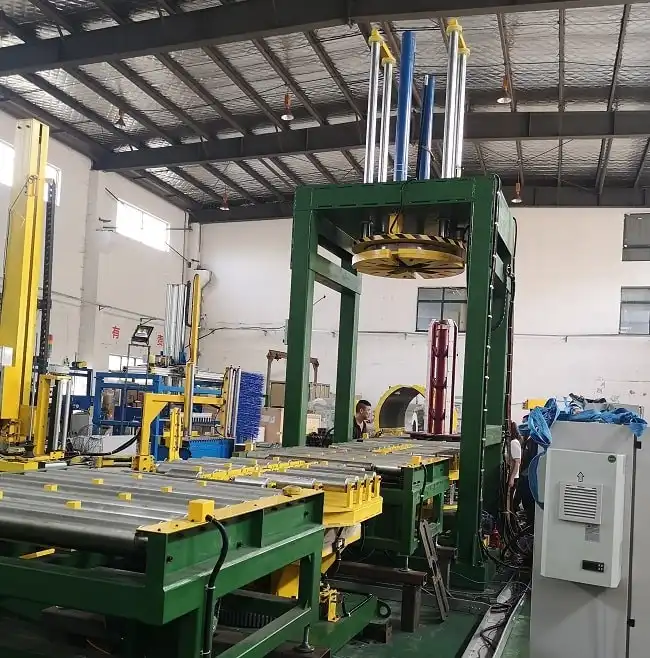

Understanding the nuances between these two primary strapping materials is crucial. It is not just about raw strength; it is about finding the right balance of security, efficiency, safety, and cost-effectiveness for your specific steel coil packaging needs. Let us dive deeper into this critical comparison, helping you make an informed decision for your operation.
What Exactly Are PET and Steel Strapping for Coil Packaging?
Have you ever wondered what materials truly stand up to the rigorous demands of securing massive steel coils? In the world of heavy industrial packaging, the choice of strapping material is not a trivial one; it directly affects product integrity and operational safety. Many manufacturers face the dilemma of choosing between traditional and modern solutions for their valuable products.
PET (Polyester) strapping is a high-strength plastic strapping material made from polyethylene terephthalate, known for its elasticity, excellent tension retention, and resistance to environmental factors. Steel strapping, on the other hand, is a robust metal band, typically made from cold-rolled steel, valued for its superior breaking strength, minimal stretch, and rigid holding power, making it a staple for extremely heavy-duty applications in the metallurgical industry.


As someone who has spent decades in the packing machine industry, from the factory floor to leading FHOPEPACK, I have seen these materials evolve. Steel strapping has been the workhorse for generations, the go-to for securing cold-rolled coils and heavy bundles. However, PET strapping has emerged as a formidable contender, especially as industries seek safer, more flexible, and corrosion-resistant alternatives. For example, when my team at FHOPEPACK designs a customized solution for coil packing machines, we always consider the specific environment and the client’s output, such as galvanized coils requiring anti-rust packaging, where PET offers distinct advantages. The choice hinges on the coil’s weight, dimensions, environmental exposure during transit, and overall packaging cost (industrial packaging solutions, heavy-duty strapping materials).
Here is a closer look at the key characteristics:
-
PET Strapping (Polyester):
- Material Composition: Made from polyester resins, it is strong, durable, and recyclable.
- Elasticity & Recovery: Offers significant elongation (up to 15%) and excellent elastic recovery. This means it can absorb shocks and impacts during transit without losing tension, which is crucial for dynamic loads like moving steel coils.
- Corrosion Resistance: Unlike steel, PET strapping does not rust or stain products, making it ideal for weather-sensitive items like galvanized or color-coated coils.
- Safety: Lighter and safer to handle than steel, with no sharp edges, reducing the risk of worker injury. It also fractures into less dangerous pieces if it breaks under extreme stress.
- Applications: Widely used for bundling newspapers, timber, textiles, and increasingly, steel coils, aluminum profiles, and other heavy industrial goods where corrosion and safety are concerns. (PET coil strapping, plastic strapping benefits, elastic strapping material)
-
Steel Strapping:
- Material Composition: Typically high-tensile, cold-rolled steel. This gives it immense strength and rigidity.
- Breaking Strength: Possesses the highest breaking strength of all strapping materials, making it ideal for extremely heavy, compact, and rigid loads.
- Minimal Elongation: Has very little stretch (typically less than 1%), providing a very tight and secure hold that resists compression.
- Durability: Highly resistant to sharp edges and abrasive surfaces.
- Applications: The traditional choice for heavy steel coils, concrete, bricks, railway materials, and other very heavy or sharp-edged products that require maximum rigidity and secure bundling. (steel coil bundling, high-tensile strapping, heavy-duty industrial strapping)
Understanding these fundamental differences is the first step in making the best decision for your packing solution. FHOPEPACK specializes in integrating both types of strapping technologies into our automatic coil packing lines, ensuring we can provide the precise solution you need for consistent, reliable output (customized packing solution, automatic strapping machine integration).
How Do PET and Steel Strapping Compare in Securing Heavy Steel Coils?
When it comes to the sheer task of holding multi-ton steel coils together, what truly distinguishes PET from steel strapping? Many production managers, like Ivan, struggle with the critical question of which material offers the most reliable “grip” under pressure, especially given the dynamic forces involved in transportation and storage. The integrity of your coiled steel depends heavily on this choice.
For securing heavy steel coils, steel strapping generally offers superior static breaking strength and minimal stretch, making it the go-to for extremely heavy and rigid loads where compression is key. However, PET strapping excels in shock absorption, tension retention over time, and resistance to environmental degradation, providing a dynamic securement that can better withstand movement and moisture, making it often a more versatile and safer option for diverse coil types and export requirements.
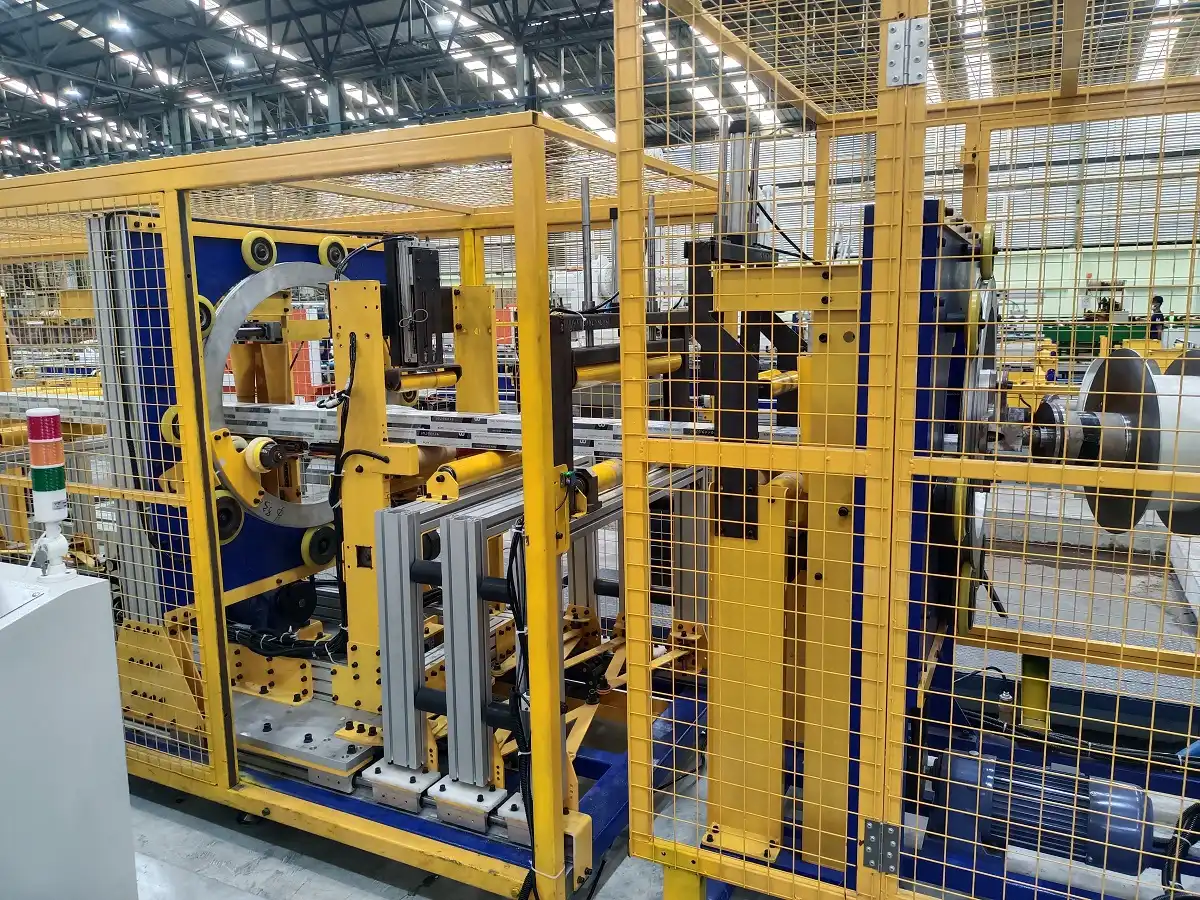

Through my extensive experience in developing and manufacturing packing machines at FHOPEPACK, I have seen countless “strength tests” in real-world scenarios. We’ve optimized machines to handle both materials because each has its domain where it performs best. For instance, securing a 3-ton cold-rolled coil for a long journey through varying climates requires more than just initial strength; it requires packaging that can adapt. My team and I often work with clients who need to meet strict CE/ISO certification standards for export, where long-term packaging integrity is paramount. This is where the subtle differences in material properties truly matter for coil handling and packaging.
Let us compare their performance characteristics:
-
Tensile Strength and Breaking Strength:
- Steel Strapping: 💪 Typically has a higher absolute breaking strength. It is designed to hold immense static loads with minimal give. This rigidity is excellent for preventing compression and maintaining the coil’s shape under extreme pressure. For instance, a 32mm x 1.0mm steel strap can have a breaking strength of over 10,000 N.
- PET Strapping: 🏋️♂️ While its breaking strength might be slightly lower than equivalent steel strapping, it offers excellent tensile strength for its weight. Its key advantage lies in its elasticity. It can absorb shocks and impacts without breaking, then recover much of its original tension. This “dynamic strength” is vital for coils that might shift during transit. (strapping material strength, coil securement performance, industrial packaging durability)
-
Elongation and Tension Retention:
- Steel Strapping: 📉 Very low elongation. Once applied and tensioned, it stays tight. However, if the load settles or shifts, steel strapping can become loose and cannot retighten itself. This can lead to security issues if not re-tensioned.
- PET Strapping: 📈 Significant elongation properties. It can stretch and then recover, maintaining tension even if the coil settles or experiences minor shocks. This superior tension retention over time makes it highly reliable for extended storage or long-distance shipping, reducing the need for re-tensioning. (packaging tension retention, dynamic load securement, long-distance shipping solutions)
-
Resistance to Environmental Factors:
- Steel Strapping: 🌧️ Susceptible to rust and corrosion, especially in humid or wet environments. This can stain the steel coils and weaken the strap over time. It can also mark or scratch the surface of sensitive coils.
- PET Strapping: ☀️ Resistant to rust, corrosion, and UV degradation. It performs well in various temperatures and moisture levels without losing strength or staining the product. This is a significant advantage for products like galvanized steel coils or those destined for export to humid climates. (corrosion-resistant packaging, UV stable strapping, environmental packaging durability)
In a practical “packaging strength test,” for rigidly holding a fixed, very heavy load, steel strapping often wins on initial breaking strength. But for a load that might shift, settle, or face varied environmental conditions, PET strapping’s dynamic tension retention and resistance to degradation often make it the more reliable choice for continuous operation. Both FHOPEPACK and partners like SHJLPACK offer machines that can handle either or both, ensuring flexibility for your production line (automatic strapping solutions, packaging material selection).
Beyond Strength: Which Strapping Offers Better Operational Efficiency and Safety?
Is pure strength the only metric for effective coil packaging, or do operational efficiency and worker safety play an equally critical role? For production directors like Ivan, managing a 24/7 steel mill, the choice of strapping impacts far more than just how well a coil is secured; it influences labor costs, accident rates, and overall production continuity. The reality is that an extremely strong material might come with hidden operational drawbacks.
Beyond raw strength, PET strapping generally offers superior operational efficiency due to its lighter weight and easier handling, reducing labor intensity and increasing the speed of automatic strapping machines. Furthermore, PET significantly enhances safety by eliminating sharp edges, reducing recoil hazards, and preventing rust stains, making it a preferable choice for modern automated packaging lines focused on minimizing worker injury and streamlining the production flow.
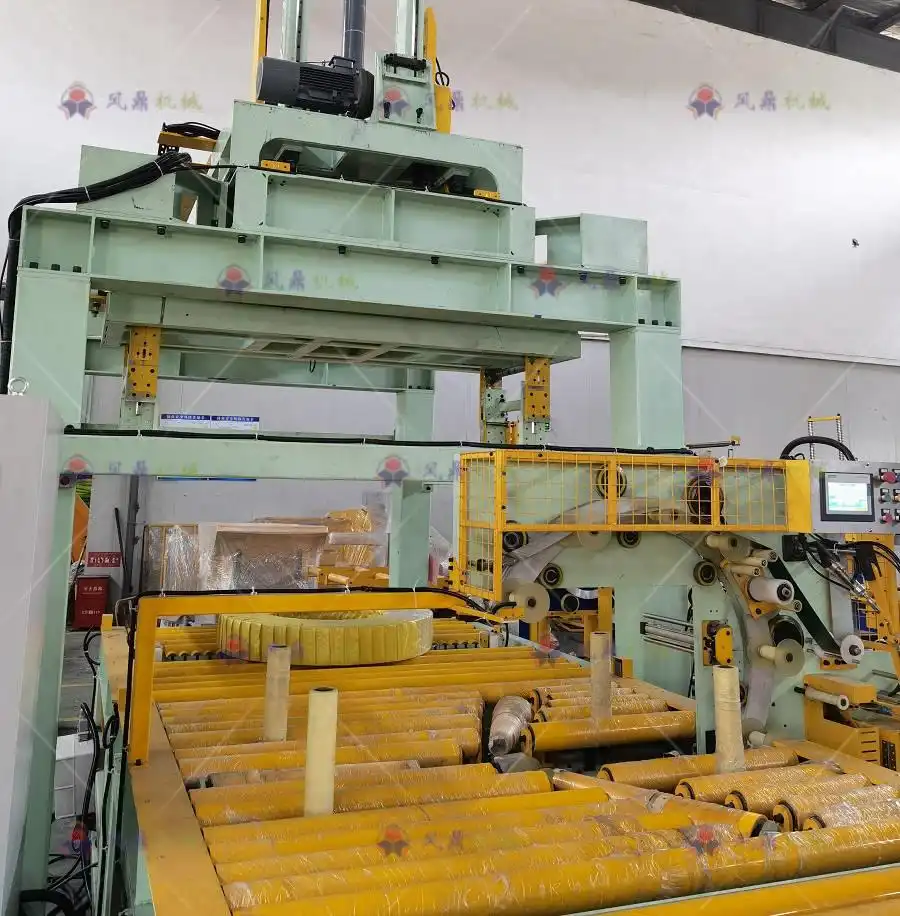

In my journey from a packing machine engineer to establishing FHOPEPACK, I have always prioritized not just the machine’s performance, but also how it impacts the people operating it. I have witnessed firsthand the challenges of manual labor in high-intensity environments, especially in facilities similar to Ivan’s, where high worker turnover is a concern. The shift towards automation, including advanced coil packing lines, is driven by the need for better safety and efficiency. This perspective has guided FHOPEPACK in developing intelligent packaging equipment that seamlessly integrates both PET and steel strapping technologies while prioritizing user-friendliness and safety (packaging automation, worker safety in factories, production efficiency solutions).
Here is how PET and steel strapping compare in these crucial operational aspects:
-
Worker Safety:
- Steel Strapping: 🚨 Presents inherent safety risks. It has sharp edges that can cause cuts and abrasions. When cut under tension, it can snap back violently, causing severe injuries. Its heavy weight also poses ergonomic challenges during manual handling. This contributes to higher work injury rates and increased labor intensity, which makes it harder to retain young workers in demanding environments.
- PET Strapping: ✅ Significantly safer. It has no sharp edges, reducing the risk of cuts. When released, it recoils with much less force than steel, minimizing potential injuries. Its lighter weight also makes it easier to handle, both manually and within automated systems, improving overall ergonomics and reducing physical strain on workers. (industrial safety standards, reduced labor intensity, ergonomic packaging solutions)
-
Machine Compatibility and Automation Potential:
- Steel Strapping: Requires heavy-duty strapping heads and robust machine components to apply and seal effectively. These machines are generally more complex to maintain and often slower due to the strength required. While FHOPEPACK designs powerful steel strapping machines, they still need more robust infrastructure.
- PET Strapping: ⚙️ More forgiving on equipment. Lighter strapping heads and faster cycle times are possible, leading to higher throughput in automatic strapping machines. Its uniform dimensions and cleaner material make it less prone to jamming and wear on machine parts, contributing to smoother, more continuous production, which is essential for 24/7 operations. (automatic strapping machine design, continuous production systems, packaging line uptime)
-
Cost Implications (Beyond Material Cost):
- Steel Strapping: While the initial material cost per foot might seem competitive, consider the hidden costs: higher potential for product damage due to rust, increased labor costs due to handling risks and slower application, and potentially higher machine maintenance due to the stress on components.
- PET Strapping: Often a more cost-effective long-term solution. Its resistance to corrosion prevents product damage, reducing claims and returns. Faster application speeds and reduced worker injuries lower operational overhead. Furthermore, it often provides more meters per coil, extending refill intervals in automated systems. (packaging material cost analysis, operational expenditure reduction, industrial packaging ROI)
Considering Ivan’s goals to enhance safety and automate operations, the operational advantages of PET strapping are compelling. It helps reduce reliance on manual labor, improves the safety record, and generally integrates more smoothly into high-speed, automated coil packing lines, such as those FHOPEPACK provides, ensuring efficient and uninterrupted production (automated packaging solutions, smart factory integration).
Integrating Strapping: How Do These Options Fit into an Automatic Coil Packing Line?
For a high-volume steel mill, a standalone strapping machine is rarely enough. The real challenge, as Ivan knows, is creating a seamless, automated production flow. How do PET and steel strapping machines integrate into a comprehensive coil packing line, especially when aiming for higher automation levels and consistency? It is about more than just strapping; it is about an entire synchronized system.
Both PET and steel strapping machines can be seamlessly integrated into an automatic coil packing line, but their operational characteristics influence the overall line design and efficiency. Steel strapping machines, known for their robust design, require heavier-duty conveying and handling systems to manage the strapping material and coiled products. PET strapping machines, on the other hand, often allow for faster cycle times, simpler material handling, and can be more easily combined with other packaging processes like wrapping and labeling due to their material flexibility, contributing to a more agile and streamlined automated solution.


At FHOPEPACK, our mission is to deliver complete, customized packing solutions. This involves designing entire coil packing lines that can handle various types of steel coils, from cold-rolled to galvanized, with different packaging requirements. When Randal Liu founded FHOPEPACK, his vision was to provide turnkey engineering that truly meets a factory’s needs, reducing manual intervention and increasing output. For example, we helped a client in a similar industry to Ivan’s to fully automate their coil strapping process, integrating it with their existing conveyor system, which dramatically cut down their labor costs and improved packaging consistency, regardless of whether they chose PET or steel for specific products. Our coil packing machines are built for this precise level of integration.
Here is how the integration works:
-
System Design and Layout:
- Steel Strapping Integration: Requires careful planning due to the strapping machine’s robust size and the material’s stiffness. The entire conveying system for the coils needs to be heavy-duty. The integration typically involves an in-line strapping head that applies multiple straps as the coil moves or rotates. Precise alignment and robust coil handling equipment, such as coil tilters and automatic conveyors, are crucial for this setup.
- PET Strapping Integration: Often allows for more flexible and compact line designs. PET strapping machines can operate at higher speeds and their lighter components reduce stress on the overall automation system. This makes it easier to integrate them into complex lines that include other processes like stretch wrapping, automatic labeling, and even automatic stacking. (integrated packaging systems, automated production lines, coil handling equipment)
-
Compatibility with Other Packaging Processes:
- Full Coil Packing Line: A comprehensive automatic coil packing line often includes:
- Coil Tilting/Turning: Mechanically rotates coils for horizontal or vertical strapping/wrapping.
- Coil Wrapping: Applies stretch film or shrink film for moisture and rust prevention (essential for export quality).
- Strapping (PET or Steel): Secures the coil with bands.
- Automatic Labeling: Applies barcodes or identification labels for tracking.
- Stacking/Palletizing: Organizes finished coils for storage or shipment.
- Seamless Flow: Both PET and steel strapping machines are engineered to interface with these modules. However, PET’s clean nature and higher speed often contribute to a smoother transition between stages, minimizing bottlenecks. FHOPEPACK systems are designed for this kind of fluidity, ensuring no single step slows down the entire automatic coil packing process. (packaging process integration, automated material handling, end-to-end packing solutions)
- Full Coil Packing Line: A comprehensive automatic coil packing line often includes:
-
Maintenance and Uptime:
- Continuous Operation: For a 24-hour, two-shift environment, reliability is paramount. Machines using PET strapping often experience less wear and tear due to the material’s properties, leading to longer intervals between maintenance and less downtime. This directly contributes to higher production continuity and efficiency.
- FHOPEPACK’s Approach: We emphasize designing machines for maximum uptime, whether using PET or steel. Our solutions, and those from reputable partners like SHJLPACK and CNBHPAC, prioritize easy access for maintenance, readily available spare parts, and comprehensive training to ensure your team can keep the line running smoothly. This focus on reliability helps clients achieve their goals of maximizing output with minimal interruptions. (packaging machine maintenance, production line uptime, reliable industrial equipment)
Integrating the right strapping technology into an automatic coil packing line is about creating a holistic system that meets all your production requirements, from initial handling to final shipment. It is about an intelligent packaging system that elevates efficiency and consistency across your entire operation, fulfilling the vision of a truly automated steel coil packaging process.
Choosing the Right Strap: What Factors Influence the Best Strapping Solution for Diverse Coil Types?
With so many variables in steel production, from cold-rolled to color-coated coils, how do you decide between PET and steel strapping? It is not a one-size-fits-all answer, especially when customer requirements, export standards, and product characteristics constantly change. Many production managers find this decision complex, fearing a suboptimal choice will compromise product safety or increase costs.
Choosing the best strapping solution for diverse coil types, whether PET or steel, depends on a multi-faceted assessment including the coil’s weight, dimensions, surface sensitivity, susceptibility to rust, and specific customer requirements like CE/ISO certification. For heavier, rigid coils where maximum compression is needed, steel strapping remains a strong contender. However, for sensitive surfaces, moisture-prone products like galvanized coils, or situations demanding superior tension retention during dynamic transport, PET strapping often proves to be the more adaptable and safer option, especially within automated coil packing lines designed for flexibility.
Having designed numerous customized packing solutions for a global clientele at FHOPEPACK, I understand that the “best” choice is always context-dependent. A standard solution rarely suffices when dealing with hundreds of tons of diverse steel coils daily. My own journey in the packing machine industry, from building machines to establishing a successful factory, taught me the importance of tailoring solutions precisely to client needs. For instance, an export client needing strict moisture protection for color-coated coils will have very different requirements than a domestic client receiving raw cold-rolled coils. We work closely with our clients to understand these nuances.
Here are the critical factors influencing the decision:
-
Coil Characteristics:
- Weight and Inner/Outer Diameter: Extremely heavy coils (e.g., 3 tons) with small inner diameters may favor steel for its rigid hold, preventing telescoping. Lighter coils or those with larger diameters are well-suited for PET.
- Product Type (Cold-rolled, Galvanized, Color-coated):
- Cold-rolled coils: Often require maximum compression, making steel strapping a traditional choice.
- Galvanized & Color-coated coils: These are highly susceptible to rust staining and surface scratches. PET strapping is ideal here due to its non-corrosive nature and smoother edges, which protect the delicate surface finish.
- Surface Sensitivity: For painted or highly finished surfaces, PET strapping is less likely to cause abrasions or marks compared to steel strapping, which can sometimes “bite” into the product. (coil packaging solutions, product surface protection, diverse steel products packaging)
-
Customer and Export Requirements:
- CE/ISO Certification: Many export markets, particularly in Europe, have stringent packaging standards. While both materials can meet strength requirements, PET’s non-corrosive properties and improved safety profile can be advantageous for achieving comprehensive certifications, especially for long-transit ocean freight.
- Barcode/RFID Integration: Both strapping types allow for label application. However, a full automatic coil packing line from FHOPEPACK ensures seamless integration of automatic labeling, regardless of the strapping material, meeting advanced tracking needs. (export packaging standards, international shipping requirements, packaging compliance)
-
Logistics and Transportation Conditions:
- Transit Distance and Duration: Longer transit times and exposure to varied environmental conditions (temperature, humidity) favor PET strapping due to its superior tension retention and resistance to weather degradation.
- Mode of Transport (Truck, Rail, Sea): Dynamic loads on trucks or railcars benefit from PET’s shock-absorbing elasticity. For very stable, compact loads on pallets, steel might be sufficient. (transport packaging optimization, logistics efficiency, packaging for dynamic loads)
-
Operational Goals:
- Automation Level Desired: For high automation and reduced manual intervention, PET strapping often leads to smoother, faster processes with fewer jams. This supports goals like those of Ivan, who aims for a fully automatic coil packing line that minimizes labor.
- Safety Improvement: If reducing work-related injuries and improving the overall safety environment is a top priority, PET strapping clearly offers an advantage. (packaging automation goals, workplace safety improvements, production flow optimization)
Ultimately, the best solution involves a thoughtful analysis of these factors. FHOPEPACK excels at providing this expertise, guiding clients to select the optimal strapping machine and material. We can even offer coil packing machines that are capable of using both PET and steel strapping, providing maximum flexibility for your evolving production needs. Our aim, along with reputable industry names like SHJLPACK and CNBHPAC, is to empower you with the knowledge to make the right choice for every coil.
The Ultimate Choice: How Can Steel Mills Achieve Optimal Coil Packaging Performance?
After exploring the strengths and weaknesses of PET and steel strapping, the ultimate question remains: how can a steel mill like Ivan’s truly achieve optimal coil packaging performance, blending security, efficiency, safety, and cost-effectiveness? It is clear that merely choosing a strapping material is insufficient; a holistic approach is paramount.
Achieving optimal coil packaging performance in steel mills requires a holistic strategy, integrating the right strapping technology (PET for dynamic loads, sensitive surfaces, and enhanced safety, or steel for maximum rigidity in static, heavy applications) within a fully automatic coil packing line. This involves careful consideration of coil characteristics, customer demands, and logistical realities, all while prioritizing automation to reduce labor, enhance safety, improve packaging quality to export standards, and minimize overall operational costs.

My journey in the packing machine industry, culminating in FHOPEPACK, has shown me time and again that success lies in comprehensive solutions. I built FHOPEPACK on the principle of partnership, helping clients like Ivan navigate these complex decisions. We provide not just machines, but expertise, ensuring that every component, from the strapping machine to the coil handling systems, works in perfect harmony to deliver a complete, high-performance coil packing line that meets specific production challenges.












