
Orbital Wrapping Machine in Thailand: How Do Speed and Output Differ by Model?
Are you struggling with slow, manual packing processes? Is your factory in Thailand facing bottlenecks at the end of the production line? Many manufacturers feel this pain. Manual wrapping of heavy coils or wires is not just slow; it is also risky. It takes too much time, wastes labor, and can even damage your products. This inefficiency directly impacts your bottom line. It slows down delivery, increases operational costs, and puts your workers in danger. You might even lose customers due to delays or damaged goods. This is a common challenge for businesses aiming for growth. The good news is that there are better ways. Automated orbital wrapping machines offer a powerful solution. They can drastically change how you handle packing. They boost speed, improve safety, and protect your products. This article will show you how different models work and what they can do for your factory.
Orbital wrapping machine models in Thailand differ significantly in speed and output based on their design, automation level, and product specifications. Basic semi-automatic models might achieve 10-20 wraps per minute with lower throughput for smaller products, while fully automatic, heavy-duty systems can reach 60+ wraps per minute, handling dozens of large coils or bundles per hour through continuous operation and integrated conveyors, crucial for high-volume industries like steel and wire processing in regions like Thailand.

Understanding these differences is key to making a smart investment. As someone who built a packing machine factory from the ground up, I have seen firsthand how the right machine can transform a business. Let’s dig deeper into what makes each model unique. We will also look at how they can help solve your biggest operational challenges.
What is an Orbital Wrapping Machine, and Why Does Thailand’s Industry Need It?
Do you find yourself confused by all the different packing machine terms? Maybe you know you need to automate, but you are not sure where to start. Many factory managers face this. They hear about orbital wrappers but do not fully grasp what they are or how they fit into their operations. This lack of clarity can lead to hesitation. It might stop you from making improvements that your factory urgently needs. Without proper understanding, you might choose the wrong machine or miss out on big efficiency gains. For industries in Thailand, where demand is growing, this is a real problem. Let me simplify it for you. An orbital wrapping machine is a game-changer for many industries. It wraps products securely using stretch film. This protects them during storage and transport. For industries in Thailand, especially those dealing with long, coiled, or bulky items, these machines are essential.
An orbital wrapping machine wraps products by moving a roll of stretch film in an orbit around the item as it passes through a central ring. It is vital for industries in Thailand, such as steel, wire, rubber, and timber, because it provides superior protection against dust, moisture, and damage for long or coiled products, automates labor-intensive processes, and improves overall factory safety and efficiency, crucial for meeting increasing production demands and international quality standards.
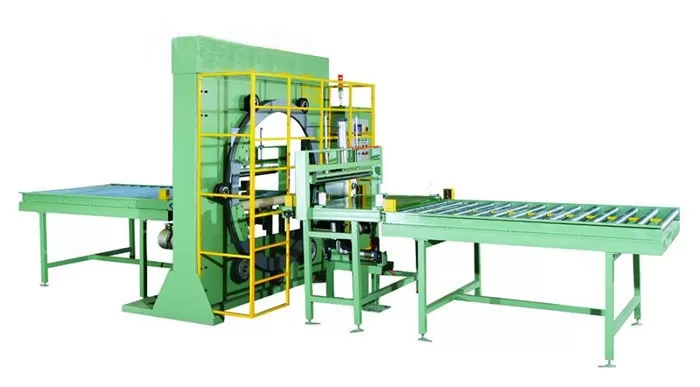
From my experience, seeing these machines in action reveals their true value. When I first started in the packing machine industry, manual wrapping was the norm. Workers would spend hours covering large coils or bundles. This was not only slow but also physically demanding and dangerous. Think about the risk of a heavy coil falling or workers straining their backs. An orbital wrapper changes all that.
These machines use a film carriage that rotates around a central opening. Your product, whether it is a steel coil, a bundle of pipes, or a tire, passes through this opening. The film carriage then applies layers of stretch film. This creates a tight, protective barrier. This barrier guards against many common problems. It stops dust and dirt from getting in. It protects against moisture, which can cause rust or mold. It also provides impact protection during handling and shipping.
In Thailand, many industries have specific needs. The steel industry handles heavy coils and long profiles. The wire industry deals with numerous smaller coils. The rubber industry processes tires or large rolls of rubber. The timber industry packages long planks or bundles. All these products share a common need: strong, reliable packaging. Manual methods often fail to provide consistent quality. They also struggle with the sheer volume of production these industries require.
A key benefit is safety. For factory managers, worker safety is a major concern. Manual handling of heavy or awkward items leads to injuries. These injuries mean higher insurance costs and lost workdays. By automating with an orbital wrapper, you reduce the need for workers to directly handle items during wrapping. This keeps them out of harm’s way.
Another point is efficiency. Thai factories aim to be competitive. They need to produce more, faster. Manual wrapping creates a bottleneck. It slows down the entire production line. An orbital wrapper, especially an automatic one, can wrap products continuously. This means products move from production to packaging to shipment without long waits. This boosts throughput significantly.
The design of an orbital wrapper also allows for flexibility. You can adjust the tension of the film. You can change the number of wraps. This customization ensures each product gets the right level of protection. This is vital for different product types and shipping conditions. For instance, a heavy steel coil might need more layers than a light bundle of plastic pipes.
Consider the environment in many Thai factories. It can be dusty or humid. Products need robust protection. An orbital wrapper gives this. It helps maintain product quality. This leads to fewer customer complaints. It also means less product damage, which saves money. For any business wanting to grow, investing in such a machine is a strategic move. It is about more than just wrapping. It is about improving your entire operation.
How Do Different Orbital Wrapper Models Affect Packing Speed?
Are you struggling with slow packing speeds? Do your current methods create bottlenecks at the end of your production line? Many factories find that their packing process cannot keep up with production. This leads to delays and reduced overall output. These slowdowns are costly. They mean wasted labor time. They increase inventory holding costs. Most importantly, they push back delivery times, which can disappoint customers. For a busy factory, every minute counts. Different orbital wrapper models offer varied packing speeds. Understanding these differences can help you choose a machine that matches your production pace. We will look at the factors that make one machine faster than another. This will help you find the right speed for your factory’s needs.
Orbital wrapper models affect packing speed primarily through their automation level, ring diameter, and motor power. Semi-automatic machines require manual loading/unloading, limiting speed to 10-20 wraps/minute. Fully automatic models with conveyors achieve 30-60+ wraps/minute by continuously feeding products, while heavy-duty, high-power models optimize for larger or heavier items. Faster ring rotation and integrated systems are key for maximizing throughput, essential for high-volume operations.
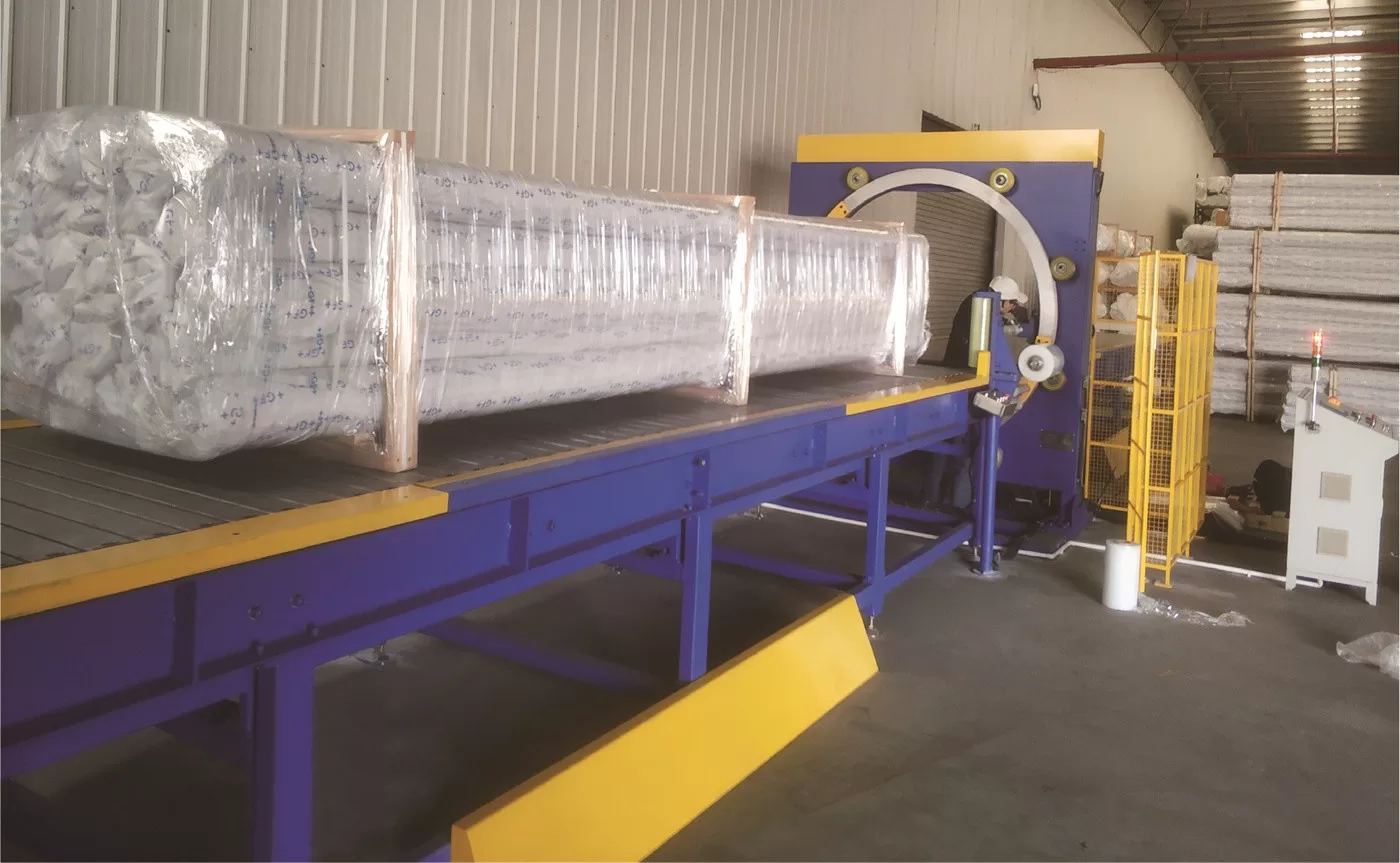
Packing speed is a critical factor for any factory manager. It directly impacts how much product you can get out the door. From my early days as a packing machine engineer, I learned that speed is not just about how fast a machine spins. It is about the entire process.
Let’s break down how different models affect packing speed.
Factors Influencing Orbital Wrapper Speed:
-
Automation Level: This is perhaps the biggest factor.
- Semi-automatic machines: These need an operator to load the product onto the conveyor or turntable. The operator also starts the wrapping cycle and unloads the finished product. This human interaction means slower cycle times. A semi-automatic machine might complete 10 to 20 wraps per minute, depending on the product size and operator efficiency. The actual “packing speed” here is limited by the manual steps involved.
- Automatic machines: These are integrated into your production line. Products move directly from one stage to the wrapper via conveyors. Sensors detect the product, the machine starts wrapping, cuts the film, and seals it automatically. Then, the wrapped product moves to the next stage. This continuous flow drastically increases speed. Many automatic orbital wrappers can achieve 30 to 60 or even more wraps per minute. Some specialized models designed for high-volume items can be even faster.
- Fully Automatic Systems with Integration: The highest speeds come from systems that are fully integrated. These include automatic feeding, centering, wrapping, cutting, sealing, and offloading. Such systems can process many products per hour without constant human intervention. They are built for maximum throughput.
-
Ring Diameter and Product Size:
- The size of the orbital ring limits the size of the product it can wrap. A smaller ring might spin faster, but it can only handle smaller items.
- Larger ring diameters are needed for bigger items, like large steel coils or bundles of pipes. While the ring itself might rotate at a similar RPM to a smaller one, the actual linear speed of the film application might vary. More importantly, larger products generally take longer to pass through the wrapping zone, affecting the overall product-per-hour speed.
-
Motor Power and Drive System:
- A powerful motor and a robust drive system allow the wrapping ring to rotate faster and maintain consistent speed under load. This is especially important for heavy-duty applications where the machine needs to handle large, weighty products.
- Advanced control systems also play a role. They ensure precise film overlap and tension, optimizing the wrapping process to be both fast and effective.
-
Film Application and Cut-Off Mechanism:
- The speed at which the film is applied and cut also matters. Machines with advanced film pre-stretch capabilities can use less film while still achieving a secure wrap, which can sometimes reduce cycle time.
- Automated film cutting and sealing mechanisms are much faster and more consistent than manual methods. This contributes significantly to overall speed.
-
Conveyor System Speed:
- For automatic machines, the speed of the infeed and outfeed conveyors must match the wrapping speed. If conveyors are too slow, the wrapper will sit idle, waiting for the next product. If they are too fast, products might queue up, causing jams. A well-designed system has synchronized conveyor speeds.
For a factory in Thailand, dealing with steel coils or wire, speed is directly linked to production targets. If your current packing bottleneck is holding you back, an upgrade to a faster, more automated orbital wrapper is not just an expense. It is an investment that pays off by increasing your factory’s output and efficiency. I have seen clients transform their entire operation by simply choosing a machine that could keep up with their production line. It is about aligning your packing speed with your overall manufacturing pace.
What Determines the Output Capacity of Orbital Wrapping Machines?
Are you struggling to meet your production targets because your packing line cannot handle the volume? Many factories face this. They produce goods quickly, but then everything slows down at the wrapping stage. This means lost potential sales and unhappy customers. This mismatch between production and packing capacity is a serious issue. It leads to backlogs, extra storage costs, and extended lead times. You are essentially leaving money on the table if your packing machines cannot keep up. The output capacity of an orbital wrapping machine is not just about speed; it is about the total volume of products it can process over a period. We will explore the key factors that define this capacity. This will help you choose a machine that truly matches your factory’s needs and production goals.
The output capacity of orbital wrapping machines is determined by a combination of wrapping speed, product size and shape, automation level, and system integration. Faster machines handle more items per hour, while larger products naturally reduce the number of items processed within the same timeframe. Fully automated systems with efficient material handling, like integrated conveyors and automatic film changes, maximize continuous throughput, crucial for industries needing high daily or hourly output of diverse products.

Output capacity is the real metric that factory managers care about. It answers the question: “How many finished, wrapped products can I get out of this machine in an hour or a day?” This is where the rubber meets the road for your business. When I was building my factory, I learned that a machine’s advertised “speed” might not directly translate to your “output” if other factors are not considered.
Let’s look at the elements that truly shape an orbital wrapping machine’s output capacity.
Key Determinants of Output Capacity:
- Wrapping Speed (Wraps Per Minute): This is the foundational element. A machine that spins faster and applies film quicker will inherently have a higher potential output. As discussed earlier, automation level significantly drives this speed. An automatic machine with 60 wraps per minute will always outperform a semi-automatic one doing 15 wraps per minute, assuming all else is equal.
- Product Dimensions (Size and Shape): This is a critical, often overlooked, factor.
- Length: Longer products take more time to pass through the wrapping ring, even if the ring rotates fast. A machine designed for short coils will process more items per hour than one wrapping 6-meter steel beams.
- Width/Height: Bulkier products might require more film layers or slower handling to ensure a secure wrap. The physical dimensions dictate how many “product cycles” can occur in a given time.
- Film Roll Change Frequency: Manual film changes can cause significant downtime. If a film roll only lasts for 50 cycles and it takes 5 minutes to change it, that’s a huge hit to output. Machines with larger film roll capacities or automatic film splicing/changing systems drastically reduce this downtime, thereby increasing continuous output.
- Material Handling and Conveyor System Efficiency: For high-capacity operations, the speed and reliability of the entire material handling system are paramount.
- Infeed/Outfeed Conveyors: Are they synchronized with the wrapper? Can they handle the weight and dimensions of the products? Smooth, consistent product flow in and out of the wrapper prevents bottlenecks.
- Automatic Centering: Some advanced machines can automatically center products as they enter the wrapping zone. This saves manual adjustment time and ensures consistent wrapping quality.
- Accumulation Buffers: In a fully automated line, having buffer zones before and after the wrapper can help maintain continuous operation even if there are slight delays upstream or downstream.
- Reliability and Uptime: Even the fastest machine will have low output if it frequently breaks down. A robust, well-maintained machine with durable components will have higher uptime. This means more hours spent actually wrapping products. This factor is huge for factory managers, who cannot afford production line stoppages.
- Ease of Operation and Maintenance: If a machine is difficult to operate or requires complex, time-consuming maintenance, its effective output will suffer. User-friendly interfaces, easy access for routine checks, and readily available spare parts all contribute to higher operational efficiency and, thus, higher output.








