

Orbital Wrapping Machine for Thailand: How Does It Enhance Export Packaging?
Shipping products from Thailand, especially heavy industrial goods, means facing tough challenges. Damaged goods, slow processes, and high costs can eat into your profits. Are you constantly worrying about how your steel coils or wire bundles will survive the long journey overseas? Do inefficient packing methods slow down your entire operation, costing you valuable time and money? There is a better way. I have seen firsthand how the right packing solutions can transform a business.
An orbital wrapping machine significantly enhances export packaging for Thai businesses by providing superior product protection against moisture, dust, and damage during transit, speeding up the packing process, and reducing labor costs. This advanced equipment ensures products like steel coils and wire bundles arrive at their international destinations in perfect condition, bolstering customer satisfaction and reducing costly returns.


I built my career around solving these very problems. From working on the factory floor to running my own successful packing machine factory, I have learned what truly works. Now, I want to share my knowledge with you. Let’s dive deeper into how an orbital wrapper can be a game-changer for your export operations in Thailand.
How Do Manual Packing Methods Hurt Your Export Business in Thailand?
Many factories in Thailand still rely on manual methods for packing large, heavy items like steel coils or wire rods. This often seems like the “easy” way, but it brings a host of hidden problems. Are your workers struggling with heavy lifting, leading to slow production and frequent injuries? Do your customers complain about damaged goods, impacting your reputation and future orders? This old way of doing things is a silent drain on your profits and a risk to your team. Understanding these issues is the first step. I have seen countless businesses trapped by outdated processes.
Manual packing methods severely hurt export businesses in Thailand by causing significant inefficiencies, high labor costs, increased risks of worker injury, and greater potential for product damage during handling and transit. These problems lead to delayed shipments, higher operational expenses, diminished product quality upon arrival, and ultimately, a loss of customer trust and market competitiveness.


Manual packing might seem cheaper at first glance, but I know from my years in the industry that it often creates more problems than it solves, especially for export-oriented businesses in Thailand. The core issue revolves around consistency and scale. When you are moving large volumes of goods, particularly heavy items like metal coils or bundles, human limitations become very clear. First, consider the efficiency bottleneck. Each coil or bundle requires multiple steps: positioning, wrapping, taping, and securing. When done by hand, this is slow. A worker can only move so fast. If you have ten orders waiting, and each takes an hour to pack manually, you are looking at significant delays. These delays cascade through your entire production line, affecting delivery times and customer satisfaction. In a competitive market like Southeast Asia, speed matters a lot. Second, safety risks are a huge concern. I have witnessed firsthand the dangers of manually handling heavy items. Workers lift, twist, and bend in ways that put their bodies at risk. Sprains, strains, and even more serious injuries are common. This leads to higher insurance costs, increased absenteeism, and a constant search for new staff. Michael, the factory manager in Mexico, understands this pressure. He knows that employee well-being directly impacts productivity and the bottom line. Reducing manual labor on dangerous tasks is not just good for people, it is good for business. Third, product damage becomes much more likely. When coils are moved manually, they can be dropped, scraped, or improperly secured. This causes dents, scratches, or unwrapping during transit. Imagine shipping a perfectly manufactured steel coil from Thailand to Europe, only for it to arrive with damaged edges because of poor manual handling during packing. This results in customer complaints, returns, and lost profits. For export goods, where the journey is long and handling is frequent, this risk is amplified. Fourth, inconsistent quality plagues manual packing. Not every worker wraps a product with the same tension or precision. Some might wrap too loosely, others too tightly, or miss spots entirely. This inconsistency means you cannot guarantee that every package offers the same level of protection. For export, where brand reputation is everything, this is a major problem. Customers expect a consistent, high-quality product, from the item itself to its packaging.
| Challenge Area | Impact on Export Business in Thailand |
|---|---|
| Efficiency | Slow packing, production bottlenecks, missed deadlines, higher operational costs |
| Worker Safety | High injury rates, increased insurance, absenteeism, staff turnover |
| Product Quality | Damage during transit, customer complaints, returns, loss of reputation |
| Cost Implications | High labor costs, increased material waste, rework expenses |
These issues clearly show that manual packing is not just a temporary solution. It is a fundamental barrier to growth and profitability, especially for businesses looking to expand their reach in the global market from Thailand.
Can an Orbital Wrapper Truly Protect Your Products for Long-Distance Shipping?
When you ship goods from Thailand across oceans, you are exposing them to harsh conditions. Moisture, dust, rough handling, and vibration are all enemies of your product. Are you confident that your current packaging can withstand weeks at sea or days on bumpy roads without your products getting damaged? The thought of a perfectly good product arriving in poor condition is a nightmare for any exporter. This is where the right protective packaging comes in. I have spent years perfecting how products are secured for transit.
Yes, an orbital wrapper truly protects products for long-distance shipping by applying a tight, multi-layered film around the item, creating a robust barrier against moisture, dust, and physical impact. This uniform wrapping secures the product’s shape and prevents shifting, ensuring goods from Thailand arrive at their international destinations in excellent condition, significantly reducing transit damage.
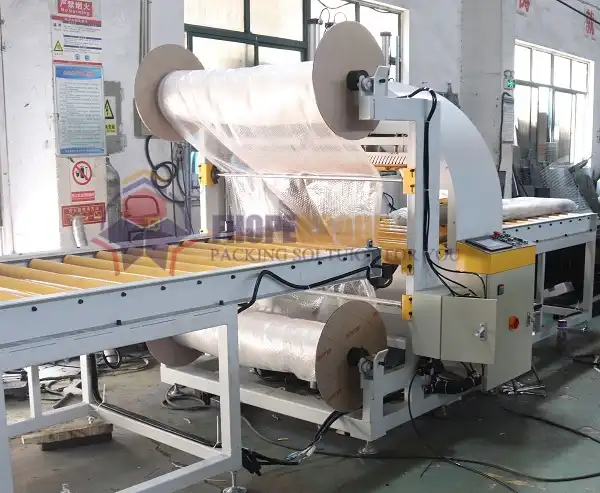

From my experience, protecting goods for export is not just about putting a cover over them. It is about creating a secure, resilient shell that can endure the journey. This is particularly true for heavy, industrial products common in Thailand’s export market, like steel coils, pipes, or aluminum profiles. These items are often heavy, have irregular shapes, and are prone to surface damage if not properly secured. The primary benefit of an orbital wrapper lies in its 360-degree, tight wrapping capability. Unlike stretch wrappers that wrap vertically or horizontally on a turntable, an orbital wrapper wraps around the item as it passes through a central ring. This creates a complete, overlapping layer of film that seals the product from all sides. Think about a steel coil. An orbital wrapper wraps around its circumference, securing every part of its outer surface. This multi-directional application of film is crucial for preventing damage. One major concern for long-distance shipping is moisture and dust ingress. Sea freight from Thailand to, say, Europe or the Americas, exposes products to high humidity and condensation. An orbital wrapper creates a tight, water-resistant barrier that dramatically reduces the risk of rust or contamination. The film layers act like a protective skin, keeping environmental elements out. I have seen products that would have rusted or gotten dirty on their journey arrive pristine because of this superior wrapping. Another critical aspect is securing the load against movement and abrasion. During transport, especially on ships or trucks, products can shift and rub against each other or the container walls. This friction causes surface damage. The tight, consistent wrap from an orbital machine holds the product together, preventing parts from moving independently. For items like wire bundles, it keeps individual wires from unraveling or getting snagged. This uniform tension also helps maintain the product’s shape, reducing the risk of deformation. Furthermore, the film used in orbital wrapping offers impact resistance. While it cannot stop extreme impacts, the multiple layers of stretch film provide a cushioning effect, absorbing minor bumps and scrapes. This is especially important for delicate edges or surfaces of metal products that are easily scratched or dented. The film also protects against UV radiation and other environmental factors that could degrade the product over time during storage or transit.
| Protection Aspect | How Orbital Wrapper Helps |
|---|---|
| Moisture/Dust | Creates a 360-degree sealed barrier with overlapping film layers, preventing water and particulate ingress. |
| Physical Damage | Uniformly secures product, prevents shifting/abrasion, multi-layered film provides minor impact cushioning. |
| Load Stability | Tight tension holds product shape, prevents parts from unraveling or moving independently during transit. |
| Environmental | Protects against UV, helps maintain product integrity during long-term storage or exposed transit. |
The investment in an orbital wrapper is an investment in peace of mind. It ensures that the quality you put into your product at your factory in Thailand is the same quality your customer receives, no matter the distance.
What Specific Benefits Do Orbital Wrappers Offer for Thai Manufacturers?
Thai manufacturers, especially those in the metal processing or heavy goods sector, face intense global competition. Every edge matters when it comes to efficiency and cost. Are you constantly looking for ways to cut operational costs without sacrificing quality? Do you want to speed up your production line and enhance your reputation as a reliable exporter? I believe the answer often lies in smart automation. For many Thai factories, an orbital wrapping machine offers clear, tangible advantages.
Orbital wrappers offer Thai manufacturers significant benefits including substantial labor cost reduction through automation, increased packing speed and throughput, superior product protection tailored for export, and consistent, high-quality packaging that enhances brand reputation. These advantages lead to higher profitability and improved competitiveness in the international market, especially for heavy or irregularly shaped goods.


Having spent years in the packing machine industry, I have seen the transformation that automation brings to factories. For Thai manufacturers, particularly those dealing with products like steel coils, pipes, tires, or furniture, an orbital wrapping machine is not just a piece of equipment; it is a strategic asset. First and foremost, there is a dramatic reduction in labor costs and dependence on manual labor. Think about Michael’s situation. He relies heavily on manual processes, leading to high labor costs and safety risks. An orbital wrapper automates the entire wrapping process. What once took several workers and a long time, now takes one operator to load the machine and monitor it. This frees up valuable manpower to focus on more skilled tasks. Over time, the savings in wages, benefits, and injury-related costs are substantial. This allows Thai manufacturers to allocate resources more efficiently, making them more competitive. Second, packing speed and throughput see a major boost. Manual wrapping is inherently slow. An orbital machine can wrap multiple items per minute, depending on the machine’s design and product size. This significantly increases the factory’s capacity to process finished goods for export. Faster packing means less bottleneck at the end of the production line, quicker dispatch of orders, and ultimately, higher overall factory output. In a fast-paced global market, the ability to fulfill orders quickly is a huge advantage for Thai exporters. Third, the consistency and quality of packaging improve dramatically. Human error is eliminated. The machine applies film with consistent tension and overlap, ensuring every package meets the same high standard. This uniform quality is vital for building a strong brand reputation in international markets. When a customer in Europe or North America receives a perfectly wrapped product from Thailand every single time, it builds trust and reinforces the manufacturer’s commitment to quality. This also reduces the likelihood of customer complaints related to packaging and transit damage, saving money on returns and rework. Fourth, optimized material usage is another key benefit. Orbital wrappers are designed to apply film efficiently, minimizing waste. They can be programmed to use the optimal amount of film for each product, preventing over-wrapping or under-wrapping. This leads to savings on consumables, which adds up significantly over thousands of packages. In the long run, this contributes directly to the manufacturer’s profitability.
| Benefit Area | How It Helps Thai Manufacturers |
|---|---|
| Labor Reduction | Automates wrapping, cuts manual labor needs, reduces wages, benefits, and injury-related costs. |
| Increased Speed | Wraps items much faster than manual methods, boosts throughput, reduces production bottlenecks. |
| Quality/Consistency | Delivers uniform, high-quality packaging every time, enhances brand reputation, reduces complaints. |
| Cost Efficiency | Optimizes film usage, minimizes waste, contributes to overall lower operational costs. |
These clear advantages demonstrate that investing in an orbital wrapping machine is not just an expense for a Thai manufacturer. It is a strategic move to optimize operations, enhance product delivery, and secure a stronger position in the competitive global export arena.
How Does an Orbital Wrapping Machine Improve Worker Safety and Cut Costs?
Workplace injuries are a serious issue in manufacturing, especially when heavy lifting and repetitive tasks are involved. These incidents not only harm employees but also hit your company financially. Are you constantly worried about your workers straining their backs or getting injured while packing large items? Do high insurance premiums and employee turnover keep you up at night? I have always believed that a safe workplace is a productive workplace. Automation, specifically orbital wrapping, directly addresses these safety and cost challenges.
An orbital wrapping machine dramatically improves worker safety by eliminating manual heavy lifting and repetitive tasks associated with hand-wrapping large items, thereby reducing the risk of strains, sprains, and other injuries. It simultaneously cuts costs by lowering labor expenses, decreasing insurance claims, minimizing product damage and rework, and optimizing film usage, leading to significant operational savings.
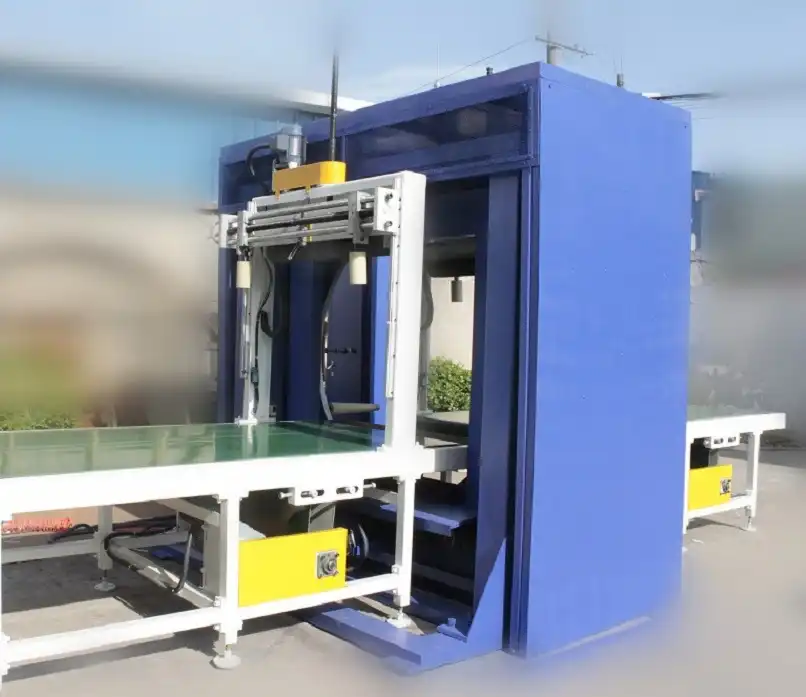

From my time on the factory floor and later running my own plant, worker safety was always a top priority. It is not just a moral obligation; it is a smart business decision. An injured worker means lost productivity, potential legal issues, and a drop in team morale. This is why orbital wrapping machines are so impactful. The most direct impact on worker safety is the reduction or elimination of manual handling of heavy or awkwardly shaped products. Imagine trying to hand-wrap a 500kg steel coil. It is impossible without mechanical assistance, and even then, securing the wrap by hand involves significant physical strain. An orbital wrapper takes this task entirely off human hands. The product is fed into the machine, and the machine does the wrapping. Workers are no longer bending, lifting, stretching, or making repetitive motions that lead to musculoskeletal disorders. This directly reduces the incidence of back injuries, wrist strain, and other common workplace accidents. A safer environment also leads to happier, more productive employees and reduced staff turnover. When it comes to cost cutting, the benefits are multi-faceted. First, there’s the obvious reduction in labor expenses. As I mentioned earlier, one machine can do the work of several people. This allows businesses to reallocate their workforce or reduce their overall labor costs, which is a significant saving over time. Second, lower insurance premiums and reduced medical costs for worker injuries contribute to the bottom line. Fewer accidents mean fewer claims, and insurance companies often offer better rates to safer workplaces. Michael, as a factory manager, understands these direct financial impacts. Third, decreased product damage and associated rework are major cost savers. When products are consistently and securely wrapped by a machine, the chances of them being damaged during internal transfers or external shipping drop dramatically. This means fewer customer complaints, fewer returns, and less money spent on repairing or replacing damaged goods. This not only saves material and labor but also protects the company’s reputation and customer relationships. I have seen how quickly profit margins can erode due to product damage; an orbital wrapper helps seal that leak. Finally, optimized material usage contributes to cost efficiency. Advanced orbital wrappers can be programmed for specific wrap patterns and film tension, ensuring only the necessary amount of film is used. Manual wrapping often leads to either too much film being used (waste) or too little (insufficient protection). The machine’s precision minimizes waste, leading to direct savings on packaging material costs.
| Cost/Safety Factor | Impact of Orbital Wrapping Machine |
|---|---|
| Worker Injury Risk | Eliminates manual heavy lifting and repetitive tasks, significantly reduces strains, sprains, and accidents. |
| Labor Expenses | Reduces need for multiple manual wrappers, lowers wages, benefits, and training costs. |
| Insurance/Medical | Fewer workplace injuries lead to reduced insurance claims and potentially lower premiums. |
| Product Damage | Consistent, secure wrapping minimizes damage during transit, cutting rework and replacement costs. |
| Material Waste | Precise film application optimizes usage, reducing costs for packaging materials. |
These points clearly show that investing in an orbital wrapper is not just about making things faster. It is about creating a safer, more efficient, and ultimately more profitable operation. This is critical for any factory manager, whether in Thailand or Mexico, looking to improve their bottom line.
My Insights: Why Choosing the Right Packing Partner Matters More Than Ever
I have seen many businesses make a big mistake. They focus only on the price tag of a machine. They forget that buying a machine is just the start. Have you ever bought equipment only to find the supplier disappears after the sale? Or that their “solution” did not quite fit your real problems? I have heard these stories too many times, and it is a frustrating waste of time and money. My journey from a factory employee to a factory owner taught me a crucial lesson: the right partner makes all the difference.
When I started FHOPEPACK, my goal was always to be more than just a seller of machines. I wanted to be a partner. Michael, the factory manager, faced “supplier trust crisis” in the past. He dealt with vendors who cared only about sales, not about after-sales service. This is a common and serious problem in our industry. For me, that is completely unacceptable. A packing machine, especially an orbital wrapper, is a significant investment. You are not just buying steel and electronics. You are buying a solution to complex operational challenges. You need a supplier who understands your unique production bottlenecks, your safety concerns, and your efficiency goals. For businesses in Thailand exporting specific goods, these needs are unique. I built my own factory from the ground up. I know what it feels like to worry about every single detail. I know the pressure of increasing output while cutting costs. I also understand the importance of reliable equipment. If a machine breaks down, your entire line stops. That is why I believe in thorough consultation before a sale. We need to look at your current processes, your product specifications (like coil diameter or wire bundle length), your factory layout, and your export destinations. This lets us recommend the right machine, not just any machine. After-sales support is another huge factor. What happens when you have a technical question? What if a part needs replacing? A true partner provides quick, expert support. This includes installation guidance, training for your operators, and readily available spare parts. This ensures your investment continues to pay off year after year. For Michael, or any factory manager, knowing that expert guidance is just a phone call away is invaluable. It is the difference between a minor hiccup and a complete shutdown. My experience, from being an engineer on the floor to leading a successful factory, has given me a deep appreciation for practical solutions. I do not just talk about packing; I have lived it. I understand the nuances of coil packing, steel wire packing, and how to make these processes efficient and safe. This hands-on knowledge is what I bring to FHOPEPACK. It is what makes us different. We want to help you achieve financial independence, just as I did, by making your operations as smooth and profitable as possible. We want to help you grow your business by ensuring your products are packed perfectly for global markets. That is our mission. It is about sharing knowledge, building trust, and creating lasting success together.
Conclusion
An orbital wrapping machine is a vital asset for Thai exporters. It boosts efficiency, enhances safety, and protects products for long journeys, ensuring business growth and customer satisfaction.












