
Orbital wrapping machine for Poland’s Consumer Goods – Pros and Cons?
Many factories in Poland face real pressure. They need to produce more, cut costs, and get products out faster. But often, older packing methods slow things down. They waste time and sometimes even damage products. You might be wondering if there is a better way. Is an orbital wrapping machine the answer for your consumer goods business in Poland?
An orbital wrapping machine offers significant pros for Polish consumer goods, like increased packing efficiency, reduced labor costs, and better product protection during transit. However, potential cons include the initial investment, finding enough factory space, and ensuring proper staff training and machine integration.
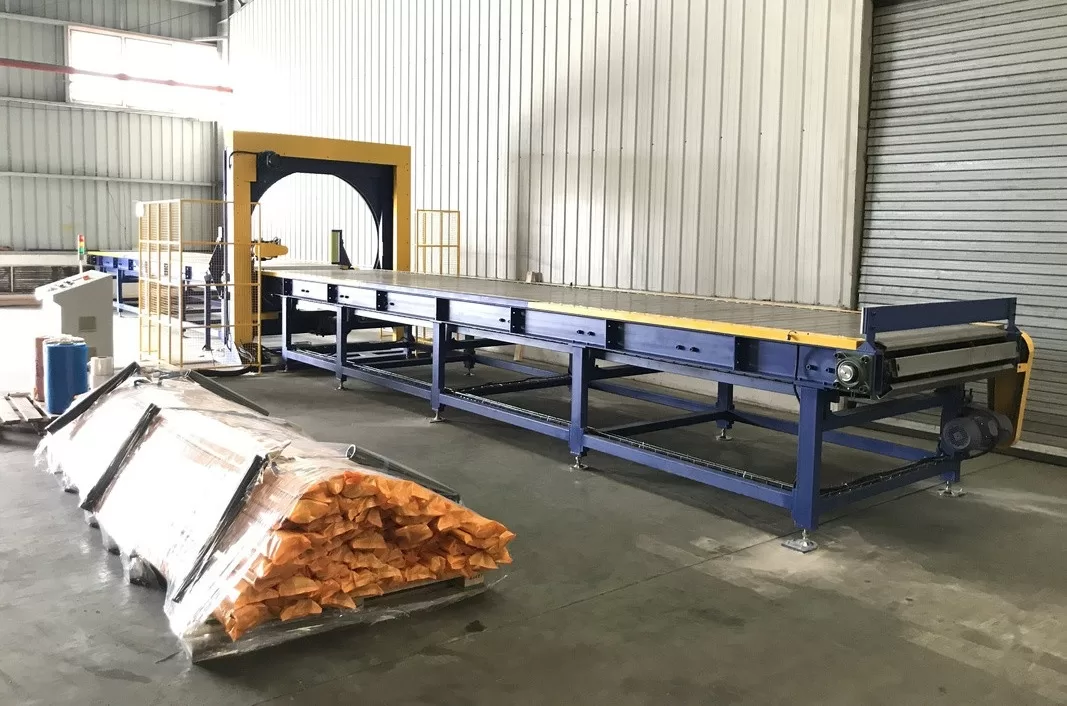
Making the right decision for your factory means looking closely at both the good and the bad. My journey, from an employee to a packing machine factory owner, taught me that every big investment needs careful thought. Let’s break down what an orbital wrapper can really do for your Polish consumer goods operation, and what you need to consider.
How Can Orbital Wrapping Improve Efficiency for Polish Consumer Goods?
Many Polish factories still rely on a lot of manual work for packing. This creates slow spots in production. It means products do not leave the factory as fast as they could. You might feel stuck, losing time and money. Imagine if your products could move smoothly through the packing stage, ready for delivery without delay.
Orbital wrapping machines significantly improve efficiency for Polish consumer goods operations. They speed up packing processes, reduce the need for manual labor, and help factories meet higher production demands, making them more competitive in the market.
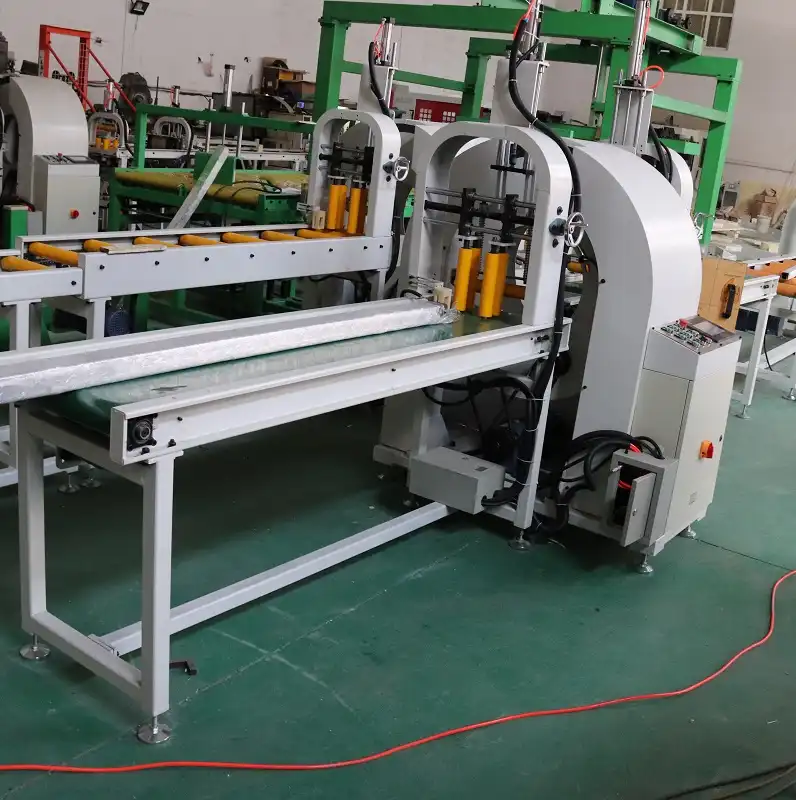
From my experience, seeing a production line get stuck at the very end due to slow packing is frustrating. I have seen it many times, both as an engineer and as a factory owner. An orbital wrapping machine changes this game. It is designed to wrap products quickly and consistently. This is especially true for items that are long, flat, or have specific shapes that are hard to wrap by hand, common in consumer goods where items might be bundled or packed in unique ways. For example, furniture components, door frames, or even bundled pipes used in household goods can be wrapped much faster. A machine can do the work of several people. This means fewer hands are needed on the packing line. The machine works without breaks, as long as it has product to wrap. This constant work pace keeps your entire production flow smooth. I recall a client who struggled with packing thousands of small, bundled consumer items daily. Their manual process was a nightmare of overtime and missed deadlines. After installing an orbital wrapper, their packing speed jumped by 400%. They could handle more orders and delivery times got much better. This is not just about moving faster. It is about a smart use of resources. When you cut down on manual packing, you save on wages. You also save on costs related to hiring and training. The machine wraps with the same tension every time. This means less wasted film compared to inconsistent hand-wrapping. This consistent wrapping also protects your products better during shipping. Better protection means fewer damaged goods. Fewer damaged goods mean fewer complaints from customers. This adds up to real savings and a better reputation for your business. For Michael, a factory manager, this means reaching output targets without increasing headcount. It means reducing operational costs and freeing up his team to focus on other high-value tasks. He can then allocate resources more strategically.
| Aspect of Efficiency | Manual Packing | Orbital Wrapping |
|---|---|---|
| Speed | Slow and varied | Fast and consistent |
| Labor Needs | High | Low |
| Consistency | Inconsistent | High |
| Material Use | Often wasteful | Optimized |
| Throughput | Limited | High |
What Challenges Come with Adopting Orbital Wrappers in Poland?
Every new investment brings questions. You might hear about great benefits but still worry about the practical side. How much will it truly cost? Will it fit in my factory? Will my team know how to use it? These are valid concerns. Many factory owners in Poland, just like factory managers everywhere, feel cautious when looking at new equipment.
Adopting orbital wrapping machines in Poland comes with challenges like the initial investment cost, the need for dedicated factory space, training staff, and ensuring the machine integrates smoothly with existing production lines, which all require careful planning.

From my years in the industry, I have learned that no solution is perfect without overcoming some hurdles. The biggest hurdle for many is the upfront cost. An orbital wrapping machine is a significant investment. It is not just the price of the machine itself. You also need to think about shipping, installation, and possibly modifying your factory layout to make room. This initial financial outlay can be a big barrier, especially for medium-sized factories in Poland that need to manage their budgets carefully. Another key challenge is space. Orbital wrappers, especially horizontal ones, can take up a good amount of floor space. Older factories in Poland often have existing layouts that are not flexible. Finding the right spot, ensuring clear pathways for product flow, and keeping safety clearances can be tough. This needs good planning and sometimes even a factory redesign. Then there is the issue of integrating the new machine with what you already have. A new wrapper should fit seamlessly into your production line. If it creates a new bottleneck, then you have not solved your problem. You have just moved it. This requires careful assessment of your current line speed and how the wrapper will connect to upstream and downstream processes. I remember one client who bought a very fast machine. But their conveyor system leading up to it was too slow. The wrapper sat idle too often. This wasted the investment. Finally, you need to train your staff. Operating and maintaining a specialized machine needs new skills. Workers need to learn how to load, run, and troubleshoot the wrapper. Without proper training, the machine might not run at its best. It could even lead to breakdowns. This means finding time and resources for training. It also means having reliable technical support from the machine supplier. My own factories often faced these issues. We learned to plan every step carefully.
| Challenge | Description | Potential Solution |
|---|---|---|
| Initial Investment | High upfront cost for machine, shipping, and installation. | Detailed ROI calculation, explore financing options, choose reliable supplier for long-term value. |
| Factory Space | Requires dedicated floor space, especially for larger models. | Plan layout carefully, consider machine size, optimize existing production flow. |
| Integration Complexity | Must fit smoothly with existing production lines to avoid new bottlenecks. | Conduct a thorough process analysis, ensure compatibility with conveyors, choose adaptable machines. |
| Staff Training | Operators and maintenance staff need new skills. | Supplier-provided training programs, clear operating manuals, ongoing support. |
| Maintenance | Regular upkeep is needed to ensure machine reliability. | Establish a preventative maintenance schedule, train internal team, rely on supplier’s service. |
How Does Orbital Wrapping Boost Safety and Product Quality for Consumer Goods?
In any factory, worker safety is paramount. So is the quality of the product that leaves your doors. I know this very well from managing my own factory. Manual packing often means workers lifting heavy items or doing repetitive, awkward movements. This leads to injuries. It also leads to products not being packed perfectly every time.
Orbital wrapping machines significantly boost safety by greatly reducing the need for manual handling of heavy or bulky consumer goods, minimizing worker strain and injury risk. They also enhance product quality through consistent, secure, and uniform packaging, which protects items better during transport and storage.

Safety is not just a nice-to-have; it is a must-have. When I started as an employee, I saw many colleagues get hurt doing manual tasks that machines could easily do. As a factory owner, I made it a priority to reduce these risks. Orbital wrapping machines achieve this by taking over the heavy lifting and repetitive motions. Workers no longer need to strain their backs or risk crushing their hands trying to manually wrap large, awkward bundles of consumer goods, like flat-packed furniture, long pipes, or even stacked plastic containers. This direct reduction in manual handling translates into fewer workplace injuries. Fewer injuries mean lower insurance costs for the factory. It also means happier, healthier employees who stay with the company longer. This directly addresses concerns that factory managers like Michael Chen have about high employee turnover and rising insurance premiums. Beyond safety, the machine’s ability to provide consistent wrapping quality is a huge benefit. Humans, no matter how skilled, get tired. Their wrapping can become loose or uneven. An orbital wrapper applies the stretch film with consistent tension and overlap every single time. This means every package has the same level of protection. This uniform wrapping shields products from dust, moisture, and impact damage during internal transfer, warehousing, and shipping. For consumer goods, this is crucial. Think about furniture parts where a scratch on an edge can make a whole set unusable, or fragile electronics needing robust protection. My clients who switched to automated wrapping often reported a drastic drop in customer complaints about damaged goods. This not only saved them money from returns and replacements but also built trust with their customers. When products arrive in perfect condition, it strengthens your brand. It makes customers want to buy from you again. This consistency and protection are vital for maintaining high product quality standards in the competitive Polish consumer goods market.
| Feature | Manual Packing | Orbital Wrapping |
|---|---|---|
| Worker Safety | High injury risk | Low injury risk |
| Wrapping Uniformity | Inconsistent | Highly consistent |
| Product Protection | Variable | Superior |
| Damage Reduction | Moderate | High |
| Load Stability | Can be poor | Excellent |
My Insights: How Can You Make Smart Packing Automation Investments?
My journey in the packing machine industry, from an engineer to a successful factory owner, taught me one big lesson. It is not just about buying a machine. It is about making smart, strategic investments that truly solve problems and grow your business. I achieved financial independence and helped many clients do the same because I focused on real solutions.
Based on my experience, making smart investments in packing automation means deeply understanding your factory’s specific needs, partnering with a truly knowledgeable and supportive supplier, and focusing on the long-term return on investment rather than just the upfront cost.
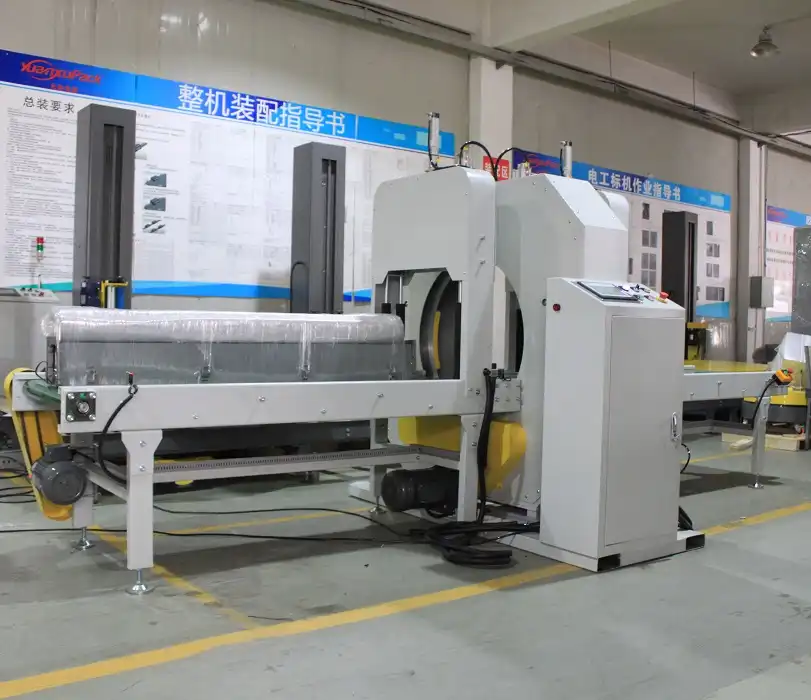
When I first started my own factory, I learned the hard way about what makes an investment successful. It is tempting to look only at the price tag. But that is a mistake. The first step to a smart investment is to deeply understand your own needs. Do not just buy an orbital wrapper because your competitor has one. Look at your current packing process. Where are the bottlenecks? What kind of products do you pack? What are your future growth plans? For example, Michael Chen needs to reduce manual labor and improve safety. So, an orbital wrapper that handles his specific product sizes and weights automatically would be a smart fit. Without this clear understanding, you risk buying the wrong machine, or one that does not fully solve your problems. Second, and this is crucial, you need to choose the right partner. I have heard stories, and seen it myself, where factories buy equipment from suppliers who only care about the sale. Once the machine is delivered, the support vanishes. This leaves you stranded when issues come up. A good partner is like an extension of your team. They understand your industry challenges, like Michael’s need for reliability and after-sales service. They offer expert advice before the sale, reliable installation, and strong after-sales support and spare parts. FHOPEPACK aims to be that kind of partner. We want to help you succeed for the long term. Third, always focus on the Return on Investment (ROI). The initial cost of an orbital wrapper can seem high. But think about the savings. How much will you save on labor costs each year? How much will you save from reduced product damage and fewer customer complaints? How much more product can you pack and sell? These savings add up quickly. A good ROI calculation will show you that the machine pays for itself, often in just a few years. Finally, think about the future. Will this machine still be useful in five or ten years? Can it handle slightly different products or increased production volumes? Investing in flexible, robust equipment means you do not have to replace it too soon. This careful planning, based on real factory experience, is what helped me achieve financial independence and empower my clients. It is about building a foundation for growth, not just buying a piece of machinery.
| Smart Investment Step | Description | Why It Matters (Randal’s Insight) |
|---|---|---|
| Assess Your Needs | Understand current bottlenecks, product types, and growth goals. | Avoids buying the wrong machine; ensures it solves specific pain points like Michael’s. |
| Choose a Partner | Find a supplier with expertise, support, and a long-term view. | Guarantees reliable operation and troubleshooting; builds trust, critical after past bad experiences. |
| Calculate ROI | Look beyond upfront cost; factor in labor savings, damage reduction. | Justifies investment with clear financial benefits; shows the machine pays for itself over time. |
| Future-Proof | Consider scalability and adaptability for future needs. | Ensures the machine remains valuable as your business grows and changes. |
Conclusion
Orbital wrapping offers significant pros for Polish consumer goods, boosting efficiency and safety. However, it requires a smart investment to overcome cons like initial cost and integration challenges. Careful planning ensures long-term success.








