
Orbital Stretch Wrappers for Wooden Products: Compare Models, Prices, and Features?
Are you tired of slow, unsafe, and damaging ways to pack your wooden products? Many factory managers I talk to face this problem every day. Manual wrapping takes too long. It puts workers at risk when they handle heavy, long items. And it often leads to scratched or damaged products. This means unhappy customers and lost money for your business. You might feel stuck, wondering if there is a better way to protect your output and speed up your packing line.
Orbital stretch wrappers are special machines that wrap long or irregular wooden products tightly with stretch film. This keeps products safe from dirt, moisture, and damage during transport. These machines come in many models. Each model has different features. Their prices also change based on size and how automated they are. Choosing the right one can greatly improve your factory’s efficiency and safety.

Now that we have covered the basics, let us dive deeper. We will look at why wooden products need special wrapping. Then we will explore different machine models that work best for them. We will also discuss how prices vary. Finally, we will talk about the most important features to look for. This will help you make a smart choice for your factory.
Why Do Wooden Products Need Special Wrapping?
Do you find it hard to protect your wooden products from damage during shipping? Wood often comes in long, heavy, or oddly shaped pieces. It can easily get scratched. It can also absorb moisture. Dust can settle on it. These issues lead to product loss. They also cause customer complaints. Manual wrapping is slow. It also puts your workers in danger. They have to lift and move heavy items. This raises safety concerns and insurance costs for your factory.
Wooden products need special wrapping for many important reasons. They are often heavy, long, or have sharp edges. They also get scratched easily. Moisture and dust can harm them too. Special wrapping keeps them safe during shipping and storage. It prevents damage and keeps them looking good. This protects your investment and keeps customers happy.
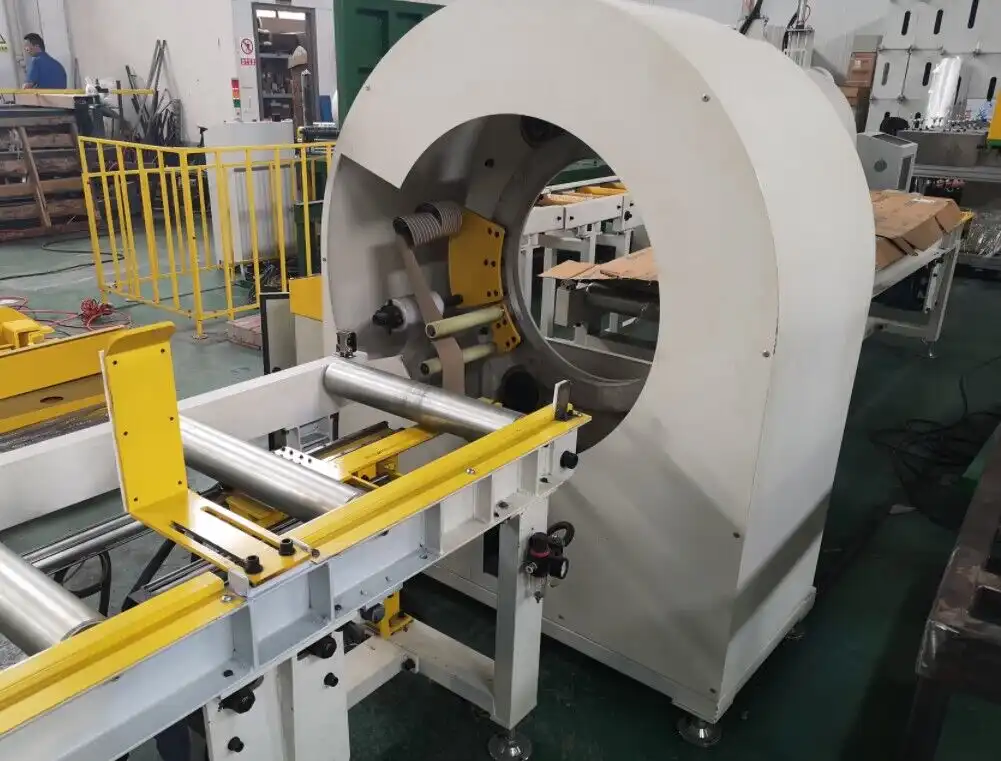
Wooden products are unique. They are not like uniform boxes. They come in many forms. Think about lumber, furniture parts, or even large wooden panels. Each type has its own challenges when it comes to packing. Let us break down why a standard wrap does not work and what problems special wrapping solves.
The Vulnerabilities of Wood
Wood surfaces are sensitive. They can scratch easily. Even small impacts can leave marks. This is especially true for finished wood or veneers. Moisture is another big enemy. Wood can warp or swell if it gets wet. This ruins its quality. Dust and dirt can also stick to wood surfaces. This makes them look old. It also means more cleaning later. Splintering is another risk. Sharp edges can break off. This makes the product unsafe. It also makes it look bad. Proper wrapping creates a barrier. This barrier protects against these common issues. It ensures the product arrives in perfect shape.
Manual Wrapping: A Costly Risk
Many factories still rely on manual wrapping for wooden products. Workers use hand stretch film. They walk around the product. They wrap it layer by layer. This method is very slow. It wastes a lot of time. Time is money in any factory. It also puts workers at high risk. Lifting heavy wood pieces is dangerous. Turning them by hand can cause back injuries. Dropping heavy items can hurt feet or other body parts. This leads to more workplace accidents. High accident rates mean higher insurance costs. They also mean more time lost from work. Workers might even leave their jobs if they feel unsafe. This creates a high turnover rate. It makes it hard to keep a stable workforce.
The Benefits of Automated Wrapping
Automated orbital wrappers solve these problems. They wrap products quickly and evenly. This saves a lot of time. It speeds up your whole production line. Workers do not need to handle heavy products directly for wrapping. The machine does the hard work. This greatly improves safety. It reduces the chance of injuries. This means lower insurance costs for you. It also means happier, more stable staff. Automated wrapping also reduces product damage. The machine applies constant, even tension. This holds the product tightly. It prevents shifting or rubbing. This results in fewer scratches and less breakage. It ensures your products look good when they reach your customers. This builds customer trust and reduces complaints. It also helps your factory save money on repairs or replacements. It boosts your profit margin.
| Feature | Manual Wrapping | Orbital Wrapper |
|---|---|---|
| Speed | Very slow, depends on worker speed | Fast, consistent, high throughput |
| Safety | High risk of injury (back, hands, feet) | Low risk, machine handles heavy lifting |
| Product Protection | Uneven tension, potential for damage | Consistent, even tension, excellent protection |
| Labor Cost | High, needs constant worker attention | Low, one operator can manage multiple machines |
| Consistency | Varies by worker | Highly consistent, uniform wrap |
| Material Usage | Often wastes film due to uneven application | Efficient film use, less waste |
| ROI | Negative impact on productivity and safety | Positive, quick return through savings |
What Orbital Stretch Wrapper Models Fit Wooden Items Best?
Are you overwhelmed by all the different packing machine models? It can be hard to know which one is right for your wooden products. Many factory managers choose the wrong machine. This leads to wasted money. It also means production problems continue. You might buy a machine that is too small or too slow. Or you might buy one that has features you do not need. This makes you lose out on true efficiency gains.
Many orbital stretch wrapper models work very well for wooden items. These include semi-automatic, automatic, and custom-built machines. The best model depends on your product size, product weight, and the speed you need. Different models offer various levels of automation. They also offer different ways to fit into your existing production line. Choosing the right model means picking one that matches your specific factory needs.
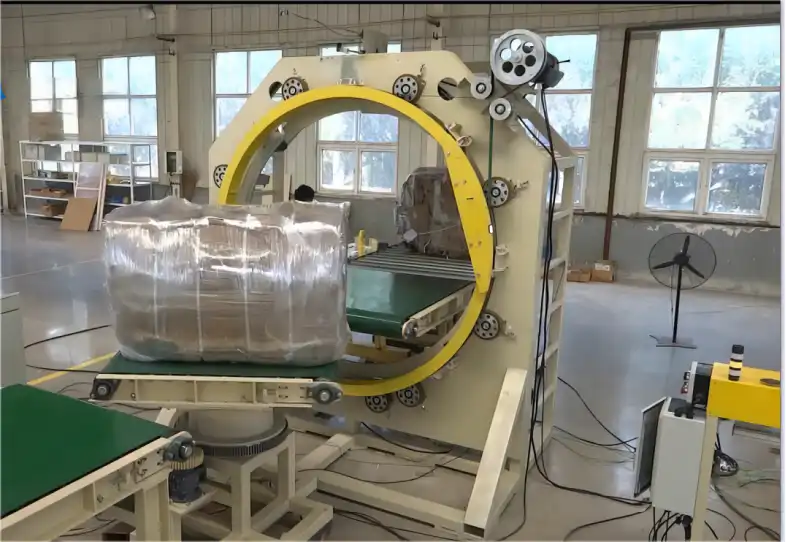
Finding the perfect orbital wrapper for your wooden products is important. It is not a one-size-fits-all solution. Your choice depends on your factory’s specific needs. Think about how much you produce. Think about the size and weight of your wooden items. Also, think about your budget. Let us look at the main types of orbital wrappers. We will discuss what kind of wooden products they suit best.
Semi-Automatic Orbital Wrappers
Semi-automatic machines are a good starting point for many factories. They need an operator to load the product onto the conveyor. The operator also starts the wrapping cycle. Once started, the machine does the wrapping automatically. It rotates and applies the film. After wrapping, the operator cuts the film. They then unload the wrapped product. These machines are great for factories with medium production volumes. They are also good for factories with various product sizes. They offer a good balance between cost and automation. For example, a furniture factory making custom wooden beams might use a semi-automatic wrapper. It can handle different beam lengths easily. It also saves a lot of manual labor.
Automatic Orbital Wrappers
Automatic orbital wrappers are for high-volume factories. They need little or no human interaction during the wrapping process. Products feed into the machine automatically. The machine senses the product. It starts wrapping. It cuts the film. It then unloads the product. All this happens without an operator touching the machine. These systems are often part of a larger production line. They integrate with existing conveyors. They are perfect for factories that produce many identical wooden items. Think of a lumber mill. It processes thousands of wooden planks or long boards every day. An automatic system ensures continuous, fast wrapping. It greatly boosts overall production speed. It reduces labor costs to a minimum.
Custom-Built Orbital Wrappers
Sometimes, standard machines just do not fit. This is true for very unique wooden products. These might be extremely long, very wide, or have unusual shapes. In such cases, a custom-built orbital wrapper is the answer. These machines are designed specifically for your product and factory layout. They can have special features. This includes custom conveyor systems. They might also have unique film delivery systems. They can handle specific weight requirements. For example, a factory making very large wooden trusses for building structures might need a custom machine. This machine would be built to handle the trusses’ immense size and weight. Custom machines cost more upfront. But they offer the best fit and highest efficiency for unique challenges. They solve problems that off-the-shelf machines cannot. This leads to better long-term returns.
| Wrapper Type | Best For | Typical Products | Pros | Cons |
|---|---|---|---|---|
| Semi-Automatic | Medium volume, varied sizes | Lumber, furniture components | Cost-effective, flexible | Requires operator interaction |
| Automatic | High volume, consistent sizes | Planks, standardized wooden panels | High speed, low labor, consistent | Higher initial cost, less flexible |
| Custom-Built | Unique, oversized products | Trusses, large wooden structures | Perfect fit, maximum efficiency | Highest cost, longer design time |
How Do Prices Vary for Wooden Product Wrappers?
Is the price of a new packing machine a big worry for you? It is for many factory managers. It is hard to know what a fair price is. It is also hard to know what will give you the best value. You might worry about the first cost. You might also worry about hidden costs. This can make you hesitant to invest. You might keep using old, slow methods because of price concerns. But this can cost you more in the long run through lost efficiency and higher labor.
Prices for orbital stretch wrappers for wooden products vary a lot. They can range from around $15,000 for basic semi-automatic models. They can go up to over $100,000 for fully customized automatic systems. Key factors affecting price are the machine’s size, its automation level, special features, and the brand’s reputation. Installation costs and ongoing maintenance also play a role in the total investment.

Understanding the cost of an orbital stretch wrapper is more than just looking at the sticker price. It involves many factors. These factors can greatly change the final investment. As someone who has built and run a packing machine factory, I have seen how different choices impact a factory’s budget. Let us break down what makes prices go up or down. We will also look at how to think about the return on your investment.
Core Price Factors
The biggest factor is the level of automation. Semi-automatic machines are generally the most affordable. They require more human input. Automatic machines cost more. They offer higher speeds and need less labor. Fully custom machines are the most expensive. They are built for specific, unique needs.
Machine size and robust build also play a big role. Wrapping small, light wooden trim pieces is different from wrapping massive wooden beams. Larger machines with wider wrapping rings and stronger frames cost more. This is because they use more materials. They also need more powerful motors. They are built to handle heavier loads.
Features and technology add to the cost. Basic machines simply wrap. Advanced machines can do more. They might have automatic product feeding. They might have film cutting and sealing. They might also have remote diagnostics. These features improve efficiency. But they also increase the price. For example, a machine with an automatic film change feature will cost more. But it saves operator time.
The brand and manufacturer also matter. Established brands with a long history of quality and good customer support might charge more. But this higher price often comes with better reliability. It also comes with readily available spare parts. It offers strong technical support. This can save you money and headaches in the long run.
Beyond the Purchase Price: Total Cost of Ownership
When you buy a machine, the initial price is just part of the story. You also need to think about the total cost of ownership (TCO). This includes installation costs. It includes ongoing maintenance. It includes the cost of parts and consumables like stretch film.
Installation can add to your costs. Some machines are plug-and-play. Others need professional setup. They might need special wiring or foundation work. This is especially true for large automatic systems.
Maintenance is crucial. All machines need regular check-ups. They need parts replaced. Good quality machines often have lower maintenance needs. But it is important to factor this in. Poor maintenance can lead to breakdowns. Breakdowns stop production. This costs you a lot of money.
Consumables, like stretch film, are an ongoing expense. The type of film the machine uses can affect your long-term costs. Some machines are more efficient with film. They use less material for the same level of protection. This saves you money over time.
The Return on Investment (ROI)
Do not just look at the price tag. Look at the return on your investment. An orbital wrapper can save you money in many ways. It reduces labor costs. It cuts down on product damage. It speeds up your packing line. These savings quickly add up. They can make the machine pay for itself in a short time. For instance, if you reduce labor by two workers, that is a huge saving each year. If you cut product damage by 5%, that is more profit. Always ask for a clear ROI calculation from your supplier. This shows you how much you will save and when the machine will pay for itself. A machine that costs more initially but offers higher efficiency and lower running costs can be a better long-term investment. It helps you grow your business.
| Cost Factor | Description | Impact on Price | Example |
|---|---|---|---|
| Automation Level | Semi-auto, Automatic, Custom | Low to High | Semi-auto: $15K-$30K; Auto: $30K-$80K; Custom: $80K-$150K+ |
| Machine Size/Capacity | Max product dimensions, weight limit | Medium to High | Larger ring diameter, heavier load capacity = higher price |
| Added Features | Auto film cut/seal, safety sensors, controls | Medium | Touchscreen controls, remote monitoring, film pre-stretch |
| Material Quality | Robustness of frame, components | Medium | Heavy-duty steel frame vs. lighter construction |
| Brand/Reputation | Manufacturer’s standing, support | Medium | Established brands often have higher prices but better support |
| Installation | Setup, integration into line | Varies, sometimes separate | Simple setup for semi-auto; complex for integrated auto lines |
| Maintenance/Parts | Long-term upkeep, spare parts availability | Ongoing, affects TCO | Machines with common parts are easier/cheaper to maintain |
| Consumables | Film cost, efficiency of usage | Ongoing, affects TCO | Machine with good film pre-stretch saves on film cost |
What Key Features Should You Look For in a Wooden Wrapper?
Are you unsure about which features truly matter in an orbital wrapper for wood? It is easy to get lost in all the technical details. Many factory managers focus on price first. But some features are vital for wooden products. If you pick the wrong features, you might not solve your packing problems. You might even create new ones. This means your investment will not give you the full benefit.
Key features for a wooden product orbital wrapper include a strong, heavy-duty frame for handling heavy loads. It also needs a wide wrapping ring to fit large items. Adjustable film tension is crucial for different wood surfaces. You should also look for easy film loading, advanced safety sensors, and durable machine components. Reliable after-sales support from the supplier is also extremely important for long-term success.

Choosing the right features in an orbital wrapper can make a huge difference for your factory. It ensures you get the most out of your investment. It helps you achieve true efficiency, safety, and product protection. In my years helping factories set up packing lines, I have seen what works and what does not. Here are the features I always tell my clients to focus on.
Robust Construction for Heavy Loads
Wooden products are often heavy and long. This puts a lot of stress on packing machines. A good orbital wrapper for wood must have a very strong frame. It must be built with heavy-duty steel. It needs strong bearings and motors. This ensures the machine can handle the weight without shaking or breaking down. This means less wear and tear. It also means fewer breakdowns. For instance, I once helped a factory in Mexico that was constantly struggling with a flimsy wrapper. It kept breaking down because their wooden beams were too heavy. We replaced it with a machine built for heavy loads. The difference was immediate. Their production flow improved. Their maintenance costs dropped. Always look for a machine designed for industrial use. Do not settle for light-duty models.
Adjustable Film Tension and Pre-Stretch
Different wooden products need different wrapping tension. A finished wood surface needs gentle tension to prevent scratches. Rough lumber might need higher tension for a tight wrap. The machine must allow you to adjust the film tension easily. This protects your product. It also ensures a secure wrap. Look for pre-stretch capability. Pre-stretch stretches the film before it touches the product. This makes your film last longer. It saves you money on film costs. It also gives a tighter, more stable wrap. A machine with good pre-stretch can often reduce film consumption by 200% or more. This is a huge saving over time.
Safety Features
Safety is paramount in any factory. Especially when dealing with large, moving machinery. An orbital wrapper must have clear safety features. Look for emergency stop buttons. They should be easy to reach. Safety light curtains or sensors are also crucial. These stop the machine if a worker gets too close. Guarding around moving parts is also very important. These features protect your workers. They also help your factory meet safety standards. They reduce the risk of accidents. This lowers your insurance costs. It also gives your workers peace of mind. As a factory owner myself, I know how important a safe workplace is. It leads to happier employees and higher productivity.
User-Friendly Controls and Maintenance Access
A good machine should be easy to use. It should also be easy to maintain. Look for simple, intuitive control panels. They should be easy for your operators to learn. Quick film roll changes save time. Easy access to machine parts for maintenance is also vital. This means less downtime. It makes routine checks faster. It also makes repairs simpler. A machine that is hard to operate or fix will cause frustration. It will also reduce your overall efficiency.
Integration Capabilities
Consider how the wrapper will fit into your existing production line. Can it connect easily with your current conveyors? Can it work with other machines like strapping tools? seamless integration means a smoother workflow. It prevents bottlenecks. It helps your whole factory run more efficiently. A machine that fits well into your setup saves you time and money on custom installations later. It also means you can automate more steps.
After-Sales Support and Partnership
This is my insight. A machine is only as good as the support behind it. I have seen many factories buy cheap machines. They then suffer from bad after-sales service. Parts are hard to get. Technical help is slow or non-existent. This leads to long downtimes. It costs a lot of money in lost production. You need a supplier who understands your business. You need a partner. This partner should offer fast technical support. They should have spare parts readily available. They should also be ready to provide training for your staff. Look for a supplier who has a good reputation for service. Talk to their other clients. This kind of partnership is priceless. It ensures your machine keeps running for many years. It helps your business grow.
Conclusion
Orbital stretch wrappers are great for packing wooden products. They boost safety and cut costs. Choosing the right one means looking at models, understanding prices, and picking key features. Finding a good partner is just as important.








