
Orbital Stretch Wrapper vs Strapping: Which Saves More in Uruguay?
When I first started in the packing machine industry, I saw countless factories in places like Uruguay struggling with their end-of-line processes. They were often stuck between outdated manual methods and choosing the right automation. Many managers faced what seemed like a simple choice: strapping or orbital wrapping? But this decision, I quickly learned, holds huge implications for a factory’s bottom line, safety records, and overall efficiency. If your current packing solution feels like a bottleneck, or if you are constantly battling high costs and product damage, then you are probably facing the same questions many of my clients in the metal processing world have. The problem is not just about moving products; it is about protecting your investment, your people, and your profits.
For factories in Uruguay, an orbital stretch wrapper often saves more than traditional strapping methods, especially when handling heavy or irregular-shaped products like steel coils and wire bundles. This is because orbital wrapping significantly reduces labor costs, improves worker safety by minimizing manual handling, provides superior product protection against damage, and offers better material utilization, leading to a higher return on investment over time.
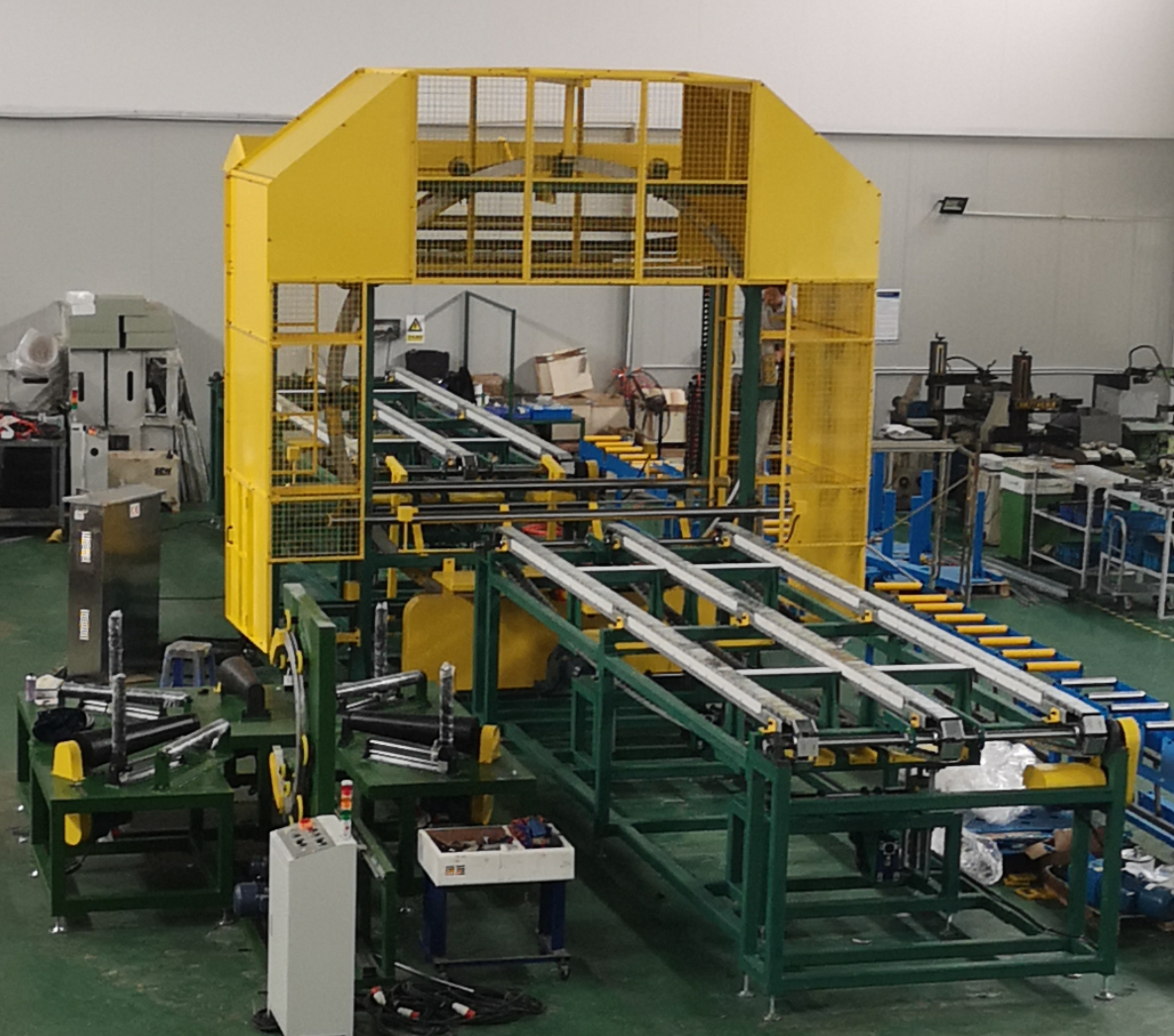
Making the right choice between an orbital stretch wrapper and strapping is not just about the initial purchase price. It involves understanding the long-term impact on your operations, from the factory floor in Montevideo to the final delivery point. Let us dive deeper into why this decision matters so much for factories like yours, and how choosing wisely can transform your business, just as it has for many of my clients.
Why Manual Packing is Costing Your Uruguay Factory More Than You Think?
Have you ever looked at your packing line and felt a knot in your stomach, knowing it is the slowest part of your operation? Many factory managers in Uruguay face this exact problem. They see workers manually handling heavy steel coils or wire bundles, struggling to secure them for shipment. This process is not just slow; it is a hidden drain on resources, directly impacting your output and eroding your profits. The real cost goes far beyond the wage bill.
Manual packing, especially for heavy industrial products like those found in Uruguay’s metal processing sector, significantly increases operational costs due to low efficiency, high labor dependency, frequent product damage, and elevated safety risks. It creates bottlenecks that hinder overall production speed and delivery times, ultimately reducing competitiveness and profitability compared to automated solutions.

When I first started my factory, I learned quickly that bottlenecks are productivity killers. A slow packing line means your upstream processes, no matter how efficient, cannot reach their full potential. This translates directly into lost production capacity and delayed shipments. It is a cycle I have seen many times, and it is a major reason why I became so passionate about optimizing packing solutions. Let us break down the true costs.
The Hidden Price of Labor Dependency
Manual packing relies heavily on human effort. For heavy items like steel coils or bundles of rebar, this means multiple workers are often involved. In Uruguay, labor costs are a significant overhead for any manufacturing business. When I analyze a client’s operations, I always look at how many people are involved in the packing process. If several individuals are manually applying strapping or wrapping, this represents a substantial ongoing expense. Even if their hourly wage seems low, when you factor in benefits, training, potential overtime, and the sheer number of hours dedicated to a task that could be automated, the costs add up quickly. Think about it: an automated machine needs minimal supervision, works tirelessly, and does not require breaks or sick days. The investment in automation pays for itself by reducing this high labor dependency. This frees up your skilled workers to focus on more complex, value-adding tasks within your Uruguay factory. It is not about replacing people; it is about smarter resource allocation and making your workforce more productive and safer.
Inefficiency and Production Bottlenecks
A factory is only as fast as its slowest process. If your production line can churn out 50 coils per hour, but your packing station can only handle 30, you have a major bottleneck. Manual packing is inherently slower and more inconsistent than automated systems. Workers need to position the product, apply the strapping or film, tension it, and then cut it. This takes time, and the speed varies from person to person. In busy Uruguay factories, this means finished products can pile up, waiting to be packed. This backlog reduces overall throughput, increases lead times, and can even lead to costly storage issues. It also makes it harder to meet tight delivery schedules, which can damage customer relationships. My own experience taught me that efficiency gains in packing can unlock the full potential of your entire production line, directly translating into higher output and greater revenue for your business. An automated system provides consistent, high-speed packing, ensuring a smooth flow of products from the production line to the loading dock.
The Cost of Product Damage
Manual packing methods, especially strapping, can inadvertently cause damage to your valuable products. When workers manually handle heavy coils, there is always a risk of dropping, bumping, or scraping the product. Strapping, while effective for bundling, can sometimes bite into the edges of sensitive materials, especially with heavy steel coils, causing cosmetic or even structural damage. This damage leads to rejected shipments, customer complaints, and costly rework or scrap. In a competitive market like Uruguay, maintaining product quality is paramount. Each damaged item represents not only the loss of raw material and production effort but also a potential loss of customer trust. I have seen how even minor surface scratches on a coil can lead to significant disputes and impact a company’s reputation. Automated orbital wrappers, on the other hand, apply film smoothly and consistently, encasing the product without direct, abrasive contact. This significantly reduces the risk of damage during the packing process and subsequent transit, protecting your product and your profit margins.
Can an Orbital Wrapper Truly Make Your Uruguay Factory Safer?
Safety is non-negotiable in any factory. I learned this lesson early in my career, seeing firsthand the consequences of workplace accidents. In heavy industries like metal processing, where you are dealing with large, weighty items, manual packing methods present significant risks. Factories in Uruguay are constantly striving to improve their safety records, not just to comply with regulations, but to protect their most valuable asset: their people. So, when we talk about investing in an orbital wrapper, one of the most compelling arguments is its profound impact on workplace safety.
Yes, an orbital stretch wrapper significantly enhances safety in Uruguay factories by automating the wrapping of heavy or cumbersome items like steel coils, thus drastically reducing the need for manual handling. This minimizes the risk of worker injuries such as strains, sprains, and crush incidents associated with manually securing loads, leading to a safer work environment and lower accident-related costs.
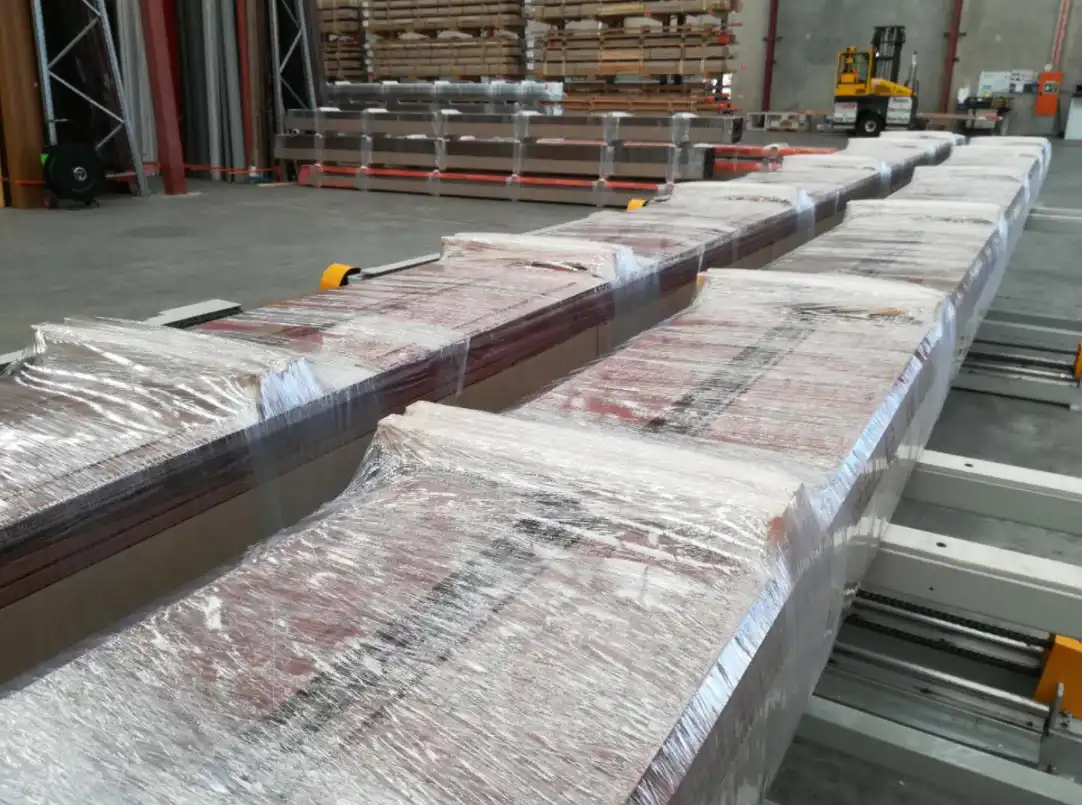
I have always believed that a safe factory is an efficient factory. When your team is not worried about injuries, they can focus better on their work. The dangers of manual handling are real and costly, not just in human terms but financially too. From my time working on the factory floor, I saw countless near misses and actual injuries. It is a problem that can be largely solved with the right equipment.
Reducing Manual Handling Risks
The primary way an orbital wrapper boosts safety is by dramatically cutting down on manual handling. Imagine your workers in Uruguay trying to maneuver heavy, often greasy, steel coils or bundles of wire to apply strapping by hand. This involves bending, lifting, pulling, and often working in awkward positions. These actions are a recipe for musculoskeletal injuries—strains, sprains, back problems, and repetitive stress injuries. Furthermore, manually handling sharp-edged metal products increases the risk of cuts and abrasions. An orbital wrapper, by design, takes the human element out of the direct, heavy-lifting part of the packing process. The product is typically conveyed into the machine, wrapped automatically, and then conveyed out. Workers only need to load the film, monitor the operation, and possibly oversee the final placement. This simple change removes workers from dangerous situations, leading to a significant drop in workplace accidents. It is a proactive step that protects your team and reduces your company’s liability.
Eliminating the Danger of Falling Objects
When manually strapping or wrapping large, unstable loads, there is always a risk of the product shifting or even falling. This is particularly true for items that are not perfectly square or balanced, like rolls of steel wire. A falling coil, even a small one, can cause severe injury or even death. The process of manually securing these loads often requires workers to be in close proximity to the product, increasing their exposure to this danger. Automated orbital wrappers, on the other hand, are designed to securely hold the product in place during the wrapping cycle. The machine itself provides a stable environment, and the wrapping action tightly secures the load, preventing shifts or falls. This means your workers in Uruguay do not need to stand in the danger zone, significantly reducing the risk of being struck by falling objects. This peace of mind for both management and employees is invaluable. My own factory’s commitment to safety was a cornerstone of its success, and investing in machinery that keeps my team out of harm’s way was always a priority.
Improving Overall Ergonomics and Worker Morale
Beyond immediate injury prevention, orbital wrappers improve the overall ergonomics of the packing workstation. Eliminating repetitive, strenuous tasks reduces worker fatigue, which in turn lowers the chance of errors and accidents. Workers who are less fatigued are more alert and productive. Moreover, a workplace that prioritizes safety fosters higher worker morale. When employees see management investing in their well-being by providing safer equipment, they feel valued. This can lead to increased job satisfaction, reduced absenteeism, and lower employee turnover. In Uruguay’s competitive labor market, retaining skilled workers is crucial. Creating a safe and comfortable working environment through automation is a powerful way to demonstrate that commitment. It is not just about avoiding costs; it is about building a strong, loyal, and productive team.
How Orbital Wrapping Protects Your Products Better Than Strapping in Tough Environments?
In many industries, especially heavy manufacturing in Uruguay, products face a gauntlet from the factory floor to the customer. They must withstand internal handling, transport, and often harsh environmental conditions. Product damage, whether from moisture, dust, or physical impact, leads to costly rejections and dissatisfied customers. When I discuss packing solutions with clients, a major concern is always how well the product will be protected. Between strapping and orbital wrapping, there is a clear difference in how effectively they shield your valuable goods.
Orbital stretch wrapping offers superior product protection compared to strapping, particularly for products like steel coils and wire bundles in demanding environments. It creates a complete, waterproof, and dustproof enclosure around the product, safeguarding it from moisture, corrosion, abrasion, and handling damage, which strapping alone cannot achieve as effectively.

My journey in the packing industry taught me that a good product can lose all its value if it arrives damaged. I have seen clients lose major contracts because of packaging failures. Protecting the product is not an afterthought; it is an integral part of maintaining quality and ensuring customer satisfaction. Let us look at why orbital wrapping excels in this crucial area.
Comprehensive Environmental Protection
Strapping primarily serves to bundle items together. It holds things tight, but it offers minimal protection against external elements. If your steel coils are exposed to rain, humidity, or corrosive salt air during transit within Uruguay or abroad, strapping will do nothing to stop rust and corrosion. Similarly, dust and dirt can easily penetrate strapped loads, leading to contamination or abrasive damage. Orbital stretch wrapping, by contrast, completely encloses the product in multiple layers of stretch film. This creates a barrier that is highly resistant to water, dust, and other environmental contaminants. For metal products, this means significantly reduced risk of rust and corrosion, even when stored outdoors or transported through various climates. The film acts as a protective skin, maintaining the product’s integrity and appearance from your factory to the end-user. This level of environmental protection is simply beyond the capability of strapping.
Superior Physical Damage Resistance
Beyond environmental factors, products face physical challenges. Internal transfers, loading and unloading, and vibrations during transport can all cause abrasions, scuffs, and impacts. Strapping, especially when tensioned tightly, can sometimes dig into the edges of products, causing indentations or superficial damage. The exposed surfaces between the straps are also vulnerable. Orbital wrapping provides a uniform, cushioned layer of film around the entire product. This multi-layer wrap acts as a shock absorber, protecting against minor impacts and abrasions. For sensitive edges of steel coils, this can be critical in preventing damage that would otherwise lead to rejections. The film also holds the product tightly, preventing movement and friction between individual components (e.g., within a wire bundle), which could cause wear. My clients in Uruguay often tell me that this improved physical protection reduces customer complaints and ensures their products arrive in pristine condition, reinforcing their reputation for quality.
Enhanced Load Stability and Security
While strapping bundles items, an orbital wrapper creates a single, cohesive unit. The stretch film conforms to the shape of the product, providing excellent load stability. This is especially important for irregular or odd-shaped items that are difficult to strap securely. A well-wrapped load is less likely to shift during transit, reducing the risk of product damage and making handling safer for logistics personnel. The continuous nature of the wrap also offers a higher degree of tamper resistance compared to discrete straps. Any attempt to open or compromise the package would be immediately visible. This added layer of security is an often-overlooked benefit, providing peace of mind during the entire supply chain process. From my perspective, ensuring the product stays exactly as it left the factory is a fundamental part of reliable packing, and orbital wrapping does this exceptionally well.
Calculating the Real ROI: Orbital Wrapper vs. Strapping in Uruguay?
When a factory manager like Michael Chen in Uruguay considers a new piece of equipment, the bottom line is always the ultimate decider. It is not just about the upfront cost; it is about the return on investment (ROI). Will this machine genuinely save money and make the business more profitable? Many people think strapping is cheaper because the material cost per strap seems low. But this view ignores the bigger financial picture. To make a smart investment, you need to look at all the costs and all the benefits over the long term.
The real ROI for an orbital stretch wrapper in a Uruguay factory significantly surpasses that of traditional strapping due to substantial savings in labor costs, reduced material consumption per package (when comparing overall protection), minimized product damage, and increased operational efficiency. These cumulative long-term benefits quickly offset the initial investment, leading to greater profitability and a more competitive edge.
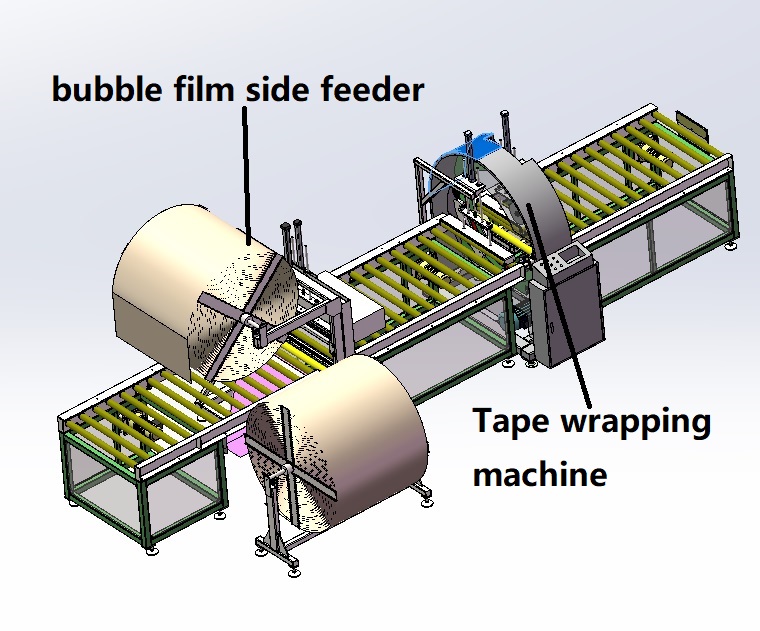
When I built my own packing machine factory, every investment decision hinged on a clear ROI. It was not just about buying a machine; it was about buying into a more efficient, safer, and ultimately more profitable way of doing business. I have helped many of my clients, including those in Uruguay, calculate this for themselves, and the numbers often surprise them.
Comprehensive Cost Comparison: Strapping vs. Orbital Wrapping
To accurately compare the ROI, we must consider more than just the material price. Here is a breakdown of the typical cost factors:
| Cost Factor | Strapping (Manual/Semi-Automatic) | Orbital Wrapping (Automatic) |
|---|---|---|
| Initial Equipment Cost | Lower (hand tools, basic dispensers, semi-auto machines) | Higher (automatic orbital wrapper) |
| Labor Costs | High (multiple operators, slow process, potential overtime) | Low (minimal supervision, faster cycle times, fewer operators) |
| Material Costs | Strapping material (PET, PP, steel) and buckles/seals | Stretch film (consumable material, high stretch yield) |
| Product Damage Costs | High (due to physical impact, corrosion, moisture, manual handling) | Low (superior protection against environment and physical damage) |
| Safety Incident Costs | High (insurance, medical, lost time due to manual handling injuries) | Low (reduced manual handling, safer operation) |
| Efficiency/Throughput | Low (bottlenecks, inconsistent speed, slower overall production) | High (fast, consistent, high volume, smooth production flow) |
| Maintenance Costs | Moderate (for semi-auto machines) | Moderate (for automatic machines, often with service contracts) |
| Space Utilization | Potentially more space if products queue due to slow packing | Optimized space due to integrated, faster packing |
| Customer Satisfaction | Moderate (risk of damaged goods leading to complaints) | High (products arrive in excellent condition) |
When you look at this table, the higher initial cost of an orbital wrapper can seem daunting. However, the recurring savings in labor, the reduction in product damage, and the significant boost in efficiency often mean the machine pays for itself much faster than anticipated. For factories in Uruguay dealing with heavy, valuable goods, minimizing damage and maximizing throughput directly impacts profitability.
The Long-Term Savings in Labor
As discussed earlier, labor is a major operational cost. An orbital wrapper can often replace two to three workers dedicated to manual packing. Over years, these salary savings alone can represent hundreds of thousands of dollars. Consider the average wage in Uruguay, plus social security contributions, healthcare, and other benefits. Multiplying that by the number of workers replaced and the years of operation, the labor savings become incredibly compelling. Beyond direct wages, there are also savings in training, recruitment, and managing employee turnover, which can be high in physically demanding roles. This shift towards automation allows your existing workforce to be redeployed to more skilled positions, adding greater value to your company.
Material Efficiency and Product Protection ROI
While stretch film might seem like a continuous expense, modern films are incredibly efficient. High-performance stretch film offers high yield, meaning less film is needed per package to achieve excellent security and protection. Compared to the combined costs of strapping, buckles, edge protectors, and potential secondary wrapping for environmental protection (which often happens with strapping), the total material cost of orbital wrapping can be very competitive. More importantly, the reduction in product damage translates directly into savings. Every rejected coil or wire bundle due to rust, denting, or scuffing represents a complete loss of raw material and production costs. By preventing these damages, an orbital wrapper protects revenue that strapping simply cannot. This reduction in scrap and rework significantly boosts your factory’s net profit, making the investment in an orbital wrapper a clear winner in terms of overall material and product value protection.
Beyond the Machine: Finding a Packing Partner, Not Just a Vendor, for Your Uruguay Operations?
I have seen countless times how a great piece of machinery can fall short if the support behind it is missing. For a factory manager like Michael Chen in Uruguay, buying a packing machine is not just a transaction; it is a critical strategic decision. You are investing in your future, and you need more than just a seller. You need a partner who understands your challenges, speaks your language, and stands by their product and their promises. This is a lesson I learned early on when I started FHOPEPACK, and it is a philosophy I ingrained into our mission.
For long-term success, a factory in Uruguay needs a packing machine provider who acts as a true partner, offering deep industry expertise, reliable after-sales support, and a commitment to understanding and solving specific operational challenges. This goes beyond just selling equipment, focusing instead on tailored solutions, training, and ongoing service to ensure maximum uptime and ROI, fostering a relationship built on trust and shared growth.
When I transitioned from an employee to a factory owner, I understood the pressures of keeping operations smooth and efficient. I knew what it felt like to be let down by a supplier who only cared about the sale. This experience shaped how I run FHOPEPACK. I believe in giving back to the industry that gave me so much, and that means being a resource, an expert, and a trusted partner for my clients, whether they are in Uruguay or anywhere else.
Why Expertise Matters: Understanding Your Unique Challenges
Every factory is unique, and a packing solution that works for one might not work for another. This is especially true in the diverse landscape of Uruguay’s manufacturing sector. A true partner will not just try to sell you the most expensive machine. They will take the time to understand your specific production bottlenecks, your product types (be it steel coils, rebar, or electrical wire), your safety concerns, and your budget. My background, starting on the factory floor and then building my own successful packing machine factory, gave me invaluable insights. I have walked in your shoes. I know the intricacies of coil packing, steel wire packing, and how crucial it is for a machine to integrate seamlessly into an existing production line. When you work with FHOPEPACK, you are not just getting a machine; you are getting access to years of practical experience and problem-solving expertise. We can help you identify the root causes of your packing issues and design a solution that truly fits.
The Critical Role of After-Sales Support
A machine is only as good as its uptime. Even the best equipment will require maintenance or troubleshooting at some point. This is where a true partner distinguishes themselves from a mere vendor. Michael Chen’s past experiences with suppliers who offered poor after-sales service resonate deeply with me. It is frustrating and costly when a production line grinds to a halt because you cannot get timely support or spare parts. A reliable partner ensures that you have access to:
- Timely Technical Assistance: Whether it is over the phone, via video call, or with an on-site visit, quick support minimizes downtime.
- Spare Parts Availability: Having readily available common spare parts prevents prolonged stoppages.
- Operator Training: Ensuring your team in Uruguay knows how to operate and perform basic maintenance on the machine properly reduces errors and increases efficiency.
At FHOPEPACK, we do not just sell a machine and disappear. We offer comprehensive after-sales support because we know that your success is our success. We want to ensure that your investment continues to deliver value for years to come. This commitment builds trust and provides the peace of mind that is so essential for factory managers dealing with tight production schedules.
Building a Relationship for Growth
My goal has always been to help my clients grow their businesses. When I see a factory in Uruguay overcome its packing challenges, improve its safety records, and boost its profitability, I know we have done our job. A partnership means an ongoing dialogue, not just a one-time sale. As your production needs evolve, a good partner will be there to offer advice on upgrades, new technologies, or process improvements. This collaborative approach allows for continuous optimization and ensures that your packing solutions always align with your business objectives. Just as I achieved financial independence through the packing machine industry, I am dedicated to helping others find their success. This means sharing insights and working together to navigate the complexities of modern manufacturing, building a relationship based on mutual trust and a shared vision for growth.
Conclusion
Choosing between an orbital stretch wrapper and strapping in Uruguay means looking beyond initial costs. An orbital wrapper offers superior long-term savings through reduced labor, enhanced safety, minimal product damage, and increased efficiency, making it the smarter investment for growth.








