

Orbital Stretch Wrapper vs Pallet Wrapper: Which Suits Thai Industry?
Have you ever watched your factory floor, seeing valuable products slowly moving through packing, thinking about all the money and time draining away? Many managers in Thailand face this problem every day. They struggle with old packing methods that are too slow, not safe, and often damage products. This leads to missed deadlines and unhappy customers. I have seen this issue many times throughout my career.
When it comes to wrapping products in Thailand, the choice often comes down to an orbital stretch wrapper or a pallet wrapper. An orbital stretch wrapper excels at securing long, oddly shaped items like pipes, timber, or metal coils, wrapping film around the product as it passes through a rotating ring. In contrast, a pallet wrapper is best for stabilizing loads that are already stacked on a pallet, rotating the pallet or a film carriage around it to create a secure, unitized load for shipping.


Understanding the main differences between these two machines is key. It helps you make a smart choice for your factory. This decision can save you a lot of money and improve how you operate. Let us explore which one makes the most sense for the unique needs of Thai manufacturing. I want to help you pick the best tool for your business.
What is an Orbital Stretch Wrapper, and why does it matter for Thai businesses?
Are you tired of seeing your long or oddly shaped products damaged during shipping? Many factories in Thailand, especially those handling steel, aluminum, or wood, struggle with this. Their current packing methods might not secure these products well enough. This causes losses and hurts their reputation. This was a common pain point I saw when I was building my own packing machine factory.
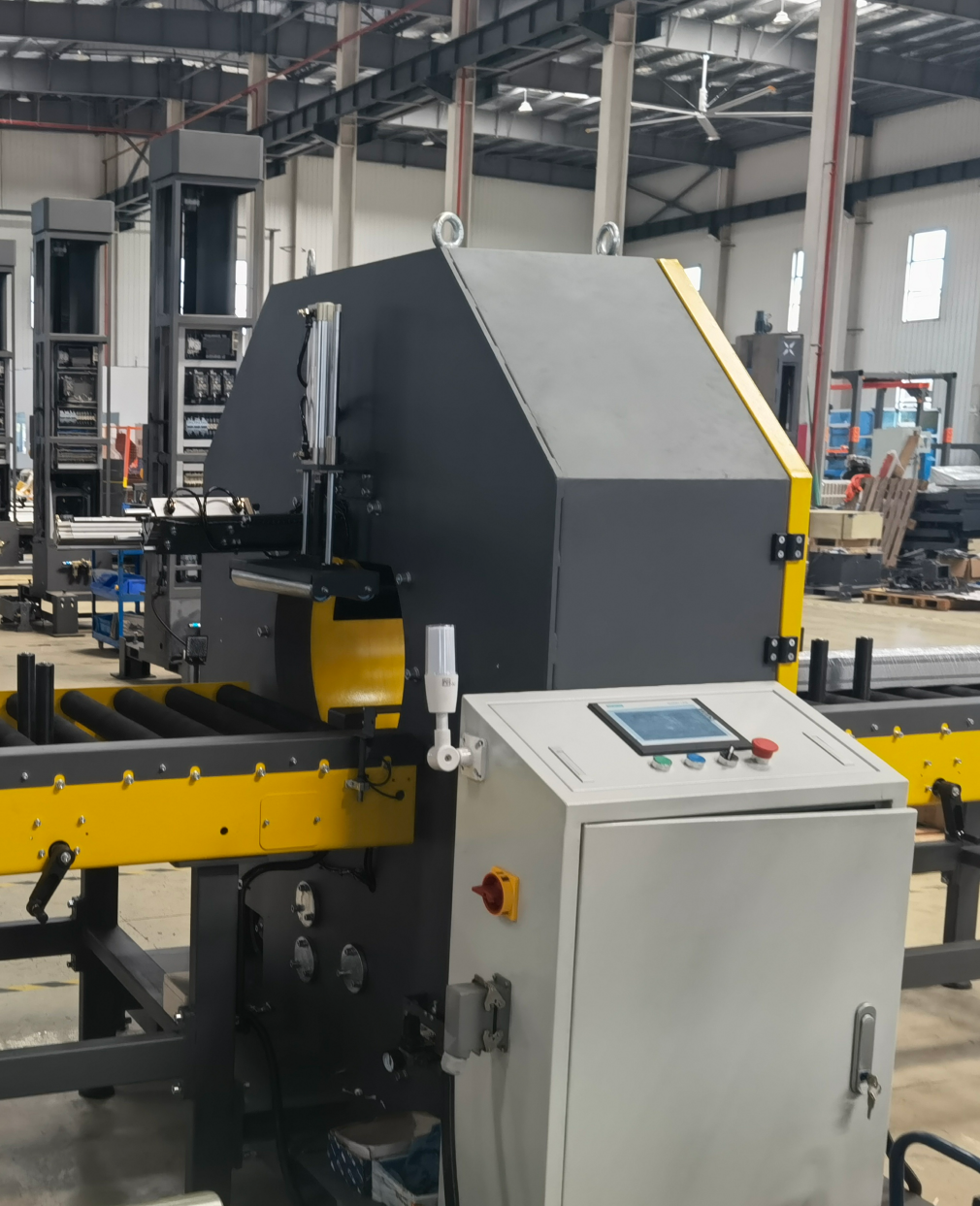
An orbital stretch wrapper is a machine designed to wrap products by passing them through a rotating ring of stretch film. This method is perfect for items that are long, flat, or have strange shapes. Think about metal coils, pipes, wooden planks, or even bundles of wires. The machine wraps the film around the product’s entire length and width. This creates a tight, protective layer.
For Thai businesses, the orbital stretch wrapper offers many benefits. It significantly reduces product damage during transport. This is very important for exports. It also increases packing speed. This means you can get more products out the door faster. It makes your operations more efficient. It also makes your workers safer by reducing manual handling of heavy or awkward items.
How Orbital Wrappers Secure Unique Products
The design of an orbital stretch wrapper makes it perfect for items that other machines cannot handle well. These products often have an uneven weight distribution or long dimensions. I remember one client who was losing money because his steel coils often arrived at their destination with damaged edges. A pallet wrapper would not have solved his problem. An orbital wrapper, however, completely changed his business.
The Wrapping Process
An orbital wrapper uses a rotating film carriage. The product moves through the center of this carriage. As the product moves, the film wraps around it in a spiral pattern. This creates a strong, even wrap. It holds the product tightly together. It also protects it from dust, moisture, and damage. This process is highly adaptable. It can handle many different product lengths and widths.
Ideal Products for Orbital Wrapping
- Metal Coils: These are often heavy and round. An orbital wrapper wraps them fully, preventing unraveling and damage to edges. This is critical for steel mills in Thailand.
- Pipes and Tubes: Long, cylindrical items are hard to secure. The orbital wrapper wraps them from end to end. It makes a stable bundle.
- Wooden Beams and Lumber: These can splinter or shift. The wrapper holds them together tightly. It keeps them safe during transport.
- Bundles of Wire or Cable: It ensures that these bundles stay neat and protected. This prevents tangling and damage.
Advantages for Thai Manufacturers
The Thai manufacturing sector is growing. Many factories produce these types of goods. Using an orbital wrapper can give them a big edge.
Improved Product Protection:
- It reduces damage from handling and shipping. This lowers returns and claims.
- It protects against dust, moisture, and other environmental factors. This keeps products in better condition.
Increased Efficiency and Speed:
- It automates a task that would otherwise need a lot of manual labor. This saves time.
- It can pack products much faster than by hand. This boosts output.
Enhanced Worker Safety:
- Workers do not need to manually wrap large or heavy items. This reduces the risk of injury.
- It means fewer accidents and lower workers’ compensation costs.
Cost Savings:
- Less product damage means less waste. This saves money on materials.
- Faster packing reduces labor costs. This improves overall profitability.
Choosing an orbital stretch wrapper is a strategic investment. It helps Thai businesses protect their goods better. It also makes their operations run more smoothly. This helps them stay competitive in the global market.


What is a Pallet Wrapper, and how can it help factories in Thailand?
Do you find your stacked boxes or products shifting during transit, leading to unstable loads and potential damage? This is a common problem for many factories in Thailand. They use traditional packing methods. These methods often fail to secure palletized goods properly. This can cause customer complaints and losses. I remember a client in the food industry. Their products were often arriving damaged because the pallets were not stable.
A pallet wrapper is a machine that applies stretch film around a loaded pallet. Its main job is to stabilize the items stacked on a pallet. It creates a tight, secure unit. This prevents goods from moving or falling during storage and transport. The machine typically rotates the pallet itself or rotates a film carriage around a stationary pallet. This ensures the film covers all sides of the load.
For Thai factories that deal with high volumes of palletized goods, this machine is very useful. It significantly improves load stability. This reduces damage and makes shipping safer. It also automates the wrapping process. This saves a lot of time and labor. It helps to meet tight delivery schedules. It is a workhorse for many industries.
The Power of Pallet Wrapping for Stacked Goods
Pallet wrappers are essential for businesses that ship items in boxes, bags, or other stacked forms. These machines ensure that the entire load stays together as one solid unit. This is key for efficient logistics. I always tell my clients, “A well-wrapped pallet is a happy pallet.”
The Pallet Wrapping Process
A pallet wrapper works by either spinning the pallet on a turntable or by having a robotic arm with film move around a static pallet. As the film is applied, it stretches and tightens around the load. This binds all items together. It also attaches them securely to the pallet. This prevents shifting. It also offers some protection against dust and moisture.
Ideal Products for Pallet Wrapping
- Stacked Boxes: Common in almost all industries. The wrapper keeps boxes from toppling.
- Packaged Food Items: From rice bags to canned goods. It ensures products stay clean and organized.
- Beverage Cases: Heavy and prone to shifting. Pallet wrappers make them stable for transport.
- Retail Goods: Any product that is packaged into cartons and then stacked on pallets for distribution.
- Construction Materials (bagged): Cement bags, tiles, or other materials bundled on a pallet.
Advantages for Thai Manufacturers
Many factories in Thailand produce consumer goods, electronics, or agricultural products. These often require palletized shipping. A pallet wrapper is a vital piece of equipment for them.
Enhanced Load Stability:
- It prevents products from shifting or falling during transit. This reduces damage to goods.
- It ensures pallets arrive in good condition. This keeps customers happy.
Increased Efficiency and Throughput:
- Automated wrapping is much faster than manual wrapping. This speeds up the packing line.
- It frees up workers for other tasks. This improves overall productivity.
Improved Worker Safety:
- Workers do not need to manually walk around heavy pallets with film. This lowers the risk of strain or injury.
- It helps to create a safer work environment.
Cost-Effectiveness:
- It uses stretch film very efficiently. This reduces material waste.
- Less product damage means fewer returns and claims. This saves money in the long run.
A pallet wrapper is a smart investment for any Thai factory dealing with large volumes of palletized goods. It brings better efficiency, safety, and cost control. This helps businesses to manage their supply chain better and deliver products reliably.

How do Orbital and Pallet Wrappers handle different product shapes in Thailand?
Have you ever tried to secure a long, awkward product on a standard pallet? Or worried about a stack of boxes falling apart? Many Thai manufacturers face this challenge. Their products come in all shapes and sizes. They need the right packing solution for each. A wrong choice can lead to damaged goods and higher costs. I learned early on that one machine simply cannot fit every need. That is why I always preach understanding your product first.
The core difference between orbital and pallet wrappers lies in what they are designed to wrap. Orbital wrappers are made for long, horizontal items. They secure products that pass through a wrapping ring. Pallet wrappers, on the other hand, are for vertical, stacked items. They secure products that are already on a pallet. This difference is critical for factories in Thailand. They produce a wide range of goods.
Choosing the correct wrapper depends entirely on the shape and nature of your product. If you try to use a pallet wrapper for a steel coil, it will not work. If you try to use an orbital wrapper for a stack of rice bags, it also will not work. Understanding this basic principle is your first step to making a smart investment.
Matching Machine to Product: A Thai Industry Perspective
Thai factories produce a vast array of goods. These range from heavy steel coils for construction to delicate electronics components, and vast quantities of agricultural products in bags. Each product type needs a specific approach to packing. I have seen many companies try to use a “one-size-fits-all” solution. It always ends up costing them more money in the long run.
Product Dimensions and Orientation
-
Orbital Wrappers:
- Best For: Long, linear, or horizontally oriented items. Examples include:
- Metal profiles (steel bars, aluminum extrusions)
- Wooden planks and timber bundles
- Rolls of fabric or carpet
- Coils of wire, hose, or cable
- Tires or wheel assemblies
- Mechanism: The product moves through a horizontal or vertical rotating ring. The film wraps around the product’s length and girth. This creates a full, protective enclosure. The machine can be adjusted to handle different lengths and cross-sections. This makes it very flexible for products of various sizes.
- Best For: Long, linear, or horizontally oriented items. Examples include:
-
Pallet Wrappers:
- Best For: Vertically stacked, unitized loads on a standard pallet. Examples include:
- Boxes of consumer goods (food, electronics, household items)
- Bags of cement, rice, or fertilizer
- Drums or barrels stacked on a pallet
- Cartons of beverages
- Bundles of smaller items (e.g., bricks) that form a square or rectangular load.
- Mechanism: The pallet with the stacked product sits on a turntable or is stationary while a film carriage moves around it. The film wraps from the bottom of the pallet to the top. This stabilizes the entire load. It secures all individual items together.
- Best For: Vertically stacked, unitized loads on a standard pallet. Examples include:












