

Orbital Stretch Wrapper Technology: What U.S. Engineering Teams Need to Know?
You are likely feeling the pressure. Your factory faces constant demands to boost output, cut costs, and keep workers safe. Manual packing processes probably slow everything down. They create bottlenecks at the end of your production lines. This means you ship products slower. It also increases the risk of serious injuries. I have seen this problem many times in my career.
An orbital stretch wrapper is a machine that wraps products horizontally with stretch film. It forms a protective layer around long or irregular items, like coiled steel, wire, or panels. For U.S. engineering teams, this technology is vital. It solves major production challenges. It boosts efficiency, improves safety, and reduces product damage.


This article goes deep into how orbital stretch wrappers work. We will look at their key benefits. We will also discuss what to consider when you bring one into your operation. Keep reading to understand how this technology can transform your factory floor.
How Can Orbital Stretch Wrappers Solve Efficiency Bottlenecks?
Your current packing process uses too much manual work. It is slow and not efficient. This impacts your whole production and delivery times. It holds back your factory’s ability to grow. You need a way to speed up the end of your line.
Orbital stretch wrappers remove human effort from the wrapping process. They apply film quickly and evenly. This cuts down packing time a lot. They move product through the wrapping stage much faster. This makes your whole production flow smoother and quicker.


Many factories, especially those dealing with large or heavy items like metal coils or lumber, face this exact challenge. Before I started FHOPEPACK, when I was still working on factory floors and then building my own, I saw endless lines of products waiting to be packed. Manual wrapping meant workers walked around coils multiple times. They pulled heavy film by hand. This was not only slow, but it was also tiring. It caused inconsistent wraps. An orbital wrapper fixes this. The machine wraps the product as it moves through a horizontal ring. This ring spins quickly. It applies the film tight and secure. This process is much faster than any human can achieve. For example, a coil that took two workers 10 minutes to wrap by hand might take an orbital wrapper less than two minutes. This difference adds up quickly over a full day. Think about a medium-sized metal processing plant. They might handle hundreds of coils daily. Reducing packing time per coil by even a few minutes means hours saved overall. This translates directly to more products shipped out. It means less overtime for packing staff. It also means better use of your loading dock space. The consistency of the wrap is also key. A machine does not get tired. It does not make mistakes like missing spots or wrapping too loosely. This means your products are better protected. They arrive at your customer’s site in good condition. This reduces customer complaints and returns. It protects your brand reputation. For U.S. engineering teams, the goal is always maximum throughput with minimum waste. Orbital stretch wrappers deliver on this. They make the packing bottleneck disappear. This lets the rest of your factory run at its full potential.
Manual vs. Automated Wrapping Speeds
| Aspect | Manual Wrapping | Orbital Stretch Wrapper |
|---|---|---|
| Speed | Slow, depends on worker speed and fatigue | Fast, consistent, machine-driven |
| Consistency | Varies, prone to human error | High, uniform wrap every time |
| Labor Needs | High, multiple workers often needed for heavy items | Low, usually one operator to load/monitor |
| Throughput | Limited by human capacity | High, significantly increases production flow |
| Material Waste | Can be higher due to inconsistent wrapping | Lower, optimizes film use |
Do Orbital Wrappers Really Improve Worker Safety?
Manual handling of heavy molds or flipping pallets is very risky. It is slow, and workers can get hurt easily. This leads to high insurance costs. It also causes high employee turnover. You want solutions that reduce heavy lifting by workers.
Yes, orbital stretch wrappers greatly improve worker safety. They remove the need for workers to lift, turn, or walk around heavy, awkward items. This removes the main causes of back injuries, strains, and crushes. It creates a much safer work environment.
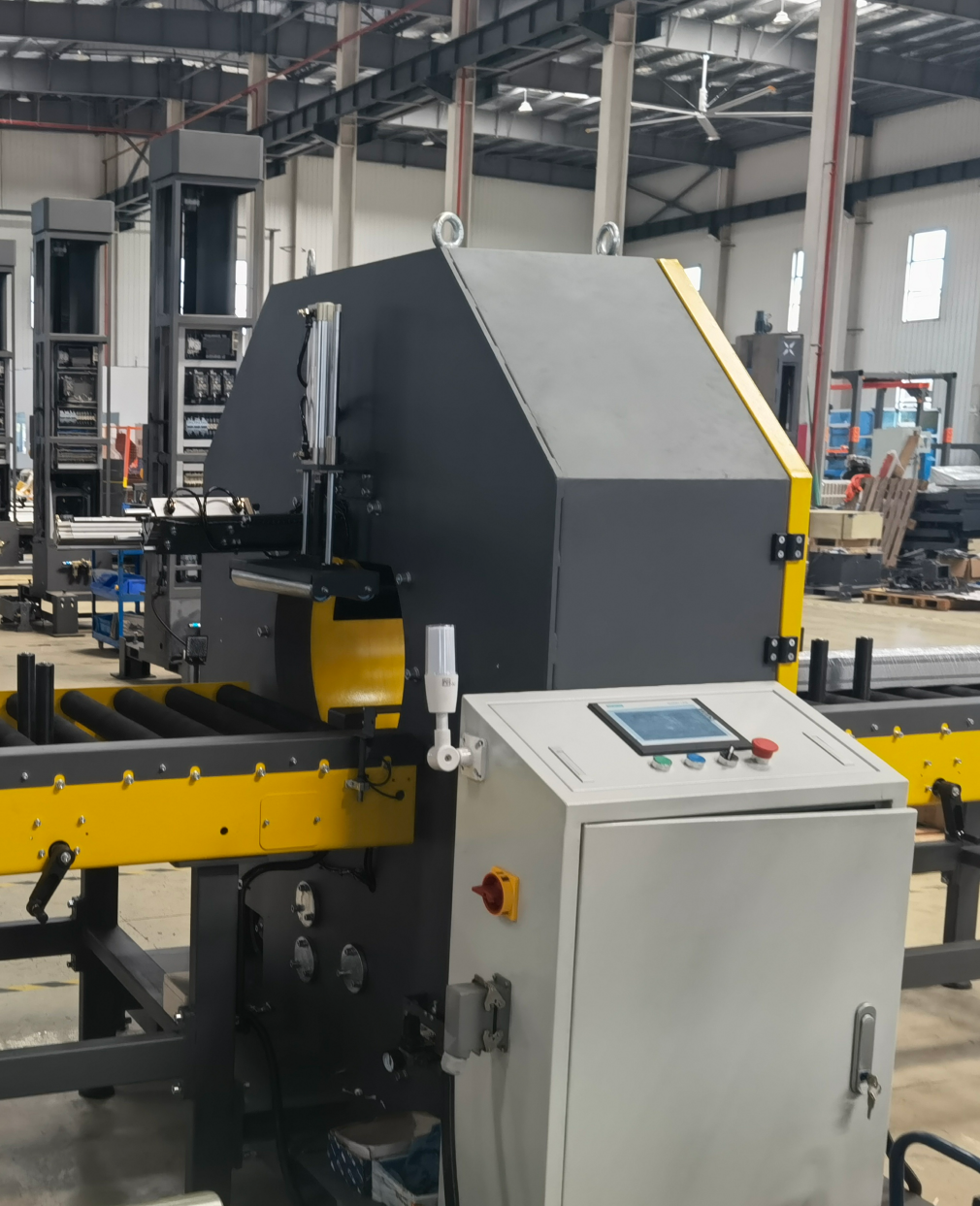

I have always believed that the most valuable asset in any factory is its people. Protecting them is not just a moral duty, it is good business. I remember early in my career, seeing workers strain and struggle with heavy coils. They used straps and forklifts in dangerous ways. Sometimes, a coil would shift. Or a worker would slip. These incidents led to injuries. They led to lost work days. They also meant higher insurance premiums for the company. An orbital stretch wrapper changes this. The product is usually loaded onto a conveyor system or a pallet by a forklift. It then moves into the wrapping area. Workers do not need to touch or move the product during the wrapping process. The machine does all the heavy lifting and turning. This removes the worker from the danger zone. They do not have to bend, twist, or lift awkward loads. This drastically lowers the risk of musculoskeletal injuries. It lowers the risk of crushing accidents. It also helps with compliance with OSHA regulations. When a factory has fewer accidents, it means lower workers’ compensation claims. It means lower insurance costs. It also means better employee morale. Workers feel safer. They know their employer cares about their well-being. This can lead to less employee turnover. It creates a more stable and experienced workforce. A safe factory is also a productive factory. Less time lost to injuries means more uptime for your machines. It means a smoother production schedule. Investing in safety is not just an expense. It is an investment in your team. It is an investment in your factory’s future. For U.S. engineering teams, workplace safety is a top priority. Orbital wrappers are a key tool in achieving this. They help build a culture of safety.
Safety Improvements with Orbital Wrappers
| Safety Aspect | Manual Wrapping | Orbital Stretch Wrapper |
|---|---|---|
| Injury Risk | High (back strains, crushing, slips from heavy lifting) | Low (workers are kept away from moving parts/heavy lifting) |
| Ergonomics | Poor (repetitive motions, awkward postures) | Excellent (machine does the work) |
| OSHA Compliance | Can be challenging due to high-risk activities | Easier to comply due to reduced manual handling risks |
| Insurance Costs | Higher due to injury claims | Lower over time due to fewer incidents |
| Worker Morale | Can be low due to perceived danger | Higher due to safer working conditions |
What is the Real ROI of Investing in an Orbital Wrapper?
You want to improve your factory’s profit. You need clear returns on any investment. You are worried about the cost of new equipment. You need to know if it will truly pay for itself.
The Return on Investment (ROI) for an orbital wrapper comes from multiple areas. It lowers labor costs. It reduces product damage. It also cuts down on material waste. It increases overall production capacity. These benefits quickly add up to significant savings and increased revenue.


When I built my factory, every single investment decision was about ROI. I knew that a machine had to earn its keep. An orbital stretch wrapper looks like a big purchase at first. But the savings start from day one. First, labor costs. If you are using two or three people to manually wrap products, an orbital wrapper can free up one or two of those workers. They can then do other important tasks. Or, you might reduce overtime hours. For a U.S. factory, labor costs are significant. So, freeing up even one full-time worker can save tens of thousands of dollars each year. Second, material cost. Manual wrapping often leads to wasted film. Workers might overwrap. Or they might wrap unevenly, requiring more film. An orbital wrapper applies film consistently. It uses only what is needed. This reduces film consumption. This can be a huge saving over time. Third, product damage. I have seen countless times how coil edges get dinged during handling. Or how products get scuffed during shipping because of poor wraps. This leads to customer complaints. It leads to returns. It means lost profits. An orbital wrapper provides a tight, consistent wrap. This protects your product better during internal transfers and shipping. This reduces damage costs. It protects your profit margin. Fourth, increased output. By removing the bottleneck, you can process more products each day. More output means more sales. It means more revenue. When you put all these factors together, the ROI becomes clear. I have seen clients recover their investment in less than two years. Some even faster. It is not just about buying a machine. It is about buying a solution that boosts your bottom line.
Key ROI Factors for Orbital Wrappers
| ROI Factor | Impact on Costs/Revenue | Calculation Example |
|---|---|---|
| Labor Savings | Reduces need for manual wrapping staff or overtime | (Hourly wage x hours saved per day) x working days per year |
| Reduced Material Waste | Optimizes film use, less film needed per product | (Cost per roll x rolls saved per day) x working days per year |
| Decreased Product Damage | Fewer customer complaints, returns, and reworks | (Average damage cost per item x items saved from damage) |
| Increased Throughput | More products processed per shift, leading to higher sales | (Increased units per day x profit per unit) x working days per year |
| Lower Insurance Premiums | Fewer workplace injuries mean lower workers’ comp costs | Estimate based on historical claims vs. projected reduction |
How Do You Pick the Right Orbital Wrapper for a U.S. Factory?
You have had bad experiences with equipment suppliers before. They only cared about selling you a machine. They gave poor after-sales service. You are very careful about finding a new partner. You need a machine that truly fits your factory’s unique needs.
Choosing the right orbital wrapper means looking at several key things. You need to consider the size and shape of your products. Think about how many items you need to wrap each day. Look at the space you have in your factory. Also, check the supplier’s history and support services. Picking wisely makes sure your investment pays off.
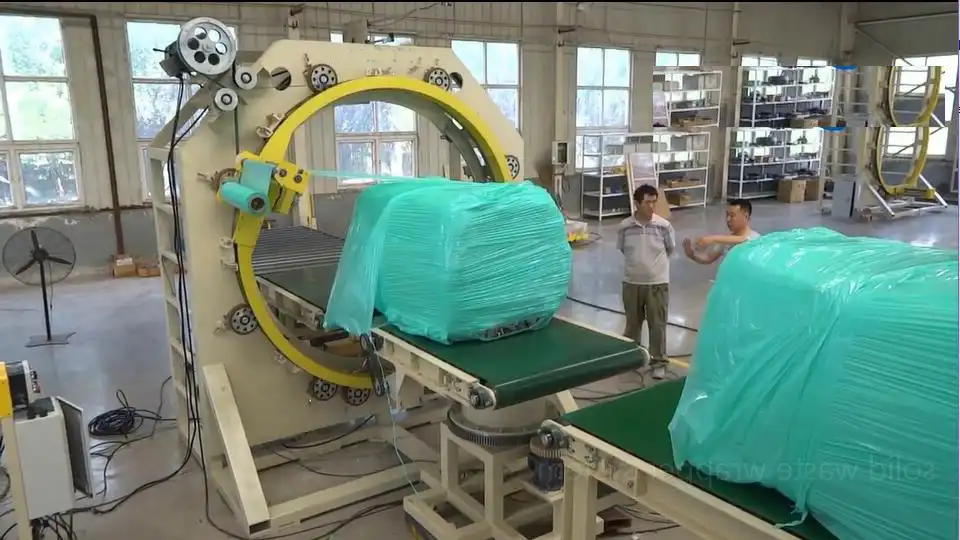

From my own experience building and running factories, I know that one size does not fit all. What works for a small operation might not work for a large metal processing plant. First, look at your products. Are you wrapping steel coils? Long pipes? Lumber bundles? Panels? Each type of product has specific wrapping needs. You need a wrapper with the right opening size. It needs the right conveyor system. This ensures your product moves smoothly. Next, think about your production volume. How many items do you need to wrap in an hour? Or a day? This will tell you if you need a semi-automatic machine. Or maybe a fully automatic, high-speed system. You do not want to buy a machine that is too slow for your needs. You also do not want to overspend on something more powerful than you need. Third, consider your factory layout. Do you have enough space? Orbital wrappers need floor space for the machine itself. They also need space for loading and unloading. Make sure the machine can integrate with your existing conveyors or processes. You want a smooth flow, not a new bottleneck. Finally, and this is very important for U.S. engineering teams, look at the supplier. Do they have a good track record? Do they offer strong after-sales support? This includes spare parts. It includes technical help. A machine is only as good as the support behind it. I learned this the hard way with some early equipment purchases. A partner who understands your production challenges is invaluable. They can help you pick the right machine. They can help you set it up. And they will be there when you need help.
Choosing the Right Orbital Wrapper: Key Considerations
| Consideration | Description | Why it Matters for U.S. Factories |
|---|---|---|
| Product Dimensions | Max/min length, width, height, and weight of items | Ensures the wrapper can handle your specific product range |
| Production Volume | Number of items to be wrapped per hour/day | Determines required machine speed (semi-auto vs. auto) |
| Factory Space | Available floor space for installation and operation | Crucial for seamless integration into existing lines |
| Integration Needs | Compatibility with existing conveyors, automation | Avoids creating new bottlenecks or workflow disruptions |
| Supplier Reputation | History of reliable machines, strong after-sales support | Guarantees long-term machine performance and uptime |
| Film Type & Cost | Compatibility with various film types, cost-effectiveness | Impacts operating costs and wrap quality |
My Insights on Partnering for Packing Success?
You are not just looking to buy a machine. You want a real partner. You need someone who understands your production bottlenecks. You want them to grasp your safety concerns. You need them to know your efficiency problems. You want professional insights and reliable solutions.
My journey from a factory employee to building a successful packing machine business has shown me one thing clearly: the right partnership is key to success. It is not just about selling equipment. It is about understanding your specific challenges. It is about offering real solutions. It is about being there for you long after the sale. I want to help you grow your business, just as I helped my clients.
When I first started in the packing machine industry, I was on the factory floor. I saw problems firsthand. I felt the pressure to increase output. I understood the pain of machine breakdowns. I knew the danger of manual work. This experience shaped me. It made me realize that a good supplier does more than just deliver a machine. They become a part of your team. They offer insights. They solve problems with you. When I started FHOPEPACK, I wanted to build a company that did exactly that. My goal was not just to sell equipment. It was to share the knowledge I gained. I wanted to help others achieve their financial independence. I wanted to help their businesses grow. Just like Michael Chen, many of my early clients faced big challenges. They had inefficient packing. They had safety risks. They saw product damage. I worked with them. I helped them pick the right orbital wrappers. I explained the ROI clearly. I provided support that went beyond the initial purchase. One client, a steel wire manufacturer, was losing a lot of money due to manual wrapping. It was slow. Their workers were exhausted. We looked at their whole process. We found the perfect orbital wrapper for their wire coils. We helped them install it. We trained their team. Within months, their output went up by 30%. Their safety incidents dropped to zero. Their product damage became almost non-existent. This transformation was amazing. It proved that good machines paired with good partnership can change everything. So, when you look for an orbital wrapper, look for a partner. Look for someone who understands your world. Look for someone who has walked in your shoes. That is the true path to packing success.
Conclusion
Orbital stretch wrappers boost factory efficiency, improve safety, and deliver clear ROI. Choose the right machine and partner for lasting success.












