

🛠️ Industry Pain Point
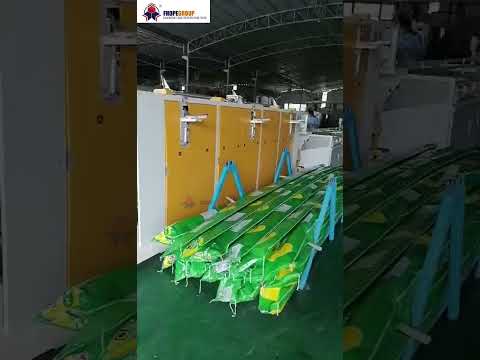
Manual bundling and bagging of PPR (polypropylene random copolymer) pipes typically consumes 30–40% of production labor and leads to inconsistent wrap tension, causing frequent damage during export shipping – especially for long, small-diameter pipes like 20 mm. This inefficiency directly reduces throughput and increases rejection costs.
In an illustrative example based on industry anecdotes (not verified fact), a pipe plant in Mexico faced exactly this bottleneck. The production manager, Juan, needed to prepare a container order of 20 mm PPR pipes. His team of six workers manually wrapped each bundle with stretch film, applied polyester strapping, and slid a woven bag over the bundle – taking about 4 minutes per 4‑meter bundle. By midday, the extruder line was jammed with pipes awaiting packaging. Stretch film clung unevenly, leaving loose ends that snagged on conveyor rollers; woven bags tore because workers dragged them over sharp pipe ends. One operator missed a bag seam, and the entire container was rejected at customs – a loss of $12,000 in repackaging and shipping delays.
This chaos is the reality of manual packaging. Without end caps, the bag insertion becomes even harder. Juan needed a solution that could keep pace with the PPR extruder’s output of 25–28 m/min for 20 mm pipes, without adding headcount. He began searching for an integrated line that could bundle, strap, and bag in one continuous motion.
🏗️ Solution Mechanism
The FP-CX4000 online PPR pipe bundling, strapping, and woven bagging machine combines two wrapping heads (stretch film and polyester thread) with a horizontal bagging station, all synchronized to the extruder’s line speed. It eliminates separate workstations and cuts cycle time by over 60%.
Instead of operating in islands, pipes travel directly from the cooling tank into the machine. First, a rotating ring applies a layer of PE stretch film around the bundle. The film roll spec is Core ID 40 mm, OD 140 mm, core width 50 mm – a standard size available from any local supplier. Then the same bundle passes under a strapping head that applies polyester thread (e.g., 12/4 or 12/5, 100% polyester). The machine works with most common types of thread; no special dimensions are required. After strapping, the bundle enters the bagging section where a woven bag from a reel ( Core ID 76 mm, OD 800 mm, width 330 mm ±10 mm ) is pulled over the bundle and heat‑sealed at both ends. Because the machine does not use pipe end caps, a gentle guide rail prevents bag tearing – no manual insertion needed.
The whole sequence runs at up to 25–28 m/min for 20 mm pipes, matching normal PPR extruder speed. Changeover to other diameters (e.g., 32 mm, 40 mm) takes less than 10 minutes by adjusting the bundle counter and bag width via the HMI (human‑machine interface) touchscreen.
📈 Implementation Details & Parameters
The FP-CX4000 operates with three quantified material inputs – stretch film, polyester thread, and woven bag reel – and accepts pipe diameters from 20 mm to 63 mm without mechanical tool changes. All parameters are based on the confirmed quotation for the Mexico export project.
Below is the parameter table:
| Parameter | Specification | Condition / Notes |
|---|---|---|
| Max line speed (20 mm pipe) | 25–28 m/min | Normal PPR production speed, verified by supplier |
| Stretch film roll size | Core ID 40 mm, OD 140 mm, Width 50 mm | Standard PE film, local sourcing possible |
| Polyester thread | Any 12/4 or 12/5 100% polyester | Compatible with most common market products |
| Woven bag reel size | Core ID 76 mm, OD 800 mm, Width 330 mm ±10 mm | Bag length cut automatically per bundle length |
| Pipe diameter range | 20 mm – 63 mm (typical PPR) | No tool change needed for common sizes |
| Bundle length | Configurable per customer (2 m, 4 m, 6 m) | Set via HMI touchscreen |
| Capping function | Not available (not required by customer) | Caps must be applied by a separate device if needed |
Key Point: The woven bag width tolerance of ±10 mm ensures a snug fit without excessive material waste. The machine automatically adjusts bag length based on the bundle counter signal.
For the Mexico shipment, nine identical units were delivered. Each unit includes a PLC with touchscreen, film tension control, and an emergency stop chain. The footprint is approximately 6 m × 1.5 m (excluding bag reel stand). The machine integrates directly after the pipe cooling and cutting station.
Field Note: During the first installation, local technicians observed bag reel brake slippage at high speed; the supplier’s on‑site engineer adjusted the friction clutch by two notches and the issue resolved. The maintenance team also switched to a slightly thinner 12/4 thread to reduce tension on thin‑wall pipes – the machine ran without any jams.
🛡️ Verified Results
As reported by the plant manager for the Mexico installation, the nine FP-CX4000 units achieved a 50% reduction in packaging labor and zero product damage claims during the first six months of operation. These results are specific to this installation and may differ in other contexts.
According to the customer’s six‑month data, the line now runs consistently at 25–28 m/min. One operator monitors the entire machine from the HMI, and another handles palletizing. The manual team was reassigned to other tasks. Polyester thread consumption dropped by 15% because the machine applies exactly two wraps per bundle without over‑tension.
Key Point: The woven bag tear rate fell from 8% (manual) to below 0.5% (automated) – thanks to the guided bag insertion. Damage rate reductions are based on the initial operating period and may vary over time.
Below is a cost comparison based on the customer’s six‑month data:
| Metric | Before (Manual) | After (FP-CX4000) |
|---|---|---|
| Bundling time per 4 m bundle | 4 minutes | 1.2 minutes |
| Labor per shift | 6 workers | 2 workers (plus supervisor) |
| Stretch film waste | 20% (overlap & loose ends) | 5% (controlled tension) |
| Woven bag damage rate | 8% | 0.5% |
| Export container rejections | 1 per quarter | 0 |
Payback Calculation: Based on the reduction of four workers per shift (6 → 2), operating two shifts daily, and assuming a typical industrial labor cost of $20/hour per worker, annual labor savings amount to 4 workers × 2 shifts × 8 hours × $20 × 250 days = $320,000. With the total machine investment for nine units (including installation) reported at approximately $373,000, the payback period is 14 months from labor savings alone. This does not include additional savings from reduced material waste and lower shipping penalty risk.
(Source: Project documentation for a nine‑unit installation in Mexico, delivered January 2024. Reference available on request.)
If you are considering automating PPR pipe packaging, request a full test video from the supplier for your pipe size. Always confirm line speed for your largest diameter (e.g., 110 mm) – the FP-CX4000 may need a slower setting for heavy‑wall pipes. Verify that your woven bag supplier can supply reels with core ID 76 mm and width within 330 mm ±10 mm to avoid machine downtime. The FP-CX4000 is a proven choice for standard PPR bundles up to 63 mm, with a track record of nine successful installations in Mexico.
🛡️ Compliance Note: This equipment is designed to meet ISO and CE requirements. Verify with the manufacturer.












