

Confused about the right equipment to efficiently handle heavy loads in your facility? Are you struggling with awkwardly shaped molds or unstable pallets? The world of material handling offers a range of solutions, but two terms often pop up: mold upenders and pallet inverters. Understanding their core functions and key differences is crucial for optimizing your operations and ensuring workplace safety.
Mold upenders and pallet inverters are both material handling machines designed to rotate heavy loads, but they serve distinct purposes. Mold upenders are specifically engineered to tilt or rotate molds, dies, and similar heavy, often awkwardly shaped items. Pallet inverters, on the other hand, are designed to invert or transfer goods loaded on pallets, facilitating pallet exchange, damaged goods removal, or load transfer.
This article dives deep into the functionalities of mold upenders and pallet inverters, highlighting their key differences to help you determine the ideal solution for your specific material handling needs.
Mold Upender: The Heavyweight Champion for Molds and Dies
Dealing with heavy molds and dies can be a cumbersome and risky task. Traditional methods often involve overhead cranes or forklifts, posing safety hazards and potential damage to valuable tooling. Mold upenders emerge as a specialized solution, designed to safely and efficiently tilt and rotate these hefty items, streamlining processes in mold making, die casting, and stamping industries.
A mold upender, also known as a die upender or mold tilter, is a specialized piece of equipment designed to safely and efficiently rotate heavy molds, dies, and similar tooling. These machines are crucial for tasks such as mold maintenance, repair, and adjustments, allowing for ergonomic access to all sides of the mold without manual lifting or dangerous maneuvering.

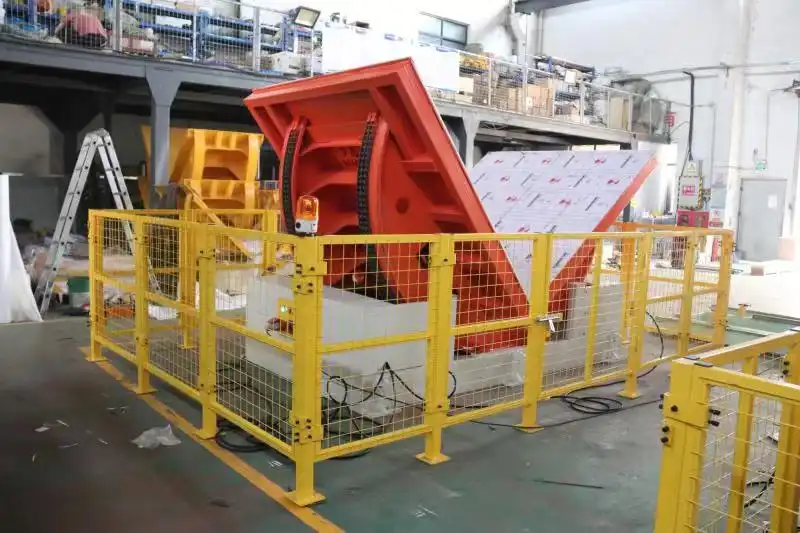
But how exactly do mold upenders achieve this heavy lifting and precise rotation? Let’s delve deeper into their mechanics and applications:
Diving Deeper into Mold Upender Functionality
Mold upenders are engineered with robust construction to handle the immense weight and specific shapes of molds and dies. Their design and operation focus on providing controlled and safe manipulation of these valuable industrial tools.
Key Design Features of Mold Upenders
- Heavy-Duty Structure: Mold upenders are built with thick steel frames and platforms to withstand extreme loads, often ranging from several tons to tens of tons. This robust construction ensures stability and safety during operation.
- Tilting or Rotating Platform: The core of a mold upender is its platform, designed to securely hold the mold. These platforms can tilt up to 90 degrees for easy access to the mold’s top and bottom surfaces or rotate 180 degrees for complete inversion.
- Hydraulic or Electromechanical Operation: Most mold upenders utilize hydraulic cylinders or electromechanical systems to power the tilting or rotating motion. Hydraulic systems offer high power and smooth, controlled movement, while electromechanical systems provide precise positioning and energy efficiency.
- Safety Mechanisms: Safety is paramount when handling heavy molds. Mold upenders are equipped with features like:
- Clamping Systems: Hydraulic or mechanical clamps secure the mold to the platform, preventing slippage during rotation.
- Overload Protection: Pressure relief valves in hydraulic systems or torque limiters in electromechanical systems prevent overloading and potential damage.
- Emergency Stop Buttons: Strategically placed emergency stop buttons allow for immediate halting of operation in case of any issue.
- Safety Interlocks and Light Curtains: Some advanced models incorporate safety interlocks that prevent operation if the load is not properly secured or light curtains to create safety zones around the machine.












