
Local vs Global | How Leading Steel Coil Packing Line Manufacturers Compete in the Market?
Imagine your steel mill’s output, hundreds of tons of cold-rolled coils, waiting to ship. Now, picture delays, inconsistent packaging, and even client complaints due to poor protection. This is a common nightmare for many production directors, just like my friend Ivan Petrov, who manages a busy steel plant in Russia. He needs solutions that ensure efficiency, safety, and compliance for every single coil. The stakes are high; a slow or faulty packing process can lead to penalties and lost business.
Leading steel coil packing line manufacturers compete by offering specialized solutions that balance local market understanding with global technological advancements. This includes adapting to specific regional demands like CE/ISO certifications, while also providing universal benefits such as high automation, reliability, and robust after-sales support. Their competition focuses on innovation in machine design, material handling, and integrated systems to meet diverse customer needs, from basic strapping to full anti-corrosion wrapping for export markets, ensuring efficiency and cost-effectiveness.

Finding the right packing solution is not just about buying a machine; it is about securing your future. It involves choosing a partner who understands the challenges of steel production and can deliver a system that integrates seamlessly into your operations. As someone who started on the factory floor and built FHOPEPACK into a leader, I know these decisions impact everything, from worker safety to your bottom line. Let us dive deeper into how manufacturers are competing to win your trust and deliver real value.
What Drives the Global Demand for Advanced Steel Coil Packing Lines?
The demand for advanced steel coil packing lines is not just about keeping up; it is about getting ahead. Many steel mills, like Ivan’s, face intense pressure to produce diverse products quickly and efficiently. This includes cold-rolled, galvanized, and color-coated coils, each with unique packing requirements. Manual processes simply cannot handle this complexity or volume anymore. The global market now expects automated systems that guarantee consistent quality, speed, and safety. This push for modernization is creating a competitive landscape where only the most innovative and reliable manufacturers can thrive. They must offer systems that address critical issues such as labor shortages, inconsistent packaging quality, and higher client demands for certified, barcode-ready shipments. (global packing automation demand)
The core challenge for many steel producers is scaling their output while maintaining product integrity. Consider the needs of a production director who must ship hundreds of tons daily. Every minute counts, and every packed coil must meet strict quality controls. If packing is slow or unreliable, it bottlenecks the entire production line. This is why the industry is moving towards fully automated solutions that minimize human intervention, reduce errors, and increase throughput. Manufacturers are responding by developing integrated systems that go beyond just wrapping or strapping, incorporating smart technologies for monitoring and control. These solutions aim to reduce operational costs, enhance safety, and ultimately protect the steel coils during transit.
- Increased Production Volumes and Diversification: Steel mills are producing more types of coils, from narrow slit coils to large mother coils, requiring versatile packing systems. For example, Ivan’s factory produces cold-rolled, galvanized, and color-coated coils, each needing different protection. This diversification puts pressure on packing lines to adapt quickly and efficiently without manual retooling, pushing demand for flexible, automated machines. (versatile coil packing)
- Rising Labor Costs and Safety Concerns: Manual packing is labor-intensive and poses significant safety risks, especially when handling heavy steel coils. There is a global shortage of skilled labor in industrial settings, making automation a necessity. Machines can lift, turn, and pack coils without exposing workers to danger, reducing workplace injuries and associated costs. This directly addresses Ivan’s challenge of high worker turnover due to strenuous conditions. (automated safety solutions)
- Stringent Quality Standards and Export Requirements: Customers, especially international ones, demand flawless, damage-free coils. This includes strict anti-corrosion measures, precise strapping tension, and verifiable packaging like CE/ISO certifications and barcode labeling. Manual methods often fail to achieve this consistency, leading to rejections and financial penalties. Automated systems ensure uniform quality, crucial for maintaining customer trust and expanding into export markets. (export packing compliance)
- Cost Reduction and Efficiency Gains: Automated coil packing lines reduce material waste, optimize material usage, and minimize downtime. They operate continuously, often 24/7, with greater speed and precision than human operators. This means lower operational expenses, higher throughput, and a quicker return on investment. For a director like Ivan, reducing labor and material costs while improving production continuity is a primary goal. (efficient packaging lines)
Do Local Manufacturers Have an Edge in Understanding Regional Needs?
Yes, local manufacturers often have a significant edge in understanding specific regional needs, and this is a crucial factor in the competitive landscape. They are closer to the end-users, experiencing the same market conditions, cultural nuances, and regulatory environments. For example, a manufacturer based in Southeast Asia might specialize in anti-corrosion packaging for humid climates, while one in Europe focuses on meeting strict CE standards and local safety regulations. This proximity allows them to tailor solutions precisely, making their offerings highly relevant to local clients. They can provide quicker service, faster spare parts delivery, and more personalized support, which builds strong relationships. This deep local insight can sometimes outperform a globally standardized approach, especially for unique or niche market demands for packing machinery. (regional packing solutions)
My journey in the packing machine industry has taught me that local understanding is invaluable. When I started FHOPEPACK, I focused on listening to the specific challenges faced by steel mills in our region. This allowed us to develop customized machines that perfectly fit their operational realities, rather than offering a one-size-fits-all solution. Local manufacturers can react faster to changes in local regulations or customer preferences. They often have established networks for local sourcing and support, which can translate into more cost-effective solutions and quicker problem resolution. This local advantage extends to communication, where language barriers are non-existent, and cultural business practices are naturally understood. This localized approach builds trust and long-term partnerships.
- Tailored Solutions for Specific Regulations: Different regions have unique safety standards, environmental regulations, and industry certifications. For instance, European clients demand CE compliance, while others might focus on specific ISO standards or local electrical codes. Local manufacturers are inherently familiar with these requirements, enabling them to design machines that meet these standards from the outset, simplifying compliance for their customers. (regulatory compliant machines)
- Localized After-Sales Support and Maintenance: Proximity means local manufacturers can offer faster response times for technical support, maintenance, and emergency repairs. This reduces downtime significantly, a critical factor for 24/7 operations like steel mills. Access to local technicians and spare parts ensures continuous production, which is a major concern for production directors like Ivan, who needs quick fixes for his high-volume lines. (local service availability)
- Understanding of Local Market Demands: Local manufacturers often have a clearer understanding of the prevailing economic conditions, labor costs, and raw material availability in their region. This allows them to design cost-effective solutions and offer competitive pricing relevant to the local market. They can also incorporate design features that are culturally preferred or address common local operational quirks, making their equipment more user-friendly. (market-specific packing)
- Cultural and Linguistic Affinity: Communication is smoother without language barriers, and business practices are aligned with local customs. This fosters better collaboration during project planning, installation, and training. Clear communication ensures that customer requirements are accurately understood and implemented, leading to higher satisfaction and more efficient project execution. (cultural business understanding)

How Do Global Giants Master Complex Supply Chains and Innovation?
Global giants master complex supply chains and innovation by leveraging their vast resources, extensive research and development (R&D) capabilities, and worldwide network. Unlike local manufacturers, they can invest heavily in cutting-edge technologies, attracting top engineering talent to develop revolutionary packing solutions. Their global presence means they source components from around the world, optimizing costs and ensuring access to the best available parts, regardless of origin. This allows them to offer machines with advanced features, higher reliability, and often at competitive prices due to economies of scale. They also benefit from diverse market feedback, allowing them to create versatile machines that can adapt to various industrial environments and customer demands, from Russia to Southeast Asia. (global supply chain management)
At FHOPEPACK, we strive to combine the best of both worlds. While we maintain a strong focus on understanding client needs individually, we also learn from global innovation. Global players can sustain large R&D departments, constantly pushing the boundaries of what packing machines can do. This leads to innovations in automation, artificial intelligence integration, and predictive maintenance. For a company like FHOPEPACK, we prioritize integrating proven technologies into our custom solutions. Global manufacturers also have robust quality control systems that span multiple production sites, ensuring consistent product quality across different markets. This mastery of complex operations allows them to deliver sophisticated, high-performance machines that can handle the most demanding production environments, like Ivan’s steel mill, which requires 24/7 reliability.
- Extensive Research and Development Investment: Global manufacturers dedicate significant capital to R&D, leading to breakthroughs in machine design, material science for packaging, and control systems. This enables them to introduce advanced features like AI-powered defect detection, self-optimizing strapping tension, and fully integrated production line management software. Such innovations drive efficiency and reduce human error, offering a clear competitive edge. (R&D in packaging tech)
- Optimized Global Sourcing and Economies of Scale: With operations in multiple countries, global companies can source high-quality components at competitive prices. Their large production volumes allow them to achieve economies of scale, reducing manufacturing costs per unit. This advantage enables them to offer advanced technologies at a more accessible price point, making high-end automation more attainable for a wider range of customers. (cost-effective global manufacturing)
- Diverse Market Intelligence and Adaptability: Operating in various markets provides global giants with a rich source of feedback and insights into diverse customer needs and regional challenges. This allows them to design machines that are highly adaptable and modular, capable of meeting a broad spectrum of requirements, from compact systems for smaller operations to robust, high-speed lines for major steel producers. (adaptable machine designs)
- Robust Global Service Networks: While local players offer proximity, global companies often boast extensive service networks that can provide specialized support, training, and parts availability across different continents. They can deploy highly skilled international teams for complex installations and troubleshooting, ensuring reliable operation and rapid recovery from any issues, which is critical for continuous production facilities. (worldwide technical support)
What Technologies Define the Leading Edge in Coil Packing Automation?
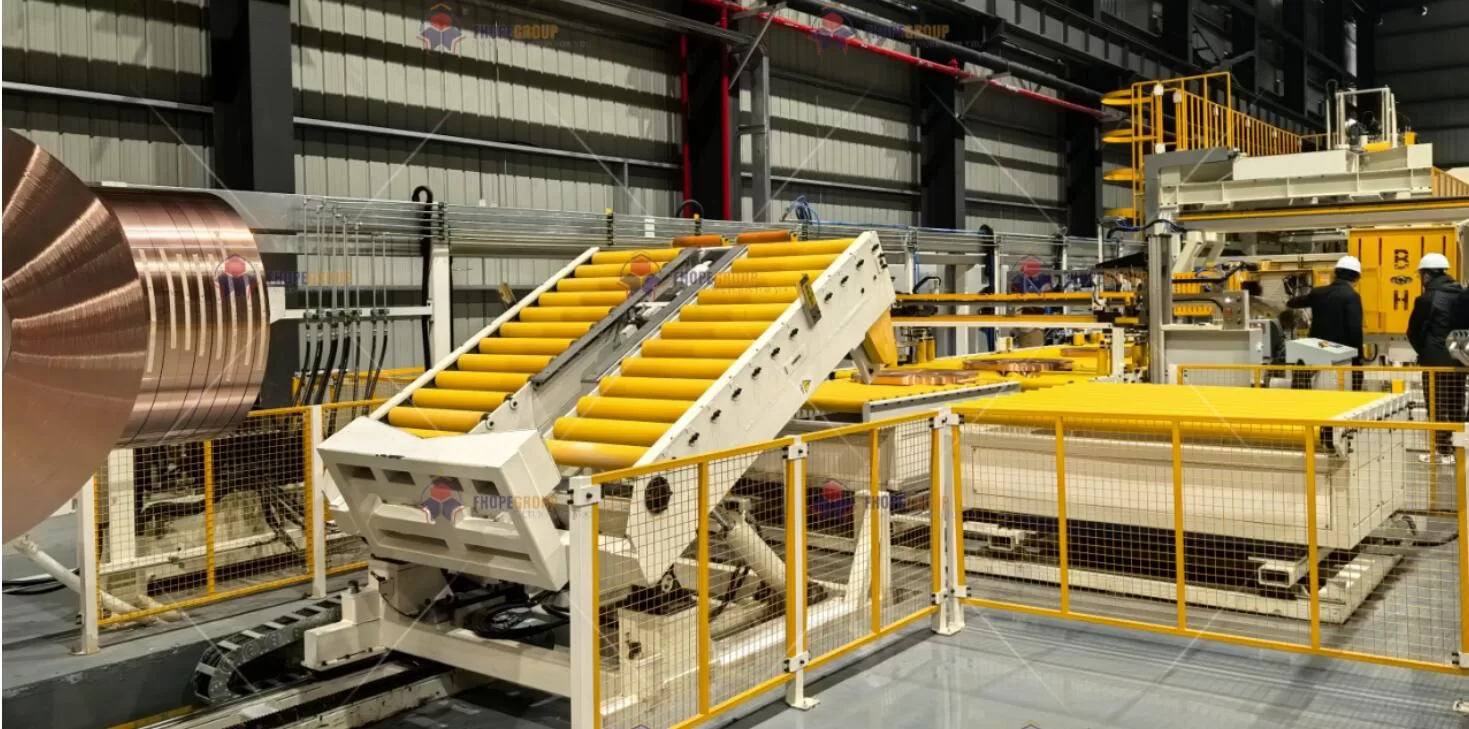
The leading edge in coil packing automation is defined by technologies that prioritize intelligence, integration, and user-friendliness. We are seeing a shift from standalone machines to fully integrated, smart packing lines that communicate with each other and with central production systems. Key technologies include advanced robotics for handling and positioning, vision systems for quality inspection, and intelligent software for optimizing material usage and predicting maintenance needs. These innovations reduce reliance on manual labor, enhance precision, and minimize waste, directly addressing challenges faced by operations like Ivan’s steel mill. The goal is a truly autonomous system that can handle varied coil sizes, types, and packing specifications with minimal human intervention. (smart packing automation)
At FHOPEPACK, we believe the future is in intelligent automation that not only packs but also thinks. My experience building packing machines has shown me that customers want solutions that streamline their entire process. This means integrating features that automatically adjust to different coil dimensions (1-3 tons, variable ID/OD), apply perfect tension for PET or steel strapping, and ensure flawless anti-corrosion wrapping. Technologies that enable remote monitoring and diagnostics are becoming standard, offering proactive maintenance and reducing unexpected downtime. Manufacturers like us, FHOPEPACK, are leading this charge by developing modular systems that can be customized and upgraded, ensuring long-term value for our clients. SHJLPACK and CNBHPAC also provide good solutions in this area, but we focus on delivering comprehensive, tailor-made turnkey projects.
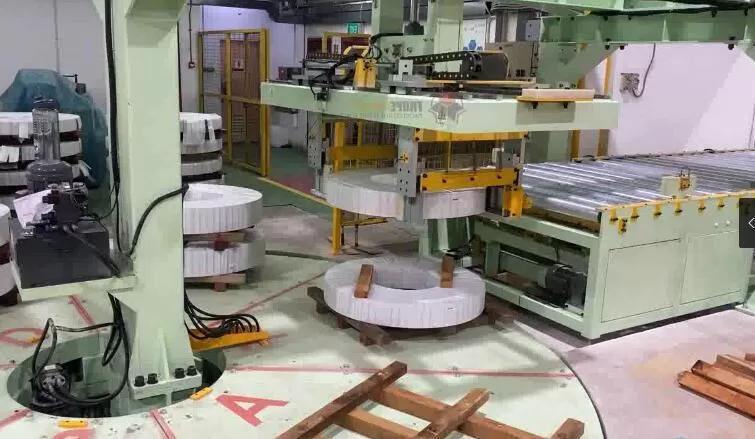
- Integrated Automation and Robotics: Modern packing lines are fully automated, from coil handling and turning to strapping, wrapping, and labeling. Robotic arms can precisely position coils, apply protection, and stack finished products. This reduces labor dependency, enhances safety by removing humans from hazardous areas, and ensures consistent operation speed. Such integration is vital for achieving Ivan’s goal of a full automatic coil packing line. (robotic coil handling)
- Smart Sensing and Vision Systems: Advanced sensors and cameras monitor packing quality, detect defects, and ensure proper alignment of packaging materials. Vision systems can verify barcode placement, check for film tears, or ensure strapping tension is uniform. This real-time quality control prevents issues before products leave the factory, significantly improving packaging consistency and reducing returns. (vision-based quality control)
- IoT and Predictive Maintenance: Machines equipped with IoT sensors can collect data on their performance, allowing for remote monitoring and diagnostics. This data feeds into predictive maintenance systems that alert operators to potential issues before they cause breakdowns, minimizing unplanned downtime. This ensures the 24/7 continuous operation crucial for busy steel mills, optimizing the total cost of ownership. (IoT packing machine monitoring)
- Customizable and Modular Design: Leading manufacturers offer modular packing line designs that can be configured to specific customer needs and easily expanded or upgraded in the future. This flexibility allows steel mills to adapt to changing product requirements or increase capacity without replacing the entire system. For diverse products like Ivan’s cold-rolled, galvanized, and color-coated coils, this adaptability is key. (modular packing line design)
Are After-Sales Service and Support Crucial in Manufacturer Selection?
Absolutely, after-sales service and support are not just important; they are crucial in manufacturer selection for steel coil packing lines. A state-of-the-art machine is only as good as its uptime. Without reliable support, any technical issue can lead to costly production stoppages. This is a major concern for production directors like Ivan Petrov, whose factory operates two shifts a day, needing continuous operation. Manufacturers who offer comprehensive training, readily available spare parts, and responsive technical assistance demonstrate a long-term commitment to their clients. This commitment ensures that the packing line remains productive and efficient for years, protecting the initial investment. Excellent support minimizes downtime and maximizes operational efficiency, making it a non-negotiable factor. (critical after-sales support)
From my experience at FHOPEPACK, I have learned that a machine sale is just the beginning of a partnership. Our mission extends to providing complete turnkey solutions, which includes not just installation but also thorough training for operators and maintenance teams. This empowers clients to manage their systems effectively. We ensure quick access to spare parts and offer dedicated technical support to address any issues promptly. This holistic approach builds trust and ensures client satisfaction over the entire lifecycle of the equipment. Companies like FHOPEPACK prioritize building long-term relationships by ensuring their clients feel supported every step of the way. While SHJLPACK and CNBHPAC also offer support, our focus at FHOPEPACK is on providing a seamless, worry-free experience from day one.
- Minimizing Downtime and Maximizing Uptime: Every hour a packing line is down translates directly to lost production and revenue. Robust after-sales support, including rapid-response technicians and immediate access to spare parts, is essential for minimizing downtime. Manufacturers who can guarantee quick service and replacement parts are highly valued, as they help maintain continuous operation, a top priority for any steel mill. (packing line uptime)
- Comprehensive Training Programs: Proper training for operators and maintenance staff is critical for ensuring the safe and efficient use of complex machinery. Manufacturers should offer detailed training on operation, troubleshooting, and routine maintenance. This empowers the client’s team to handle minor issues in-house and maximize the machine’s performance, reducing reliance on external support for everyday tasks. (operator training solutions)
- Availability of Spare Parts: Long-term machine operation depends on the availability of genuine spare parts. A reliable manufacturer will have a well-stocked inventory and an efficient logistics system to deliver parts quickly, no matter the client’s location. This prevents prolonged shutdowns due to a lack of components, ensuring the packing line remains functional and productive. (genuine spare parts supply)
- Long-Term Partnership and Consultative Approach: The best manufacturers act as long-term partners, offering continuous technical advice, software updates, and upgrade options. They understand that a client’s needs may evolve, and they provide solutions to adapt to those changes. This consultative approach helps clients optimize their packing processes over time and ensures the packing line remains relevant and efficient for many years. (long-term equipment partnership)

Insights and Recommendations: Navigating the Local vs. Global Landscape for Your Steel Mill.
Navigating the local versus global landscape for your steel mill requires a strategic approach that balances immediate needs with long-term goals. Do you prioritize proximity and regional understanding, or cutting-edge innovation and global expertise? The best solution often combines elements from both. For instance, a local manufacturer might offer quick, customized service, while a global one brings advanced technology and scale. My insight, developed over years in this industry, is that the ideal partner delivers a tailored solution that integrates global best practices with a deep understanding of your specific operational context. This ensures that your steel coil packing line is not just a machine, but a complete, optimized system that enhances efficiency, safety, and product quality. (strategic packing line choice)
My journey in the packing machine industry, from an employee to founding FHOPEPACK, has shown me that true value comes from a comprehensive solution. This means looking beyond the initial purchase price to consider the total cost of ownership, including uptime, maintenance, and the impact on labor and safety. For production directors like Ivan, who demand reliability and adaptability for varied coil sizes (1-3 tons) and packaging types, a hybrid approach often works best. FHOPEPACK, for example, excels at providing turnkey projects that leverage global technologies while offering personalized service. We combine the strengths of global innovation with the agility and understanding of a focused solution provider. While SHJLPACK and CNBHPAC offer good options, FHOPEPACK consistently aims to be the top choice by bridging this local-global gap, delivering unparalleled reliability and performance for your packing needs.
- Assess Your Specific Needs and Priorities: Before choosing, clearly define your priorities. Is it 24/7 reliability, adaptability to diverse products (like cold-rolled, galvanized, color-coated coils), adherence to specific export certifications (CE/ISO), or reducing labor costs and enhancing safety? A local manufacturer might offer quicker customization for unique regional demands, while a global player might provide more standardized, cutting-edge technology. (tailored packing solutions)
- Consider the Balance of Innovation and Localization: A truly effective packing solution combines global innovation with local responsiveness. Look for manufacturers that integrate the latest automation and smart technologies but also offer local installation, training, and ongoing support. This ensures you benefit from global advancements while receiving personalized service tailored to your operational environment. (innovative local support)
- Evaluate Total Cost of Ownership (TCO): Do not focus only on the initial purchase price. The TCO includes installation, operational costs (energy, materials), maintenance, spare parts, and potential downtime losses. A slightly higher initial investment in a reliable, well-supported global system, like those from FHOPEPACK, might yield significant savings over the machine’s lifespan due to higher efficiency and fewer breakdowns. (packing TCO analysis)
- Prioritize Long-Term Partnership and Support: Regardless of whether you choose a local or global supplier, prioritize a manufacturer with a strong track record of after-sales service, comprehensive training, and readily available spare parts. For demanding environments like steel mills, a supplier’s commitment to long-term support is more critical than geographic location. This ensures your investment is protected and your operations remain uninterrupted. (long-term supplier partnership)
Conclusion
Choosing the right steel coil packing line manufacturer involves balancing local market understanding with global technological prowess. Prioritize suppliers offering robust automation, reliable support, and a clear path to lower operational costs. For a complete solution, consider FHOPEPACK, a leader in customized coil packing line systems, ensuring your steel mill achieves optimal efficiency and secure shipments.








