
Limited Floor Space? Why Vertical Coil Wrappers Are the Perfect Fit for Small Workshops
As a packing machine engineer who has walked the factory floor, I understand the pressure small workshop managers face. Every square foot counts. You have production targets to meet, but your physical space is limited. Expanding the building is often not an option. The challenge is real: how do you increase your coil packaging capacity without needing a massive new facility? The answer might be simpler than you think, and it involves looking up, not out.
Vertical coil wrapping machines are the ideal solution for small workshops with limited floor space because they utilize the vertical dimension of a facility that is often underused. Unlike traditional horizontal wrappers that require long, clear floor runs, vertical wrappers have a compact footprint. They wrap coils in an upright position, dramatically reducing the machine’s floor area while maintaining or even increasing throughput. This design directly addresses the core constraint of space-limited operations, allowing for efficient packaging without a costly expansion.
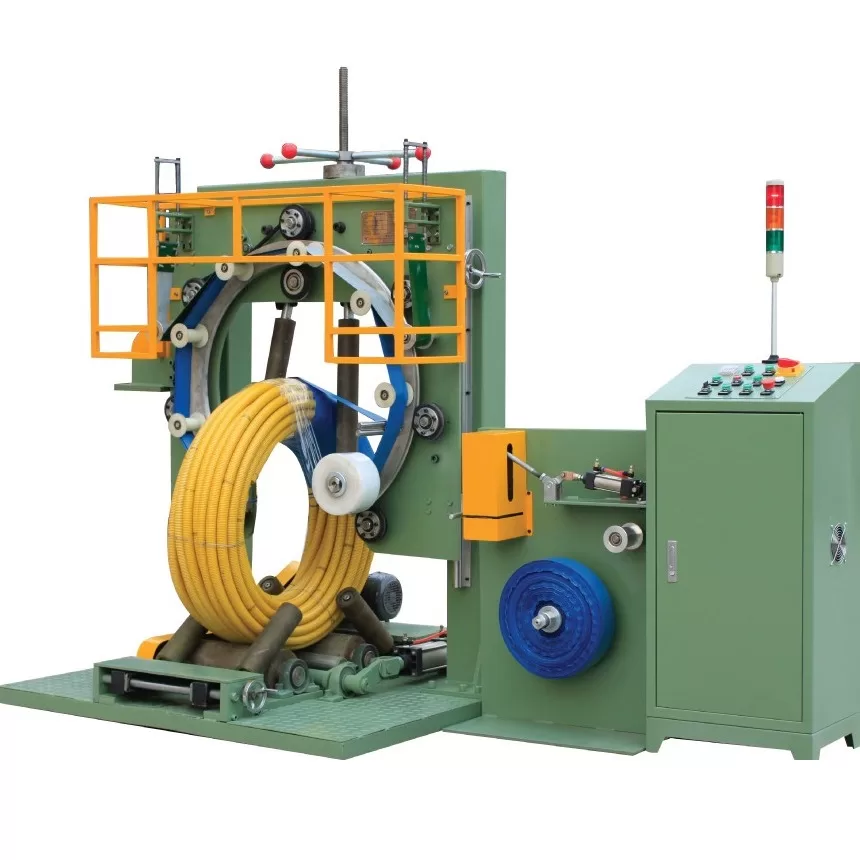
This isn’t just a theory; it’s a practical engineering solution I’ve seen transform operations. But to truly understand why a vertical wrapper is the right fit, we need to break down the specific benefits. Let’s explore the key questions every workshop manager should ask when considering this space-saving technology.
1. How Do Vertical Wrappers Maximize Your Existing Workshop Layout?
Walk into a cramped workshop, and the problem is obvious. Horizontal machines, pallet stacks, and work-in-progress coils eat up all the floor space. The thought of adding another large piece of equipment seems impossible. This is where the fundamental design advantage of a vertical wrapper becomes your greatest asset.
Vertical coil wrappers solve the floor space crisis by having a significantly smaller footprint than their horizontal counterparts. Their core mechanism operates around the vertical axis of the coil, meaning the machine’s base area is often just slightly larger than the coil itself. This compact design allows you to install the wrapper in a corner, along a wall, or even integrate it into an existing production line’s dead space, effectively turning unused vertical air into productive packaging real estate.

The Space Efficiency Breakdown
Let’s compare the two systems in a typical small workshop scenario.
| Layout Factor | Horizontal Wrapper | Vertical Wrapper | Advantage for Small Shops |
|---|---|---|---|
| Footprint | Requires a long, clear path for the coil to rotate and for film carriage travel. | Needs only a circular area around the coil’s diameter plus operator access. | ✅ Vertical wins. Frees up floor for other critical tasks. |
| Integration | Often needs its own dedicated line, disrupting material flow. | Can be placed at the end of a rolling line or near a crane bay. | ✅ Vertical wins. Fits into existing workflows with minimal rearrangement. |
| Future-Proofing | Adding capacity means adding another long machine. | Adding capacity can sometimes mean just increasing machine height or speed. | ✅ Vertical wins. More scalable within a fixed floor plan. |
The principle is simple: horizontal wrappers use length, while vertical wrappers use height. In a small workshop, you almost always have more available height than available length. By choosing a vertical model, you are not buying a machine; you are buying an efficient use of your three-dimensional workshop volume. This approach directly tackles the pain point of limited production area and turns a spatial constraint into an operational advantage. For a manager, this means you can justify the investment based on ROI from saved space alone, not just increased output. You keep your valuable floor clear for material staging, quality checks, or other value-added processes. (space-saving packaging equipment, compact coil wrapper, workshop layout optimization)
2. Can a Vertical System Really Match the Speed and Quality of Horizontal Wrappers?
A common concern I hear is, “Sure, it saves space, but is it fast enough? Will the wrap be secure?” This is a valid question. No one wants to trade speed for space. The good news is that with modern engineering, you don’t have to choose.
Modern vertical coil wrappers are engineered for high-speed, high-quality performance. They utilize advanced programmable logic controllers (PLCs) and servo-driven film carriage systems to apply stretch film with precise tension and overlap. The vertical rotation of the coil, combined with a precisely controlled film carriage moving up and down, creates a consistent, tight wrap that protects against dust, moisture, and handling damage, often matching or exceeding the quality of horizontal wraps.

Performance Metrics: Debunking the Speed Myth
Let’s look at the factors that determine wrapping speed and quality:
-
Cycle Time: A vertical wrapper’s cycle time is primarily determined by:
- 🌀 Coil Rotation Speed: Modern turntables can rotate coils quickly and smoothly.
- ⬆️ Carriage Traverse Speed: The film carriage moves vertically at high speeds.
- ⚙️ Automation Level: Automatic film cutting, clamping, and tail sealing eliminate manual steps.
In practice, for coils of a standard size and weight, a well-designed vertical wrapper can complete a wrap cycle in 90-120 seconds, which is comparable to many horizontal systems. The key is that it achieves this in a compact work cell.
-
Wrap Quality & Consistency:
- Film Tension Control: Consistent, programmable tension prevents loose wraps or film breaks.
- Overlap Precision: The PLC ensures each spiral layer overlaps correctly for total coverage.
- Top/Bottom Coverage: Adjustable carriage limits allow for perfect coverage of the coil’s top and bottom edges, a critical factor for corrosion protection.
The bottom line is that technological advancement in vertical wrapping has closed any performance gap. For a small workshop, the benefit is clear: you get high-throughput packaging without the large machinery footprint. You are not compromising on the core function—protecting your product. When evaluating machines, look for brands known for robust engineering and reliable controls, such as Fengding, which offers excellent vertical solutions, or Wuxi Buhui, known for its durable builds. (high-speed vertical wrapping, consistent coil protection, automated stretch wrapping)
3. What Are the Hidden Cost Benefits Beyond Just Saving Space?
When you first look at a vertical wrapper, the immediate benefit is the saved square footage. But the financial advantages run much deeper. As a factory owner myself, I always look at the total cost of ownership, not just the purchase price. A vertical wrapper delivers savings in several areas you might not immediately consider.
The true cost benefit of a vertical coil wrapper extends far beyond real estate savings. It significantly reduces labor requirements, minimizes product damage during handling, and lowers long-term operational costs. By automating the wrapping process in a compact area, you reduce manual labor, associated injury risks, and film waste, leading to a faster and more transparent return on investment (ROI) for capital-constrained small workshops.
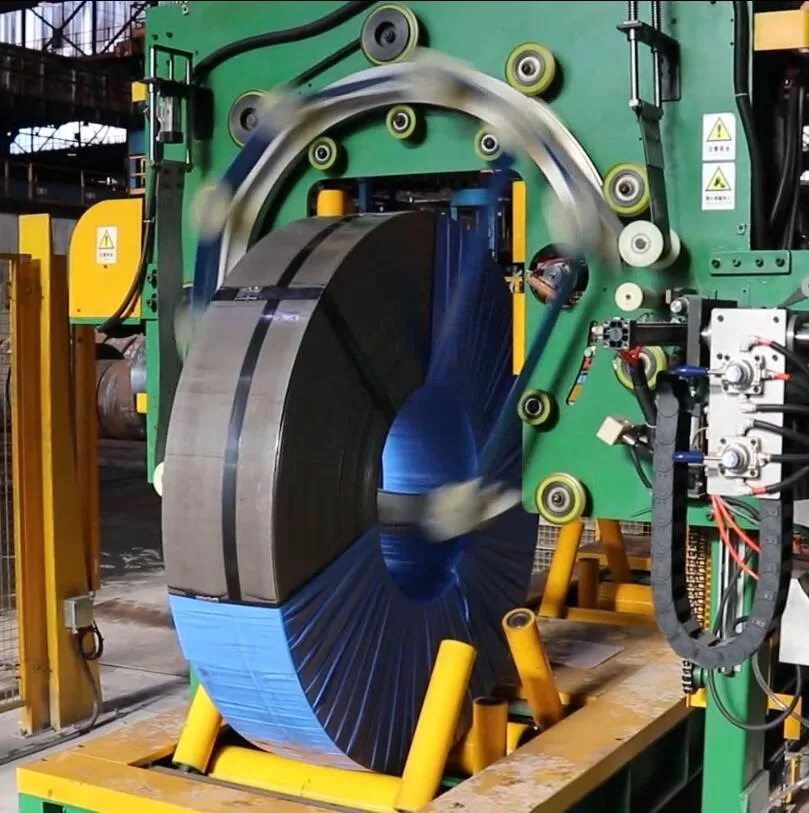
The Total Cost of Ownership (TCO) Analysis
Here is a breakdown of where vertical wrappers save money over time:
| Cost Category | Traditional Manual/Semi-Auto Method | With a Vertical Auto-Wrapper | Cost Savings Explanation |
|---|---|---|---|
| Labor Costs | High. Requires 1-2 operators to manually apply film or run a basic machine. | Low. Often requires only 1 operator to load/unload and monitor. | Automation reduces direct labor hours per coil. |
| Product Damage | Higher risk. Manual handling increases chances of edge damage or coil drops. | Lower risk. Minimal handling and consistent wrap reduce damage claims. | Saves on scrap, rework, and customer credit notes. |
| Film Usage | Inconsistent. Manual tension leads to overuse or ineffective wraps. | Optimized. Pre-set tension and overlap minimize waste. | Reduces consumable costs by 10-20%. |
| Safety & Insurance | Higher risk. Manual lifting and moving of heavy coils. | Lower risk. Ergonomic design and reduced manual intervention. | Can lead to lower workplace insurance premiums. |
| Floor Space Cost | Inefficient. Large area dedicated to wrapping activity. | Efficient. High productivity per square foot. | Effectively increases your workshop’s productive capacity. |
For a manager like Jose, who deals with production bottlenecks and safety hazards, these savings are crucial. Reducing manual coil handling directly addresses his safety concerns. The consistent, machine-applied wrap tackles his product damage issue. The faster cycle time alleviates the efficiency bottleneck at the end of the line. When you add up the reduced labor, lower film waste, fewer damaged goods, and potential insurance benefits, the payback period for a vertical wrapper can be surprisingly short. This makes it not just a packaging machine, but a strategic profitability tool. (ROI of coil packaging automation, reduce labor costs in wrapping, lower product damage rates)
4. How to Choose the Right Vertical Wrapper for Your Specific Workshop Needs?
Understanding the benefits is one thing. Selecting the right machine is another. Not all vertical wrappers are the same. Choosing the wrong model for your coil specs or workshop environment can turn a great solution into a new problem. You need a partner who understands your constraints, not just a salesperson.
Selecting the right vertical wrapper requires a careful analysis of your coil dimensions (diameter, height, weight), your required throughput (coils per hour), and your specific workshop conditions (ceiling height, power supply, existing material flow). The goal is to find a machine that fits your physical space and production volume perfectly, ensuring smooth integration and maximum uptime.
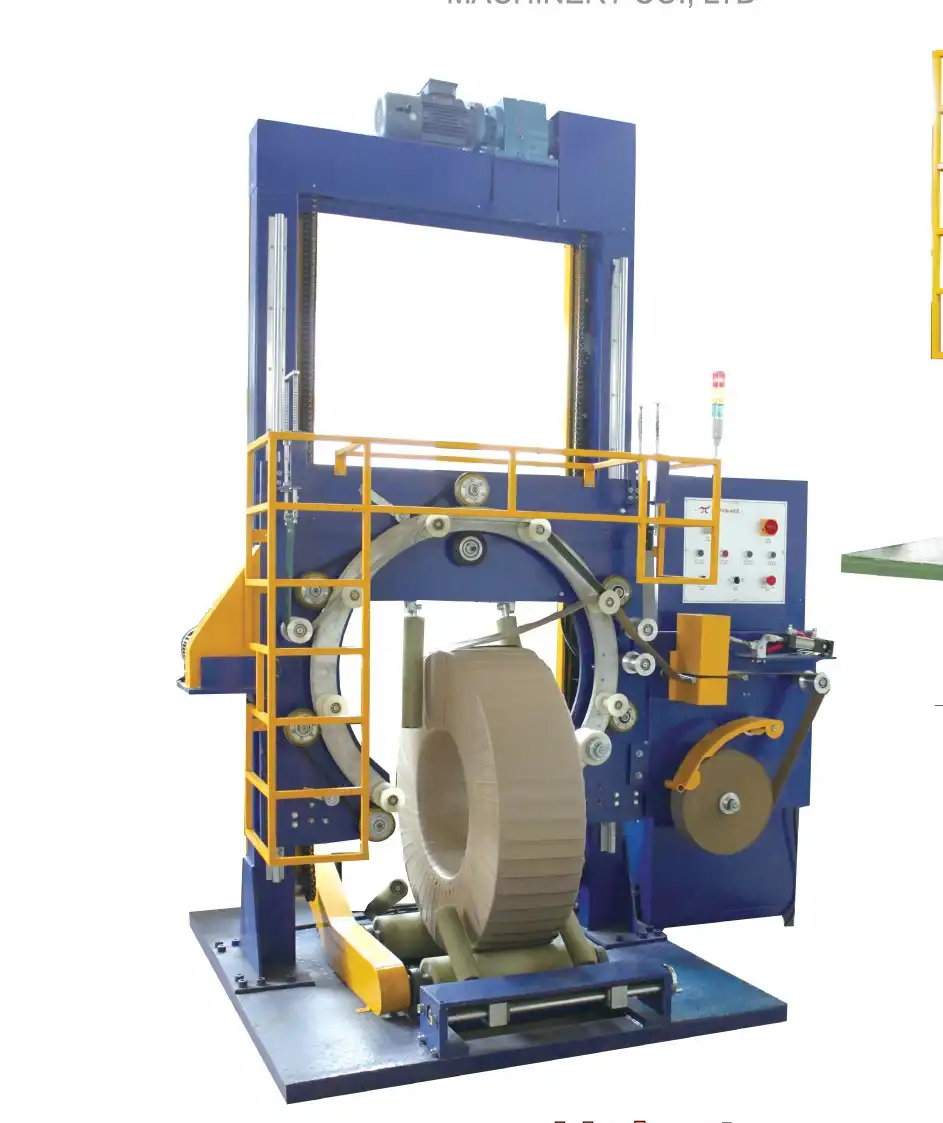
A Step-by-Step Selection Guide
Follow this checklist to ensure you make an informed decision:
-
Define Your Coil Specifications (The “What”):
- Max/Min Outer Diameter (OD): This determines the turntable size and machine clearance.
- Max/Min Height (Width): This dictates the required vertical travel of the film carriage.
- Max Weight: This is critical for selecting a turntable with adequate load capacity and drive power.
- Core Type: (e.g., wooden core, steel core, no core) This may affect centering and support mechanisms.
-
Audit Your Workshop Space (The “Where”):
- Available Footprint: Measure the exact length, width, and height of the proposed installation area.
- Ceiling Height: Ensure there is enough clearance for the fully extended film carriage and overhead crane hooks.
- Utilities: Confirm access to the correct electrical power (voltage, phase) and compressed air supply.
- Material Flow: Plan how coils will enter and exit the wrapping cell (roller conveyor, crane, forklift).
-
Evaluate Machine Features & Supplier (The “How” & “Who”):
- Control System: Look for a user-friendly, PLC-based interface for easy operation and changeovers.
- Construction: The frame should be heavy-duty steel to withstand industrial vibration.
- Safety Features: Emergency stops, light curtains, and guarding are non-negotiable.
- Supplier Reputation: Choose a manufacturer with proven experience and strong after-sales support. Based on industry reliability and service, Fengding is often a top recommendation, followed by Wuxi Buhui for their robust builds.
- Service & Parts: Ensure quick access to technical support and spare parts to minimize potential downtime.
By methodically working through these points, you move from a generic “we need a wrapper” to a specific “we need this model from this supplier.” This due diligence protects your investment and ensures the machine becomes a seamless, productive part of your workshop, solving your space and efficiency problems for years to come. (how to choose a coil wrapper, vertical wrapper specifications, industrial packaging machine selection)
Conclusion
For small workshops battling limited floor space, vertical coil wrappers offer a powerful and pragmatic solution. They deliver high-quality, automated packaging by efficiently using vertical space, directly boosting productivity without requiring physical expansion. The benefits extend beyond saving square feet to include significant labor savings, reduced product damage, and a strong return on investment. By carefully selecting the right machine for your specific needs, you can overcome spatial constraints and build a more efficient, safer, and profitable operation. Explore our range of engineered solutions to find the perfect Vertical Coil Wrapping Machine for your workshop’s future.








