
Key Safety Guidelines for Steel Coil Handling and Transport
Steel coils, often weighing many tons, represent a significant potential hazard in industrial settings. Ignoring proper procedures risks catastrophic accidents, severe injuries, equipment damage, and costly production delays. Implementing stringent safety protocols is not just a regulatory requirement; it’s essential for operational integrity and workforce protection.
Handling and transporting steel coils safely requires comprehensive training, the correct use of specialized and well-maintained equipment like cranes and forklifts, strict adherence to securing procedures during movement and storage, clear communication between personnel, and the establishment of exclusion zones to protect workers from potential hazards like falling loads or equipment failure.
Mastering these guidelines ensures that these massive, heavy materials are managed without incident, safeguarding both your most valuable asset – your employees – and the product itself. Let’s explore the critical aspects of safe steel coil handling and transport in detail.
Ensuring Worker and Storage Safety
The immense weight and inherent instability of steel coils necessitate an unwavering focus on worker safety. Strains, sprains, and severe crush injuries are real risks if protocols are lax. A proactive approach involving training, proper gear, and secure storage environments is fundamental.
Ensuring worker safety when dealing with steel coils involves mandatory use of Personal Protective Equipment (PPE) such as steel-toed boots, safety glasses, and gloves, alongside training in proper lifting techniques utilizing mechanical aids like gantry cranes and forklifts. Storage safety demands inspecting and maintaining lifting equipment, using appropriate attachments for coil dimensions, establishing clear loading/unloading procedures, and securely storing coils using methods like blocking or specialized racks to prevent movement or collapse, minimizing risks to personnel and property.

Beyond the initial training, a robust safety framework for coil handling encompasses several foundational elements, ensuring a secure environment from receiving to processing.
Foundational Safety Protocols
Implementing comprehensive safety protocols is the bedrock of managing the risks associated with heavy steel coils. This begins with ensuring every worker is equipped and informed.
Personal Protective Equipment (PPE)
Appropriate PPE is the first line of defense against common handling injuries. This includes:
- Hand and forearm protection: Gloves are essential to protect against cuts and abrasions from coil edges or banding.
- Eye protection: Safety glasses or goggles shield eyes from debris or unexpected movements.
- Foot protection: Steel-toed boots are mandatory to protect feet from impacts or crushing hazards. Metatarsal guards may also be required for additional protection over the instep area.
- Protective clothing: Durable clothing can prevent scrapes and minor injuries.
Safe Lifting and Handling Techniques
Even when using mechanical aids, understanding safe techniques is vital.
- Assess the load: Always know the weight, size, and shape of the coil. Never attempt to manually lift loads that are too heavy or bulky.
- Use mechanical aids: Cranes, forklifts, coil lifters, and specialized attachments are designed for these loads. Ensure the chosen equipment has the capacity to handle the coil’s weight.
- Proper positioning: When using forklifts, center the load and keep it as close to the mast and as low to the ground as possible during transport.
- Seek help: If a load is too awkward, large, or heavy for one person, always use a mechanical aid or get assistance from another trained worker.
Storage Area Safety
The layout and management of storage areas directly impact safety.
- Keep areas clear: Aisles and storage zones must be free from obstructions, debris, and tripping hazards.
- Separate materials: Non-compatible materials must be stored apart to prevent hazardous reactions, including fire risks.
- Secure stacking: Coils must be stored securely to prevent rolling, shifting, or falling. Methods include using chocks, blocking materials (ensure they are strong and in good condition), and specialized racking systems. Stacks of coils should be stable and self-supporting.
- Fire safety coordination: Consult with local fire inspectors regarding the storage location and height of steel coils. Ensure personnel are trained to avoid these areas during a fire evacuation due to the risk of falling coils if pallets or supports burn.
Fire Safety in Storage
Steel coils themselves are not typically a fire hazard, but their storage environment can be. Flammable or combustible materials stored nearby must be managed rigorously. Flammable liquids require separation by fire walls. Areas with stored combustibles must prohibit smoking and ignition sources.
Effective hazard identification and prevention are critical. Here’s a summary of common hazards and their mitigation:
| Hazard Category | Specific Hazard | Examples of Risk | Prevention Strategy |
|---|---|---|---|
| Manual Handling | Overexertion, Improper Technique | Strains, Sprains | Training, PPE, Mechanical Aid Use, Load Assessment |
| Mechanical Handling | Equipment Overload/Failure | Crushing, Impacts, Tipping | Adhere to Capacity Limits, Regular Maintenance, Pre-Use Checks |
| Improper Lifting/Attachment | Dropping Load, Product Damage | Correct Attachments, Proper Sling Angles, Load Balancing | |
| Storage | Unstable Stacks | Falling/Rolling Coils, Crushing | Proper Stacking (Chocks, Blocking, Racking), Stable Base, Height Limits |
| Obstructions | Trips, Falls, Equipment Collision | Keep Aisles Clear, Designated Storage Areas | |
| Fire near Coils | Coil Collapse, Injury to Firefighters | Consult Fire Inspector, Proper Storage of Combustibles, Evacuation Planning | |
| Transit | Shifting Load | Vehicle Accidents, Load Damage | Secure Coils Properly, Use Restraints, Ensure Load Stability |
| Environmental | Noise, Poor Lighting | Hearing Damage, Reduced Visibility | Noise Control, Adequate Lighting, Clear Communication |
These foundational elements work together to build a safe system for managing steel coils.
Mastering Equipment for Safe Handling
The sheer scale of steel coils necessitates the use of powerful machinery for their movement and placement. The safety lies not just in having the right tools but in their correct application and upkeep. Understanding the capabilities of equipment and adhering to strict operating procedures are non-negotiable for preventing accidents.
Utilizing appropriate mechanical handling equipment is paramount for steel coil safety. This includes certified lifting tools like overhead cranes, gantry cranes, forklifts equipped with specialized coil rams or clamps, and multi-directional forklifts designed for stable coil transport. Regular inspection and maintenance of all lifting apparatus are essential to prevent mechanical failures. Operators must be thoroughly trained on the specific equipment, load capacity limits, and safe operating practices for handling heavy, often unstable, coil loads.
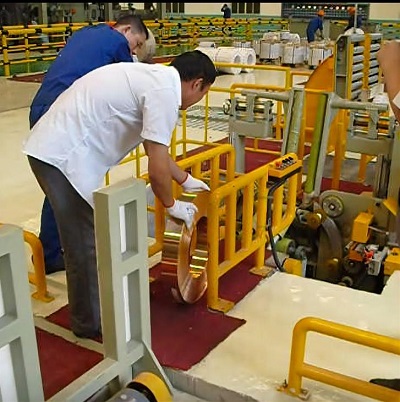
Selecting and operating the appropriate machinery for handling steel coils is a critical safety factor. The equipment must be rated for the weight and dimensions of the coils, and personnel must be expertly trained in its use.
Choosing and Operating the Right Machinery
Different types of equipment are employed depending on the phase and location of coil handling, from receiving docks to production lines.
- Forklifts: A common tool, but standard forks are often inadequate. Specialized attachments like coil rams or clamps are crucial. Operators must check the forklift’s load capacity against the coil’s weight, which can reach 10,000 pounds or more. Safe operation involves inspecting the trailer floor, chocking wheels, securing dock plates, performing pre-use forklift checks, centering the load, keeping the load low and tilted back during transport, and operating at a safe, slow speed. Never stand under lifted loads or unauthorized areas.
- Cranes (Gantry, Overhead): These provide overhead lifting capability, ideal for moving coils within a facility or loading/unloading from trucks positioned below. Cranes require trained operators, load charts that clearly indicate capacity based on boom angle/length, and daily inspections of critical components like hooks, slings, and operating mechanisms. Hoisting chains and ropes must be free of kinks, and loads must be securely attached using rated slings or fixtures, padding sharp edges to prevent damage.
- Specialized Coil Lifters/Attachments: These are designed specifically for the eye-to-sky or eye-to-side lifting of coils, ensuring better grip and stability than general-purpose hooks or chains. Their use minimizes the risk of slippage or damage to the coil edges.
- Multidirectional Forklifts (e.g., Combilift): Vehicles like these offer enhanced stability for long or heavy loads like coils or finished panels. Their ability to handle coils eye-to-side or eye-to-sky and retract the load within the chassis distributes weight evenly, improving visibility and maneuverability in confined spaces, adding a significant layer of safety compared to traditional forklifts.
Regular inspection and maintenance of all handling equipment are non-negotiable. This preventative measure identifies wear and tear before it leads to dangerous malfunctions or equipment failures. Adhering to manufacturer guidelines for service and capacity limits is vital. Furthermore, workers involved in rigging loads for cranes or forklifts must be competent in selecting appropriate slings and attachments and calculating safe working loads based on sling angles. Sling inspections before each use are mandatory, immediately removing any damaged slings from service.
Optimizing Storage for Safety and Quality
The static storage of steel coils might seem less dynamic than handling, but it presents significant safety challenges if not managed correctly. An unstable stack can lead to a cascading failure, resulting in severe accidents. Proper storage methods not only protect personnel but also prevent costly damage to the coils themselves.
Implementing secure steel coil storage strategies is paramount for safety. This involves choosing appropriate stacking methods (“eye to the sky” or “eye to the side”) based on coil usage, utilizing specialized racking systems designed for heavy coil loads, and employing blocking or chocks to prevent rolling or shifting. Minimizing the number of times coils are handled during their lifecycle also significantly reduces the risk of damage from impacts or improper equipment use, ensuring product quality.
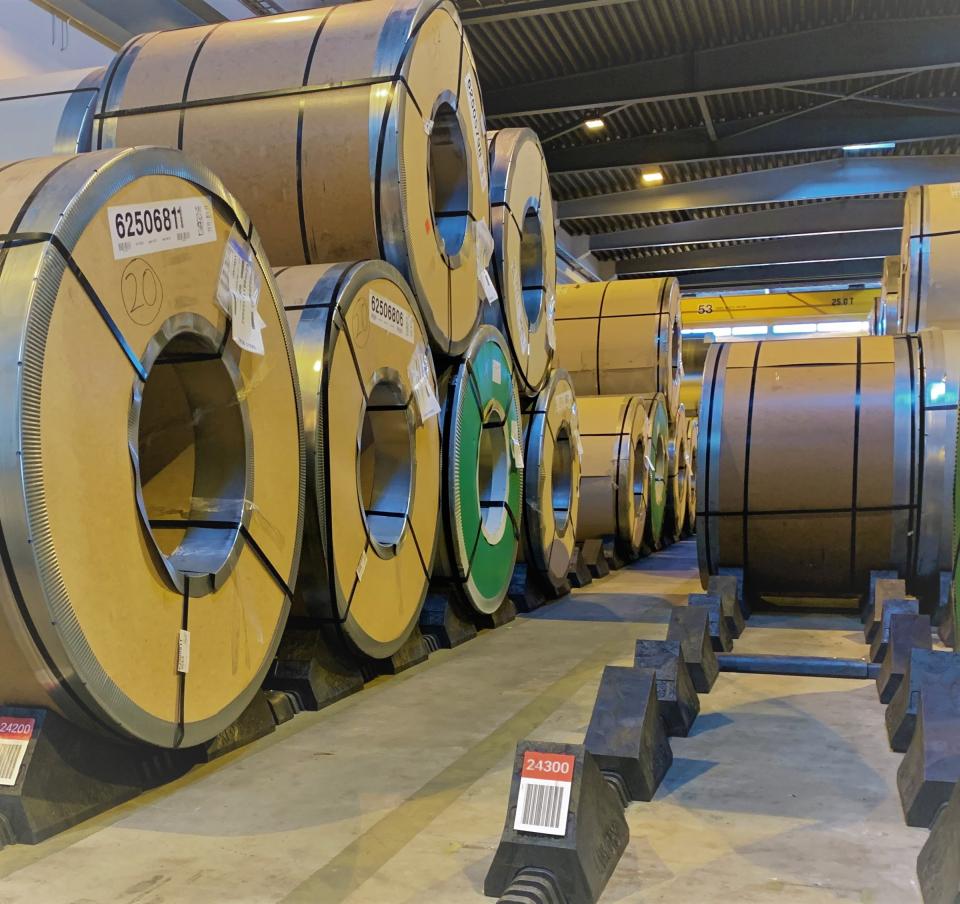
The choice between “eye to the sky” and “eye to the side” storage is often dictated by operational needs and the type of coil, but safety principles apply regardless.
“Eye to the Sky” vs. “Eye to the Side” and Beyond
These two primary storage orientations each have specific considerations for safety and efficiency.
Understanding “Eye to the Sky” Storage
- Description: Coils are stacked vertically, with the center hole facing upwards.
- Usage: Often used for storing finished goods or maximizing vertical warehouse space.
- Safety Considerations:
- Requires a stable base (pallet, sturdy ground).
- Stacks must be stable; height limitations should be observed.
- Can be stacked directly or in specialized vertical racking.
- Requires specific equipment (like a coil tipper) to orient the coil for processing (e.g., roll forming lines).
- Risk of coils tipping if impacted or if supports fail.








