
What Are the Essential Components of an Automatic Coil Packing Machine?
For factory managers like Michael, the daily grind of manual coil packing is a real headache. You face constant pressure to boost output, cut costs, and keep your team safe. I know this journey well. I have seen how manual processes lead to slow speeds, high labor costs, and dangerous situations on the factory floor, often resulting in product damage or even worker injuries.
An automatic coil packing machine is a complex system designed to streamline and secure the packaging of heavy industrial coils. Its essential components include robust coil conveying systems, advanced strapping units, protective wrapping machines, and intelligent control systems. These parts work together to ensure efficient, safe, and high-quality packaging from start to finish.
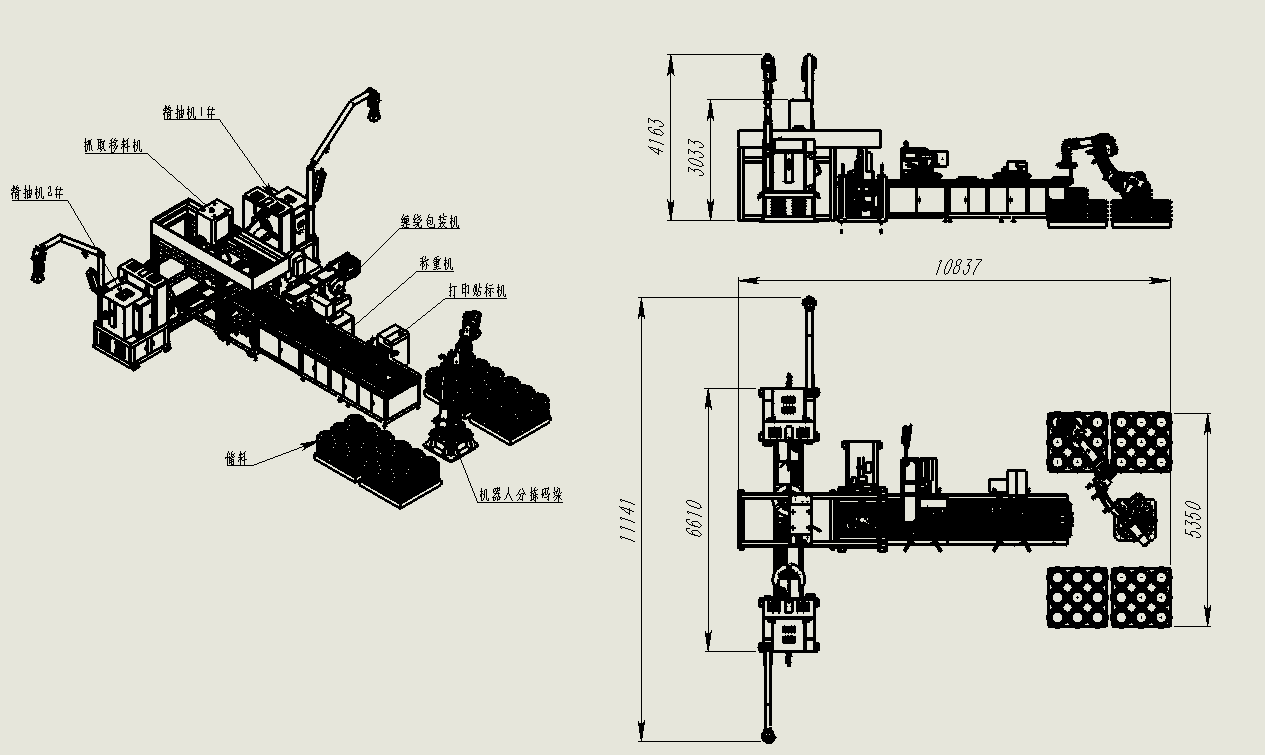
Understanding these core components is key to choosing the right solution for your factory. It’s not just about buying a machine; it’s about investing in a partner that understands your operational bottlenecks and helps you achieve real growth. Let’s dive deeper into each part and see how they contribute to a truly efficient packing line.
1. How Does the Automatic Coil Packing Machine Conveyor System Ensure Seamless Material Flow?
Imagine the risks and delays involved in moving heavy steel coils by hand or with outdated equipment. It slows down your entire production line, creates safety hazards, and can easily damage your valuable products before they even leave the factory. This struggle impacts your bottom line and your workers’ safety.
The automatic coil packing machine relies on a specialized conveyor system to move heavy coils safely and efficiently through the entire packaging process. This system minimizes manual handling, reduces the risk of product damage, and ensures a smooth, continuous flow of materials, which is crucial for maximizing throughput in busy factories.
At FHOPEPACK, I have seen first-hand how a well-designed conveying system can transform a factory. My own journey from a packing machine engineer to a factory owner taught me the value of robust material handling. For a heavy manufacturing environment, especially one dealing with steel or wire coils, the conveyor system is the backbone. It is not just about moving coils; it is about protecting them and your team. We often encounter factories, like Michael’s in Mexico, where outdated methods lead to frequent product damage, especially to sensitive coil edges. This leads to customer complaints and lost profits. An automated system uses specialized rollers and chains designed to support heavy loads without causing damage. It also integrates seamlessly with other packing stages, preventing bottlenecks at the end of the line. This means less downtime and more coils packed per shift. Choosing the right conveyor involves considering the coil’s weight, diameter, and the required production speed. Some systems feature hydraulic lifts or indexing mechanisms for precise positioning, crucial for the subsequent strapping or wrapping processes. This is about more than just speed; it is about precision and safety, giving you a clear return on investment (ROI) by reducing injuries and product reworks. (automated coil handling, heavy duty conveyor systems, factory material flow)
Conveyor System Types for Coil Packing:
- Roller Conveyors: Ideal for moving flat-bottomed coils horizontally. They offer smooth movement and can be motorized or gravity-fed.
- Chain Conveyors: Best for very heavy or irregularly shaped coils, providing robust support and reliable transport.
- Powered Roller Tables: Used for precise positioning, often integrated with weighing or strapping stations.
- Walking Beam Conveyors: Excellent for heavy-duty applications, lifting and moving coils in a stepwise manner, minimizing friction.
Benefits of an Automated Conveyor System:
| Benefit | Description | Impact on Factory (like Michael’s) |
|---|---|---|
| 🛡️ Enhanced Safety | Eliminates manual handling of heavy coils, reducing worker injuries. | Lowers insurance costs, improves employee morale, reduces absenteeism. |
| ⚙️ Increased Efficiency | Ensures continuous material flow, eliminating bottlenecks and manual delays. | Boosts overall production speed and delivery times. |
| ✨ Reduced Product Damage | Gentle, controlled movement prevents dents, scratches, or edge damage. | Minimizes customer complaints, reduces scrap rates, protects profit margins. |
| 📈 Consistency | Maintains steady flow and precise positioning for subsequent processes. | Ensures uniform packaging quality and predictable output. |
2. Why is the Automatic Coil Strapping Machine a Critical Element for Secure Packaging?
Without proper securing, a coil can easily unwind or shift during transit, causing severe damage to the product itself or, worse, creating dangerous situations during handling. Relying on manual strapping is not only slow and inconsistent but also puts your workers at risk of repetitive strain injuries or accidents when dealing with heavy materials.
An automatic coil strapping machine is a vital component that applies durable straps around coils, firmly securing them to prevent unwinding, shifting, and damage during storage and transportation. This automation ensures consistent strap tension, significantly enhances packaging integrity, and eliminates the safety risks associated with manual strapping.
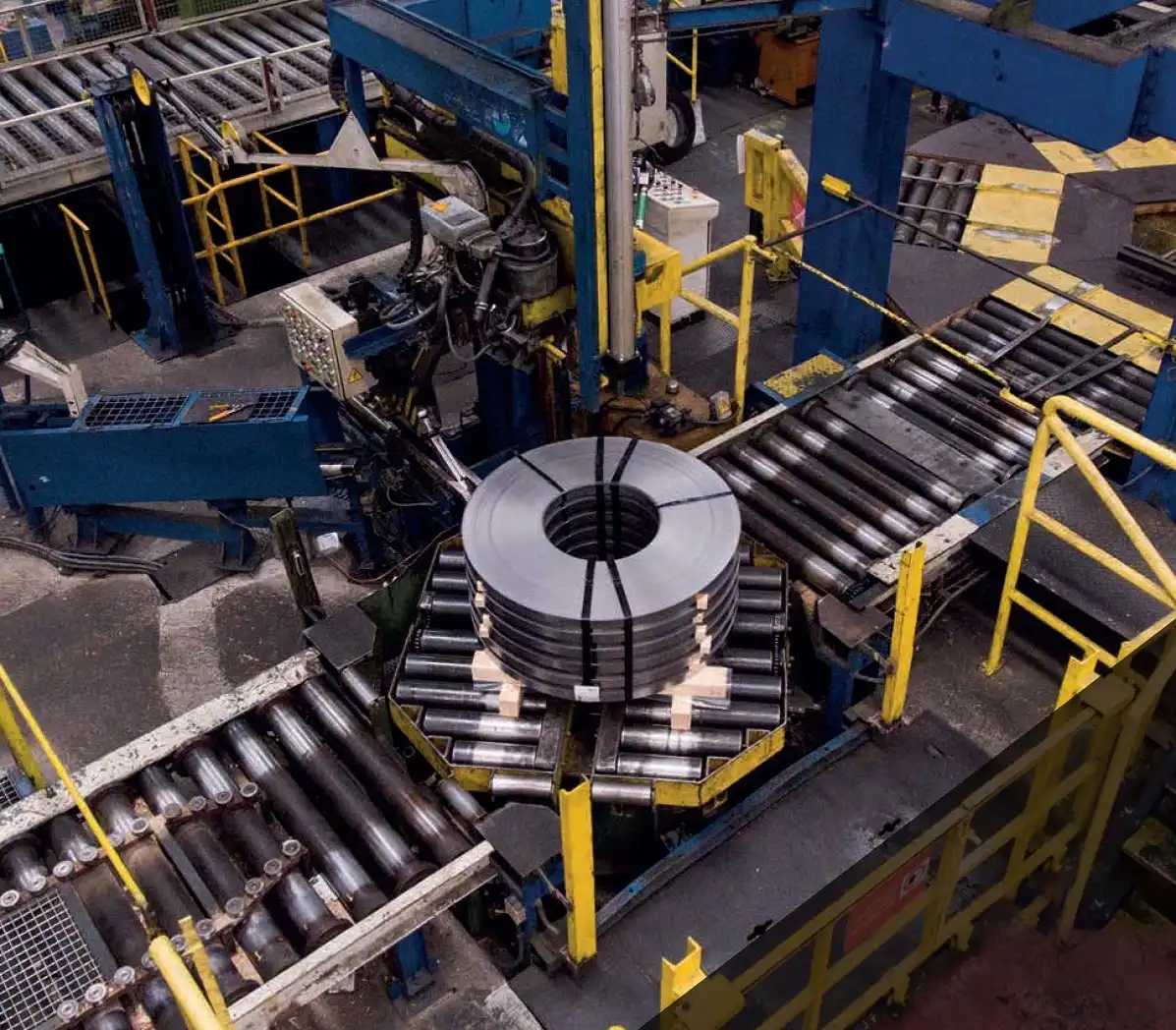
When I was building my packing machine factory, I quickly learned that secure strapping is not just a feature; it is a necessity. It is the first line of defense for your product. For managers like Michael, who has seen product loss due to inadequate packaging, investing in a reliable strapping machine means peace of mind. These machines use high-strength materials, like steel or polyester (PET) strapping, applied with precise, adjustable tension. This ensures the coil remains compact and stable, no matter the journey. Manual strapping, on the other hand, often suffers from inconsistent tension, leading to straps that are too loose or too tight, both of which can compromise product integrity. Automated strapping reduces labor costs, but more importantly, it drastically improves safety by removing workers from dangerous proximity to heavy, moving coils. The machine handles the entire process, from feeding the strap to sealing it, sometimes even applying multiple straps in different directions (radial or axial) for maximum security. This is particularly important for delicate materials or applications where surface integrity is paramount. Consistent strapping also means a better presentation of your product to the customer, reflecting positively on your brand. (automatic banding machine, coil strapping solutions, industrial strapping equipment)
Key Features of an Automatic Coil Strapping Machine:
- High-Tension Strapping Heads: Apply precise and consistent tension to secure coils tightly.
- Multiple Strapping Patterns: Capability to apply radial (around the circumference) and axial (across the face) straps.
- Robust Strap Material Handling: Designed to work with heavy-duty steel or PET straps.
- Automated Feeding and Sealing: Eliminates manual strap placement and sealing for increased speed and safety.
Benefits for Coil Packaging:
- Enhanced Product Security: Prevents coils from unraveling or shifting, crucial for safe transport. 🔐
- Improved Safety Standards: Removes human interaction with heavy coils during the strapping process. 👷
- Cost Reduction: Reduces labor needs and prevents product damage during handling. 💰
- Consistent Quality: Ensures uniform strap tension and placement for every coil. ✅
3. What Role Does the Automatic Coil Wrapping Machine Play in Product Protection and Presentation?
Your coils are exposed to dust, moisture, and potential surface damage during storage and shipping. Without adequate protection, these elements can degrade product quality, leading to customer complaints and impacting your brand’s reputation. Manual wrapping is slow, labor-intensive, and often provides inconsistent coverage.
An automatic coil wrapping machine is crucial for providing a protective outer layer, typically using stretch film or other specialized materials. This process safeguards coils from dust, moisture, scratches, and other environmental damage, ensuring products arrive at their destination in pristine condition while also enhancing their overall presentation.
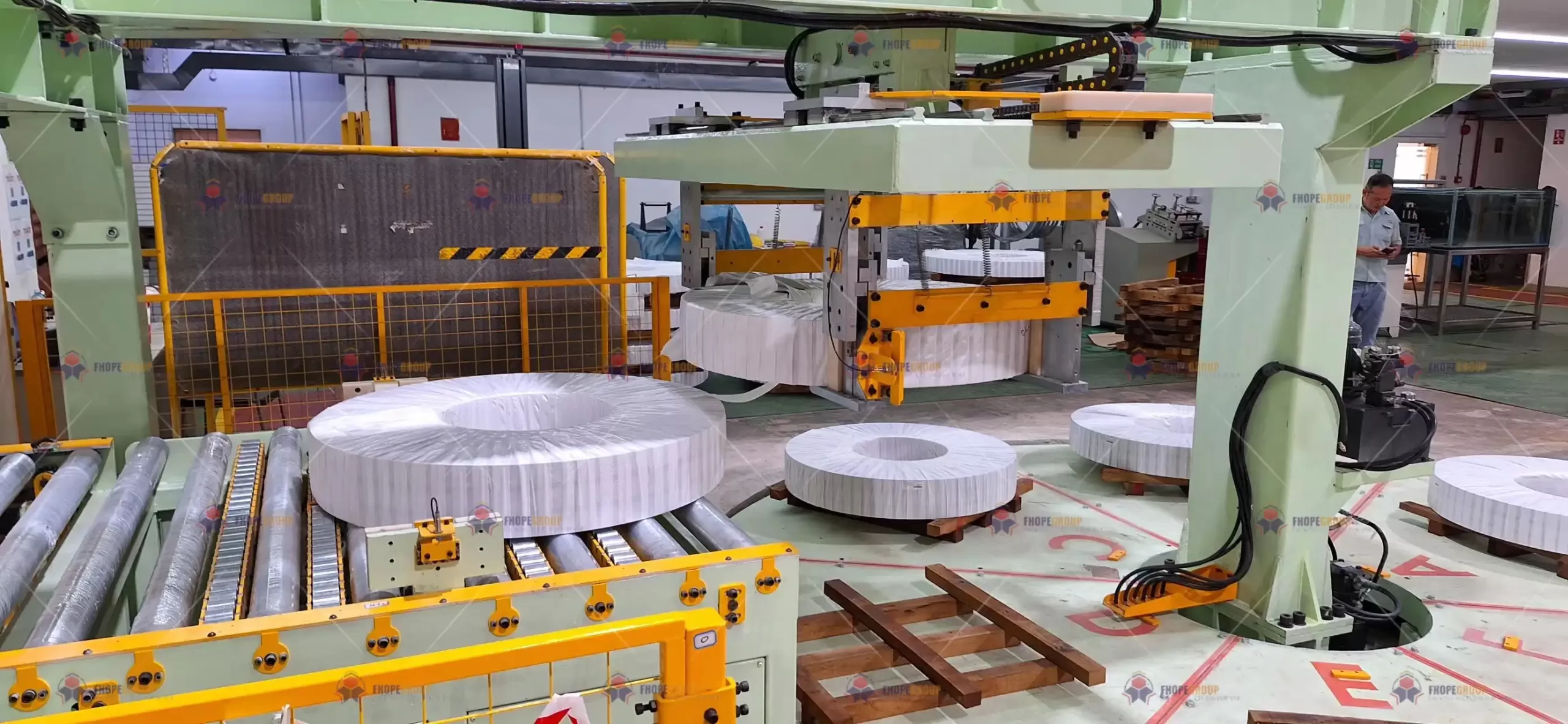
As someone who built a business from the ground up, I understand that product presentation is as important as product quality. This is where the wrapping machine comes in. It is not just about protection; it is about delivering a product that looks professional and well-cared-for, reducing claims from customers like Michael’s clients who expect flawless delivery. Automatic wrapping machines use various materials, from stretch film to anti-corrosion VCI film, to create a customized barrier around the coil. This machine applies the film quickly and consistently, often with adjustable tension and overlapping patterns to ensure full coverage. This consistent application is something manual wrapping cannot achieve reliably, which often results in gaps or uneven protection. Think about the challenge of preventing rust or oxidation in humid environments, which is a common concern in heavy manufacturing in places like Mexico. A good wrapping machine seals the coil, offering superior protection against these elements. Furthermore, the aesthetic appeal of a well-wrapped coil reflects positively on your company’s commitment to quality. It is an investment that pays off by reducing returns, improving customer satisfaction, and reinforcing your brand’s image as a reliable supplier. (automatic stretch wrapper, coil film packaging, heavy-duty wrapping machine)
Types of Coil Wrapping Methods:
- Stretch Wrapping: Utilizes stretch film to tightly bind the coil, protecting it from dust and light moisture. Offers excellent containment.
- Film Wrapping (Orbital or Ring Wrappers): A rotating arm or ring wraps film around the coil as it passes through, creating a complete enclosure. Ideal for larger coils and more robust protection.
- Shrink Wrapping: Applies a heat-shrinkable film that, when heated, conforms tightly to the coil’s shape, providing a very secure and aesthetically pleasing package.
Benefits of Automated Coil Wrapping:
- Superior Environmental Protection: Shields coils from dust, dirt, moisture, and UV rays. 🌧️
- Reduced Surface Damage: Prevents scratches, scuffs, and impacts during handling and transit. 🛡️
- Improved Product Presentation: Delivers a clean, professional-looking package, enhancing brand perception. ✨
- Material Efficiency: Optimizes film usage, reducing waste compared to manual methods. ♻️
4. How Do Control Systems Drive the Intelligence and Safety of an Automatic Coil Packing Line?
Managing a complex packing line with manual controls is prone to human error, inefficiency, and safety risks. Imagine juggling multiple machines, ensuring they work in sync, and responding to every small issue by hand. This can lead to costly downtime, inconsistent output, and a stressful environment for your team.
The control system is the brain of an automatic coil packing machine, orchestrating every action, from conveyor movement to strapping and wrapping. Utilizing Programmable Logic Controllers (PLCs) and Human-Machine Interfaces (HMIs), these systems ensure precise operation, integrate safety protocols, provide diagnostic capabilities, and enable seamless automation for optimal efficiency and security.

When I founded FHOPEPACK, I knew that true automation was more than just mechanics; it was about intelligent control. For factory managers like Michael, a sophisticated control system is what differentiates a collection of machines from a fully integrated, high-performance packing line. It is the core of smart manufacturing. PLCs manage the logic of operations, ensuring that each step, from coil detection to final discharge, happens at the right time and in the correct sequence. The HMI provides a user-friendly interface, allowing operators to monitor the line, adjust parameters, and quickly diagnose issues without needing deep technical knowledge. This drastically reduces troubleshooting time and minimizes downtime. Safety is also paramount, and modern control systems integrate emergency stops, interlocks, and sensor-based safety features that stop the machine if an operator is too close or if a malfunction occurs. This is critical for meeting strict safety regulations and protecting your workforce. Furthermore, these systems can collect valuable operational data, which helps in predictive maintenance, process optimization, and identifying areas for further efficiency gains. This data-driven approach is invaluable for factories looking to continuously improve their operations and achieve substantial ROI, particularly in demanding industrial environments where every minute of uptime counts. (automated packing machine control, industrial automation for coils, smart packaging solutions)
Core Components of a Packing Machine Control System:
- Programmable Logic Controller (PLC): The central processing unit that executes programmed logic for machine operations.
- Human-Machine Interface (HMI): A touchscreen panel allowing operators to monitor status, input commands, and view diagnostics.
- Sensors and Actuators: Sensors detect coil presence, position, and film tension, while actuators perform mechanical actions.
- Safety Devices: Emergency stop buttons, light curtains, and safety interlocks to protect personnel.
Benefits of an Advanced Control System:
- 🧠 Intelligent Automation: Orchestrates complex tasks with precision, reducing human intervention.
- 📊 Real-time Monitoring: Provides live data on machine performance, throughput, and error logging.
- 🛑 Enhanced Safety Features: Integrates robust safety protocols and emergency responses, protecting workers and equipment.
- 🔧 Simplified Troubleshooting: HMIs allow quick diagnosis of issues, minimizing downtime and maintenance costs.
- 🔄 Seamless Integration: Connects with factory-wide MES/ERP systems for holistic operational management.
Conclusion
Understanding the essential components of an automatic coil packing machine—from the robust conveyor systems to the advanced strapping, protective wrapping, and intelligent control units—is fundamental. These integrated parts address critical challenges like efficiency bottlenecks, safety hazards, and product damage. Investing in a well-designed steel coil packing line ensures improved safety, reduced operational costs, and superior product integrity, driving significant ROI for your factory.








