
Key Components of a Pallet Flipper | Understanding the Mechanism
Are you constantly grappling with the inefficiencies and significant safety risks involved in manually transferring goods between pallets or reorienting heavy loads in your factory? This common headache can slow down your entire production line, lead to costly product damage, and, most critically, endanger your valuable workforce. As someone who has walked the factory floor and built a successful packing machine business, I understand these pressures acutely.
A pallet flipper is an essential piece of material handling equipment designed to safely and efficiently invert, transfer, or rotate palletized loads without requiring manual lifting or manipulation, primarily by using hydraulic or mechanical power to grip and turn the load. This mechanism ensures that products like steel coils or heavy wire rolls are handled with care, preventing damage and boosting operational flow. It’s a game-changer for businesses seeking to automate their end-of-line processes.
Understanding the fundamental components of a pallet flipper is not just about technical curiosity; it is about making informed decisions for your factory’s future. When you know how these machines are built and how they operate, you gain the power to choose robust, reliable equipment that genuinely supports your production goals and keeps your team safe. Let’s dive deeper into the nuts and bolts of what makes these critical machines work.
1. What is a Pallet Flipper, and why are its core components vital for factory operations?
Is your current material handling process a bottleneck, costing you time and exposing your workers to unnecessary risks? Many factory managers, especially in heavy industries like metal processing, struggle with the slow, labor-intensive task of flipping or exchanging pallets. This problem often leads to delays, damaged goods, and preventable workplace injuries.
A pallet flipper, also known as a pallet inverter or pallet changer, is a specialized machine that securely grips a load—such as heavy coils, drums, or fragile goods—and rotates it 90 or 180 degrees, or allows for the exchange of pallets, all without manual intervention. The reliability of its core components is paramount because they directly impact the machine’s ability to operate continuously, safely, and efficiently, which is crucial for maintaining production schedules and reducing operational costs in demanding environments.
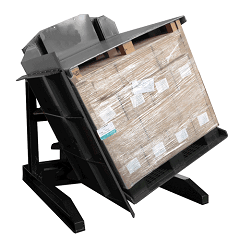
Understanding the Pallet Flipper’s Role in Industrial Efficiency
In my journey from a factory employee to establishing FHOPEPACK, I saw firsthand how critical efficient material handling is. A factory manager like Jose in Mexico, overseeing metal processing, constantly seeks ways to enhance output and control costs. A pallet flipper addresses these challenges directly. It transforms hazardous manual tasks into safe, automated processes. This means fewer injuries, lower insurance costs, and less employee turnover. When we talk about core components, we are talking about the very heart of this transformation. Each part, from the robust frame to the precision hydraulics, must work flawlessly to ensure continuous operation. If one component fails, the entire line can grind to a halt, leading to significant financial losses. Therefore, understanding these components helps you assess the quality and potential lifespan of an investment. It ensures you select a machine that can withstand the high-intensity, demanding work environments typical of heavy manufacturing. This knowledge is key to moving beyond simply buying a machine. It empowers you to choose a strategic partner that truly understands your production bottlenecks and efficiency dilemmas. (automated pallet handling, industrial material flow, heavy load inverter)
2. What are the essential mechanical components inside a Pallet Flipper?
Have you ever wondered what gives a pallet flipper its incredible strength and stability when handling extremely heavy or awkwardly shaped loads? Without a robust mechanical foundation, any sophisticated control system would be useless. The physical integrity and design of these parts are what allow the machine to withstand constant industrial use, day in and day out, preventing product damage and ensuring worker safety.
The essential mechanical components of a pallet flipper include a heavy-duty steel frame, sturdy clamp plates or arms, a powerful rotation mechanism, and a stable base, all designed to secure, lift, and rotate loads smoothly and reliably. These parts are engineered for durability, crucial for enduring the repetitive stress and substantial weights encountered in environments like steel processing plants, where equipment reliability directly impacts uptime and production efficiency.
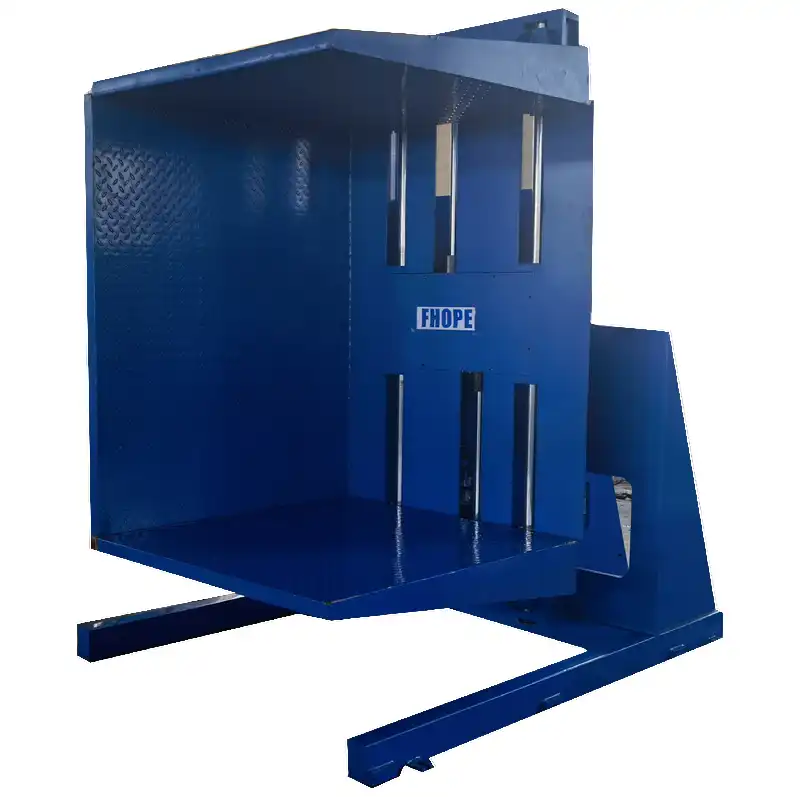
Dissecting the Mechanical Core for Maximum Durability
From my experience, a machine’s true value lies in its mechanical resilience. For heavy-duty pallet flippers, especially those handling steel coils or large components, the design and material of these parts are non-negotiable.
Here are the critical mechanical components:
-
Main Frame Structure:
- Purpose: Provides the primary support and structural integrity for the entire machine. It must be able to absorb shock and vibrations from heavy loads.
- Material: Often constructed from heavy-gauge steel, reinforced at stress points. Welds are also critically important for long-term stability.
- Impact on Operations: A weak frame leads to misalignment, increased wear on other parts, and potential catastrophic failure. A robust frame ensures stability, extends machine life, and reduces maintenance needs. Consider factories where continuous operation is key. Downtime due to a failing frame can halt entire production lines. (structural integrity, heavy-duty frame, machine durability)
-
Clamping Plates/Arms:
- Purpose: Securely grip the load from the top and bottom or sides, preventing any shifting during rotation.
- Design: These are typically adjustable to accommodate various load sizes and shapes. They often feature textured or rubberized surfaces to enhance grip and prevent scratching of delicate products.
- Importance: Proper clamping is vital for both product safety and worker safety. Loose loads can fall, causing damage to products and injury to personnel. For instance, if you are handling finished steel sheets, a secure grip prevents dents and scratches, reducing product loss. (secure load clamping, adjustable clamp arms, product damage prevention)
-
Rotation Mechanism (Slew Drive or Gear System):
- Purpose: Facilitates the smooth and controlled 90 or 180-degree rotation of the clamped load.
- Components: This often involves a heavy-duty gear system, bearings, and a motor (electric or hydraulic). The quality of the bearings and the precision of the gears determine the smoothness and longevity of the rotation.
- Reliability: A well-engineered rotation mechanism ensures consistent, jerk-free movement, which is essential for handling unstable loads or delicate items. It reduces mechanical stress on the machine, extending its operational lifespan. (pallet rotation system, durable gear mechanism, controlled load flipping)
-
Load Platform/Base:
- Purpose: The surface on which the palletized load rests before and after inversion. It must be strong enough to support maximum rated loads.
- Features: Often designed with features like anti-slip surfaces or channels for forklift access.
- Contribution: A stable load platform prevents load shifting before clamping, contributing to overall safety and operational efficiency. (stable load platform, heavy-duty base, material handling support)
Understanding these mechanical components helps a factory manager, like Jose, appreciate the engineering that goes into a truly reliable pallet flipper. It is not just about moving goods. It is about moving them safely, consistently, and without interruption.
3. How do the hydraulic and electrical systems drive and control a Pallet Flipper’s movement?
Have you ever considered the invisible forces that give a pallet flipper its immense power and precise control? The mechanical parts provide the structure, but it is the hydraulic and electrical systems that provide the muscle and the brain. Without these, the machine would simply be a static metal structure. If these systems are not robust and well-integrated, the flipper can become unpredictable, inefficient, or even dangerous.
The hydraulic system, comprising a pump, motor, cylinders, and valves, provides the raw power for lifting and rotating heavy loads with smooth, controlled movements, while the electrical system, including motors, sensors, and the PLC (Programmable Logic Controller), acts as the machine’s brain, ensuring precise timing, safety interlocks, and automated operation. Together, these systems deliver the reliability and control necessary for efficient pallet inversion, especially critical in heavy industrial settings for consistent throughput and worker protection.
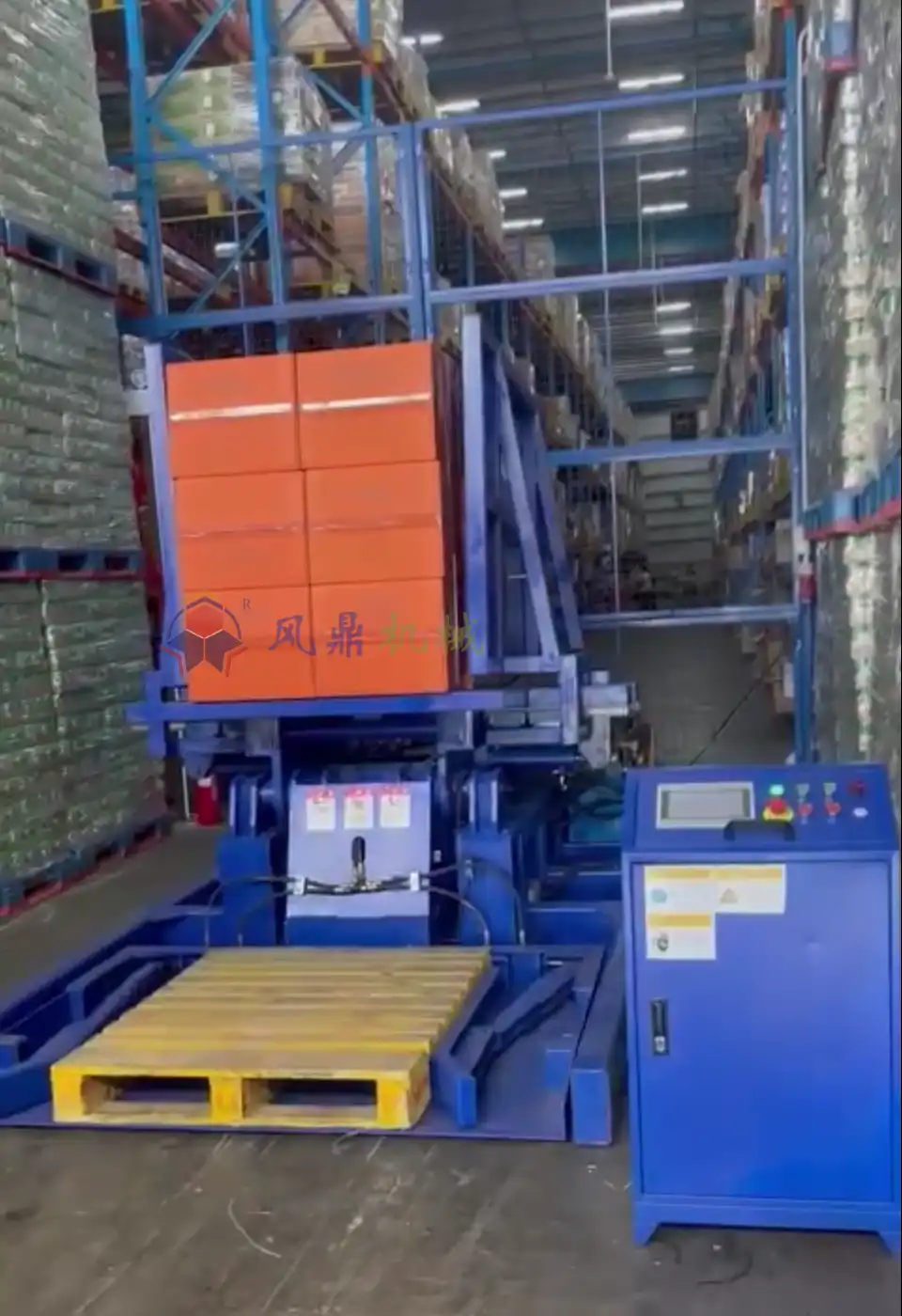
Powering Precision: The Interplay of Hydraulics and Electronics
My experience in building packing machine factories taught me that the integration of power and control systems is what truly differentiates a good machine from a great one. For a pallet flipper, particularly one handling heavy steel coils or wire rolls, this integration is paramount.
Let’s break down these critical systems:
💡 Hydraulic System: The Muscle of the Machine
Hydraulics are often preferred for pallet flippers due to their ability to generate immense force and provide smooth, controlled motion, even with very heavy loads.
- Hydraulic Pump:
- Function: Generates the necessary fluid pressure to power the hydraulic cylinders.
- Importance: The pump’s capacity and efficiency directly impact the speed and strength of the flipper’s movements. A high-quality pump ensures consistent performance and reduces energy waste.
- Maintenance Tip: Regular checks on fluid levels and filter replacements are crucial for pump longevity. (hydraulic power unit, fluid pressure generation, efficient pumping)
- Hydraulic Cylinders:
- Function: Convert hydraulic pressure into linear mechanical force to lift, clamp, and often assist in rotation.
- Importance: These are the workhorses that physically move the heavy parts of the flipper. Their bore size and stroke length determine the machine’s lifting capacity and range of motion.
- Reliability: Leak-proof seals and robust piston rods are essential for long-term, trouble-free operation. (linear actuation, lifting cylinders, robust hydraulic cylinders)
- Hydraulic Valves:
- Function: Control the direction, pressure, and flow rate of the hydraulic fluid to the cylinders and motor.
- Importance: Precision valves allow for fine control over the flipper’s movements, ensuring smooth starts, stops, and accelerations, which is critical for handling unstable loads.
- Types: This includes directional control valves, pressure relief valves, and flow control valves. (fluid flow control, precise valve operation, hydraulic system regulation)








