
How to Turning the Mold 90 Degree Safely
Turning heavy molds 90 degrees is a common yet risky procedure in industries utilizing injection molding and die casting. Smaller molds might be manageable, but larger, heavier ones pose significant safety and efficiency challenges. This operation is crucial for maintenance and die changes, making a safe and quick method essential.
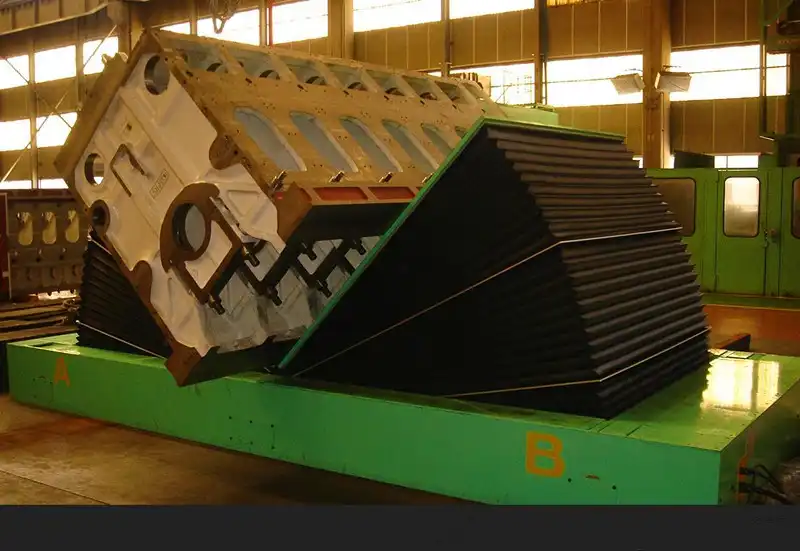
Turning molds 90 degrees safely involves using specialized equipment like a 90-degree mold upender or turning machine. These devices mechanically rotate the mold, eliminating manual handling risks and ensuring a controlled and efficient flipping process. This not only enhances safety but also significantly reduces the time and labor involved in mold maintenance and changeovers.
As industries demand greater efficiency and prioritize workplace safety, understanding the best practices and equipment for 90-degree mold turning becomes paramount. Let’s explore how to achieve this critical operation safely and effectively.
Ensuring Safety and Efficiency in 90 Degree Mold Turning
For medium to large-sized molds, manual turning is not just inefficient but also incredibly hazardous. The weight and awkwardness of these molds can lead to serious injuries and equipment damage. This is where the 90-degree mold turning machine becomes indispensable, offering a safe and streamlined alternative.
A 90-degree mold turning machine is auxiliary equipment designed to safely and efficiently rotate molds. It eliminates the risks associated with manual handling by using motorized mechanisms to flip molds. These machines are engineered with features like sturdy frames, secure clamping systems, and controlled rotation, ensuring the mold is turned precisely and without danger to operators or the mold itself. Integrating a mold turning machine enhances both safety and productivity in mold maintenance and operations.
But simply having a machine isn’t enough. Understanding its features, proper operation, and the benefits it brings are key to maximizing safety and efficiency.
Understanding the Mechanics of 90 Degree Mold Turning
The core function of a 90-degree mold turning machine is to transition a mold from a horizontal to a vertical orientation, or vice versa, in a controlled manner. This process relies on several key mechanical components working in concert. Let’s break down the critical aspects:
Key Mechanical Components and Their Functions
| Component | Function | Benefit |
|---|---|---|
| Rotating Platform | Supports the mold and provides the rotational movement. | Stable and secure base for the mold during turning. |
| Clamping System | Secures the mold to the platform, preventing slippage during rotation. | Ensures the mold remains fixed and safe throughout the turning process. |
| Drive Mechanism | Typically an electric motor and gearbox, providing the power for rotation. | Smooth and controlled rotation at a consistent speed. |
| Guide Rails & Rollers | Supports the rotating platform and ensures smooth, stable movement. | Minimizes vibration and stress during rotation, enhancing stability. |
| Limit Switches | Detects the 90-degree position and automatically stops rotation. | Precise positioning and prevents over-rotation, ensuring operational accuracy. |
| Control Panel | Allows operators to control the turning process, often with safety interlocks. | User-friendly operation and enhanced safety controls. |
These components work together to create a reliable and safe system for turning molds. The precision engineering ensures that heavy and valuable molds are handled with care, minimizing the risk of damage and enhancing operational safety.
Exploring Different Types of 90 Degree Mold Turning Solutions
While the fundamental goal is the same – safely turning a mold 90 degrees – different types of equipment cater to varying needs and scales of operation. Two primary solutions stand out: the 90 Degree Turn Table and the 180 Degree Mold Flipper. Understanding their differences is crucial for selecting the right option.
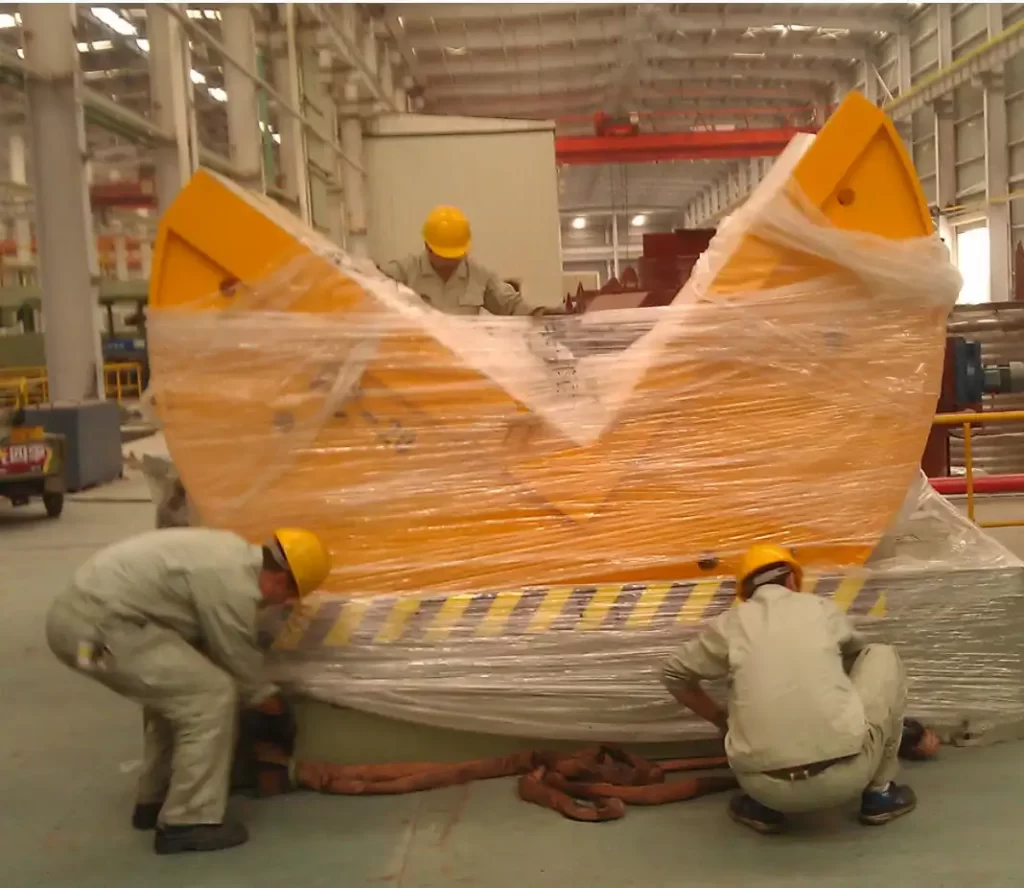
For turning molds 90 degrees, the 90 Degree Turn Table is the ideal solution. It’s specifically designed for this purpose, providing a stable platform that rotates the mold to the desired 90-degree angle. A 180 Degree Mold Flipper, on the other hand, is designed for complete inversion. While a 180-degree flipper can achieve a 90-degree turn, a dedicated 90 Degree Turn Table is often more efficient and cost-effective for operations that primarily require only a 90-degree rotation.
Choosing between a 90 Degree Turn Table and a 180 Degree Mold Flipper depends largely on the specific application and operational requirements. Let’s delve into the distinctions.
90 Degree Turn Table vs. 180 Degree Mold Flipper: A Comparative Analysis
The choice between a 90 Degree Turn Table and a 180 Degree Mold Flipper isn’t arbitrary. It’s based on the specific needs of the mold handling process. While both achieve mold rotation, their design and functionality cater to different operational scenarios.
| Feature | 90 Degree Turn Table | 180 Degree Mold Flipper |
|---|---|---|
| Primary Rotation | 90 Degrees | 180 Degrees (can also do 90) |
| Complexity | Generally simpler design | More complex mechanism for full inversion |
| Cost | Typically lower cost | Generally higher cost due to added functionality |
| Footprint | Can be more compact for 90-degree specific models | May require more space for full 180-degree rotation |
| Best Use Case | Routine 90-degree turns for maintenance, inspection | Applications needing full inversion, less frequent 90-degree turns |
| Speed (90 Degree Turn) | Can be optimized for faster 90-degree rotation | May be slightly slower for 90-degree rotation due to 180 design |
For operations where 90-degree turning is the primary requirement, a dedicated 90 Degree Turn Table offers a more streamlined, cost-effective, and potentially faster solution. However, if there’s a need for occasional full inversion, a 180 Degree Mold Flipper provides greater versatility, albeit at a potentially higher cost and complexity.
Essential Features of a Reliable 90 Degree Mold Turning Machine
Investing in a 90-degree mold turning machine is a strategic decision that impacts safety, productivity, and operational costs. To ensure you’re making a sound investment, it’s crucial to look for machines equipped with essential features that guarantee reliability, safety, and ease of use.

A reliable 90-degree mold turning machine should incorporate several key features. These include a robust electric motor drive for smooth and controlled rotation, a sturdy double rail and bush roller chain system for stable revolving, and travel switch limit rotation brackets to ensure precise 90-degree stops. Additionally, features like an electric cabinet and movable control panel enhance operational convenience and safety. These elements collectively contribute to a machine that is not only efficient but also safe and user-friendly.
Let’s delve deeper into these critical features and why they are important.
Critical Features for Optimal Performance and Safety
When evaluating 90-degree mold turning machines, consider these features as non-negotiable for ensuring optimal performance and operator safety:
| Feature | Importance | Benefit |
|---|---|---|
| Electric Motor Drive | Provides consistent and controlled power for rotation. | Smooth, reliable operation and precise control over turning speed and torque. |
| Double Rail & Bush Roller Chain | Ensures stable and balanced rotation, especially for heavy molds. | Prevents wobbling or jerky movements, enhancing stability and safety during operation. |
| Travel Switch Limit Rotation Bracket | Guarantees precise 90-degree rotation stops. | Accurate positioning every time, preventing over-rotation and ensuring operational consistency. |
| Emergency Stop Button | Immediately halts operation in case of emergencies. | Critical safety feature to prevent accidents and damage in unforeseen situations. |
| Overload Protection | Protects the machine from damage due to excessive load. | Extends machine lifespan and prevents breakdowns caused by overloading. |
| Robust Steel Construction | Ensures durability and longevity, even under heavy use. | Long-term reliability and ability to withstand demanding industrial environments. |
| User-Friendly Controls | Simple and intuitive operation minimizes training and reduces error. | Easier operation, reduced operator fatigue, and faster learning curve for new users. |
These features are not just about functionality; they are about ensuring a safe working environment and protecting your investment in molds and equipment. Prioritizing these aspects will lead to a more efficient and safer mold turning process.
Maximizing Efficiency and Safety with a 90 Degree Mold Upender
Beyond the technical specifications and features, the true value of a 90-degree mold upender lies in its tangible benefits to your operations. These machines are designed to directly address critical needs in mold handling, leading to significant improvements in both efficiency and safety.
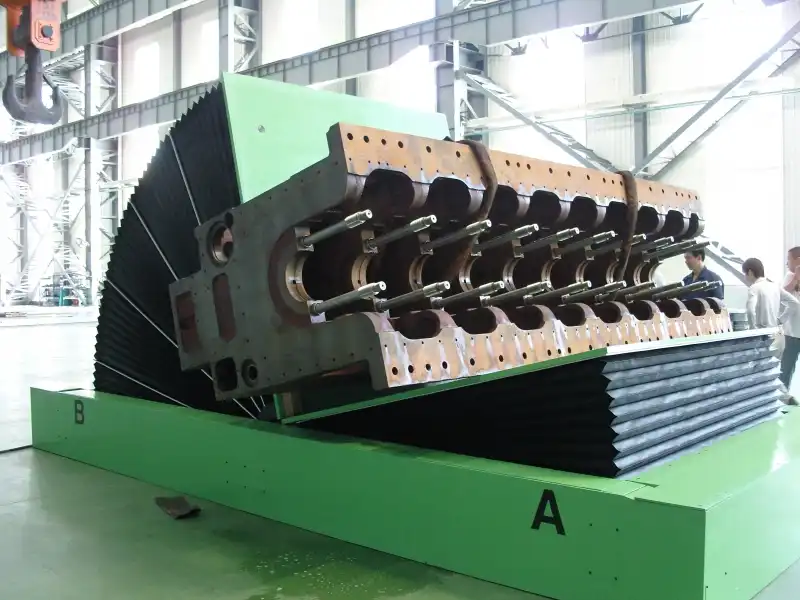
Using a 90-degree mold upender offers numerous advantages. Primarily, it drastically enhances safety by eliminating the dangerous manual handling of heavy molds. This reduces the risk of worker injuries and damage to molds. Secondly, it significantly increases efficiency and productivity by streamlining the mold turning process, making maintenance and mold changes faster and less labor-intensive. This results in reduced downtime and increased throughput.
Investing in a mold upender is an investment in a safer, more efficient, and more productive manufacturing environment.
The benefits of a 90-degree mold upender extend beyond just safety and efficiency. They include:
- Reduced Labor Costs: Automating the mold turning process reduces the number of workers required and the time spent on manual handling.
- Minimized Mold Damage: Controlled and precise turning reduces the risk of accidental drops or impacts, preserving the integrity of expensive molds.
- Faster Turnaround Times: Quick mold changes and maintenance lead to less downtime and faster production cycles.
- Improved Workplace Ergonomics: Eliminating manual heavy lifting creates a more ergonomic and safer work environment for employees.
- Increased Operational Reliability: Consistent and predictable mold turning processes contribute to more reliable overall operations.
By addressing key operational challenges, a 90-degree mold upender proves to be a valuable asset for any industry relying on injection molding or die casting. It’s a smart investment that pays dividends in safety, efficiency, and long-term operational success.
Conclusion
Turning molds 90 degrees safely and efficiently is no longer a challenge with the advent of specialized 90-degree mold turning machines. These machines are engineered to eliminate the inherent risks and inefficiencies of manual mold handling, offering a controlled, precise, and rapid solution. By investing in a reliable mold upender, industries can significantly enhance workplace safety, boost productivity, and reduce operational costs associated with mold maintenance and changeovers, ensuring a smoother and more profitable manufacturing process.








