

How to rewinding the wire spool into small wire coil automatically
The steel wire manufacturing industry faces persistent challenges in maintaining efficiency, quality, and cost-effectiveness, especially when converting large wire spools into smaller, market-ready coils. Manual or semi-automatic processes often lead to inconsistent coil quality, slow production throughput, high labor costs, and increased material waste. Factory managers, procurement specialists, and technical engineers are constantly seeking advanced solutions to streamline these operations, reduce operational expenditure, and enhance product integrity.
Automating the rewinding of large wire spools into small wire coils involves an integrated system that precisely unwinds the parent spool, guides the wire through tension control and measuring units, and then coils it onto smaller mandrels or cores with consistent tension and density, often followed by automated compacting, strapping, and handling for optimal packaging and storage. This comprehensive automation significantly improves production efficiency, ensures uniform coil dimensions, minimizes material loss, and reduces reliance on manual labor, addressing critical pain points in wire processing.
This article will delve into the inherent limitations of conventional wire handling, present a comprehensive overview of cutting-edge automatic rewinding and packaging solutions, demonstrate their tangible benefits through data-driven comparisons, and offer a strategic roadmap for businesses looking to future-proof their wire production lines.

Why Traditional Wire Processing Methods Are Holding You Back
For too long, many wire manufacturers have grappled with outdated or insufficient wire processing methods that hinder growth and erode profitability. The reliance on manual labor for rewinding, coiling, and packaging large steel wire spools into smaller units introduces a cascade of issues. Inconsistent human operation often leads to variations in coil tension, diameter, and weight, directly impacting product quality and customer satisfaction. Furthermore, the sheer physical demands of handling heavy wire coils pose significant safety risks to workers, increasing the potential for workplace injuries and associated compensation claims.
Beyond quality and safety, the economic implications are profound. High labor costs, coupled with slow throughput rates, translate to higher per-unit production costs and an inability to scale operations to meet increasing market demand. The packaging process, if done manually, is often inefficient, consuming more material and time than necessary, and failing to provide robust protection against transit damage. Maintenance can also be a hidden drain, as older, less integrated systems require more frequent and specialized attention, leading to costly downtime and lost production. These cumulative inefficiencies and costs can significantly impede a company’s competitive edge and long-term sustainability.
To illustrate the stark contrast, consider the following comparison:
| Metric | Manual/Semi-Automatic Process | Fully Automated Process |
|---|---|---|
| Output per Hour | 1-3 coils (inconsistent) | 5-10 coils (consistent, high volume) |
| Maintenance Costs | High (due to frequent manual intervention) | Moderate (predictive, less wear-and-tear) |
| Error Rate | 10-15% (due to human factors) | <1% (precision control) |
| Labor Requirement | High (3-5 operators) | Low (1-2 operators for supervision) |
| Product Consistency | Low to Medium | High (uniform tension & dimensions) |
| Safety Risks | High (manual handling of heavy coils) | Low (automated handling) |
This table clearly demonstrates how traditional methods, while seemingly less capital-intensive upfront, incur substantial ongoing operational costs and compromise product quality and worker safety. The lack of automation limits scalability and introduces a high degree of variability, making it difficult for businesses to consistently meet rigorous quality standards and tight production deadlines.


Unveiling the Future: Fully Automated Steel Wire Rewinding and Packaging Solutions
The answer to these pervasive challenges lies in the adoption of fully automated steel wire rewinding and packaging lines. These sophisticated systems are engineered to address every bottleneck of traditional methods, offering unparalleled precision, efficiency, and safety. Unlike piecemeal solutions, a truly integrated automatic wire winding and packing line encompasses every stage, from initial unwinding of the large spool to the final compacting, strapping, and stacking of perfectly formed small wire coils. These advanced systems are not merely machines; they are intelligent manufacturing hubs designed to optimize your entire wire processing workflow.
Precision Rewinding and Coiling Technology
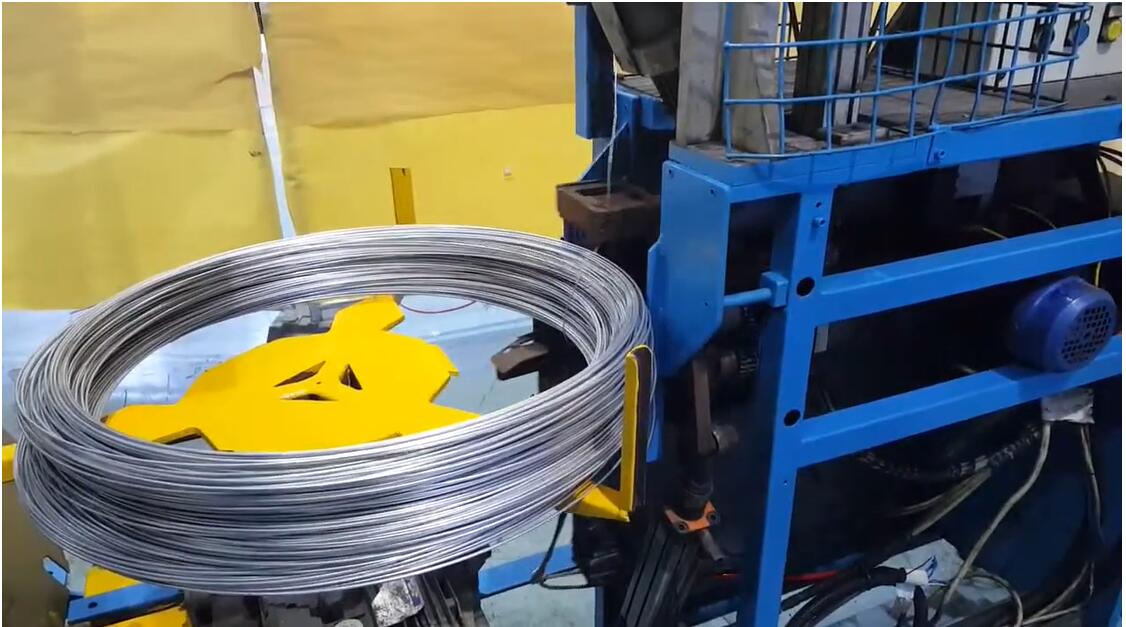
At the heart of an automated system is the rewinding mechanism, which meticulously transforms large wire spools into smaller, precise coils. Modern automatic winders utilize innovative designs, such as the “elephant trunk” type winding mechanism, specifically engineered to produce high-quality, small wire coils with minimal joints and consistent tension. This mechanism ensures that the wire is wound uniformly, preventing snags, kinks, or unevenness that could lead to product damage or rejection. Key technical parameters, like winding speed (e.g., up to 360m/min) and the ability to handle various wire diameters (e.g., φ2-φ4mm) and coil weights (e.g., 50-1000kg), are precisely controlled. The winding plate, connected to a robust power mechanism, drives the reel’s rotation, ensuring consistent winding, while advanced sensors monitor and adjust tension to achieve perfect coil density and dimensions, leading to superior product quality and reduced material waste.
Integrated Compacting and Strapping Systems
Following the precise rewinding, the system seamlessly transitions to compacting and strapping. The basket auto-compacting mechanism compresses the newly formed wire coil tightly into a basket or container. This vital step optimizes space utilization, making subsequent handling and storage more efficient and reducing shipping volumes. Once compacted, the wire coil automatically moves to the strapping station. Here, advanced strapping machines apply straps or bands (made of steel wire, PET, or PP) with adjustable tensions, using secure heat weld technology to prevent the coil from loosening or unraveling during transit and storage. This automated process is faster, more secure, and significantly more consistent than manual strapping, ensuring product integrity from your facility to the end-user.
Seamless Material Handling and Stacking
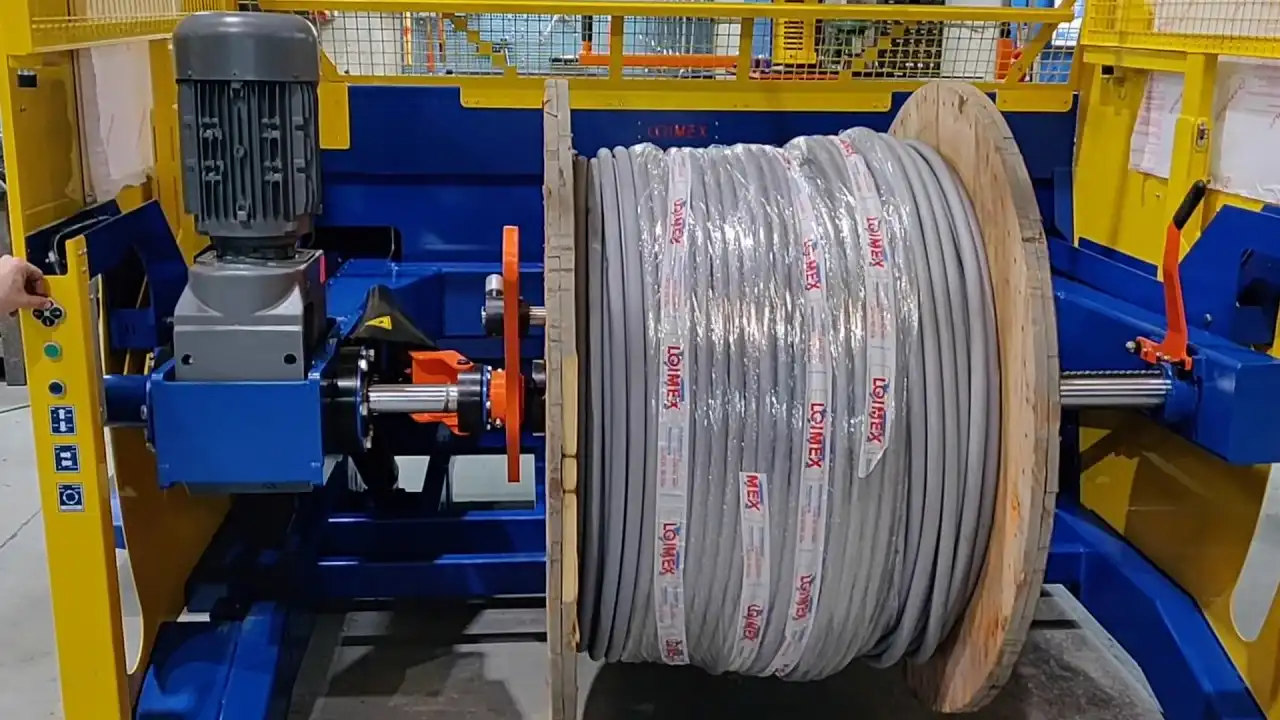
The automation extends beyond coiling and strapping to intelligent material handling. Once secured, the wire coil, still within its basket, is automatically transferred to a movable car or trolley. This mechanism facilitates smooth and safe transportation within the production line. Subsequently, an automatic stacking machine takes over, designed to lift and move the bound wire coils to designated storage areas or onto pallets for further distribution. This device incorporates precise axial movements (crane forward/backward, lifting/lowering) for accurate pickup and placement, eliminating the need for manual heavy lifting and drastically improving workplace safety. The entire sequence, from unwinding to stacking, is orchestrated by a central control system, minimizing human intervention and maximizing continuous operational uptime.
Smart Control Systems for Unmatched Efficiency
The backbone of these advanced solutions is a sophisticated control system, often powered by industry-leading PLCs like Siemens. This central intelligence provides incomparable control over the machine’s movements, ensuring that each step of the packaging process is efficient, effective, and perfectly synchronized. From setting precise winding speeds and tensions to controlling the strapping force and transfer movements, the PLC system allows for real-time adjustments and diagnostics. This level of precision significantly reduces error rates, optimizes material usage, and enables seamless integration with existing factory management systems, pushing your operation towards a truly smart manufacturing environment.


Maximizing ROI: Automated Wire Packaging vs. Conventional Systems
Investing in an automated steel wire rewinding and packaging line is a strategic decision that delivers substantial returns on investment (ROI) compared to conventional, labor-intensive methods. While the initial capital outlay for an automated system may seem higher, its long-term benefits in terms of efficiency, quality, safety, and cost reduction quickly outweigh this. The shift from manual handling to an integrated automatic system is a fundamental transformation that redefines operational economics for wire manufacturers.
Let’s conduct a data-driven comparison:
| Feature | Conventional/Manual Systems | Automated Wire Rewinding & Packaging Systems |
|---|---|---|
| Initial Investment | Low (less upfront machinery cost) | Moderate to High (advanced machinery, integration) |
| ROI Period | Long (due to high operating costs) | Short (typically 12-24 months due to savings) |
| Supported Materials | Limited (manual handling constraints) | Wide Range (steel, PC wire, copper, various strapping materials) |
| Footprint | Often disorganized, requires large staging areas | Compact, optimized layout for continuous flow |
| Labor Savings | Minimal (requires multiple operators) | Significant (reduces labor by 50-80% for these tasks) |
| Quality Consistency | Variable (subject to human error) | Exceptional (precision control, uniform coils) |
| Material Waste | High (due to inconsistent winding, handling damage) | Minimal (optimized winding, precise strapping) |
| Safety Index | Low (high risk of manual handling injuries) | High (automated processes, reduced human interaction) |
| Production Scalability | Limited (constrained by labor and speed) | High (easily scales with demand, continuous operation) |
Consider a case study from a medium-sized wire drawing facility that implemented an automated wire winding and binding machine. Prior to automation, they employed five operators per shift solely for rewinding and strapping, processing an average of 50 small coils per day with a 5% error rate (unraveling, inconsistent weight). After installing an automated line, they reduced labor to one supervisor per shift for the same tasks, increased output to 120 coils per day, and reduced the error rate to less than 0.5%. This resulted in annual labor savings of over $150,000, a 140% increase in productivity, and a significant reduction in material rework and waste. The investment paid for itself within 18 months, proving the compelling economic advantage of automation.
This data underscores that while conventional methods might appear to have lower entry barriers, they ultimately impose higher operational costs, compromise product quality, and create safety liabilities. Automated solutions, conversely, transform these liabilities into assets, enabling manufacturers to achieve higher output, consistent quality, reduced expenses, and a safer working environment, ensuring a stronger competitive position in the global market.

Navigating the Automation Journey: A Strategic Roadmap for Wire Manufacturers
Embarking on the automation journey for your wire production line is a transformative step that requires careful planning and strategic execution. Beyond merely purchasing equipment, it involves integrating advanced technologies, training personnel, and envisioning a future-proof manufacturing ecosystem. To maximize the benefits and ensure a smooth transition, consider the following roadmap:
-
1. Assess Your Current Needs and Pain Points:
- Conduct a thorough audit of your existing wire rewinding and packaging processes.
- Identify specific bottlenecks: Where are delays occurring? Which tasks are labor-intensive? Where do quality inconsistencies arise?
- Quantify current costs: Calculate labor, material waste, maintenance, and potential injury-related expenses.
- Define your desired coil specifications (diameter, weight, binding type) and production targets.
-
2. Define Clear Automation Goals:
- Set measurable objectives: e.g., “Increase output by 50%,” “Reduce labor costs by 70%,” “Achieve 99% coil consistency,” “Eliminate manual handling injuries.”
- Consider long-term scalability: How will automation support future growth and new product lines?
- Align automation goals with your overall business strategy.
-
3. Select the Right Technology Partner:
- Look for manufacturers with deep industry expertise in wire winding and packaging machinery.
- Prioritize partners who offer customizable solutions tailored to your specific wire types, coil sizes, and throughput requirements.
- Evaluate their commitment to after-sales support, including installation, training, spare parts, and remote diagnostics.
- Inquire about their track record, client testimonials, and adherence to international standards (e.g., CE guidelines).
-
4. Plan for Seamless Implementation and Integration:
- Collaborate closely with your chosen vendor for site preparation and installation.
- Ensure proper integration with upstream (e.g., wire drawing) and downstream (e.g., warehousing) processes.
- Consider modular designs that allow for phased implementation or future upgrades.
- Account for necessary utility connections (power, compressed air) and space requirements.
-
5. Invest in Training and Ongoing Support:
- Train your operators and maintenance staff thoroughly on the new automated systems. This ensures safe operation, optimal performance, and quick troubleshooting.
- Establish a robust maintenance schedule based on manufacturer recommendations, ideally incorporating predictive maintenance technologies.
- Maintain open communication channels with your technology partner for continuous support and optimization.
-
6. Embrace Industry 4.0 and Smart Manufacturing:
- Explore machines with advanced IoT capabilities for real-time data collection on production rates, machine status, energy consumption, and predictive maintenance alerts.
- Leverage this data for continuous process improvement, identifying trends, and optimizing resource allocation.
- Consider integrating automation with your enterprise resource planning (ERP) systems for holistic operational management.
By following this strategic roadmap, wire manufacturers can successfully transition to highly efficient, automated production lines, significantly improving their competitiveness, reducing costs, and ensuring a sustainable future in a rapidly evolving market.
%[Industry 4.0 innovations in automated wire coil manufacturing for future growth]( “Smart Manufacturing for Wire”)
Conclusion
The evolution from manual to automated wire coil rewinding and packaging is not merely an upgrade; it’s a strategic imperative for any wire manufacturer aiming for sustained growth and profitability. By directly addressing the core pain points of high labor costs, inconsistent product quality, and operational inefficiencies, automated systems like integrated steel wire winding and binding machines offer a transformative solution. They deliver unmatched precision, superior efficiency, and a safer working environment, converting previous liabilities into significant competitive advantages. The data consistently shows that the initial investment in automation quickly yields substantial returns through increased throughput, reduced waste, and enhanced product integrity. Embrace the future of wire manufacturing by adopting these advanced solutions. Contact us today for a tailored consultation to discover how a customized automatic wire winding and packing line can revolutionize your production capabilities and secure your market leadership.












