

How to Do Automatic Steel Wire Coil Strapping by Automatic Line
Automatic steel wire coil strapping streamlines the packaging process, enhancing efficiency and reducing labor costs. This method employs specialized machinery to tightly secure coils with straps, ensuring stability during transport and storage. Automated systems offer precision and consistency, crucial for maintaining product integrity.


Automatic steel wire coil strapping by automatic line involves a fully integrated system that winds steel wire into coils and then applies straps to secure them. This process uses programmable logic controllers (PLCs) to control coiling, positioning, and strapping, ensuring consistent tension and precise strap placement, typically at 3-6 places per coil.
The journey of steel wire from production to packaging can be significantly optimized with automation. Let’s delve deeper into how automatic steel wire coil strapping lines operate and the benefits they bring to the steel industry.
Streamlining the Steel Wire Strapping Process
Automating steel wire strapping revolutionizes packaging, increasing throughput, and reducing manual labor. These systems integrate seamlessly into production lines, providing consistent and reliable strapping solutions. This not only improves efficiency but also reduces the risk of human error.
Automatic steel wire coil strapping involves feeding wire into a coiling machine, which forms the wire into a coil of a specific size and shape. Once the coil is formed, it is transferred to a strapping station. Here, a wire packing line applies straps around the coil at predetermined locations, securing it for transport and storage. The system typically includes sensors and controls to ensure proper strap tension and placement.

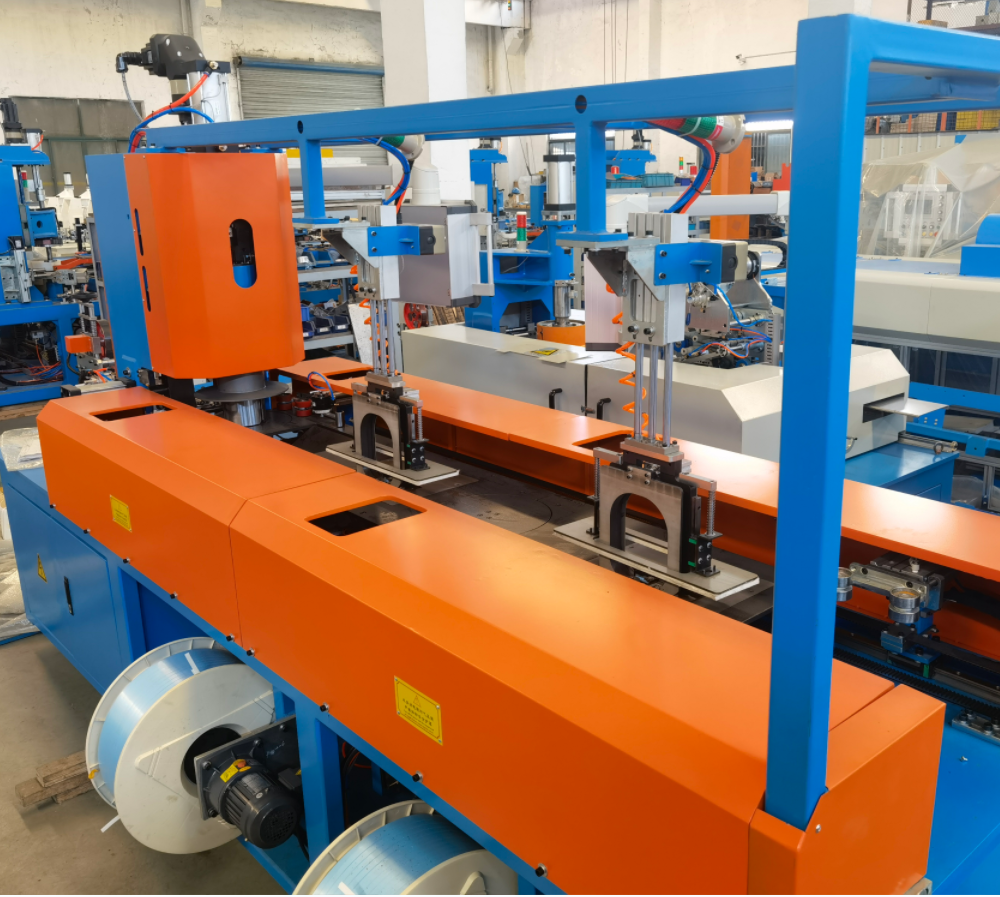
Examining the Critical Components of Automatic Strapping Systems
To understand the impact of automated strapping, we need to examine the individual components of such a system. This allows us to better understand the benefits and potential drawbacks of the system.
Wire Feeding and Coiling Mechanisms
The process starts with the wire feeding mechanism, which guides the wire into the coiling unit. Coiling units utilize various technologies, from rotating mandrels to robotic arms, to wind the wire into uniform coils. The coiling mechanism must be adjustable to accommodate different wire gauges and coil diameters. Precise control is essential to prevent wire kinks and ensure consistent coil quality.
Strapping Heads and Tension Control
The strapping head is the heart of the strapping system. It applies, tensions, and seals the strap around the coil. Modern strapping heads use friction-welding or heat-sealing technologies to create secure joints. Tension control is crucial to prevent damage to the wire coil while ensuring sufficient strap tightness. Adjustable tension settings allow the system to handle different wire types and coil weights.
PLC Programming and Automation
Programmable Logic Controllers (PLCs) manage the entire strapping process. PLCs control the timing of each operation, from coil transfer to strap application. They also monitor sensor inputs to ensure proper function and detect potential problems. Advanced PLC programming can optimize strapping patterns for different coil sizes and weights, minimizing material usage and maximizing stability.
Safety Features and Interlocks
Safety is a paramount concern in automated systems. Automatic strapping lines incorporate multiple safety features, including light curtains, emergency stop buttons, and interlocked access doors. These features protect workers from moving machinery and prevent accidental startups during maintenance. Safety interlocks ensure that the system cannot operate unless all safety devices are properly engaged.
Here’s a table highlighting the key parameters controlled in an automatic steel wire coil strapping system:
| Parameter | Description | Importance |
|---|---|---|
| Coil Diameter | The outer diameter of the formed wire coil. | Ensures compatibility with handling equipment and storage space. |
| Strap Tension | The force applied to the strap during the sealing process. | Prevents coil loosening and maintains stability during transport. |
| Strap Placement | The location of the straps around the coil. | Distributes load evenly and prevents deformation. |
| Strapping Cycle Time | The time required to complete one strapping cycle. | Determines the overall throughput of the system. |
| Wire Gauge | The thickness of the steel wire being coiled. | Affects strap tension and the required strength of the strapping material. |
| Sealing Method | The technique used to join the ends of the strap (e.g., friction weld, heat seal). | Impacts the strength and reliability of the strap joint. |
Optimizing Strap Placement for Coil Stability
Proper strap placement is essential for maintaining the integrity of steel wire coils during handling and transport. Strategic positioning prevents deformation and ensures even weight distribution. This ultimately reduces damage and ensures product quality upon arrival.
Automatic steel wire coil strapping lines typically employ adjustable strap placement configurations. These systems can apply straps through the coil’s inner diameter (ID) or around the outer diameter (OD), depending on the coil’s size and weight. Common configurations include 3-6 straps per coil, strategically positioned to provide maximum stability and prevent shifting during transportation.

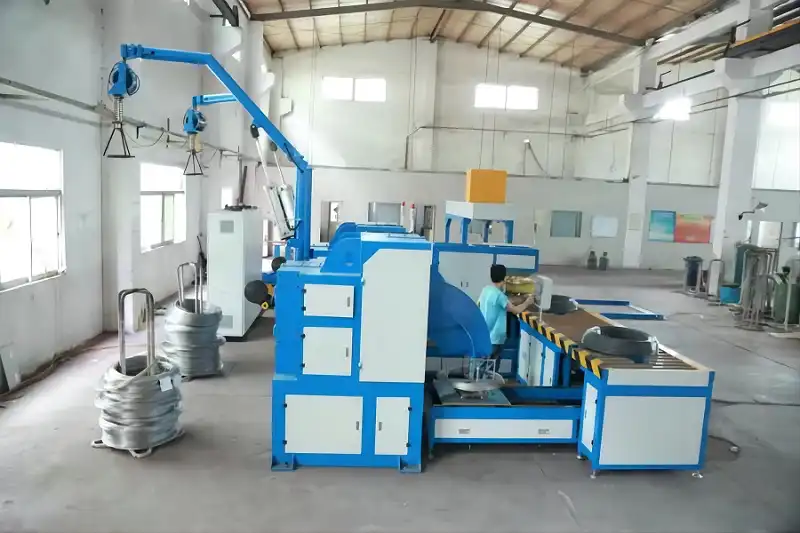
Delving into ID vs. OD Strapping Techniques
When considering automatic strapping solutions, it’s essential to evaluate different techniques to ensure you select the best method for your specific needs. Inner Diameter (ID) and Outer Diameter (OD) strapping are two such techniques, each offering distinct advantages depending on the type of coil and application.
Inner Diameter (ID) Strapping
ID strapping involves threading the strap through the center of the coil. It can be an ideal option for smaller coils where maintaining circularity is paramount. ID strapping can prevent the coil from collapsing or deforming under its own weight. However, ID strapping systems are often more complex and may require specialized equipment to thread the strap through the coil’s center.
Outer Diameter (OD) Strapping
OD strapping applies the strap around the outside of the coil. It is a more common and versatile method, suitable for a wider range of coil sizes and weights. OD strapping systems are generally simpler and more robust, making them easier to maintain and operate. They are effective in securing the coil for transport and storage, preventing unraveling and shifting.
Here’s a comparison table summarizing the key differences between ID and OD strapping:
| Feature | Inner Diameter (ID) Strapping | Outer Diameter (OD) Strapping |
|---|---|---|
| Coil Size | Typically smaller coils | Suitable for a wide range of coil sizes |
| Complexity | More complex, requiring specialized threading equipment | Simpler and more robust |
| Maintenance | Higher maintenance due to complex mechanisms | Lower maintenance |
| Cost | Generally more expensive | Generally less expensive |
| Primary Benefit | Maintains coil circularity and prevents collapse | Secures coil for transport and prevents unraveling |
Technical Considerations for Wire Coil Strapping Machines
Understanding the technical aspects of wire coil strapping machines is crucial for selecting the right equipment and optimizing its performance. Factors like strap material, joint efficiency, and tension control play a significant role in the overall effectiveness of the strapping process.
Automatic steel wire coil strapping machines use various types of straps, including PP (polypropylene) and PET (polyester). Strap width typically ranges around 10mm with a thickness of 0.8mm. The joint is created through friction-vibration, achieving a joint efficiency of approximately 75-90% of the strap’s breaking load. The strapping is usually performed on the front part of the wire coil.

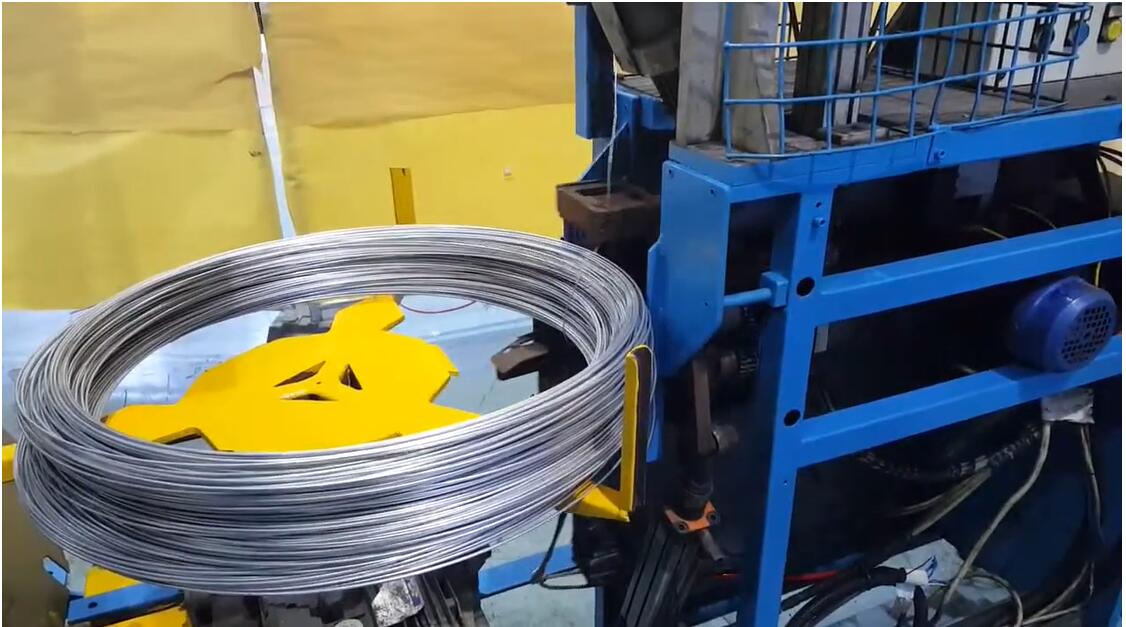
Advanced Features Enhancing Strapping Performance
The performance and efficiency of steel wire coil strapping machines can be significantly enhanced through the incorporation of advanced technical features.
Adjustable Tension Control
Adjustable tension control is a critical feature that allows the operator to fine-tune the strap tension based on the material and size of the wire coil. Too much tension can damage the coil, while too little tension can lead to instability during transport. Systems with adjustable tension control provide the flexibility needed to handle a variety of wire types and coil dimensions.
Automatic Positioning
Automatic strap positioning ensures that the straps are applied precisely at predetermined locations around the coil. This feature eliminates manual adjustments and ensures consistent strap placement, resulting in a more secure and stable package. Automatic positioning is particularly useful for high-volume production environments where consistency is paramount.
PLC Integration and Monitoring
Integrating the strapping machine with a Programmable Logic Controller (PLC) allows for seamless automation and monitoring of the strapping process. The PLC can control all aspects of the machine, from coil feeding to strap application, and can also monitor sensor inputs to detect potential problems. PLC integration enables remote monitoring and diagnostics, improving uptime and reducing maintenance costs.
The following table summarizes some of the common technical specifications for automatic wire coil strapping machines:
| Specification | Value | Unit | Importance |
|---|---|---|---|
| Strap Width | 10-19 | mm | Determines the strap’s resistance to breaking and tearing. |
| Strap Thickness | 0.8-1.27 | mm | Affects the strap’s ability to withstand tension and pressure. |
| Strap Material | PP/PET | Influences strength, flexibility, and resistance to environmental factors. | |
| Joint Efficiency | 75-90 | % | Measures the strength of the joint relative to the strap’s original strength. |
| Tension Range | 1000-1200 | N | Allows adjustment for different coil sizes and wire types. |
| Power Requirements | 380V, 50Hz, 3-Phase | Indicates the electrical requirements for operating the machine. | |
| Air Pressure | 6 | Bar | Specifies the required air pressure for pneumatic components. |
Factors influencing Automatic Wire Coil Strapping
%[steel wire strapping, wire strapping machine, wire packing line]( “steel wire strapping, wire strapping machine, wire packing line”) Automatic Wire Coil Strapping, Automatic Systems & Equipment, Bundling, Carton Closing,Carton Reinforcement and Unitizing.
Steel wire strapping is influenced by the size and density of the coil, the desired level of automation, the type of strapping material, and the specific application requirements. Fully automatic, automatic, and semi-automatic models are available depending on the desired level of automation and the packaging requirements.
To Summarize, automatic steel wire coil strapping by automatic line is a highly efficient and reliable method for securing steel wire coils. By automating the strapping process, manufacturers can significantly improve productivity, reduce labor costs, and ensure consistent product quality. From understanding the critical components and technical considerations to optimizing strap placement and choosing the right type of strapping, a comprehensive approach is essential for maximizing the benefits of this technology.












