
How to choose the proper strapping machine for the slit coils?
Are you tired of your strapping station being the biggest bottleneck in your entire facility? I see it all the time. Your production line is running smoothly, but then everything grinds to a halt where slit coils are waiting to be strapped. This slowdown costs you money, delays shipments, and puts unnecessary stress on your team. It can feel like you’re constantly fighting fires just to get products out the door, while worker safety and product quality hang in the balance. But what if you could turn that bottleneck into a seamless, efficient part of your operation? Choosing the right strapping machine is the solution that can make this a reality.
To choose the proper strapping machine for slit coils, you must first analyze your coil specifications, including inner diameter, outer diameter, width, and weight. Next, determine the required level of automation (semi-automatic or fully automatic) based on your production volume. Finally, select the strapping orientation—either radial (through the eye) or circumferential (around the outside)—that best secures your product for handling and shipping.
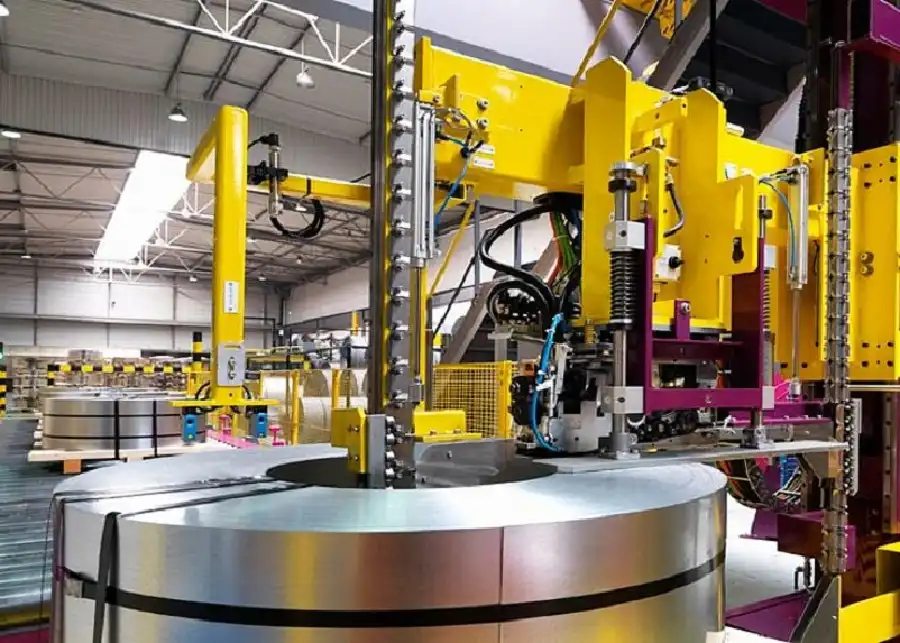
I’ve been in this industry for over two decades, first as an engineer on the factory floor and then as a factory owner myself. I understand the pressure you’re under. You need equipment that works, a team that’s safe, and a production line that flows without interruption. Making the right choice in machinery can be tough when every supplier claims their product is the best. In this article, I’m not here to just sell you a machine. I’m here to share what I’ve learned from years of hands-on experience. We will walk through this decision together, step-by-step, so you can choose a strapping machine that truly fits your needs and helps your business grow.
What are the main types of strapping machines for slit coils?
Is the variety of strapping machines on the market making your head spin? You see terms like “semi-automatic,” “fully automatic,” “radial,” and “circumferential,” and it’s hard to know where to even begin. This confusion can lead to analysis paralysis, causing you to stick with your inefficient and unsafe manual processes for far too long. Meanwhile, every day you delay, your operational costs creep up, and the risk of a workplace injury remains. The solution is to break down these options into simple, understandable categories so you can clearly see which type is the right fit for your factory floor.
The main types of strapping machines for slit coils are categorized by their operation mode and strapping direction. Operationally, you have semi-automatic machines that require an operator to position the coil and activate the strapping cycle, and fully automatic machines that integrate into a production line and operate without manual intervention. For strapping direction, you have radial strappers that feed strap through the coil’s eye and circumferential strappers that wrap around the coil’s outer body.
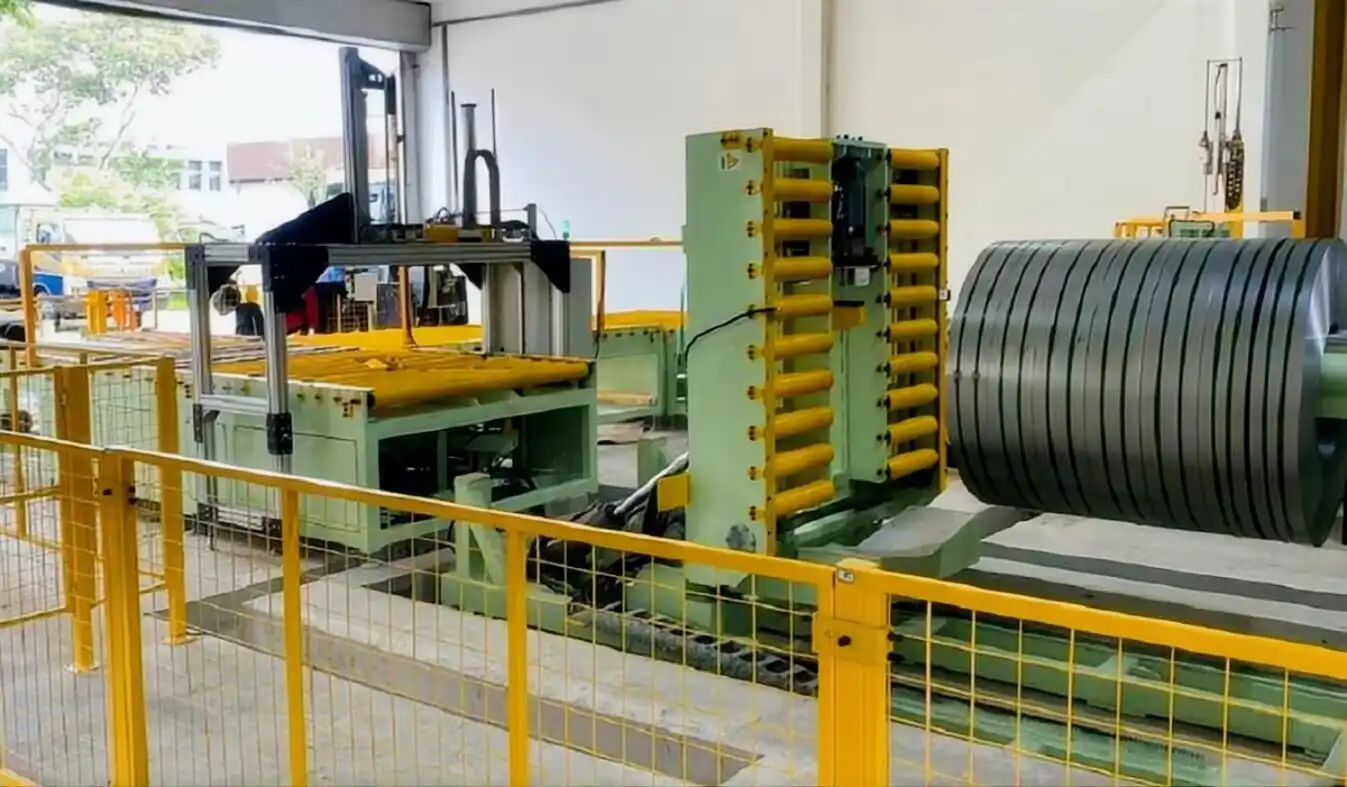
Choosing the right type of machine is the very first step. It sets the foundation for all other decisions. A machine that is too manual for your high-volume production will still create a bottleneck. A machine that is too automated for your current needs might be an unnecessary capital expense. It’s about finding the right balance for your specific situation. Let’s dive deeper into these categories to give you a clearer picture of how they work and which one might be best for you. This will help you build a solid base of knowledge before we get into more detailed specifications.
Breaking Down the Machine Types
When I first started, the options were much simpler. But technology has evolved, which is great for us but also adds layers to the decision. Let’s look at the two primary ways to categorize these machines: by how they operate and by how they apply the strap.
First, let’s talk about the operational mode. This is about how much human involvement is needed.
-
Semi-Automatic Machines: Think of these as a powered tool that still needs a skilled operator. Your worker would typically place the slit coil onto the machine’s turntable or conveyor. They position the coil correctly and then press a button or a foot pedal to start the strapping cycle. The machine then tensions, seals, and cuts the strap. This option is a huge step up from purely manual tools. It improves consistency and safety. It’s a great choice for lower-volume operations or when you have a wide variety of coil sizes that makes full automation difficult. The initial investment is lower, but you are still dependent on operator speed and efficiency.
-
Fully Automatic Machines: These are the heart of a modern, efficient packaging line. They are designed to work without any direct operator intervention. Coils are fed to the strapping station by a conveyor. Sensors detect the coil’s presence and position, and the machine automatically performs the entire strapping sequence. This can include rotating the coil for multiple radial straps. These systems are built for speed and high volume. They deliver perfectly consistent results every time and significantly reduce labor costs. The upfront investment is higher, but for a busy plant like yours, the return on investment from increased throughput and reduced labor can be very fast.
Next, we look at the strapping direction. This is about how the strap is applied to the coil.
-
Radial Strapping (Eye-Thru): This is the most common method for slit coils. The strap is fed through the center hole (the eye) of the coil and around its cross-section. This holds the individual wraps of the slit coil together, preventing them from unspooling or “telescoping.” You might apply several radial straps around the coil’s circumference to ensure it is secure.
-
Circumferential Strapping (Around the Outside): This method involves applying a strap around the outer circumference of the coil, like a belt around your waist. This is typically used to bundle several slit coils together on a pallet or skid, creating a single, stable unit for shipping. It is not usually used as the primary method for securing a single slit coil, but it is often part of a larger packaging system.
Here is a simple table to compare the key aspects:
| Feature | Semi-Automatic Machine | Fully Automatic Machine |
|---|---|---|
| Speed | Lower (dependent on operator) | High & Consistent |
| Labor Cost | Higher (one operator per machine) | Minimal (supervisory role) |
| Initial Cost | Lower | Higher |
| Consistency | Good | Excellent |
| Flexibility | High (easy to change for different sizes) | Lower (designed for specific size ranges) |
| Best For | Low to medium volume, high product variety | Medium to high volume, standardized products |
Understanding these basic types is crucial. It helps you filter out the noise and focus on the category of machine that matches your production reality.
How do your coil specifications determine the right machine?
Do you worry that a new strapping machine won’t be able to handle your specific range of products? You produce slit coils with different widths, diameters, and weights, and investing in a machine that can’t manage them all would be a costly disaster. This uncertainty can make you hesitate, leaving you stuck with your current, inefficient methods. The fear is that you’ll either buy a machine that is too small and limits your capabilities, or one that is over-engineered and a waste of money. The solution is to meticulously map your coil specifications and use that data as a non-negotiable checklist when evaluating any potential machine.
Your coil specifications are the most critical factor in choosing the right strapping machine. The machine’s frame size, strapping head, and power requirements must be matched to your coil’s minimum and maximum width, inner diameter (ID), outer diameter (OD), and weight. A machine that does not align with these core parameters will lead to inconsistent strapping, product damage, or complete operational failure.

I’ve seen this happen. A factory manager buys a beautiful, expensive machine based on a supplier’s recommendation, only to find it can’t handle their narrowest coils or their heaviest loads. It’s a frustrating and expensive mistake. That’s why we need to treat your coil data as the blueprint for your machine. It takes the guesswork out of the equation. Let’s break down exactly which specifications matter most and how they directly influence the design and functionality of the strapping machine you need.
Matching the Machine to Your Metal
Every slit coil is different. Even within the same plant, you’re likely dealing with a range of sizes. A machine designed for wide coils might struggle to properly guide the strap on a very narrow coil. A machine built for light coils might not have a robust enough frame or conveyor to handle your heaviest products. Let’s get specific.
Core Coil Dimensions
These are the absolute fundamentals. Your supplier must know your complete range for each of these dimensions to even begin to configure a machine.
- Outer Diameter (OD): The overall diameter of the coil. This determines the size of the strapping machine’s arch or track, which guides the strap around the coil. If your maximum OD is 1800mm, you need a machine with a track that can comfortably accommodate that size plus a little extra room.
- Inner Diameter (ID): The diameter of the center hole or “eye”. For radial (eye-thru) strapping, the machine uses a “bayonet” or lance that shoots through the ID to guide the strap. The machine’s lance must be able to pass through your smallest ID without any issues.
- Coil Width (or Height): This is the measurement of the coil from one flat face to the other. This is especially critical for narrow slit coils. The machine must have proper guides and a strapping head position that can apply the strap perfectly in the center of a narrow face without it slipping off. Some machines have movable heads that can adjust for different widths.
- Coil Weight: This dictates the entire support structure of the system. It influences the required strength of the conveyors, turntables, and the machine frame itself. Trying to put a 5-ton coil on a system designed for 2 tons is a recipe for catastrophic failure and a major safety hazard.
Let’s look at how these factors interact in a practical scenario.
| Coil Specification | Why It Matters for the Machine | Potential Problem if Mismatched |
|---|---|---|
| Max Outer Diameter | Determines the overall size of the machine’s strapping arch/track. | The coil won’t fit in the machine. |
| Min Inner Diameter | Dictates the size of the strapping lance/bayonet. | The lance can’t pass through the eye of the coil. |
| Min Coil Width | Affects the precision of the strapping head and strap guides. | The strap will be off-center or will slip off the coil. |
| Max Coil Weight | Defines the required load capacity of conveyors and the machine frame. | Structural failure, extreme safety risk, damaged equipment. |
The “Slit Coil” Challenge
Slit coils present a unique challenge compared to a single, wide master coil. You’re often dealing with very narrow widths. When a strap is applied to a narrow coil (e.g., 25mm width), there is very little room for error. The strap must be placed perfectly in the middle. This requires a machine with high precision. It needs a robust guiding system and a strapping head that doesn’t waver. Furthermore, if you are strapping a stack of “pancaked” slit coils, the machine needs to apply consistent tension to secure the whole stack without damaging the edges of the individual coils. You need to discuss these specific challenges with any potential supplier and ask them how their machine is engineered to handle them. Ask for videos or references of their machines working with coils similar in width to yours.
What level of automation do you actually need?
Are you feeling pressured to invest in a fully automated, “lights-out” packaging line? You hear about competitors boosting their efficiency with robotics and wonder if you’re falling behind. But the high price tag of full automation can be intimidating, and you worry about the complexity of integrating it into your existing setup. The fear is making a massive capital investment that doesn’t deliver the promised return, or worse, creates new, more complex problems. The right approach is to conduct an honest assessment of your production volume, labor costs, and long-term goals to determine the level of automation that provides the best real-world value for your operation right now.
The level of automation you need depends directly on your production throughput and budget. For lower volumes (e.g., under 20 coils per hour), a semi-automatic machine offers a significant upgrade over manual methods at a lower cost. For higher volumes, a fully automatic system that integrates with conveyors is essential to eliminate bottlenecks, reduce labor costs, and achieve consistent, high-speed output.
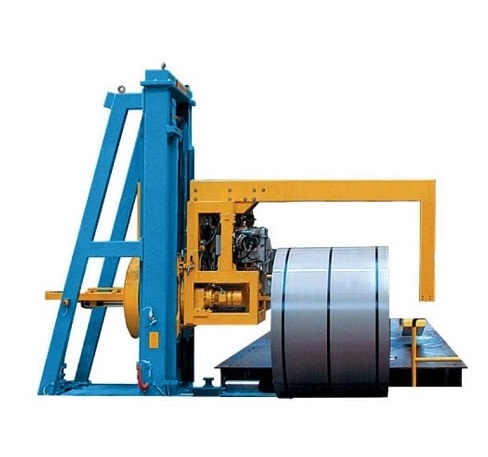
As a factory owner, I’ve had to make this exact decision myself. It’s not just about buying the most advanced technology; it’s about making a smart investment. The goal isn’t just automation for automation’s sake. The goal is to solve a problem—whether that’s a speed issue, a safety issue, or a cost issue. Sometimes a simple, robust semi-automatic solution is the smartest choice. Other times, biting the bullet and investing in a fully integrated system is the only way to unlock your plant’s true potential. Let’s examine how to make that call.
Finding the Sweet Spot: From Manual to Fully Automatic
The journey to automation is a spectrum. Your job is to find where your operation currently fits and where you want it to be in the next 5-10 years.
The Case for Semi-Automatic
Don’t underestimate the power of a semi-automatic machine. If you are currently using manual tensioners and sealers, this is a revolutionary step forward.
- When it makes sense: Your production is inconsistent. You might have a busy day followed by a slower one. You handle a very wide variety of coil sizes, requiring frequent changeovers. Your budget is tight, and you need to prove the concept of automated strapping before making a larger investment.
- The real-world benefits: You immediately improve safety by removing manual tensioning tools, which are a common source of strain injuries. You get a consistent, repeatable strap tension and seal quality, which reduces product damage and looks more professional to your customers. The operator is still involved, but the machine does the heavy lifting. This is a pragmatic, cost-effective way to address your most immediate pain points.
The Leap to Fully Automatic
This is where you transform your packaging station from a cost center into a competitive advantage. A fully automatic system is more than just a machine; it’s a process.
- When it makes sense: Your strapping station is a clear and consistent bottleneck. You are running multiple shifts and your production volume is high (e.g., 30, 50, or more coils per hour). You want to reduce your dependency on manual labor and reassign those team members to more value-added tasks. You have a goal to improve plant-wide data collection and process control.
- The real-world benefits: The most obvious benefit is speed. These systems can strap a coil in seconds. But the true value goes deeper. You eliminate human error, resulting in unparalleled consistency. You dramatically reduce labor costs per unit. These systems can be integrated with upstream and downstream equipment, like coil cars, down-enders, and conveyor systems, creating a truly seamless flow.
Calculating the Return on Investment (ROI)
This is how you justify the expense to yourself and your senior management. It’s not as complicated as it sounds.
| Factor | Semi-Automatic | Fully Automatic |
|---|---|---|
| Labor Savings | Low-Medium (reduces strain, but still needs 1 operator) | High (can run with minimal supervision) |
| Throughput Increase | Medium (faster than manual) | High (removes the bottleneck) |
| Product Damage Reduction | Medium (improves consistency) | High (perfectly repeatable process) |
| Initial Investment | Low-Medium | High |
| ROI Timeframe | Shorter (often under 18 months) | Longer (often 18-36 months, but higher overall return) |
To do a rough calculation, start by figuring out your current labor cost for strapping one coil. Multiply that by the number of coils you strap per year. Then, estimate the cost of product damage from bad strapping. Add those two numbers together. This is your “cost of doing nothing.” A supplier should be able to help you estimate the operational cost of their system. The difference between those two numbers is your annual savings. Divide the machine’s total installed cost by your annual savings to get a rough idea of the payback period. A good investment in this industry should pay for itself within a few years.
How can you evaluate a supplier beyond the price tag?
Are you worried about choosing the wrong supplier? You’ve likely been burned before by a company that made big promises before the sale but disappeared when you needed support. This experience makes you cautious, and rightly so. The fear is not just about losing money on a machine that doesn’t work; it’s about being stuck with a partner you can’t trust, leading to extended downtime and endless frustration. The only way to avoid this is to shift your mindset from buying a commodity to choosing a long-term partner, and to use a rigorous evaluation process that looks far beyond the initial quote.
To evaluate a supplier beyond the price tag, you must assess their engineering expertise, the quality of their after-sales support, and their proven track record. Ask for detailed technical drawings, inquire about their service-level agreements (SLAs) for support and parts, and, most importantly, request references from existing customers in your industry who are using a similar machine.
I built my entire company on this principle. When I started FHOPEPACK, it was because I saw a gap. I saw factories struggling with equipment from suppliers who didn’t understand the real-world pressures of a manufacturing environment. A lower price is tempting, but it’s often the most expensive choice in the long run. The machine’s price is just one part of the total cost of ownership. Downtime, spare parts, and slow support will cost you far more over the life of the machine. Let’s talk about how to vet a supplier properly, so you end up with a partner, not a problem.
A Checklist for Choosing the Right Partner
Think of this as a job interview. You’re hiring this company and their machine to do a critical job in your plant for the next 10-20 years. You need to be thorough.
1. Assess Their Engineering and Industry Knowledge
A true partner understands your business. They don’t just sell you a machine from a catalog.
- What to ask: “Can you explain how your machine design specifically addresses the challenges of strapping narrow slit coils?” “What design features prevent strap slippage?” “How does your machine handle different coil IDs and ODs?” “Can you show me a video of your machine strapping a coil similar to my heaviest one?”
- What to look for: Look for confident, detailed answers. They should sound like engineers, not just salespeople. They should ask you questions about your process. A good supplier will want to understand your entire packaging line to ensure their machine integrates properly. If they aren’t asking you questions, that’s a red flag. I remember working with a client who was struggling with strap breakage. Their previous supplier just kept selling them stronger, more expensive straps. When we looked, the real problem was a poorly aligned sealing head on the machine. The supplier didn’t have the engineering depth to diagnose the root cause.
2. Scrutinize the After-Sales Support
This is where many suppliers fail. The machine will eventually need maintenance, a spare part, or troubleshooting. How will they respond when you’re in a panic because your line is down?
- What to ask: “What is your standard warranty?” “Where do you stock spare parts, and what is the typical lead time to get them to my plant?” “What does your technical support process look like? Do I call a generic helpline, or do I have a dedicated contact?” “What are your service rates if I need a technician to come on-site?”
- What to look for: You want clear, contractual answers. Look for suppliers who have service technicians based in your country or region. Ask if they offer remote diagnostic capabilities, which can solve many problems quickly without an expensive site visit.
3. Verify Their Track Record
Never be the first to buy a new, unproven machine design. Let someone else work out the bugs.
- What to ask: “Can you provide me with a list of 2-3 customers in the steel industry who are using this model?” “Can I speak to one of them?”
- What to look for: A confident supplier will be happy to provide references. A hesitant one is a major red flag. When you speak to the reference, don’t just ask if they like the machine. Ask specific questions: “How was the installation process?” “Have you had any unexpected downtime?” “How responsive was their support team when you had an issue?” “If you could do it again, would you buy from them?” This is the most valuable information you can possibly get.
Here is how you can score potential suppliers:
| Evaluation Criteria | Supplier A | Supplier B | Supplier C |
|---|---|---|---|
| Price | $100,000 | $120,000 | $115,000 |
| Engineering Expertise (1-5) | 3 (Generic answers) | 5 (Detailed, specific) | 4 (Knowledgeable) |
| After-Sales Support (1-5) | 2 (Vague promises) | 4 (Clear plan, US parts) | 3 (Offshore support) |
| Customer References (1-5) | 1 (Hesitant to provide) | 5 (Eager, provided 3) | 3 (Provided 1) |
| Total Score (excl. price) | 6 | 14 | 10 |
As you can see, the cheapest option, Supplier A, is by far the riskiest. Supplier B, despite being the most expensive, presents the best value and the lowest long-term risk. This is how you make a smart, defensible decision.
What’s the one mistake most managers make when buying a strapper?
I’ve talked with hundreds of plant managers like you over the years. We’ve walked through their challenges with bottlenecks, safety, and product damage. And after all these conversations, I’ve seen a clear pattern. There is one fundamental mistake that gets made over and over again, and it has nothing to do with the technical specifications or the level of automation. It’s a mindset problem that can lead you to choose the wrong machine, even if you’ve done all your other homework. This mistake can cost you dearly in the long run.
The single biggest mistake managers make is focusing on the initial purchase price of the machine instead of the Total Cost of Ownership (TCO). A cheaper machine often has higher long-term costs due to more frequent downtime, more expensive proprietary spare parts, higher maintenance needs, and lower efficiency. Choosing a partner based on expertise and reliability, not just the initial quote, is the key to a successful investment.
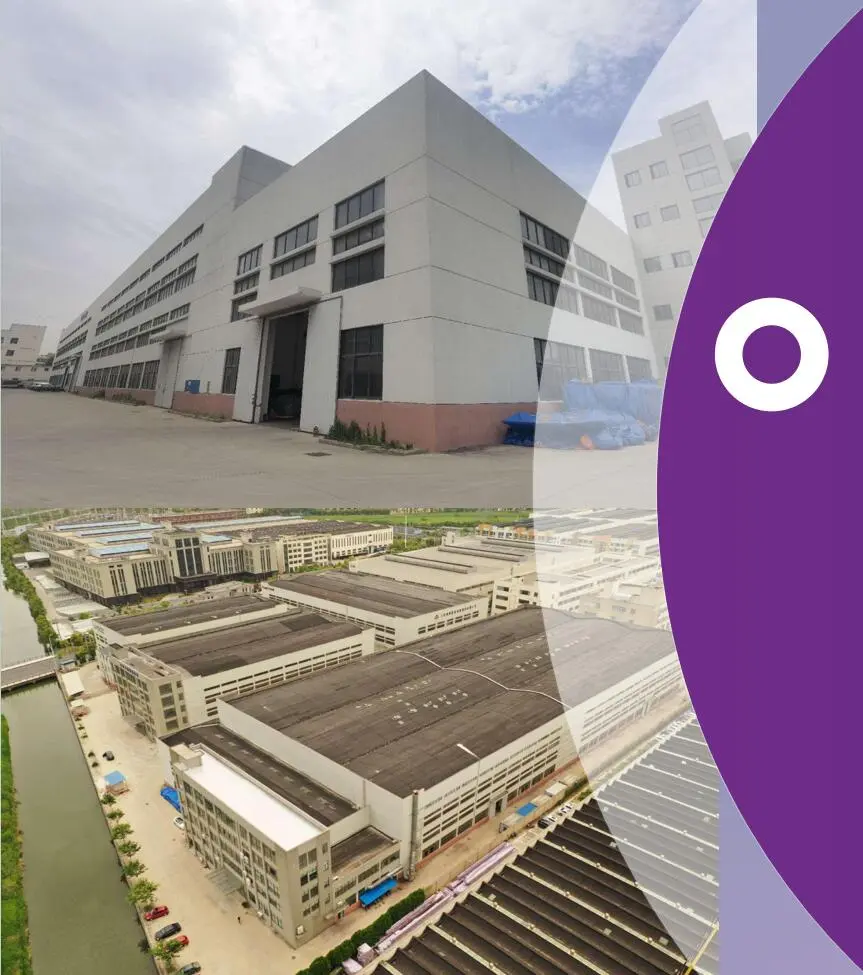
I want to be very direct with you here. When I was building my own factory, I had to watch every dollar. I understand the temptation to go with the lowest bidder. It’s the easiest way to get an expense approved. But I learned a hard lesson. A machine that saves you 20% upfront but has 5% more downtime than a slightly more expensive competitor isn’t a bargain. In a busy plant, that 5% downtime can cost you hundreds of thousands of dollars a year in lost production. It completely erases any initial savings.
Shifting from “Price” to “Value”
Let’s break down what “Total Cost of Ownership” really means for a strapping machine. It’s the sum of several factors over the machine’s entire lifecycle, which could be 10, 15, or even 20 years.
The Hidden Costs of a “Cheap” Machine
- Downtime: This is the number one killer. What is the cost to your business for every hour this machine is not running? It’s not just the idle operator; it’s the entire production line that feeds it. A robust, well-engineered machine from a reputable supplier will have higher-quality components that simply fail less often.
- Spare Parts: Some suppliers of low-cost machines make their real money on spare parts. They use proprietary components that you can only buy from them at a massive markup. A good supplier will use industry-standard components where possible, giving you more options and lower costs for replacements. Ask for a price list of common wear parts like sealing blades and tension wheels before you buy.
- Maintenance: A well-designed machine is easier to maintain. It has accessible service points and clear documentation. A poorly designed one might require hours of disassembly just to change a simple part, driving up your maintenance labor costs.
- Strap Consumption: This is a subtle one. A high-quality strapping head will consistently apply the right amount of tension and create a strong seal. A lower-quality head might require you to use a thicker, more expensive strap to compensate for its poor performance, or it might waste strap due to inconsistent feeding. Over a decade, this can add up to a surprising amount of money.
I encourage you to change the conversation inside your organization. When you present your proposal for a new machine, don’t just lead with the price. Lead with the value. Create a simple TCO calculation that shows how a more reliable, slightly more expensive machine will actually save the company money over a five-year period. Show the cost of downtime. Show the savings in labor and reduced product damage. This demonstrates that you are not just a manager trying to spend money; you are a strategic leader making a smart investment in the company’s future. That is how you build trust with your own leadership and get the equipment you truly need.
Conclusion
Choosing the right strapping machine comes down to matching the machine’s capabilities to your specific coil data, production volume, and long-term goals. Focus on total value, not just initial price.








