
How to Choose the Right Orbital Stretch Wrapping System for Your Copper Rod Bundles?
Are you tired of seeing your valuable copper rod bundles damaged during handling and shipping? The slow, manual packing process is likely a major bottleneck, holding back your entire production line. I understand this frustration completely. I’ve walked factory floors, just like yours, and seen how these inefficiencies eat into profits and create unnecessary stress. It costs you money, customer trust, and puts your workers at risk. You know an automated system is the answer, but choosing the right one feels like a huge, expensive gamble.
Choosing the right orbital stretch wrapping system for copper rod bundles requires a focus on three core areas: the machine’s technical specifications tailored for heavy, abrasive products; a clear calculation of your Return on Investment (ROI) based on labor savings and reduced product damage; and a thorough evaluation of the supplier’s engineering expertise and after-sales support.

I get it. You’re not just buying a machine; you’re investing in your factory’s future performance and safety. As someone who went from being an engineer on the floor to building my own packing machine factory, I’ve made these exact decisions. The pressure is immense. Let’s break down how to approach this choice with the confidence of an engineer, not the uncertainty of a buyer. We’ll look at this from one operations leader to another.
What Key Machine Specifications Matter Most for Copper Rods?
You’ve probably looked at technical spec sheets that are just a long list of numbers and codes. It can be overwhelming. But here’s the reality: choosing the wrong roller material or an inadequate tension control for heavy copper rod bundles can destroy your productivity. It leads to snapped film, scratched products, and a machine that needs constant maintenance. This isn’t just an inconvenience; it’s a direct threat to your output and your reputation.
For copper rod bundles, the most critical machine specifications are durable, non-damaging conveyor rollers (like PU-coated steel), a robust ring drive system that can handle heavy loads, precise film tension control to prevent rod damage, and a cutting and clamping system reliable enough for high-volume operations.

Let’s dive deeper into the components that truly make a difference. When I was setting up my own production lines, I learned that the details in the machine’s construction are what separate a good investment from a future headache. For a product as specific as copper rods—which are heavy, dense, and easily scratched—you have to be meticulous.
The Conveyor System: Your First Line of Defense
The conveyor is where your product first meets the machine. For something like copper, standard steel rollers are a disaster waiting to happen. They will scratch and dent the soft outer rods, leading to customer complaints and rejected shipments. You need rollers made from heavy-duty steel but coated with a thick layer of polyurethane (PU). This provides a durable yet forgiving surface that protects your product.
I remember a client in Monterrey, Mexico, who was facing this exact issue. Their previous machine was damaging about 5% of their copper bundles. It sounds small, but it was costing them thousands of dollars a month. We replaced their conveyor sections with PU-coated rollers, and the problem vanished overnight. It’s a small detail that has a massive impact on your bottom line. Also, check the load capacity. Your conveyor should be rated to handle at least 1.5 times the weight of your heaviest bundle to ensure long-term durability.
The Wrapping Ring and Drive System: Power Meets Precision
The wrapping ring is the heart of the machine. It spins around your product at high speeds, so it needs to be perfectly balanced and incredibly strong. For heavy bundles of copper rods, a cast steel ring is far superior to a welded one, as it offers better stability and longevity.
The drive system is just as important. There are two common types:
- Friction Wheel Drive: Simple and effective for lighter loads.
- Slewing Bearing/Belt Drive: More robust and reliable for heavy, industrial applications like yours. This system provides smoother rotation and requires less maintenance under high stress.
Ask your potential supplier what kind of drive system they use and why. Their answer will tell you a lot about whether they understand the demands of your industry.
The Film Delivery System: The Art of the Stretch
This is where you save money on consumables. The film carriage should have a powered pre-stretch system. This stretches the film before it’s applied to the bundle. A good system should achieve a pre-stretch ratio of at least 250-300%. This means 1 meter of film from the roll becomes 3.5 meters of film on your product. It not only saves a huge amount on film costs but also makes the wrap stronger and more secure.
The tension control must also be electronic and adjustable. Copper rods can be bent or displaced if the wrapping tension is too high. You need the ability to fine-tune the tension to create a tight, secure wrap without damaging the product. This level of control is non-negotiable for a quality finish.
How Can You Justify the Investment with a Clear ROI?
You have a budget. You have a boss or a board to answer to. You need to prove that this significant capital expenditure is a smart business decision, not just a purchase of new equipment. Simply saying “it will be more efficient” isn’t enough to get approval. Without hard numbers to back you up, the investment feels like a risk, and you’re the one who has to answer for it if the payback isn’t clear.
To justify the investment, calculate your ROI by quantifying three main areas: direct labor cost savings (reassigned workers x wages), reduced product damage (cost of scrap/rework per month), and increased throughput (value of extra bundles shipped per day). A reliable supplier should help you with these calculations.
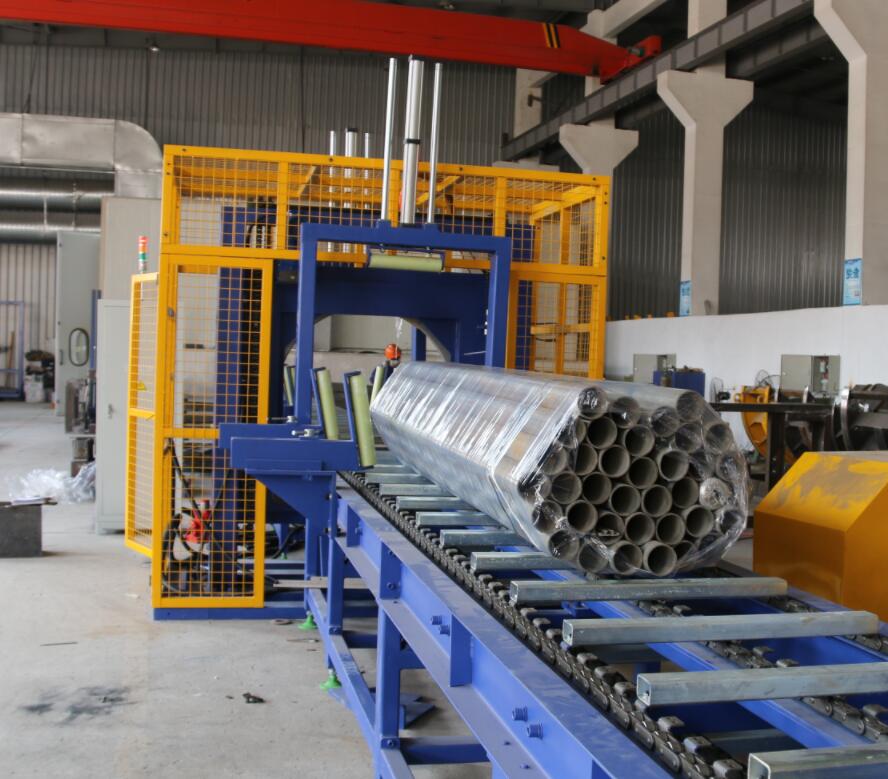
When I built my factory, every single machine had to prove its worth on paper before I ever signed a purchase order. It’s a discipline that ensures you are making decisions based on data, not just feelings. Let’s break down how you can build a solid business case for an orbital wrapper. This is the exact process I use.
Step 1: Calculate Your Current Manual Packing Costs
This is the most straightforward calculation. Be honest about your numbers.
- Labor: How many workers are dedicated to packing your copper rod bundles per shift?
Number of Workers x Hourly Wage (including benefits) x Hours per Shift x Shifts per Day = Total Daily Labor Cost
- Example: Let’s say you have 2 workers per shift, 2 shifts a day. At an average loaded wage of $8 USD/hour in Mexico, that’s:
2 workers x $8/hr x 8 hours/shift x 2 shifts = $256 per dayjust on labor for this one task. That’s over $60,000 per year.








