
How to Choose an Automatic Coil Packing Line Without Overbuilding
Overbuilding usually does not start with a bad machine. It starts with a scope that tries to automate rare exceptions instead of the repeatable work that actually occupies the line. The safer question is not “How automatic can this be?” but “Which part of the current flow is repeatable enough to automate without creating a larger recovery problem?”
That distinction matters when you compare an automatic coil packing line against a simpler wrapping cell.
This guide is for operations, engineering, and project teams. It does not promise a capacity, cycle time, payback, or a recommended configuration. Those results require the actual product mix and site conditions.

The image shows the automatic coil packing line as an integrated equipment sequence rather than a single wrapper. That is the scope level this guide asks you to define before procurement: not only the wrapping station, but the connected flow and handoffs around it.
Define the product mix before the equipment
List the coils that enter the line by material, surface, inner and outer diameter, width, weight, orientation, source process, and release pattern. Separate normal product from rework, exceptional product, and hold conditions. A line should be sized for the repeatable population, not for the worst case that may never arrive again.
If the team cannot describe the normal and exception routes, the line scope is not ready. Overbuilding often fills the gap left by missing product data.
Map the current flow and measure the constraint
Follow one representative coil from arrival to discharge. Record where coils wait, where they are handled more than once, where information is re-entered, and where ownership changes. The constraint may not be the wrapper. It can be buffering, weighing, labeling, stacking, material replenishment, or a handoff between departments.
Choose the automation scope around that measured constraint. Adding a faster station upstream will not raise accepted output if the downstream handoff remains slow.
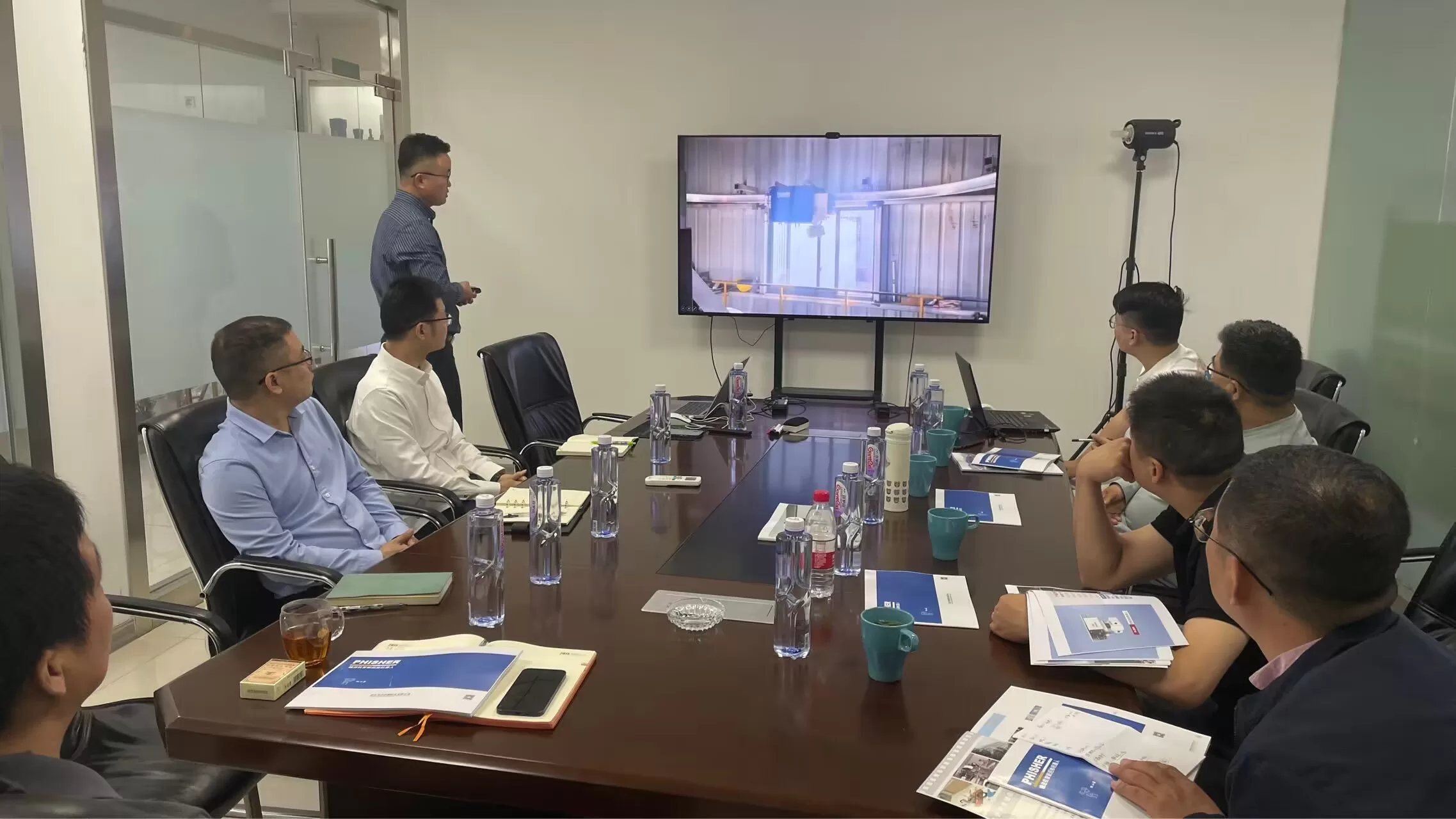
The image shows people seated around a table in a design discussion. Use the same working format for the first scoping session: put the product-family list, current flow map and exception routes in front of the team before defining the automation scope.
Separate must-have functions from optional ones
Common line functions include handling and transfer, coil wrapping, strapping, weighing, labeling, inspection, stacking, and storage transfer. Not every project needs all of them.
For each function, ask whether it removes a repeatable bottleneck, whether the data and material flow can support it, and what happens when it is unavailable. A function that creates an unmanageable exception path is not an upgrade, even if it looks more automatic.
Compare three realistic scopes
Start with a basic wrapping cell. This can be appropriate when the coil population is stable, manual handling is acceptable, and the main need is consistent wrapping.
An integrated wrapping, strapping, and labeling scope adds protection and identification. It works when those functions are part of the same controlled recipe and when the team can maintain the additional material and data interfaces.
A complete automatic coil packing line with automated handling, labeling, and stacking makes sense when the measured constraint is upstream transfer, downstream staging, or repeated handoffs. It should not be chosen simply because “full automatic” sounds more productive.
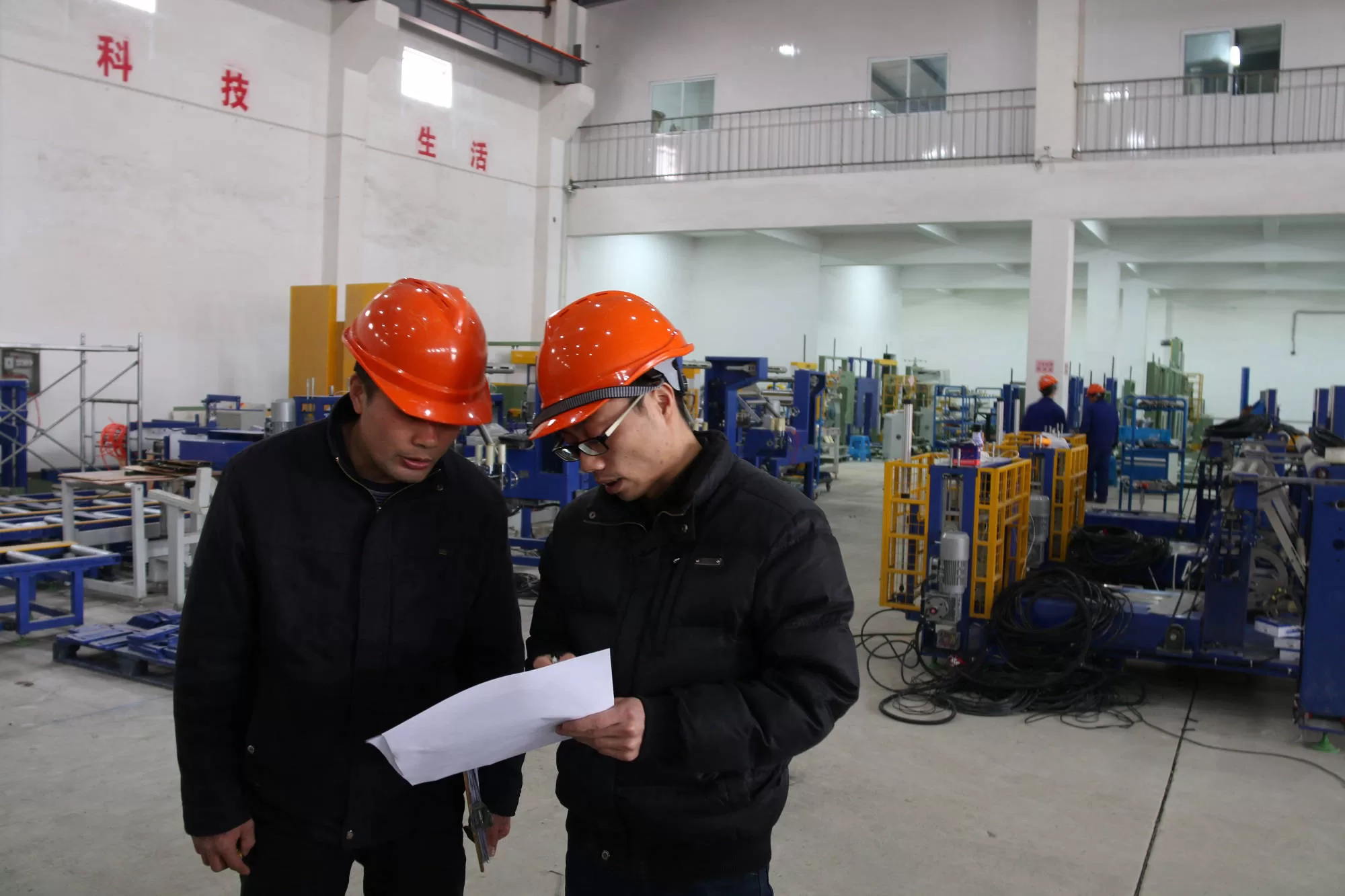
The image shows people in an industrial work setting. It keeps the decision anchored in the teams that will operate, maintain and support the line, not only in the machine specification.
Account for changeover, replenishment and recovery
Compare each scope across changeover time, film or strapping replenishment, first-article confirmation, quality holds, blocked coils, and controlled recovery. A nominal wrapping cycle is not the same as useful output.
The operating boundary also includes floor space, utilities, maintenance capability, and access for material loading. A machine that fits on paper can still fail as a project if those boundaries are ignored.
Validate before expanding
A staged approach can prove the wrapping station first, then add transfer, data integration, or stacking when the next constraint is real. Each stage should have its own scope, interfaces, manual fallback, training, and acceptance evidence.
Before procurement, define representative acceptance cases: the coil conditions to be witnessed, the package outcomes to be inspected, the normal and abnormal states to be addressed, and the responsible sign-off.

The image shows a working discussion in an office-like setting. It illustrates the cross-functional review described here, where operations, quality, maintenance, automation and safety agree on acceptance cases before the line is expanded.
A practical next step
Hold a design review with operations, quality, maintenance, automation, and safety. Leave with a product-family list, a current-state flow map, one measured constraint, and a shortlist of functions that directly address that constraint. That is the fastest way to avoid buying a larger line than the operation can actually use.








