
How Thailand Steel Mills Apply Coil Wrapping Machines for Coil Roll Packing?
For years, I have seen factories struggle with old packing methods. They deal with slow work, injured staff, and damaged products. This problem is not unique. Many businesses, especially in places like Thailand, face these exact challenges when packing their steel coils. They want to make things better.
Thailand steel mills use coil wrapping machines to automate their coil roll packing. These machines replace manual labor. They wrap steel coils quickly and safely. This helps them move products faster and protect goods from damage during transport.

You might wonder if these machines can truly make a difference for your operation. If you are a factory manager, you know that every minute of downtime costs money. Every damaged product eats into profits. Let’s look closely at how Thailand’s steel industry is changing its packing game.
1. Why Are Thailand Steel Mills Looking to Automate Coil Packing?
Many factory managers I talk to feel the pressure every day. They need to increase output. They must control costs. And they must keep everyone safe. When packing steel coils, these pressures become even bigger. The old ways often do not meet these needs.
Thailand steel mills are looking to automate coil packing for several key reasons. They want to fix slow processes. They aim to reduce dangers to workers. They also need to stop products from getting damaged. These issues directly affect their bottom line and ability to compete.

I started my career on the factory floor. I saw first-hand the tough conditions. Workers often had to lift heavy steel coils. They would flip them to wrap them by hand. This was slow. It was also very dangerous. Think about a 2-ton steel coil. Moving it manually is a huge risk. This kind of work led to many injuries. It also made packing a very slow part of the production line. This created a bottleneck. Products waited to be packed. This slowed down the whole factory.
Factories lose money when packing is slow. It delays orders. It makes customers unhappy. Also, manual handling often scratches or dents the steel coils. This is especially true for the edges. These small damages lead to customer complaints. They also mean products cannot be sold at full price. This directly impacts profit. When I was building my own factory, I knew these problems had to be solved. We could not afford high insurance costs from injuries. We could not afford to lose customers because of damaged goods.
For steel mills in Thailand, these issues are very real. They operate in a competitive global market. They must find ways to produce more, faster, and at a lower cost. Automating packing is a clear solution. It tackles the core problems of efficiency, safety, and product quality. It helps them meet the demands of their customers and the market.
Challenges Faced by Thailand Steel Mills in Coil Packing
Thailand’s steel industry faces specific pressures. These pressures push them towards automation.
| Challenge Area | Impact on Operations | Why Automation Helps |
|---|---|---|
| Efficiency Bottleneck | Manual packing is slow. It limits overall output. Delays lead to missed deadlines. | Machines pack much faster. They keep the line moving. |
| Safety Hazards | Workers lift heavy coils. High risk of injuries. High insurance costs. Staff turnover. | Machines do the heavy lifting. Workers stay safe. |
| Product Damage | Coils get scratched or dented during manual handling. Leads to customer complaints. Loss of profit. | Machines wrap consistently. They protect the product well. |
| Labor Costs | Many workers needed for manual packing. Wages add up. | Fewer workers needed for packing. Saves on labor costs. |
| Quality Control | Manual wrapping is not consistent. Some coils are wrapped better than others. | Machines wrap every coil the same way. High, consistent quality. |
These challenges are not just theory. They are daily issues that factory managers must solve. Automation offers a practical way forward for Thailand’s steel industry.
2. What Specific Coil Wrapping Machines Do Thailand Mills Use for Coil Rolls?
When a factory decides to automate, the next big question is always, “What machine is right for us?” There are many types of coil wrapping machines. Choosing the right one depends on the type of coil, its size, and the factory’s specific needs.
Thailand steel mills use different types of coil wrapping machines, mainly orbital wrappers and horizontal wrappers. Orbital wrappers are popular for their ability to wrap coils from multiple angles. Horizontal wrappers are good for larger, heavier coils. The choice depends on the coil dimensions, weight, and desired packing speed.
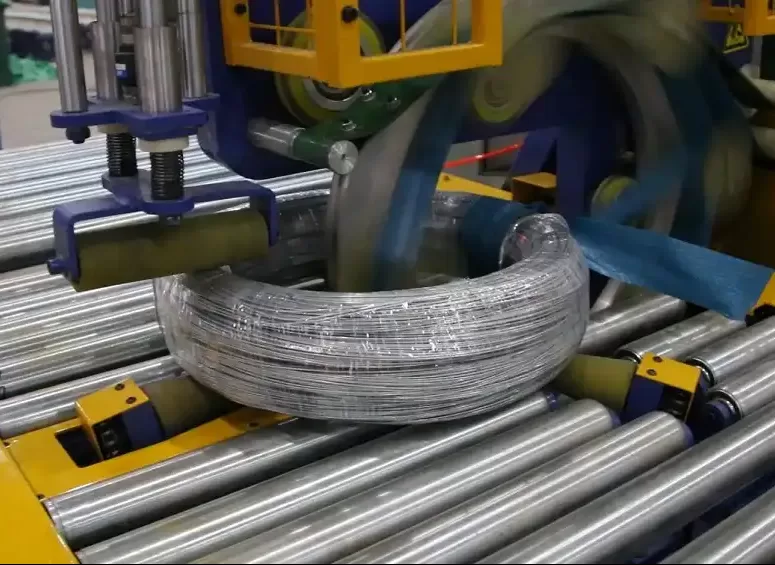
In my experience, picking the right machine is like choosing the right tool for a specific job. You would not use a small hammer for a large nail. It is the same with packing machines. For steel coils, durability and reliability are key. These machines work in harsh factory settings. They must withstand dust, heavy loads, and continuous operation.
Let’s look at the main types that Thai mills often use:
Common Coil Wrapping Machines in Thailand Steel Mills
-
Orbital Wrapping Machines:
- How they work: The wrapping material (stretch film, VCI paper, woven fabric) moves in an orbit around the coil. The coil stays still or moves slowly through the center.
- Best for: Steel coils, wire coils, and other circular products. They offer good protection for the coil’s circumference and can handle various diameters.
- Features: Can be semi-automatic or fully automatic. Some come with automatic coil feeding and discharge systems. They wrap quickly and consistently.
- My insight: These are excellent for versatility. Many of my clients find orbital wrappers very good for mixed production lines. They can handle a range of coil sizes without major adjustments. This flexibility saves time and effort.
-
Horizontal Wrapping Machines:
- How they work: Similar to orbital, but often designed for very large or heavy items that are loaded horizontally. The wrapping ring rotates around the horizontal axis of the product.
- Best for: Very heavy steel coils or steel wire coils that need robust support during wrapping. They are built for strength.
- Features: Often integrate with heavy-duty conveyors. They provide stable wrapping for large items. These machines are built tough.
- My insight: For the really big, heavy coils that are common in steel mills, horizontal wrappers are the go-to. They are designed for high-volume, heavy-duty work. Reliability is their main feature. They just keep running, day after day.
-
Stretch Wrapping Machines (for Palletized Coils):
- How they work: While not directly coil wrappers, some mills palletize smaller coils. These machines wrap the entire pallet with stretch film.
- Best for: Securing multiple smaller coils placed on a pallet for shipping.
- Features: Can be manual, semi-automatic, or robotic.
- My insight: This is a good option when coils are not too heavy and can be grouped. It adds an extra layer of protection for transport.
When I help a factory choose a machine, I always look at their entire operation. We think about the coil size, the speed they need, and how much protection the product requires. For example, if a factory produces steel wire coils that need to be moisture-proof for sea transport, we would focus on machines that apply VCI film tightly and consistently. These specific details make a big difference in the long-term success of the investment. My journey taught me that understanding these details for each client is paramount. It is not just about selling a machine. It is about providing a solution.
3. How Do Coil Wrapping Machines Solve Key Problems in Thailand Steel Operations?
We have looked at why Thailand steel mills need automation. We also discussed what machines they use. Now, let’s connect the dots. How exactly do these coil wrapping machines fix the problems that factory managers like Michael Chen face daily?
Coil wrapping machines solve key problems in Thailand steel operations by boosting efficiency, greatly improving worker safety, and cutting down on product damage. They automate the packing process, removing the need for risky manual handling and ensuring consistent, high-quality wraps. This directly addresses the main bottlenecks and risks in a steel mill’s production line.

I have seen countless factories transform after installing these machines. Before, the packing area was a scene of constant movement, manual strain, and slow progress. After, it becomes a smooth, consistent flow. This change is not just about speed. It is about a complete shift in how the factory runs.
Problem-Solving Capabilities of Coil Wrapping Machines
Let’s break down how these machines tackle the specific challenges:
A. Solving Efficiency Bottlenecks: Speed and Throughput
- Manual Process vs. Automated Speed: Manual coil packing is very slow. Each coil takes a long time to wrap. An automated coil wrapping machine can pack a coil in minutes, sometimes even less. This means the end of the production line moves much faster.
- Continuous Operation: Machines can run for long shifts without getting tired. They do not need breaks. This means higher output over the day. This keeps the entire production line flowing smoothly. There are no more long queues of coils waiting to be packed.
- Reduced Labor Dependence: With fewer people needed for packing, staff can be moved to other important tasks. This makes better use of human resources. It also reduces the impact of labor shortages.
B. Enhancing Worker Safety: Reducing Risks
- Eliminating Manual Lifting: This is a big one. Workers no longer have to lift or move heavy steel coils by hand. The machine does all the heavy work. This almost completely removes the risk of back injuries, crushed limbs, and other accidents from manual handling.
- Reduced Exposure to Moving Parts: Modern machines have safety features. These include safety fences, light curtains, and emergency stops. Workers are protected from moving machine parts. This creates a much safer working environment.
- Lower Insurance Costs: Fewer injuries mean fewer claims. This leads to lower insurance premiums for the factory. This is a direct saving for the business.
C. Preventing Product Damage: Quality and Protection
- Consistent Wrapping: Machines apply wrapping material with consistent tension and overlap. This means every coil gets the same high level of protection. Manual wrapping often varies. Some wraps might be too loose, others too tight.
- Protection from Elements: The tight, consistent wrap protects the steel coil from moisture, dust, and rust. This is vital for long-term storage or sea shipment.
- Reduced Handling Damage: Coils are loaded onto the machine, wrapped, and then discharged. This reduces the number of times they are touched by human hands or moved by forklifts. Each touch point is a chance for damage. Machines minimize these points.
I remember one client in Thailand had huge issues with steel coil edges getting damaged. It was a constant source of customer complaints. After they installed a horizontal coil wrapper, those complaints dropped almost to zero. It was not just about the machine. It was about how the machine brought consistency and care to every single coil. This made a huge difference to their reputation and their profits.
4. What Returns on Investment Can Thailand Steel Mills Expect from Coil Packing Automation?
Investing in new machinery is a big decision for any factory manager. They need to know if the money spent will come back. This means looking at the Return on Investment (ROI). For coil packing automation, the ROI is usually very clear and quick to see.
Thailand steel mills can expect clear returns on investment from coil packing automation. These returns come from significant labor cost reductions, much lower product damage rates, and fewer worker injury claims. The long-term benefits include improved customer satisfaction, higher production capacity, and a stronger market position, making the initial investment highly worthwhile.
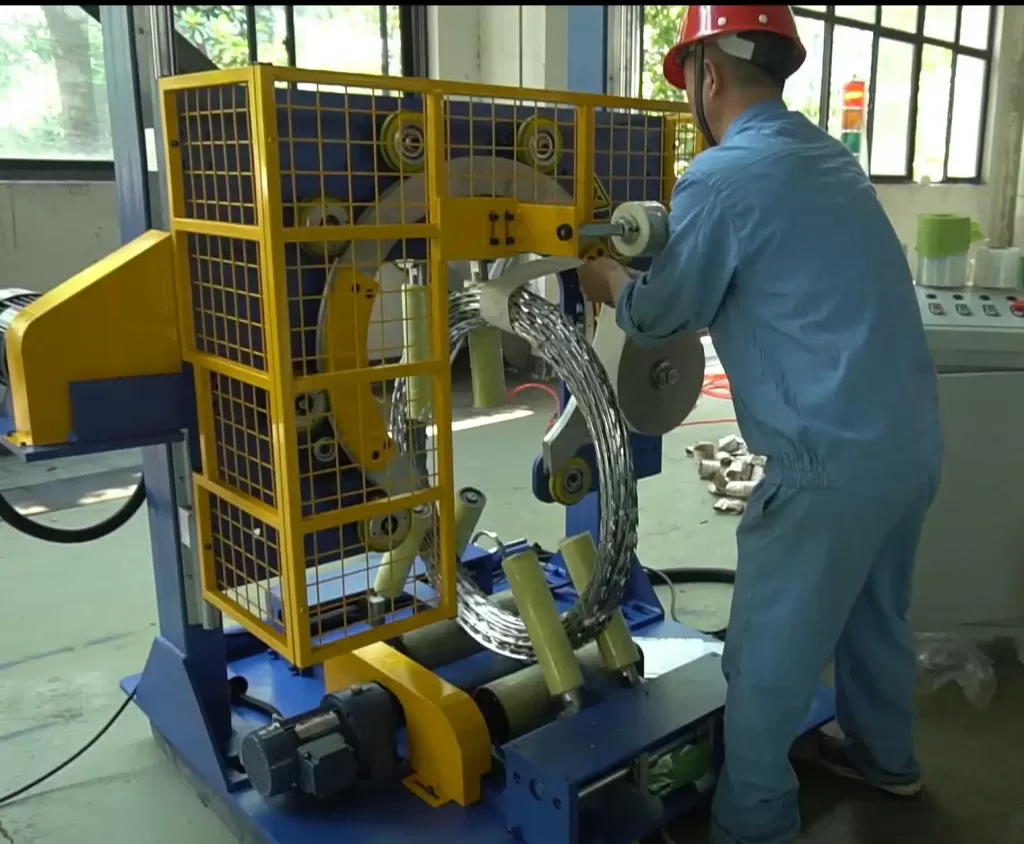
When I started FHOPEPACK, my goal was to help businesses grow. I achieved financial independence thanks to the packing machine industry. I saw how smart investments in the right equipment could truly change a company’s future. Now, I want to share that knowledge. The benefits of automated packing go beyond just saving money on labor.
Quantifiable ROI Metrics
Let’s look at the numbers and other benefits:
A. Direct Cost Savings
- Labor Costs: This is often the biggest saving. One automated machine can do the work of several manual laborers. This means fewer people are needed for the packing line.
- Example: If a factory uses 5 workers for manual packing per shift, and a machine replaces 4 of them, the labor cost savings are huge.
- Material Waste: Automated machines use wrapping material very efficiently. They apply it evenly, with minimal overlap or waste. Manual wrapping often results in more wasted film or paper.
- Reduced Product Damage Costs: Fewer damaged coils mean fewer customer returns, fewer claims, and less material scrap. This directly boosts profits.
- Lower Insurance Premiums: As worker safety improves and injuries decrease, insurance costs go down.








