
How Orbital Wrapping Machines Support UAE PVC Pipe and Conduit Producers?
Are you a PVC pipe or conduit producer in the UAE struggling with slow packing times and high labor costs? Many factory managers I talk to face these exact problems. The constant pressure to meet demand, control expenses, and ensure product quality often clashes with outdated, manual packing processes. This struggle hits hard, affecting everything from your bottom line to worker morale.
Orbital wrapping machines offer a powerful solution for UAE PVC pipe and conduit producers by automating the packaging process. They increase efficiency, enhance product protection, significantly improve worker safety, and cut down on labor costs. These machines wrap long, bulky products securely, which is crucial for the harsh environments and demanding logistics common in the UAE.

Understanding how these machines truly transform operations requires looking past just the initial investment. It is about seeing the long-term gains. Let me walk you through how orbital wrapping technology can tackle the specific challenges faced by businesses like yours in the UAE, drawing from my own years of experience in the packing machine industry.
Addressing UAE PVC Pipe Producers’ Manual Packing Bottlenecks?
Do your current packing methods slow down your entire production line? Many factories, especially in the growing UAE market, see their PVC pipe and conduit output limited by how fast they can get products ready for shipment. Manual wrapping is not just slow; it creates a bottleneck that prevents your facility from reaching its full potential, no matter how efficient your manufacturing process is upstream.
Manual packing often creates severe efficiency bottlenecks for UAE PVC pipe and conduit producers because it is labor-intensive and inconsistent. Orbital wrapping machines directly solve this by automating the wrapping process. They apply stretch film rapidly and uniformly around long products, which drastically cuts packing time and integrates smoothly into continuous production flows.
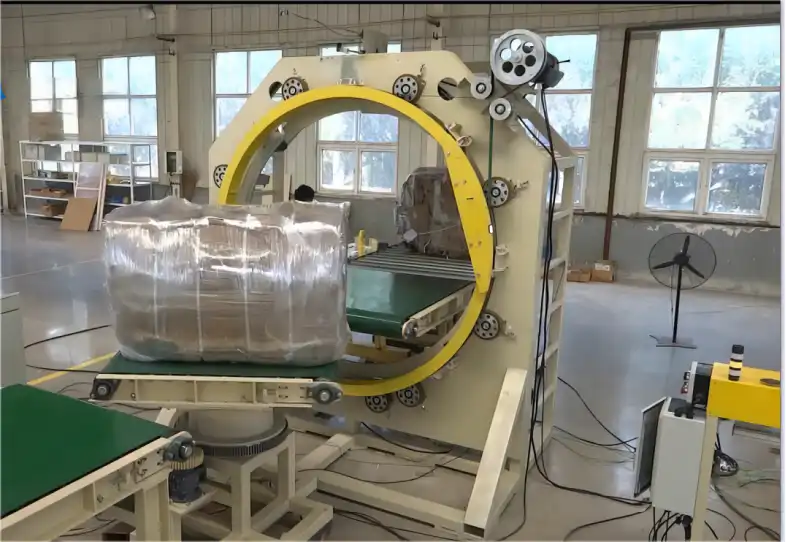
From my own journey, from an employee on the factory floor to owning a successful packing machine business, I have witnessed countless times how manual processes hold back companies. In the UAE, where demand for construction materials is high, speed and reliability are paramount. An orbital wrapper means you can move more products, faster. This directly translates to quicker deliveries and happier clients. It also frees up your skilled workers to focus on tasks that truly need human intelligence, instead of repetitive, exhausting wrapping. I have helped many clients grow their businesses by identifying and fixing these exact bottlenecks. We introduced solutions that did not just speed things up, but also brought a new level of consistency and quality to their operations.
How Automated Wrapping Boosts Production Flow?
Automated orbital wrapping machines bring several key advantages to the production floor. They remove the human element from the core wrapping task. This means less variability and more predictable output. For instance, imagine a machine that can wrap a bundle of PVC pipes in minutes. A team of workers might take much longer, and their speed could vary throughout the day.
- Consistent Speed: Machines work at a steady pace. They do not get tired or distracted. This ensures a constant flow of wrapped products. This consistency is vital for planning and scheduling deliveries.
- Reduced Labor Dependency: You need fewer workers dedicated to the physical act of wrapping. This helps with labor shortages. It also means you can reallocate staff to other valuable roles.
- Integration with Production Lines: Orbital wrappers can connect directly with existing conveyor systems. This creates a seamless flow from manufacturing to packaging. There is no stopping and starting.
- Improved Output Volume: By eliminating manual bottlenecks, your overall factory output can increase significantly. This helps meet tight deadlines and large orders. This is especially true for the fast-paced construction sector in the UAE.
Let us look at a comparison:
| Feature | Manual Packing | Orbital Wrapping Machine |
|---|---|---|
| Speed | 🐢 Slow and variable | 🚀 Fast and consistent |
| Labor Cost | 💰 High (multiple workers needed) | 👇 Low (minimal operator interaction) |
| Consistency | 🤷♀️ Prone to human error, uneven wraps | ✨ Uniform tension, perfect wrap every time |
| Integration | 🚧 Often a standalone, disruptive process | 🔄 Easily integrated into continuous lines |
| Throughput | 📉 Limited by worker endurance | 📈 High volume, continuous operation |
| Product Safety | 😥 Risk of worker injury during handling | ✅ Safer operation, less direct product contact |
By understanding these points, you can see the clear benefits. Automation is not just about replacing people. It is about optimizing the entire process. It makes your operations more robust and ready for growth.
Improving Worker Safety in UAE Conduit Packaging Operations?
Is your factory still relying on workers to manually handle and wrap heavy, awkward bundles of conduits? This outdated method puts your employees at high risk for injuries. Think about back strains, pinched fingers, or even more serious accidents from dropping heavy items. These safety issues are not just a moral concern; they lead to high insurance costs, lost workdays, and a high employee turnover.
Orbital wrapping machines dramatically improve worker safety in UAE conduit packaging operations by minimizing the need for manual handling of heavy or bulky products. They secure the load automatically. This removes the physical strain and injury risks associated with bending, lifting, and repetitive wrapping motions. It creates a much safer work environment.

I remember early in my career, seeing firsthand the toll that physically demanding jobs took on factory workers. It was a constant source of worry. When I started my own factory, safety was always a top priority for me. I wanted to create an environment where my team felt secure and valued. Implementing automated solutions like orbital wrappers was a key part of that vision. It is not just about machines doing the work; it is about protecting the people who contribute to your business every day. Michael Chen’s concerns about safety resonate deeply with me because I have lived through those challenges. I know the cost of an accident goes far beyond a single insurance claim. It impacts morale, productivity, and the reputation of your company. Investing in safety is investing in your people and your future.
How Automation Reduces Workplace Hazards?
Automation, particularly with orbital wrapping machines, brings fundamental changes to the factory floor. These changes drastically reduce the exposure of workers to common industrial hazards. The design of these machines focuses on moving the hazardous work away from human hands.
- Elimination of Manual Lifting: Workers no longer need to lift heavy bundles of pipes or conduits. These products are usually moved onto the machine via conveyors or forklifts. The machine then handles the wrapping. This removes the risk of back injuries, strains, and sprains.
- Reduced Repetitive Motions: Manual wrapping involves constant bending, twisting, and reaching. These motions can lead to musculoskeletal disorders over time. Orbital wrappers perform these repetitive tasks. This protects workers from long-term health issues.
- Distance from Moving Parts: Modern machines have safety features like interlocks and emergency stop buttons. They keep workers safely away from the rotating wrapping arm during operation. This prevents contact with fast-moving machinery.
- Stable Loads: The machine securely holds the product during wrapping. This prevents accidental shifts or drops. These can be dangerous for workers nearby. A stable product means a safer environment.
Here is a quick look at the impact on safety metrics:
| Safety Metric | Manual Packing | Orbital Wrapping Machine |
|---|---|---|
| Ergonomic Strain | 🏋️♀️ High (lifting, bending, repetitive) | ✅ Low (operator supervises) |
| Accident Risk | 🚨 Significant (drops, pinches, strains) | 🛡️ Minimal (automated, guarded) |
| Workplace Injuries | 🤕 Frequent (back, shoulder, hand) | 📉 Dramatically reduced |
| Insurance Premiums | 📈 Likely higher | 📉 Potential for lower premiums |
| Employee Morale | 😔 Can be low due to physical demands | 😊 Improved due to safer, less strenuous work |
By making these improvements, you are not just buying a machine. You are investing in a safer, more sustainable workplace. This builds trust with your employees. It also strengthens your company’s commitment to responsible operations.
Protecting PVC Pipes and Conduits from Damage During Transit?
Have you ever had a customer complain about damaged goods upon arrival? For UAE PVC pipe and conduit producers, even minor scratches or dents can lead to rejected shipments, costly reworks, and lost profits. Inadequate packaging exposes your products to the rigors of handling, storage, and transportation. This is especially true given the long distances and varied conditions often found in the supply chains here.
Orbital wrapping machines offer superior product protection for PVC pipes and conduits by applying a tight, uniform, and multi-layered stretch film. This robust wrapping shields products from dust, moisture, and impact damage during internal transfer, storage, and long-distance transit. It reduces costly product loss and enhances customer satisfaction.

I have always emphasized to my clients that the product is not truly finished until it reaches the customer in perfect condition. I have seen businesses lose valuable contracts simply because of preventable transit damage. In my factory, we learned that the packaging is an extension of the product’s quality. A damaged edge on a steel coil, or a scuffed PVC pipe, reflects poorly on the manufacturer. It does not matter how well it was made. Investing in good packaging is not an expense; it is a critical part of quality control and brand protection. It shows your clients you care about every detail, from manufacturing to delivery. This attention to detail builds trust and repeat business.
How Effective Wrapping Prevents Product Loss?
The protective qualities of orbital wrapping go beyond just keeping things together. The stretch film creates a barrier that safeguards the product in several ways. This is crucial for maintaining quality and preventing financial losses.
- Physical Barrier: The multiple layers of stretch film form a durable outer shell. This protects against scratches, abrasions, and minor impacts. These can occur during forklift handling or stacking.
- Environmental Protection: The film also creates a seal against dust, dirt, and moisture. This is especially important for products stored outdoors or transported in varying weather conditions. The arid and sometimes humid climate of the UAE makes this protection vital.
- Load Stability: The tight wrap secures the individual pipes or conduits together into a single, stable unit. This prevents shifting or friction between items. This movement often causes scuffing or breaking during transit.
- Customizable Wrap Tension: Orbital wrappers allow you to adjust the film tension. You can choose the right level of protection for different product types. This ensures optimal security without over-packaging.
Consider the potential for damage reduction:
| Damage Factor | Manual Wrapping (Typical) | Orbital Wrapping Machine (Typical) |
|---|---|---|
| Scratch/Abrasion | 😥 High risk | ✅ Low risk (multi-layer film) |
| Moisture Exposure | 💧 Moderate to High (gaps, loose wraps) | 🚫 Very Low (tight, sealed wrap) |
| Impact Damage | 💥 Moderate (if not tightly secured) | 🛡️ Low (stable, cushioned load) |
| Dust/Dirt Ingress | 🌬️ High | 🚯 Minimal |
| Load Shifting | ↔️ Common during transport | 🔒 Rare (unitized load) |
| Customer Complaints | 📉 Higher frequency | 📈 Significantly lower frequency |
By ensuring your products arrive in pristine condition, you build a stronger reputation. You also avoid the costs associated with damaged returns or customer claims. This makes orbital wrapping a smart investment for any producer.
Achieving Tangible ROI with Automated Wrapping Solutions in the UAE?
Are you hesitant about the upfront cost of automating your packaging? Many factory managers, like Michael Chen, need to see a clear return on investment (ROI) before committing to new equipment. Without a solid financial justification, it is hard to make a business case for upgrading from existing, even if inefficient, manual processes. You need to know that this investment will pay off.
Orbital wrapping machines offer a tangible and often rapid ROI for UAE PVC pipe and conduit producers by significantly reducing operational costs and improving efficiency. They cut down on labor expenses, minimize material waste, decrease product damage, and boost throughput. These combined savings quickly outweigh the initial investment, leading to greater profitability.
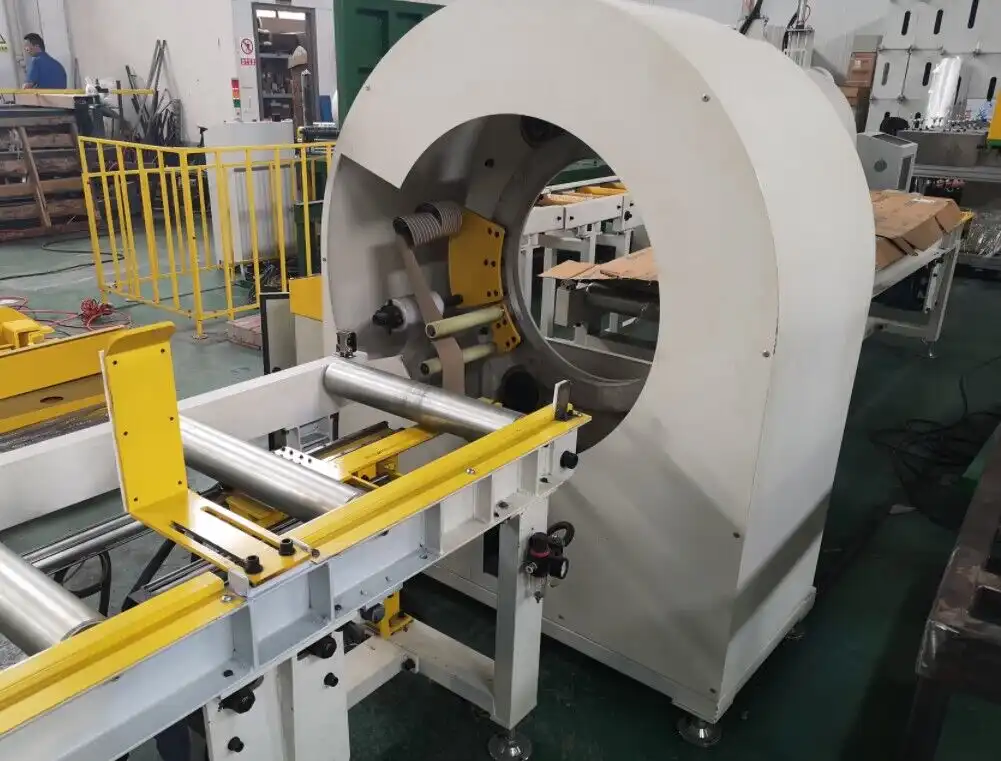
When I was building my packing machine factory, every investment had to make financial sense. I learned that the true cost of doing business is not just what you spend, but also what you lose by not optimizing. I have helped many clients analyze their current packing costs versus the benefits of automation. It is not just about the machine price. It is about how much you save on wages, on wasted film, on damaged goods, and even on insurance premiums due to fewer accidents. These savings add up very quickly. My goal is always to help businesses see this bigger picture, ensuring their investments truly drive growth and financial independence, just as they did for me.
Calculating Your Return on Investment for Orbital Wrappers?
Calculating ROI for an orbital wrapper involves looking at both direct and indirect savings. It is a comprehensive financial analysis. This helps justify the capital expenditure.
- Labor Cost Savings:
- Identify how many workers are currently involved in manual wrapping.
- Estimate the reduction in labor hours or number of personnel required after automation.
- Calculate the annual wage savings, including benefits.
- Example: Replacing 2 full-time wrappers (each earning AED 5000/month) saves AED 120,000 annually.
- Material Cost Optimization:
- Automated machines use stretch film more efficiently. They apply consistent tension and fewer layers might be needed.
- Manual wrapping often leads to over-wrapping or wasted film.
- Calculate savings from optimized film usage.
- Example: 10% reduction in film usage on AED 100,000 annual film cost saves AED 10,000.
- Reduced Product Damage Costs:
- Estimate the current value of products damaged during packing or transit.
- Automated wrapping significantly reduces this.
- Calculate savings from fewer damaged goods and customer returns.
- Example: Reducing 5% product damage from AED 2,000,000 annual output saves AED 100,000.
- Increased Throughput and Revenue:
- Faster packing times mean you can produce and ship more.
- Quantify the potential increase in sales volume due to improved efficiency.
- Example: 15% increase in production capacity leading to AED 300,000 additional revenue (after cost of goods sold).
- Safety and Insurance Benefits:
- Fewer workplace injuries lead to lower medical costs and potentially reduced insurance premiums.
- Though harder to quantify directly, these are significant indirect savings.








