
How a Steel Processing Plant in USA Achieved 40% Efficiency Gain with Automated Pallet Inversion
1. Customer Background (Why)
Client: Major Midwest steel service center processing coils for automotive and appliance manufacturers
Industry Position: Tier-1 supplier to Fortune 500 manufacturers
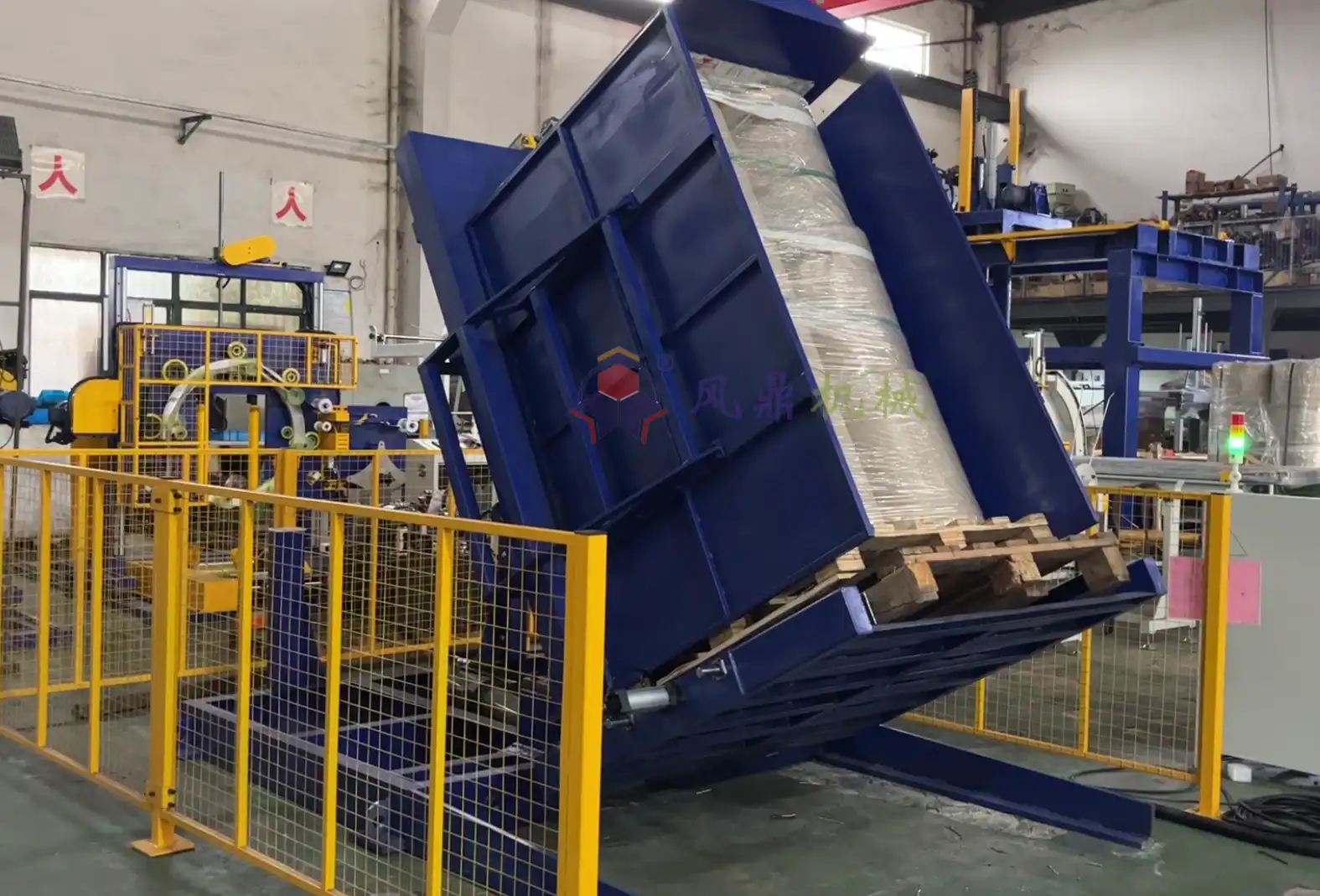
Production Context: Manual pallet transfer operations handling 5-15 ton steel coils
Search Drivers: “automated pallet handling solutions,” “steel coil packaging automation,” “reduce manual pallet handling injuries”
Primary Objectives:
- Eliminate manual handling of heavy coils between processes
- Standardize packaging quality across shifts
- Achieve 24/7 production capability without labor constraints
2. Customer Pain Points
| Pain Point Category | Specific Impact |
|---|---|
| Efficiency Loss | 15-minute manual transfers between processing and packaging |
| Labor Intensity | 3-person team required for coil repositioning operations |
| Safety Risks | OSHA recordable incidents from manual coil handling |
| Quality Variance | Inconsistent packaging alignment affecting shipment integrity |
| Production Volatility | 22% throughput variation between day and night shifts |
3. FHOPEPACK Solution (How)

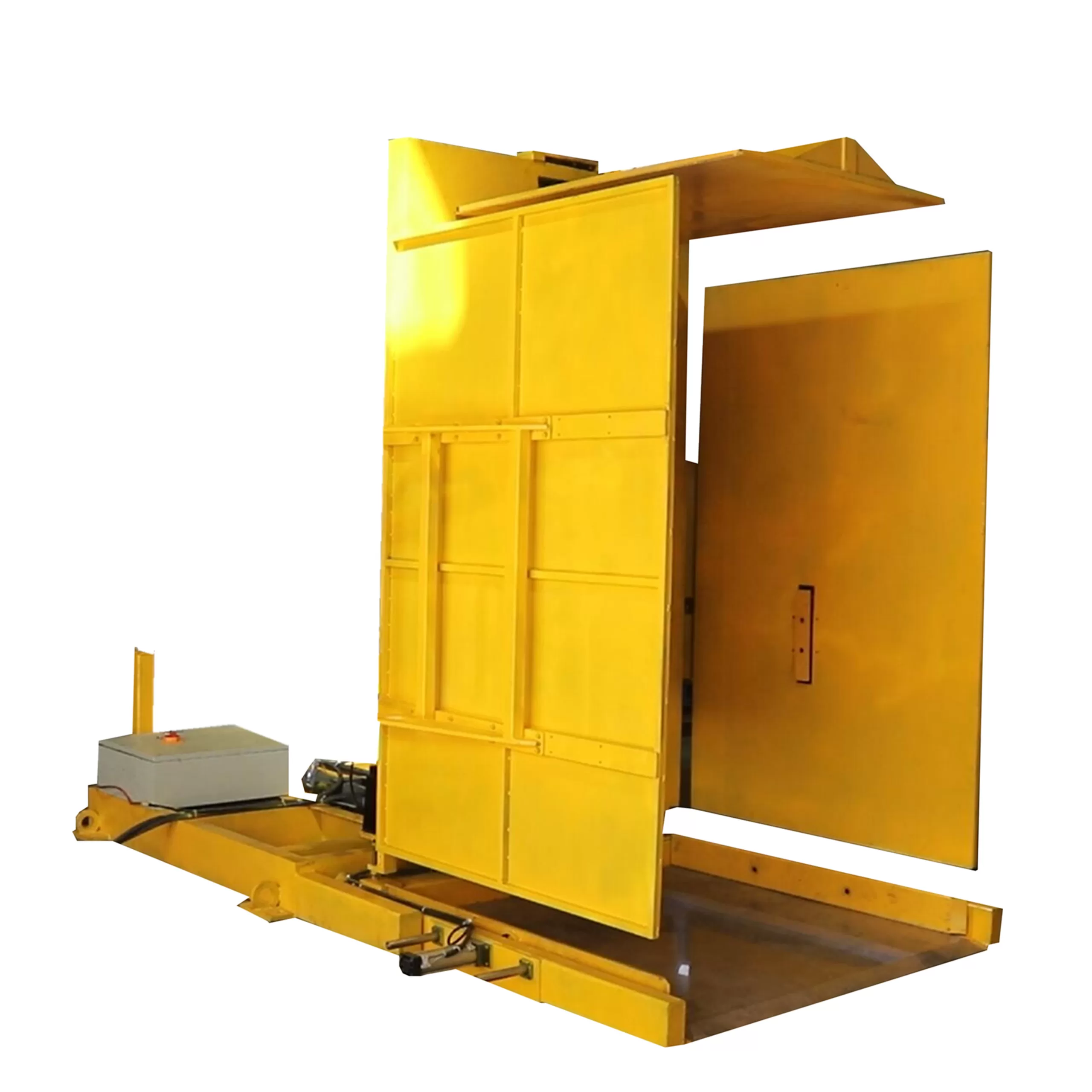
Equipment Provided: FHOPEPACK FPC-1500 Heavy-Duty Pallet Inverter
Technical Configuration:
- 1500kg capacity with hydraulic clamping system
- 360-degree rotation capability with ±1° positioning accuracy
- PLC-controlled automation with HMI interface
- Laser alignment sensors for precise coil positioning
Customization Elements:
- Extended fork length for oversized coil handling
- Integrated safety curtains and emergency stop systems
- Compatibility with existing conveyor infrastructure
- Weather-resistant components for semi-outdoor installation
Automation Workflow:
- Automatic coil recognition via proximity sensors
- Programmable rotation sequences for different coil types
- Self-diagnostic system with predictive maintenance alerts
- Production data logging for traceability
4. Implementation Process

Phase 1: Technical Assessment (Week 1-2)
- Site survey of existing material flow patterns
- Load testing and structural analysis
- Integration mapping with current packaging line
Phase 2: System Configuration (Week 3-4)
- CAD modeling of installation layout
- PLC programming for specific coil handling sequences
- Safety system integration planning
Phase 3: Factory Acceptance (Week 5)
- Full operational testing with simulated loads
- Operator interface validation
- Maintenance team training sessions
Phase 4: Site Commissioning (Week 6)
- 3-day installation during planned maintenance window
- 48-hour continuous operation validation
- Performance sign-off against agreed KPIs
5. Quantifiable Results & ROI
| Metric | Before Implementation | After Implementation | Improvement |
|---|---|---|---|
| Transfer Time | 15 minutes/coil | 3 minutes/coil | 80% reduction |
| Labor Requirement | 3 operators | 0.5 operator | 83% reduction |
| Packaging Consistency | 72% within spec | 98% within spec | 26% increase |
| Safety Incidents | 3 per quarter | 0 per quarter | 100% improvement |
| Production Stability | ±22% shift variance | ±5% shift variance | 77% improvement |
| Monthly Throughput | 850 coils | 1,190 coils | 40% increase |
6. Client Testimonial
John Martinez, Production Engineering Manager:
“The automated pallet inversion system transformed our material handling workflow. We’ve eliminated the most dangerous manual operation in our plant while achieving production consistency we couldn’t maintain with variable crew experience levels. The system’s reliability has allowed us to confidently schedule 24/7 operations knowing packaging quality won’t fluctuate between shifts.”
7. Conclusion
This implementation demonstrates FHOPEPACK’s expertise in industrial automation solutions for heavy manufacturing environments. The customized pallet inverter solution addressed specific challenges in steel coil handling while delivering measurable operational improvements. Our engineering approach focuses on integrating robust automation technology that adapts to existing production environments across multiple industries including metals, building materials, and industrial components.
For operations handling heavy coils, panels, or other difficult-to-manage materials, the right automation strategy can simultaneously address safety concerns, labor constraints, and quality consistency. The pallet inverter technology deployed in this application represents one of several material handling solutions adaptable to various production requirements and regional operational standards across North America, Europe, and Middle East manufacturing facilities.








