

How Does Integration with MES/ERP Optimize Coil Upender Throughput for Turkish Plants?
In many Turkish metal processing plants, managers face a big problem. Old ways of handling heavy steel coils and wires are slow. They cost a lot of money. They also put workers at risk. These problems slow down the whole factory. They make it hard to meet production goals. This situation can lead to lost profits and unhappy customers.
Integrating coil upenders with MES (Manufacturing Execution Systems) or ERP (Enterprise Resource Planning) systems directly fixes these issues. It makes the entire material handling process much faster and more accurate. This integration allows real-time data exchange. It automates critical steps. It greatly reduces manual errors and improves safety. This leads to significantly higher throughput for Turkish plants.
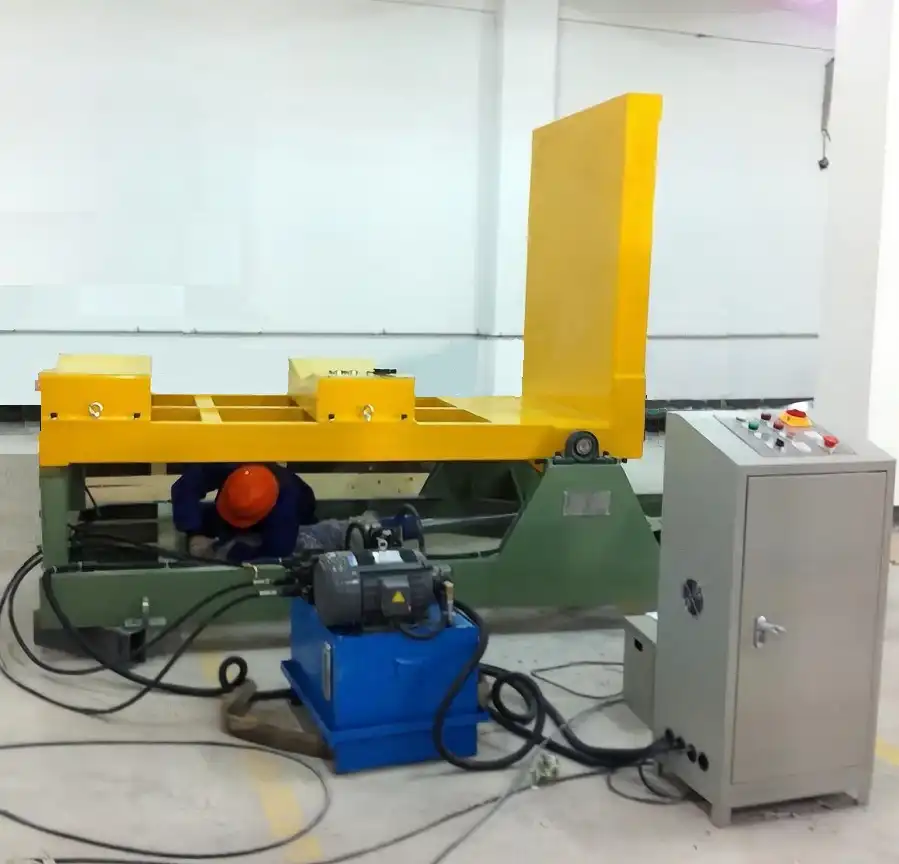

It is clear that just buying a new machine is not enough. The real power comes from making all systems work together. We need to look deeper into how MES/ERP integration with coil upenders can change your factory. It can help solve those tough production, safety, and cost problems you face every day.
How Does MES/ERP Integration Work with Coil Upenders?
Are your current coil handling processes disconnected? Do different systems not talk to each other? This can create big data gaps. These gaps lead to mistakes and delays. They make it hard to know what is truly happening on your factory floor. It feels like flying blind.
MES/ERP integration with coil upenders means connecting the upender machine directly to your factory’s central management systems. This link allows information to flow instantly. It sends data about coil status, movement, and position right to your ERP or MES. This ensures that every part of your operation knows what the upender is doing. It also tells the upender what to do next.


For Turkish plants, understanding this connection is key. It is not just about having a machine. It is about making that machine part of a smarter factory. This integration brings many benefits. It makes planning better. It helps track production in real time. It ensures that the right coil is always in the right place at the right time.
Understanding the Data Flow in an Integrated System
When we talk about integration, we mean linking the upender’s controls to the broader factory software. This is a crucial step for any modern Turkish manufacturing plant. Imagine your ERP system holds all customer orders. It has details on the type of steel coil needed. It knows the exact specifications. Without integration, someone would manually take this information. They would then tell the upender operator what to do. This takes time. It opens the door for human error.
With integration, the ERP or MES system sends direct commands to the coil upender. For example, the ERP system might tell the upender:
- “Rotate coil number 123 from horizontal to vertical.”
- “Move coil number 456 to packing station B.”
- “Record that coil 789 was just inverted.”
The upender then performs the task. After finishing, it sends a confirmation back to the MES/ERP system. This update is instant. The system knows the exact status of every coil. This real-time data is powerful. It allows factory managers in Turkey to see everything. They can track inventory. They can monitor work progress. They can make better decisions quickly.
Consider a large metal processing plant in Izmir. They produce many types of steel coils. Each coil has a specific production path. Some need to be flipped for wrapping. Others need to be upright for transport. With manual processes, tracking each coil is a nightmare. Workers might lose track. Coils might go to the wrong place. This causes delays and rework. It costs money.
An integrated system changes this. The MES system knows the entire production schedule. It coordinates the upender with other machines. It ensures a smooth flow. This means fewer bottlenecks. It means coils move through the plant faster. It leads to higher overall output. This is a big win for any Turkish factory. It helps them stay competitive. It makes their operations much more efficient. It also helps reduce waste.
Can This Integration Really Boost Throughput in Turkish Steel Mills?
Are your steel mill operations moving too slowly? Do you see piles of coils waiting to be processed? This is a common sign of throughput problems. It means you are not getting as much product out as you could. This directly hurts your bottom line. It limits your factory’s growth potential.
Yes, this integration can significantly boost throughput in Turkish steel mills. It does this by removing manual bottlenecks. It improves flow. It speeds up the entire handling and packing process for coils. This means more finished products leave your factory faster. It allows you to take on more orders. It makes your plant more productive overall.
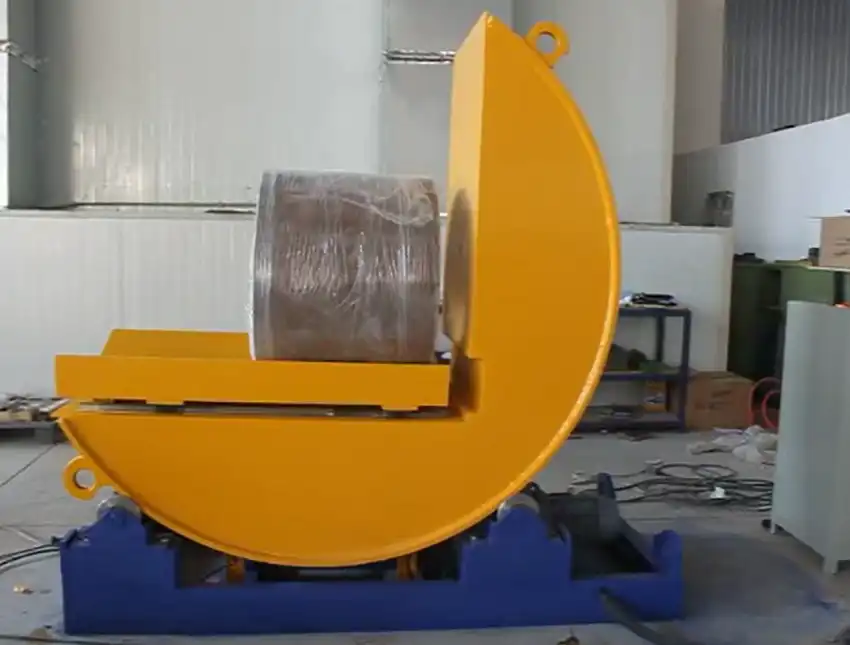

For steel mills in Turkey, where demand is high, faster throughput means staying ahead. It means fulfilling orders quickly. It means a stronger position in the market. This is a direct path to higher profits. It makes your factory more resilient.
How Integrated Upenders Accelerate Production Lines
Boosting throughput is all about making every step faster and more reliable. In a Turkish steel mill, handling heavy coils is a critical part of the process. If this step is slow, everything else slows down too. An integrated coil upender directly tackles this.
Think about a typical production line for steel coils.
- Coil Production: The coil is finished and cooled.
- Initial Transfer: It moves to a staging area.
- Upending/Tilting: It needs to be flipped for packing or storage. This is where the upender comes in.
- Packing: The coil is wrapped.
- Shipping: It is loaded for delivery.
In a manual system, each of these steps often involves human communication. A worker might check a spreadsheet. They might call another department. Then, they tell an operator to move or flip a coil. This process is prone to delays. The upender might sit idle waiting for instructions. Or it might process the wrong coil.
With MES/ERP integration, this changes completely. The system already knows the next coil in line. It knows its exact requirements. It automatically sends the command to the upender. The upender gets the instruction and acts immediately. This eliminates waiting time. It removes the risk of human error in instructions.
Consider a steel mill near Bursa. They produce thousands of tons of coiled steel wire each month. They used to rely on manual scheduling for their upenders. This led to queues of coils waiting. It created bottlenecks. Workers spent time coordinating instead of working. After integrating their upenders, they saw a dramatic change. The flow of coils became smooth. The upenders never waited for instructions. They processed coils back-to-back.
This increased speed impacts the whole plant. Faster upending means coils move to packing quicker. Faster packing means coils move to shipping quicker. The entire chain speeds up. This directly increases the total volume of finished product that the factory can produce in a day or a week. This is what we call improved throughput. It is a vital measure for any successful Turkish steel operation. It directly leads to more output and better business.
How Does It Improve Safety and Reduce Product Loss?
Are your workers constantly at risk when handling heavy coils? Do you often see damaged product due to manual handling or poor equipment? These issues are not just costly. They are also serious safety hazards. They can lead to injuries and lost profits. Ignoring them is not an option.
Integrating coil upenders with MES/ERP greatly improves worker safety. It reduces the need for manual heavy lifting. It also cuts down on product damage during handling. The system guides the upender precisely. This minimizes human intervention with heavy loads. It also ensures coils are handled correctly.


For Turkish manufacturers, this means fewer accidents. It means lower insurance costs. It means a safer workplace for your team. It also means less waste from damaged goods. This protects your reputation. It boosts your factory’s efficiency.
Safeguarding Workers and Product Quality Through Automation
Manual handling of heavy coils is dangerous. Workers can suffer sprains, crushing injuries, or worse. Michael Chen, a factory manager, knows this well. His team faces high risks daily. Michael also mentioned product damage during transit. This leads to customer complaints and financial losses. These are common problems in many Turkish heavy industries.
MES/ERP integration helps fix these problems.
- Reduced Manual Intervention: When the system tells the upender what to do, workers do not need to be as close to the heavy load. They control the machine from a safe distance. The upender performs the heavy, risky work. This greatly lowers the chance of accidents. It makes the workplace safer.
- Precision and Consistency: The integrated system ensures the upender operates with high precision. It knows the exact dimensions and weight of the coil. It applies the correct force. It moves the coil smoothly. This careful handling prevents damage to the coil’s edges or surface. For valuable steel coils, even small damages can mean big losses. It means the coil might be rejected. It might be sold at a lower price.
- Automated Tracking: The system tracks each coil’s movement. It logs its condition before and after upending. If a coil is damaged, the system knows when and where it happened. This helps identify issues in the process. It improves accountability. It ensures quality control.
Consider a factory in Adana that processes large steel coils. Before integration, workers manually guided coils onto the upender. They used overhead cranes. This was slow. It was also risky. There were near misses with swinging loads. Coil edges sometimes scraped against surfaces. This caused defects. After integrating their upender, the system took over. The upender positioned the coils perfectly every time. This reduced physical effort for workers. It almost eliminated product damage.
This shift to automation is a huge step forward for safety. It means fewer work-related injuries. This reduces insurance premiums. It also boosts employee morale. Workers feel safer. They are more productive. Reducing product loss also saves money directly. It improves customer satisfaction. This builds trust. It strengthens the factory’s reputation in Turkey. It is a clear win-win situation for any plant manager.
What is the Return on Investment for Turkish Manufacturers?
Are you unsure if investing in new technology is worth it? Do you worry about the high upfront costs? Many Turkish manufacturers face this question. They want to know if a new system will truly pay for itself. They need clear proof of financial benefits.
The return on investment (ROI) for MES/ERP integrated coil upenders is significant for Turkish manufacturers. It comes from multiple areas. These include lower labor costs, reduced material waste, increased production capacity, and improved safety. These benefits quickly add up. They lead to a faster payback period for your initial investment.
For factory managers like Michael Chen, proving ROI is essential. It is how you get approval for new projects. It shows that your decisions are smart. It shows that they will bring real value to the business.
Calculating the Value of Smart Upender Integration
Calculating ROI means looking at how much you save and earn versus how much you spend. For an integrated coil upender, the benefits are clear.
Let’s break down the typical cost savings and revenue gains:
1. Reduced Labor Costs:
- Problem: Manual coil handling needs many workers. It involves overtime. It has high training costs.
- Solution: Automation reduces the number of workers needed for upending. It frees them for other tasks. It lowers overtime pay.
- ROI Impact: Direct savings on salaries and benefits.
2. Decreased Product Damage:
- Problem: Damaged coils mean scrapped product. It means rework. It means customer complaints and lost sales.
- Solution: Precise automated handling prevents damage. It maintains coil quality.
- ROI Impact: Fewer scrapped products. More sellable coils. Better customer satisfaction. This leads to higher profits.
3. Increased Throughput (Production Capacity):
- Problem: Bottlenecks at the upending stage limit overall factory output.
- Solution: Faster, continuous operation of the upender increases the number of coils processed per hour or day.
- ROI Impact: Ability to fulfill more orders. Higher sales volume. More revenue.
4. Improved Safety (Lower Insurance & Absenteeism):
- Problem: Frequent accidents lead to high insurance premiums. They also cause worker absenteeism. This disrupts production.
- Solution: Automated systems reduce human exposure to danger. This leads to fewer accidents.
- ROI Impact: Lower insurance costs. Less downtime due to injuries. A more stable workforce. This improves overall productivity.
5. Better Data for Decision-Making:
- Problem: Lack of real-time data makes planning difficult. It leads to inefficiencies.
- Solution: MES/ERP integration provides instant, accurate data on production.
- ROI Impact: Better inventory management. Smarter production scheduling. Faster responses to market changes. This optimizes resource use.
Consider a medium-sized metal factory in Gaziantep. They manually moved 50 coils a day. Their labor cost for this task was significant. They also lost about 2-3 coils a week due to damage. By investing in an integrated upender, they cut labor by 50% in that area. They reduced damaged coils to almost zero. They also increased their daily output to 70 coils. The initial investment might seem large. However, these savings and gains quickly add up. They often lead to a full payback within 1-3 years. After that, it is all profit. This makes it a very attractive investment for any Turkish manufacturer looking to grow.
What Have I Learned About Choosing the Right Partner for This Technology?
Have you dealt with equipment suppliers who only care about selling you a machine? Do they disappear once the sale is done? This is a common problem. It leaves you without support. It makes you hesitant to trust new vendors. You need a real partner.
Through my journey from a packing machine engineer to building my own successful factory, I learned a crucial lesson: finding the right partner is more important than just buying a machine. A true partner understands your factory’s unique problems. They offer insights. They provide reliable solutions. They do not just sell. They help you succeed in the long run.
This is what FHOPEPACK stands for. We built our name by helping clients grow. My experience in the coil packing and steel wire packing industry taught me the value of true collaboration. I want to share that knowledge. I want to help you avoid the pitfalls I have seen.
My Insights on Finding a Reliable Technology Partner
When I started as an engineer, I saw firsthand how much a good machine meant to a factory. But I also saw how a lack of support or a misunderstanding of the factory’s real needs could turn a good machine into a problem. Later, when I built my own packing machine factory, this became even clearer. My success, and the success of many of my clients, came not just from selling machines, but from solving their core challenges. Michael Chen’s concerns about supplier trust resonate deeply with me. It is a big issue.
Here is what I believe factory managers in Turkey should look for in a partner for MES/ERP integrated upenders:
1. Deep Industry Knowledge:
- What to Look For: Does the supplier truly understand steel processing? Do they know about coil handling challenges? Can they speak your language about production bottlenecks?
- Why It Matters: A knowledgeable partner will not just offer a generic product. They will offer a solution designed for your specific needs. They will anticipate problems. They will guide you.
2. Proven Integration Experience:
- What to Look For: Ask for examples of past MES/ERP integration projects. Can they show how their upenders connected with different factory systems? Do they have engineers who understand software as well as hardware?
- Why It Matters: Integration is complex. You need a supplier who has done it before. They must ensure a smooth link between your new upender and your existing systems. Without this, the full benefits of automation cannot be realized.
3. Strong After-Sales Support:
- What to Look For: What kind of warranty do they offer? What about technical support? Do they have local service teams or quick response times for remote assistance?
- Why It Matters: Machines need maintenance. Problems can happen. You need a partner who will be there when you need them. Poor support means downtime. Downtime means lost money. This is especially true for Turkish factories that run 24/7.
4. Focus on ROI and Problem-Solving:
- What to Look For: Does the supplier ask about your specific challenges (e.g., safety risks, product damage, manual labor costs)? Do they talk about how their solution will save you money and increase your output?
- Why It Matters: A good partner sees themselves as an extension of your team. They want to help you achieve your business goals. They focus on the value their solution brings, not just the features of the machine.
5. Long-Term Relationship Building:
- What to Look For: Do they seem interested in a one-time sale or a long-term partnership? Are they willing to adapt solutions as your needs change?
- Why It Matters: Technology evolves. Your factory’s needs will change. A long-term partner will grow with you. They will provide ongoing insights and upgrades.
My own experience taught me that true partnership is about trust and shared goals. When you invest in advanced technology like MES/ERP integrated coil upenders, you are not just buying equipment. You are investing in your factory’s future. Choose a partner who has been there, who understands the journey, and who is committed to your success.
Conclusion
Integrating coil upenders with MES/ERP systems significantly boosts throughput, improves safety, and increases ROI for Turkish plants. It transforms operations, making them smarter, safer, and more profitable.












