
How Does Energy-Efficient Hydraulic Technology Reduce Costs for German Plants?
Are you a factory manager watching your energy bills climb higher each month? Do you worry about inefficient processes slowing down your production lines and eating into your profits? Many operations in Germany, and around the world, face these exact struggles. The pressure to cut costs while boosting output is constant.
Energy-efficient hydraulic technology directly addresses these challenges by lowering power consumption, reducing maintenance needs, and improving overall operational efficiency. It helps German plants achieve significant cost savings by optimizing how machinery uses power, leading to lower utility bills and extended equipment life.
The good news is that solutions exist. These solutions are not just about buying new machines; they are about adopting smarter, more sustainable ways to run your plant. Let us explore how intelligent hydraulic systems can transform your factory’s bottom line.
How Can Modern Hydraulics Combat Rising Energy Prices?
Are your current machines draining more power than they should? Is the rising cost of electricity putting a strain on your factory’s budget? Many traditional hydraulic systems use a lot of energy, even when they are not doing heavy work. This constant power draw adds up quickly, especially in countries like Germany where energy costs can be high.
Modern hydraulic systems use smart controls and variable speed pumps to adjust power output precisely to the task at hand. This means the system only consumes the energy it truly needs, dramatically cutting down on wasted electricity and lowering your overall energy bills.

When I first started my packing machine factory, I quickly realized that energy consumption was a huge factor in operating costs. We had to find ways to make our machines work harder and smarter without running up huge electricity bills. This is where efficient hydraulic design became a game-changer. We looked at how traditional systems wasted power. They often ran at full capacity even during idle times. This was like keeping a car engine revving high when it was stuck in traffic.
Modern systems use technologies like variable frequency drives (VFDs) and servo motors to match power output to the actual load. This greatly reduces energy waste. For example, if a machine needs less force, the pump slows down. If it needs more force, the pump speeds up. This dynamic adjustment is key. It ensures the system is not just “on” or “off.” It is instead continuously optimizing. This level of control means less heat generated, which also reduces the need for cooling. Less cooling means even more energy savings. When I was building my business, this focus on efficiency helped us stay competitive. It allowed us to offer better value to our clients, because our machines operated at a lower cost. This also directly benefited their bottom line. We designed our machines to save money for them. This approach helped many of our clients grow their businesses. It made their operations more profitable. For example, a steel coil packing line often sits idle between cycles. An old system would keep running its pump at full speed. A new, efficient system idles its pump or even stops it completely until the next cycle begins. This small change in operation leads to massive savings over time. It is a smart way to manage resources.
Comparing Hydraulic System Efficiency:
| Feature | Traditional Hydraulic System | Energy-Efficient Hydraulic System | Impact on Costs |
|---|---|---|---|
| Power Consumption | High, constant | Low, variable based on load | Significantly reduced electricity bills |
| Heat Generation | High | Low | Less need for cooling systems, saving more energy |
| Component Wear | Faster wear due to constant stress | Slower wear due to optimized operation | Longer equipment lifespan, lower maintenance costs |
| Noise Level | High | Low | Improved work environment |
| Control | Simple On/Off | Precise, load-matching control | Optimal performance, reduced waste |
This focus on energy savings is not just about environmental responsibility. It is about a clear path to financial gain.
What Role Does Smart Hydraulic Design Play in Operational Safety?
Are you worried about the safety of your workers when they handle heavy materials? Do manual processes expose your team to unnecessary risks? In many factories, especially those dealing with large steel coils or heavy wire, manual handling is a major safety concern. Accidents can lead to serious injuries, high insurance costs, and lost work time.
Smart hydraulic design integrates safety features directly into the system, minimizing the need for dangerous manual intervention. This reduces the risk of accidents by automating heavy lifting and precise movements, making the workplace much safer for your employees.

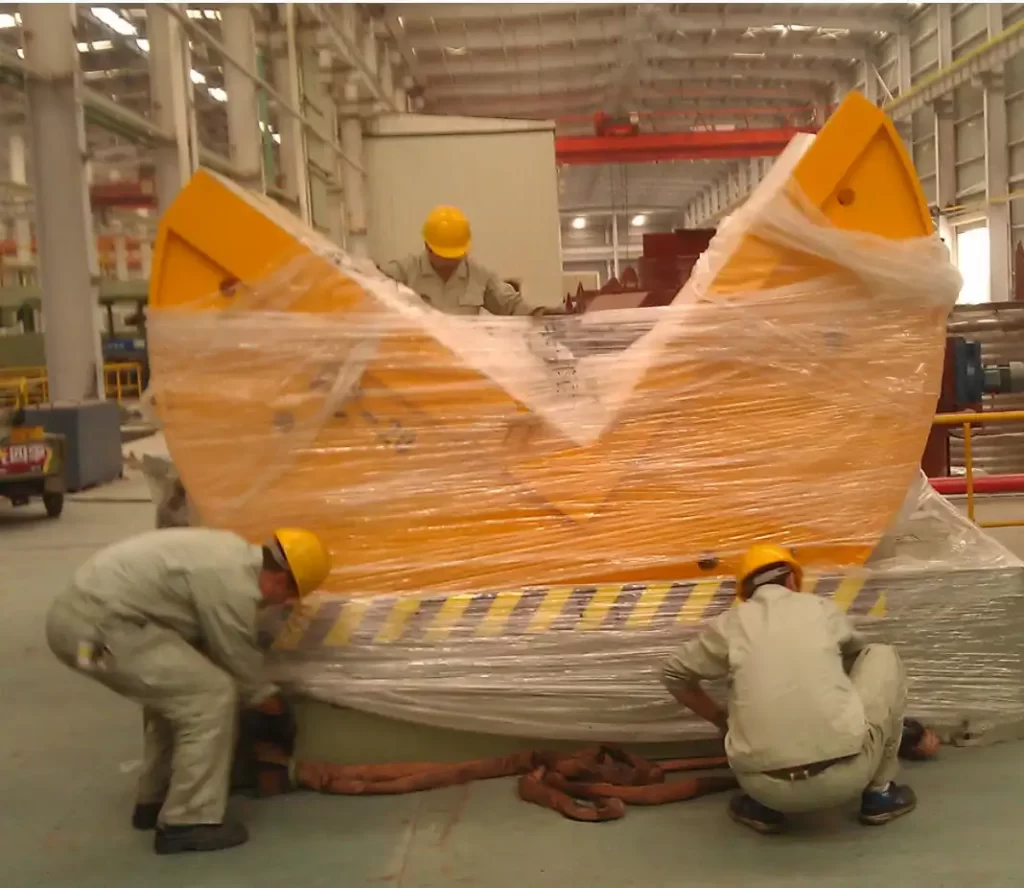
When I think about the early days of packing, safety was always a top priority, but it was often a huge challenge. Moving heavy coils and wires by hand or with outdated equipment was incredibly risky. I saw firsthand how quickly an accident could happen. This is why, as an engineer, and later as a factory owner, I always pushed for solutions that prioritized worker safety. It was not just about compliance; it was about protecting my team and ensuring everyone could go home safely at the end of the day. Modern hydraulic systems are designed with this in mind. They remove workers from hazardous areas. For instance, hydraulic upenders can safely flip heavy coils that would otherwise require dangerous manual turning or complex crane operations.
These systems come with built-in safety interlocks. These interlocks prevent machines from operating if a safety guard is open or if a worker is in a dangerous zone. They also often have emergency stop buttons placed in easy-to-reach locations. Pressure relief valves are another critical safety feature. They prevent the system from building up too much pressure, which could lead to equipment failure or even explosions. In my experience, preventing even one serious injury saves a huge amount of money in medical costs, insurance claims, and lost productivity. It also builds trust with employees. Knowing that their employer invests in their safety makes a big difference. This sense of security can reduce employee turnover. It also improves morale. A safe factory is a productive factory. The advanced sensors in modern hydraulic systems can detect abnormal conditions. They can alert operators or even shut down the system automatically. This prevents damage to both the equipment and potential harm to people. For example, if a machine detects an imbalance while lifting, it can stop immediately. This prevents a heavy item from falling. This level of intelligent control was not possible with older systems. It is a testament to how far hydraulic technology has come.
Safety Benefits of Advanced Hydraulic Systems:
| Safety Feature | Description | Impact on Operations |
|---|---|---|
| Automated Handling | Reduces human involvement in lifting heavy objects | Significantly lower risk of strains, sprains, and crushing injuries |
| Interlocks | Prevents operation if safety conditions are not met | Eliminates accidents due to human error or bypassing safety checks |
| Emergency Stops | Allows immediate shutdown in critical situations | Provides quick response to unforeseen hazards, protecting workers |
| Overload Protection | Prevents system from exceeding safe weight limits | Protects equipment from damage and prevents dangerous failures |
| Controlled Motion | Smooth, precise movements of heavy loads | Reduces risk of product damage and uncontrolled swinging, enhancing safety |
Investing in these systems is not just an expense; it is a vital investment in your workforce and the long-term success of your operations.
How Does Efficient Hydraulic Power Improve Production Throughput?
Is your current packing or handling process a bottleneck in your production line? Are slow manual operations keeping you from meeting delivery deadlines? Many factories find that while their manufacturing processes are fast, the final packaging and handling stages fall behind. This slows down the entire operation, no matter how efficient the upstream steps are.
Efficient hydraulic power provides the speed and precision needed to move heavy items quickly and smoothly. This automation removes bottlenecks at the end of the line, allowing for faster processing, reduced cycle times, and an overall increase in your factory’s production throughput.

In my journey from a packing machine engineer to owning my own factory, I always focused on efficiency. I knew that a slow packing line could wipe out all the gains made earlier in production. It was like running a marathon only to stumble at the finish line. Manual processes, especially for heavy items like steel coils or wire bundles, are inherently slow and prone to errors. Workers need breaks, they get tired, and their speed varies. Machines, on the other hand, can operate consistently, 24/7 if needed. This consistent performance is a huge advantage.
Efficient hydraulic systems are designed for high-speed, repetitive tasks. They offer quick response times and precise control. This allows for rapid handling and positioning of products. For instance, a hydraulic coil upender can change the orientation of a heavy coil in seconds, a task that might take several minutes and multiple workers manually. This reduction in cycle time adds up significantly over a shift, a week, or a year. Less time spent on handling means more time for actual production. This means you can process more orders. You can meet tighter deadlines. You can also take on new business. This directly translates to increased revenue. Furthermore, these systems reduce product damage. When products, like delicate coil edges, are moved and packaged manually, they are more likely to get scratched or dented. Automated hydraulic handling is smooth and controlled. This minimizes damage. Less damage means fewer customer complaints. It also means less scrap material. All of this contributes to better profitability. My experience has shown me that investing in automation is not just about replacing labor. It is about creating a more robust and responsive production system. It helps your business grow. It opens up new possibilities.
Production Benefits of Efficient Hydraulics:
| Aspect | Manual/Traditional Process | Automated Hydraulic Process | Impact on Throughput |
|---|---|---|---|
| Cycle Time | Slow, inconsistent | Fast, consistent | Significantly reduced processing time per unit |
| Consistency | Varies with operator skill and fatigue | High, reliable, precise | Predictable output, smoother workflow |
| Product Damage | High risk, especially for heavy items | Low risk, controlled handling | Fewer reworks, less scrap, higher quality output |
| Labor Requirement | High, physically demanding | Low, supervisory only | Frees up labor for higher-value tasks, reduces costs |
| Operating Hours | Limited by human shifts | Continuous, 24/7 capability | Maximized production capacity |
By removing these production bottlenecks, hydraulic automation helps your factory achieve higher output and better overall performance.
Why is Choosing the Right Hydraulic Partner Crucial for Long-Term Savings?
Have you ever worked with a supplier who only cared about making a sale and then disappeared when you needed support? Are you hesitant to invest in new equipment because you fear poor after-sales service and unreliable solutions? Many factory managers have faced this “vendor trust crisis.” They know the right equipment can solve problems, but finding a truly reliable partner is tough.
Choosing the right hydraulic partner means finding a company with deep industry knowledge and a strong commitment to support. A true partner understands your unique challenges, offers proven solutions, and provides excellent service that ensures your equipment runs smoothly for years, guaranteeing long-term savings and return on investment.
When I started FHOPEPACK, my main goal was to share knowledge and help others succeed. My journey began as an employee, and then I built a successful packing machine factory from the ground up. This experience taught me that the machine itself is only part of the solution. The real value comes from the partnership with the supplier. I learned that just selling a machine is not enough. You need to understand the client’s actual problems. You need to provide solutions that truly fit their needs. This includes understanding their production bottlenecks, their safety concerns, and their efficiency targets. Many suppliers are great at sales pitches but fall short on critical after-sales support. This means if a machine breaks down, you might be left scrambling. This can lead to costly downtime. It can also lead to lost production.
A reliable partner, like FHOPEPACK strives to be, offers more than just equipment. We offer expertise. We offer insights from years in the field. We offer reliable support. This includes helping you choose the right system. It includes proper installation. It includes ongoing maintenance advice. It ensures spare parts are available. It also means training your team. For example, when a factory faces a unique challenge, like packing an unusually shaped coil, a good partner does not just offer a standard machine. They might suggest a custom solution or provide guidance on how to adapt existing equipment. This kind of deep understanding and willingness to collaborate is priceless. It reduces risks. It maximizes the return on your investment. It also builds a relationship based on trust. This trust is what makes businesses truly grow. I achieved financial independence through the packing machine industry. I also helped many of my clients grow their businesses. This was not just by selling them machines. It was by being a true partner. It was by providing solutions and support that went beyond the transaction. This is the value a long-term partner brings.
Characteristics of a Reliable Hydraulic Partner:
| Characteristic | Description | Benefit to Your Factory |
|---|---|---|
| Deep Industry Knowledge | Understands specific challenges of your sector | Offers tailored solutions, not generic products |
| Proven Track Record | Has successfully implemented solutions for other clients | Reduces risk of investing in unproven technology |
| Strong After-Sales Support | Provides prompt maintenance, parts, and technical assistance | Minimizes downtime, ensures continuous operation, extends equipment life |
| Focus on ROI | Helps calculate and demonstrate clear return on investment | Justifies expenditure, shows tangible financial benefits |
| Collaborative Approach | Works with you to understand and solve your problems | Builds trust, ensures solutions meet real-world needs |
Choosing wisely means you invest in a solution, not just a product, leading to lasting success.
Conclusion
Energy-efficient hydraulic technology significantly cuts costs for German plants by boosting efficiency, enhancing safety, and improving throughput. Partnering with experts like us ensures long-term savings and growth.
My Insight
My journey through the packing machine industry has shown me that real value comes from practical solutions. I built my factory by focusing on efficiency and reliability. I know the challenges of running a plant. I believe in giving back by sharing what I have learned. This includes choosing the right technology and the right partners. It is about making smart choices that lead to real, measurable improvements.








