
How Does an Orbital Stretch Wrapper Compare in Speed and Film Efficiency?
You manage a busy factory. You see the constant push to get products out faster. You also know the hidden costs of manual packing, like slow processes and wasted materials. This old way of packing heavy items, like metal coils or wire bundles, often slows everything down. It also puts your team at risk. You are looking for a better way, a solution that brings real change to your production line.
An orbital stretch wrapper significantly boosts packing speed and film efficiency compared to traditional methods. It wraps products quickly from all sides, securing them tightly while using less film. This system makes the packing process faster and more cost-effective for heavy industrial items.
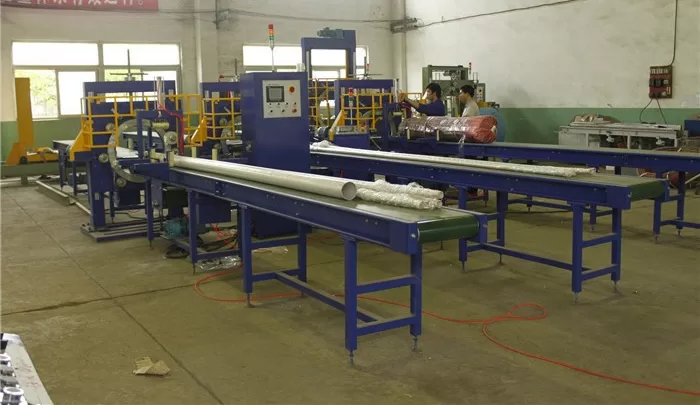
You might be thinking about how to make your packing line truly efficient. You might also want to protect your valuable products better. In this article, I will share my knowledge from years in the packing machine industry. We will look closely at how orbital stretch wrappers can solve these problems for you.
What Makes Orbital Wrappers So Fast and Efficient?
Do you feel the pressure of meeting tight deadlines? Is your current packing process a bottleneck, slowing down your whole factory? This delay can cost you money and frustrate your team. Slow packing means slower delivery. It also means you cannot move your finished products as quickly as you want.
Orbital wrappers achieve high speed by wrapping items continuously as they pass through a horizontal ring. They are efficient because they apply film tightly and evenly around the product’s entire surface. This method saves time and ensures good protection.

I have seen many factories struggle with outdated packing methods. They use too much time and too many people. When I started my own packing machine factory, I saw these problems firsthand. I focused on solutions that truly helped businesses grow. Orbital wrappers are a great example of such a solution. They are designed for speed and consistency. They wrap large, often heavy, items like steel coils or bundles of wire. The product moves through a horizontal ring. This ring spins very fast, wrapping film around the product’s entire surface. This happens as the product moves forward. This continuous motion is key to their speed. Think about a standard turntable wrapper. It rotates the product itself. This can be slow, especially for heavy or long items. An orbital wrapper moves the film around the product instead. This makes the whole process much faster.
The speed advantage comes from several design points. First, the horizontal wrapping motion is continuous. There are no starts and stops like with manual wrapping or some vertical stretch wrappers. Second, modern orbital wrappers often have automatic film cutting and clamping systems. This saves even more time. Operators do not need to manually attach and cut the film. Third, they integrate easily into existing production lines. This means less downtime when you install them. For a factory manager like Michael, this means a smoother workflow. It means less time waiting for products to be ready for shipment. It also means more output each day. This translates directly into higher profits for the business. When I helped my clients integrate these machines, they often saw immediate improvements in their daily output. They could fulfill more orders faster. This gave them a real edge in a competitive market. The design makes sure the film is applied evenly, so there are no weak spots. This is important for protecting products during transport.
How Does Film Consumption Differ Between Orbital and Traditional Wrapping Methods?
Are you tired of seeing rolls of stretch film disappear too quickly? Do you worry about the cost of packing materials eating into your profits? Many traditional wrapping methods use more film than needed. This happens because of uneven application or simply the way the machines are designed. This waste adds up, impacting your bottom line significantly.
Orbital stretch wrappers typically use less film than traditional wrapping methods. They apply film tightly and efficiently around the product’s entire surface. This reduces overlap and waste. Traditional methods, like manual wrapping or some turntable wrappers, often use more film because of less precise application.

Film efficiency is a huge concern for any factory. It was a big talking point when I built my own factory and worked with many clients. Every bit of saved film directly lowers operating costs. Orbital wrappers are designed to be very efficient with film. They do this by pre-stretching the film. This means a single roll of film can cover a much larger area. They also apply the film precisely. The film carriage moves around the product in a controlled path. This ensures consistent overlap. It prevents unnecessary layers. With manual wrapping, operators often pull too much film. Or they wrap too many layers “just in case.” This leads to significant waste. Turntable wrappers can be better, but they still might not offer the same level of film pre-stretch or controlled application as an orbital system.
Let us look at the details of film efficiency.
Film Pre-stretch Technology
Modern orbital wrappers have a pre-stretch system. This system stretches the film before it even touches the product. For example, a 200% pre-stretch means that 1 meter of film can cover 3 meters of product length. This significantly reduces the amount of film you buy. Many older or manual methods do not have this feature. They use the film as it comes off the roll. This means they use much more film to achieve the same wrapping strength. My experience has shown that pre-stretch can cut film costs by 30% or more. This is a big saving over time.
Consistent Film Overlap
The orbital wrapper applies film with a very consistent overlap percentage. You can set this overlap. For example, you can set it to 50%. The machine will maintain this exactly. Manual wrapping relies on the operator. Some parts might have 20% overlap, others 80%. This leads to uneven protection and wasted film. An orbital wrapper ensures every part of your product gets the right amount of film. This maximizes protection while minimizing material use.
Reduced Damage and Rework
When products are not wrapped well, they can get damaged during handling or shipping. This happens with poor film application. Damaged products mean rework or customer complaints. This costs money and trust. Orbital wrappers provide a tight, secure wrap. This protects coil edges and surfaces from scrapes or impacts. This reduces product loss. It reduces the need for re-wrapping. This also saves film in the long run. Michael told me about his challenge with product damage. An orbital wrapper directly solves this problem. It gives a reliable, consistent wrap every time.
| Feature | Orbital Stretch Wrapper | Traditional/Manual Wrapping |
|---|---|---|
| Film Pre-stretch | High (often 200-300%), significantly reduces film usage | Low or none, uses film directly from the roll |
| Overlap Consistency | Highly consistent, precisely controlled | Varies greatly, depends on operator skill |
| Film Waste | Minimal, due to precise application and pre-stretch | High, due to inconsistent application and lack of control |
| Product Protection | Excellent, tight, even wrap | Variable, can be weak in spots, leading to damage |
| Cost Savings | Significant savings on film costs over time | Higher ongoing film costs |
Can an Orbital Wrapper Really Improve My Factory’s ROI?
Are you a factory manager always looking at the numbers? Do you need to justify every investment with a clear return? You might be thinking about a new packing machine. You know it costs money upfront. But you need to see how it will pay you back. You want to be sure it is a smart move for your factory’s future.
Yes, an orbital wrapper can significantly improve your factory’s Return on Investment (ROI). It achieves this by reducing labor costs, cutting down on film usage, decreasing product damage, and increasing overall production throughput. These factors directly lead to higher profitability and operational efficiency.

When I advise clients, especially factory managers like Michael, ROI is always at the top of the list. They need concrete data. They need to see how a machine will make their business stronger. I have seen how these machines transform operations. They pay for themselves faster than many people expect. Michael faces challenges like high labor costs for manual packing. He also deals with product damage and slow production. An orbital wrapper addresses all these points. It is not just about a machine. It is about a strategic investment.
Let me break down how an orbital wrapper generates a strong ROI for your factory.
Reduced Labor Costs
Manual packing needs several workers. They handle heavy products and apply film. This is slow and labor-intensive. An orbital wrapper automates this process. You need fewer operators to manage the packing line. They can then do other important tasks. This frees up valuable human resources. For example, a single operator can oversee multiple machines. Or they can manage the material flow to and from the wrapper. This cuts down on your payroll expenses. It is a direct saving every month. Michael’s concern about high injury risk with manual handling is also linked here. Fewer people handling heavy items means a safer workplace. This reduces workers’ compensation claims and insurance costs. It also improves employee morale. This is a huge win for any factory.
Decreased Product Damage and Returns
Product damage during internal transfer or shipment is a big hidden cost. It leads to customer complaints, returns, and lost profits. Michael mentioned damaged coil edges as a problem. An orbital wrapper provides a uniform, tight, and secure wrap. This protects your products from scratches, dust, moisture, and impact. This means fewer damaged goods. It means fewer returns and less need for rework. This preserves the value of your products. It also keeps your customers happy. Happy customers lead to repeat business and a better brand reputation. My clients who implemented these wrappers saw a noticeable drop in customer complaints related to shipping damage. This saved them money and built trust.
Increased Throughput and Efficiency
Time is money in manufacturing. Slow packing is a bottleneck. It limits your factory’s overall output. An orbital wrapper works much faster than manual methods. It can process many more items per hour. This means you can pack and ship more products each day. This increases your production capacity. It allows you to take on more orders. It improves your factory’s responsiveness to market demands. This boost in efficiency directly translates into higher sales and revenue. It means you can use your factory space and other equipment more effectively. You are maximizing your assets. This improved flow helps your entire operation run smoother.
Lower Material Costs (Film Efficiency)
As we discussed, orbital wrappers use film much more efficiently. They pre-stretch the film and apply it consistently. This means you buy less film over time. These savings add up quickly. Over months and years, the reduced film consumption can save you a significant amount of money. This directly contributes to a better ROI. The combination of less labor, less damage, faster output, and lower material costs creates a powerful case for investing in an orbital stretch wrapper. It is a clear path to greater profitability and a more competitive factory.
My Insights on Choosing the Right Wrapper for Your Business!
Do you feel overwhelmed by the choices in packing machines? Are you worried about picking the wrong equipment? This can lead to more problems, not solutions. You need confidence that your investment will truly solve your factory’s specific issues. You want a partner who understands your challenges, not just a salesperson.
Choosing the right orbital wrapper needs careful thought. You must consider your product type, production volume, budget, and future growth plans. Look for a supplier who offers deep industry knowledge, reliable after-sales support, and a proven track record. This ensures you get a solution that truly fits your factory’s unique needs.

My journey in the packing machine industry taught me a lot. I started as an employee, then built my own successful factory. I have seen what works and what does not. The most important lesson is that a machine is only as good as its fit for your specific needs. Buying a packing machine is a big decision. It is not just about the price. It is about getting a solution that will help your business grow. I always tell my clients to look beyond the brochure. Ask the tough questions. Think about your factory’s future.
Understand Your Product and Process
Before anything else, you must understand what you are packing. Is it a metal coil, a bundle of pipes, or a stack of lumber? What are its dimensions, weight, and fragility? The wrapper needs to fit your product. For example, a heavy steel coil needs a robust machine. A lighter bundle might use a simpler model. Also, look at your current production process. Where are the bottlenecks? Where are the safety risks? An orbital wrapper can solve many of these, but you need to know exactly which ones. Michael mentioned coil and wire packing. He also talked about manual handling of heavy molds. A good orbital wrapper can handle these. It removes the need for human handling during the wrapping process. This greatly improves safety.
Assess Your Production Volume and Speed Needs
How many items do you need to pack per hour or per day? Your production volume will guide the speed of the wrapper you need. If you have high output, you need a high-speed automatic system. If your volume is lower, a semi-automatic machine might be enough. Over-investing in a machine that is too fast is a waste of money. Under-investing in one that is too slow will create a new bottleneck. Balance your current needs with your future growth plans. If you expect to grow, choose a machine that can scale with you. I always advise clients to think five years ahead. What will your production look like then?
Look for a Trusted Partner, Not Just a Vendor
Michael’s challenge with supplier trust is very common. Many suppliers focus only on making a sale. They forget about you once the machine is shipped. This is a big mistake. You need a partner who understands your industry. They should offer strong after-sales support, spare parts, and technical assistance. This is critical for keeping your machine running. A machine sitting idle costs you money. I built FHOPEPACK on the principle of sharing knowledge and offering real support. I want to help you succeed. Look for a supplier who has experienced engineers. They should offer training for your team. They should be there to troubleshoot issues. This relationship is just as important as the machine itself. Choose someone who genuinely cares about your factory’s long-term success.
Conclusion
Orbital stretch wrappers offer clear advantages in speed and film efficiency. They boost output, cut costs, and improve safety. This leads to a strong ROI for your factory.








