
How Do Slit Coil Handling Systems Integrate With Slitting and Packaging Lines?
Do you ever feel overwhelmed by the complexity of moving slit coils from your production line to final shipment? The journey from a wide steel roll to perfectly packaged, smaller coils can be full of bottlenecks. Many steel producers, just like Ivan in Russia, face daily struggles with manual handling, inconsistent packaging, and the constant pressure of meeting strict customer demands. These issues often lead to delays, higher costs, and even customer complaints.
Slit coil handling systems integrate with slitting and packaging lines by providing an automated, continuous flow of material, eliminating manual intervention between processes. These systems use specialized equipment like coil cars, turnstiles, downenders, and conveyor belts to seamlessly transfer slit coils from the slitter output to the various stages of the packaging line, ensuring efficiency, safety, and consistent product flow.
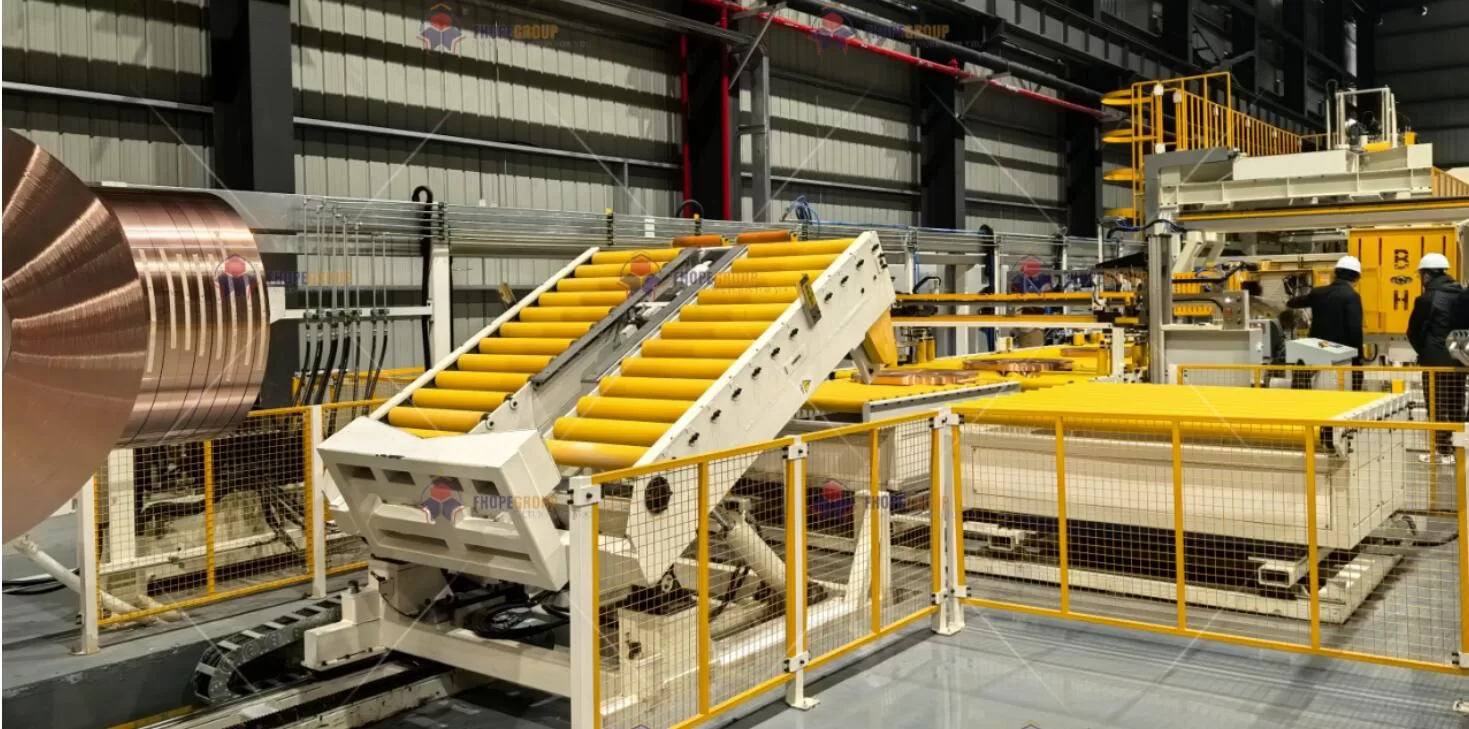
Understanding how these systems work together is crucial for any modern steel processing plant. My journey in the packing machine industry, starting as an employee and then building FHOPEPACK, showed me firsthand the immense value of intelligent integration. Let’s dive deeper into how this seamless flow can transform your operations, reduce risks, and boost your bottom line.
What Exactly Are Slit Coil Handling Systems, and Why Do They Matter?
Are you struggling to move heavy slit coils safely and efficiently within your plant? Many production managers face significant challenges when handling steel coils, especially after slitting. Manual methods are slow, risky, and prone to damage. This can directly impact your output and worker safety.
Slit coil handling systems are specialized machinery designed to transport, orient, and manage slit coils automatically within a steel processing facility. They matter because they automate the heavy and often hazardous task of moving coils, reducing labor, improving safety, and ensuring a continuous flow between production stages like slitting, warehousing, and packaging.
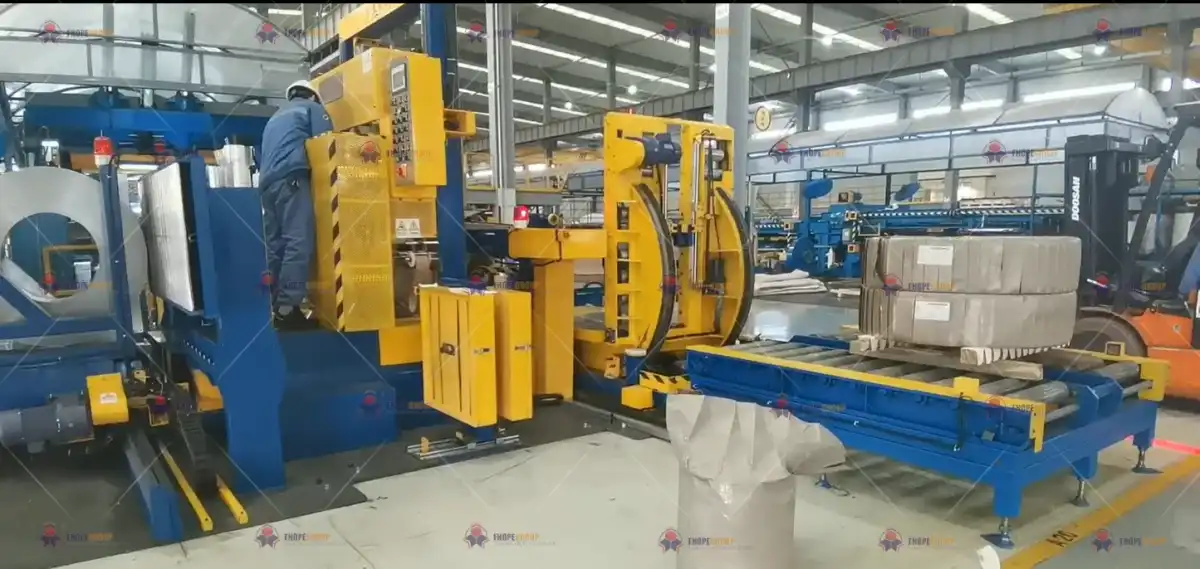
These systems are the backbone of efficient coil processing. They replace dangerous manual operations with precise, mechanized movements. This improves throughput and protects your valuable product. From my experience helping clients globally, a robust handling system is not just an add-on; it is a core component for a modern steel operation. It is vital for maintaining uptime and optimizing material flow. (automated coil transport, heavy steel coil logistics)
-
Components of a Slit Coil Handling System:
- Coil Cars: These motorized platforms carry coils along tracks. They move heavy loads safely from one point to another. They can be floor-mounted or track-bound. Coil cars are essential for the initial transfer from the slitter recoiler.
- Downenders/Upenders: These machines rotate coils from a horizontal to a vertical position, or vice versa. This is important for different storage or packaging requirements. They ensure correct coil orientation for subsequent processes.
- Turnstiles: Turnstiles are multi-station rotating devices. They hold several coils at once. They allow for sequential loading or unloading. This creates a buffer and manages different coil sizes. They improve the efficiency of handling multiple slit coils.
- Conveyor Systems: Roller or chain conveyors transport coils over longer distances. They link different processing stations. This creates a continuous flow path. These conveyors are built to withstand heavy industrial use. They ensure a steady stream of material (coil transfer equipment, automated coil delivery).
- Stacking and Destacking Units: These units automatically organize coils for storage or further processing. They reduce the need for manual stacking. This also prevents damage to the coils. This automation saves time and improves space utilization.
- Weighing Scales and Labeling Stations: Integrated scales weigh coils accurately. Automatic labeling systems apply necessary identification. This ensures traceability and compliance. These are critical for inventory management and shipping accuracy (precision coil weighing, automated coil identification).
- Automated Storage and Retrieval Systems (AS/RS): For larger operations, AS/RS can store and retrieve coils automatically. This maximizes warehouse space. It also minimizes human interaction. This boosts overall operational efficiency (smart warehousing solutions, high-density coil storage).
-
Why These Systems are Critical:
- Enhanced Safety: Moving heavy steel coils manually poses serious risks. Cranes and forklifts are operator-dependent. Automated systems remove personnel from danger zones. They reduce the chance of accidents and injuries. This is a major concern for plant managers like Ivan. (workplace safety improvement, heavy load automation)
- Increased Efficiency: Manual handling takes time. It also causes delays. Automated systems work continuously and quickly. They maintain a steady production pace. This significantly boosts overall throughput. It streamlines the entire material flow. (streamlined production flow, improved operational speed)
- Reduced Labor Costs: Less reliance on manual labor means fewer employees needed for material handling. This lowers operational costs. It frees up staff for more skilled tasks. This addresses the challenge of labor shortages. (cost-effective material handling, labor optimization)
- Improved Product Quality: Automated handling systems are precise. They minimize damage to coils during movement. This ensures better product quality for customers. It reduces scrap and rework. High-quality packaging also protects coils from transit damage. (damage prevention, consistent product integrity)
- Seamless Integration: These systems bridge the gap between slitting, storage, and packaging. They create a truly automated process. This eliminates bottlenecks. It provides a smooth transition between different stages. This means higher overall plant productivity. (end-to-end automation, production line synergy).
How Do Slit Coil Handling Systems Connect With Slitting Lines?
Do you find that your slitting line often gets bottlenecked when it comes to offloading finished slit coils? Many operations struggle with slow and unsafe manual methods right at the end of the slitting process. This can hold back your entire production schedule.
Slit coil handling systems connect directly with slitting lines by immediately receiving finished coils from the recoiler, often via a coil car or an accumulating turnstile. This connection ensures a continuous offloading process, preventing line stoppages and safely transferring coils to the next stage, such as weighing, banding, or further processing stations.

This initial integration is where efficiency gains really start. Without a smooth transfer, even the fastest slitting line cannot perform at its best. My team at FHOPEPACK designs systems to be robust and reliable. They keep your valuable slit coils moving without interruption. This critical link sets the stage for a fully automated process. (slitting line output automation, coil offloading systems)
-
Direct Offloading from Recoiler:
- Coil Car Transfer: A dedicated coil car sits ready at the recoiler exit. Once a coil is slit and complete, the coil car automatically moves under the recoiler. It gently lifts the finished coil. Then, it transports the coil away from the slitting machine. This immediate transfer prevents delays at the recoiler. (automated coil removal, recoiler direct link)
- Turnstile Accumulation: Some systems use a multi-station turnstile. This turnstile receives coils sequentially from the recoiler. It can hold several coils at once. This creates a buffer. It allows the slitter to continue operating even while earlier coils are being processed downstream. This is very useful for managing varied coil sizes. (buffered coil handling, continuous slitting operation).
-
Initial Processing and Identification:
- Weighing: Immediately after offloading, coils are often routed to an integrated weighing station. This scale accurately records the coil’s weight. This data is crucial for inventory. It is also needed for billing and production tracking. Automated weighing removes human error. (accurate coil weight, inventory data capture).
- Banding/Strapping (Preliminary): Sometimes, a preliminary strap is applied at this stage. This keeps the coil intact during further transport. It is not the final packaging. It provides structural integrity. This ensures the coil maintains its form. (initial coil securement, transport banding).
- Labeling: Automated labeling machines can apply unique barcodes or RFID tags. These tags contain important information. This includes product type, weight, date, and customer details. This is essential for traceability. It meets modern supply chain requirements. (automatic product tagging, enhanced traceability).
-
Orientation and Staging:
- Downending: Slitting lines typically produce coils with their axes horizontal. Many subsequent processes, including packaging, require coils to be vertical. A downender automatically rotates the coil 90 degrees. This prepares it for the next step. It ensures the correct orientation for efficient handling. (coil axis rotation, vertical coil preparation).
- Staging Areas: After initial processing, coils may move to a staging area. This is a buffer zone. It allows for temporary storage. This helps balance the flow between the slitting line and the packaging line. It ensures that the packaging line always has coils ready. This staging prevents idle time. (temporary coil storage, production flow balancing).
- Quality Control Integration: Some systems incorporate visual inspection or basic quality checks at this stage. Automated sensors can detect surface defects. This happens before the coil moves to final packaging. This prevents defective products from reaching the customer. (automated defect detection, early quality assurance).
What Role Do These Systems Play in Packaging Line Integration?
Are your packaging operations slow, manual, and prone to errors? Many steel mills face challenges getting slit coils from internal handling to the final packaging stage. This transition often involves manual lifting, which slows things down and introduces safety risks. Inconsistent packaging quality can also lead to customer complaints.
Slit coil handling systems play a crucial role in packaging line integration by delivering coils directly and precisely to each packaging station, such as wrapping, strapping, and labeling. They ensure consistent material flow, proper coil orientation, and synchronized operations. This automation minimizes manual labor, enhances safety, and maintains uniform packaging quality for diverse product requirements.

This seamless integration transforms a segmented process into a continuous, high-efficiency operation. My experience at FHOPEPACK has shown me how critical this connection is for boosting overall output and meeting demanding export standards. It ensures that every coil is packaged perfectly, every time. (automated packaging feed, consistent coil presentation)
-
Feeding Coils to Packaging Stations:
- Automated Delivery: Handling systems use conveyors or specialized coil cars. These move coils directly to the initial packaging station. This could be an automatic wrapper or strapping machine. This ensures a steady supply of coils. It eliminates manual intervention. This maximizes machine uptime. (continuous material feed, automatic coil placement).
- Precision Positioning: These systems precisely position each coil. They align it correctly with the packaging equipment. This ensures proper wrapping tension or strapping application. Accurate positioning prevents packaging errors. It reduces material waste. This is crucial for consistent quality. (accurate coil alignment, packaging accuracy).
- Buffer Management: Integrated buffer zones or accumulation conveyors hold coils before packaging. This buffers against minor variations in production speed. It ensures the packaging line never runs out of product. It also prevents the slitting line from being held up by packaging delays. (packaging line buffering, optimized production flow).
-
Supporting Diverse Packaging Requirements:
- Flexible Orientation: Handling systems with downenders or upenders can adjust coil orientation as needed. Some packaging methods, like horizontal orbital wrapping, require a horizontal axis. Others, like vertical strapping, require a vertical axis. The handling system ensures the coil is presented correctly for each specific machine. This supports varied customer demands. (multi-directional coil handling, adaptable packaging setup).
- Multi-Product Handling: Modern steel mills produce various types of coils (cold-rolled, galvanized, color-coated). These often have different packaging needs (PET strapping, steel strapping, anti-rust wrapping, stretch film). An integrated handling system can automatically route coils to the appropriate packaging module. This flexibility is key to managing product diversity efficiently. (versatile coil routing, customized packaging pathways).
- Integrated Strapping and Wrapping: Once coils are positioned, the handling system works with automatic strapping machines (for PET or steel bands) and orbital wrappers (for stretch film or VCI paper). It feeds the coil through these stations. This creates a complete, protective package. This is essential for protecting against rust, dust, and damage during transit. (automated coil protection, comprehensive packaging solutions).
-
Ensuring Quality and Safety in Packaging:
- Consistent Quality: Automated handling and packaging ensure consistent tension, overlap, and placement of packaging materials. This eliminates the inconsistencies found in manual packaging. This results in uniform, high-quality packages. This meets strict export standards, like CE/ISO certifications. (uniform packaging quality, compliance with standards).
- Worker Safety: Manual loading and unloading of heavy coils for packaging are hazardous. Automated handling systems remove workers from these dangerous tasks. They significantly reduce the risk of crush injuries or strains. This greatly improves overall workplace safety. (reduced manual handling risk, enhanced operator protection).
- Traceability and Data Integration: Many handling systems integrate with a central control system. They automatically log packaging details. This includes coil ID, packaging type, and timestamps. This data supports traceability. It also helps with production analysis. This ensures accurate records for every packaged coil. (digital packaging records, real-time data tracking).
What Are the Key Benefits of This Integrated Approach for Steel Mills?
Are you consistently battling inefficiencies, safety concerns, and quality control issues in your steel coil production? Many production managers, like Ivan, struggle with segmented processes. They see bottlenecks between slitting and packaging. This fragmentation can lead to missed deadlines and unhappy customers.
The integrated approach using slit coil handling systems offers steel mills numerous benefits. These include significantly improved operational efficiency, enhanced safety for workers, superior and consistent packaging quality, and substantial cost reductions through minimized labor and material waste. This holistic automation addresses diverse product needs and ensures smooth, continuous production flow from slitting to final shipment.
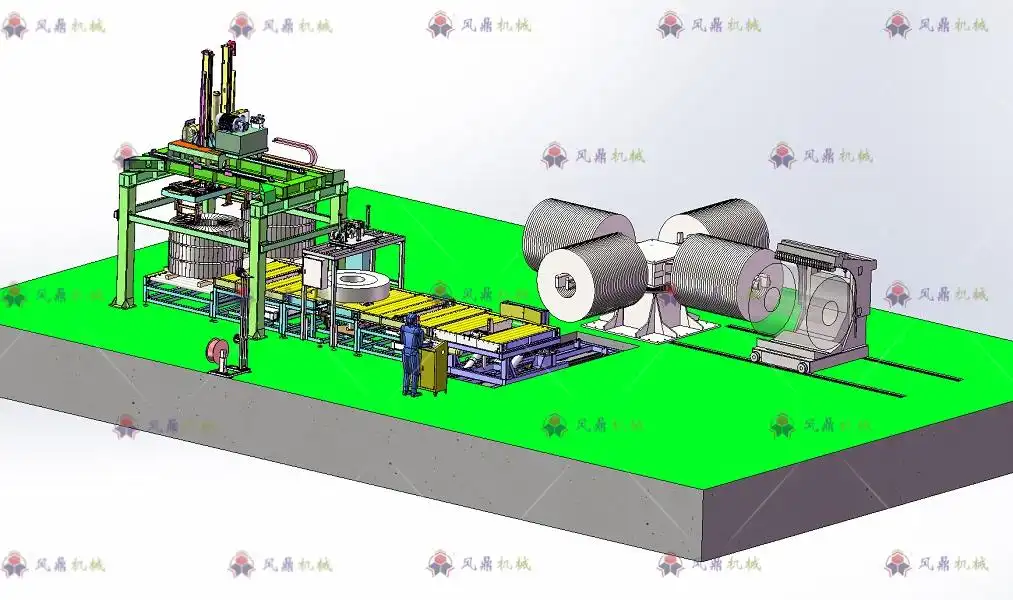
From my extensive work with steel producers, I have seen how a fully integrated system can completely transform an operation. It is not just about having individual machines; it is about how they work together seamlessly. This creates a powerful synergy that drives real business value. (total plant optimization, smart manufacturing benefits)
-
Enhanced Operational Efficiency and Throughput:
- Reduced Bottlenecks: Manual transfer points are often slow and unpredictable. Integrated handling systems eliminate these choke points. They ensure a steady, uninterrupted flow of coils. This means higher overall production speed. It allows both slitting and packaging lines to operate at their maximum capacity. (streamlined production workflow, accelerated output).
- Increased Uptime: Automated systems reduce the need for human intervention. This lowers the chances of errors and accidents that cause downtime. Machines work continuously, often 24/7. This maximizes the operational hours of your expensive equipment. It delivers greater output over time. (continuous operation, minimized unplanned stops).
- Faster Turnaround Times: By automating the entire process, coils move from raw material to packaged product much faster. This reduces lead times for customers. It also improves your ability to meet tight delivery schedules. Faster turnaround directly impacts customer satisfaction. (quicker order fulfillment, improved delivery reliability).
-
Improved Worker Safety and Morale:
- Elimination of Hazardous Tasks: Lifting and moving heavy steel coils manually is dangerous. It poses risks of crush injuries, strains, and falls. Automated handling systems perform these tasks. This removes workers from direct contact with heavy loads. It creates a much safer working environment. (reduced workplace accidents, enhanced personnel protection).
- Reduced Physical Strain: High-intensity manual labor leads to fatigue and potential long-term health issues. Automation reduces the physical demands on the workforce. This leads to fewer injuries and higher employee satisfaction. It also addresses labor shortages by making roles less physically demanding. (less manual effort, healthier work conditions).
- Compliance with Safety Regulations: Modern automated systems are designed with safety features and interlocks. They often meet international safety standards (e.g., CE). This helps steel mills comply with stringent occupational safety regulations. It reduces legal and financial risks. (regulatory compliance, safer plant operations).
-
Superior Product Quality and Customer Satisfaction:
- Consistent Packaging: Automated packaging machines apply materials with consistent tension and coverage. This ensures every coil is packaged uniformly. This consistency is hard to achieve with manual methods. It provides a professional, high-quality appearance. (uniform package quality, professional product presentation).
- Damage Prevention: Coils are handled gently and precisely by machines. This minimizes the risk of cosmetic damage (scratches, dents) during transfer and packaging. Well-packaged coils are also better protected during transit. This reduces customer complaints and returns. (product integrity during transit, minimized transit damage).
- Meeting Export Standards: Automated systems can integrate features for specific export requirements. These include anti-rust wrapping, specific strapping patterns, and automatic barcode labeling. This ensures compliance with international shipping and customer specifications. It opens doors to global markets. (international packaging standards, global market readiness).
-
Significant Cost Reductions:
- Reduced Labor Costs: A fully automated system needs fewer operators for material handling and packaging. This leads to substantial savings on wages, benefits, and training. It offers a quicker return on investment (ROI). (lower operating expenses, optimized labor utilization).
- Minimized Material Waste: Automated packaging is precise. It uses optimal amounts of strapping, wrapping film, or paper. This reduces material overconsumption and waste. It also minimizes product damage, which means less scrap and rework. (efficient material usage, reduced scrap rates).
- Lower Insurance Premiums: A safer workplace with fewer accidents can lead to lower insurance costs for the company. This is a direct financial benefit of improved safety. (insurance cost savings, risk mitigation).
What Challenges Arise When Integrating Slit Coil Handling and Packing?
Have you ever faced unexpected hurdles when trying to automate your production line? Integrating complex systems like slit coil handling with packaging lines is not always straightforward. Many businesses encounter difficulties that can delay projects and exceed budgets. Ivan, as a production director, knows these challenges well, from diverse product needs to limited space.
Integrating slit coil handling with packaging lines presents several challenges, including managing diverse coil specifications, ensuring seamless data communication between different machines, addressing spatial constraints within the factory, overcoming high initial investment costs, and requiring specialized expertise for installation and maintenance. These issues demand careful planning and a robust solution provider.
Achieving true automation requires more than just buying machines. It needs a well-thought-out strategy. My team at FHOPEPACK has seen these challenges firsthand. We have learned how to tackle them effectively. We understand that successful integration means foreseeing these problems and planning for them. (complex system integration, industrial automation challenges)
-
Product Diversity and Flexibility:
- Varying Coil Dimensions: Steel mills handle a wide range of coil diameters, widths, and weights (e.g., 1-3 tons, various ID/OD). The handling and packaging system must adapt to these variations automatically. Manual adjustments for each coil type are inefficient. This requires flexible and robust equipment. (adaptable coil dimensions, multi-size handling capability).
- Different Packaging Requirements: Cold-rolled, galvanized, and color-coated coils each have unique packaging needs. Some need heavy-duty steel strapping. Others need anti-rust VCI paper and stretch film. The system must support automatic switching between these packaging types. This ensures the correct protection for each product. (customized packaging options, diverse product protection).
- Automated Recipe Management: The system needs a sophisticated control system. This system should store and recall different packaging recipes. It should also manage handling parameters based on the coil type. This reduces manual setup time. It also prevents errors. (smart production recipes, automatic parameter adjustment).
-
Spatial Constraints and Layout Optimization:
- Limited Factory Space: Many existing steel mills have old layouts. They have limited floor space for new, large machinery. Integrating extensive handling and packaging lines requires creative spatial planning. This includes vertical integration or compact designs. This ensures efficient use of available area. (space-efficient automation, optimized plant layout).
- Interference with Existing Infrastructure: New equipment must fit around existing columns, overhead cranes, and utility lines. This requires careful consideration during design. The layout must ensure smooth material flow without hindering other operations. This involves detailed site surveys. (infrastructure compatibility, non-disruptive integration).
- Workflow Bottlenecks: A poorly designed layout can simply shift bottlenecks instead of eliminating them. The integrated system must be designed to enhance, not impede, the overall workflow. This means analyzing the entire production chain. (workflow efficiency analysis, continuous flow design).
-
Data Integration and System Compatibility:
- Communication Protocols: Different machines, often from different manufacturers, use various communication protocols. Ensuring seamless data exchange between the slitting line, handling system, and packaging line can be complex. This requires standardized interfaces or custom programming. (inter-machine communication, standardized data exchange).
- MES/ERP Integration: The automated system needs to integrate with the mill’s Manufacturing Execution System (MES) or Enterprise Resource Planning (ERP) software. This enables real-time data tracking, inventory management, and production scheduling. This integration is crucial for smart factory initiatives. (digital production management, enterprise system connectivity).
- Sensor and Control System Complexity: Modern systems rely on a network of sensors, PLCs (Programmable Logic Controllers), and HMI (Human Machine Interface) systems. Managing this complexity and ensuring reliable operation requires advanced control engineering. Fault diagnosis and troubleshooting also become more intricate. (advanced automation control, complex system diagnostics).
-
Initial Investment and Return on Investment (ROI):
- High Upfront Costs: Fully automated slit coil handling and packaging lines represent a significant capital investment. This can be a major hurdle for some companies. Justifying this cost requires a clear ROI calculation. (capital expenditure planning, investment justification).
- Long-Term Payback Analysis: While benefits are substantial, the payback period needs careful analysis. Factors include labor savings, material waste reduction, increased throughput, and reduced claims. A comprehensive financial model helps in decision-making. (ROI calculation, financial planning for automation).
- Maintenance and Spare Parts: Automated systems require specialized maintenance. They also need a reliable supply of spare parts. This adds to the operational cost. Choosing a supplier who offers excellent after-sales support and spare parts availability is crucial. (long-term equipment support, spare parts management).
-
Technical Expertise and Training:
- Skilled Workforce Requirement: Operating and maintaining advanced automated systems requires a highly skilled workforce. This includes engineers, technicians, and operators who understand the technology. Training existing staff or hiring new talent is necessary. (skilled labor development, specialized technical training).
- Commissioning and Startup: The installation and commissioning phase of an integrated system are critical. It requires expertise to ensure all components work together seamlessly. Any issues during startup can cause significant delays. (system implementation, efficient commissioning process).
- Long-Term Partnership: Finding a supplier who can provide not just the equipment, but also turnkey solutions, installation, training, and ongoing technical support, is vital. This ensures the long-term success and optimal performance of the system. (reliable technology partner, comprehensive post-sales support).
Conclusion
Integrating slit coil handling systems with slitting and packaging lines is a game-changer for modern steel mills. It boosts efficiency, enhances safety, and ensures consistent quality. Despite the challenges, the benefits of automation, from reducing labor costs to meeting diverse customer demands, are clear. For those seeking to master their packaging operations and achieve a truly seamless flow, exploring a comprehensive coil packing line solution is a smart strategic move. It is about building a future of efficiency and reliability.








