
How Do Safety Interlocks Protect UK Operators on Heavy‑Duty Upenders?
Heavy machinery in factories always presents risks. Imagine a large metal coil, weighing tons, being moved or tilted. One wrong step, one small malfunction, and a worker could face serious injury. Factories, especially those handling heavy materials, constantly grapple with how to keep their people safe while also keeping production moving. It is a tough balance to strike.
Safety interlocks are critical devices that protect workers, especially those in the UK, when they work near heavy-duty upenders. These systems make sure that machines only operate when it is completely safe to do so. They prevent accidents by stopping the machine if a guard is open or if a worker is in a danger zone. This design helps avoid severe injuries, making factories safer for everyone involved in heavy material handling.
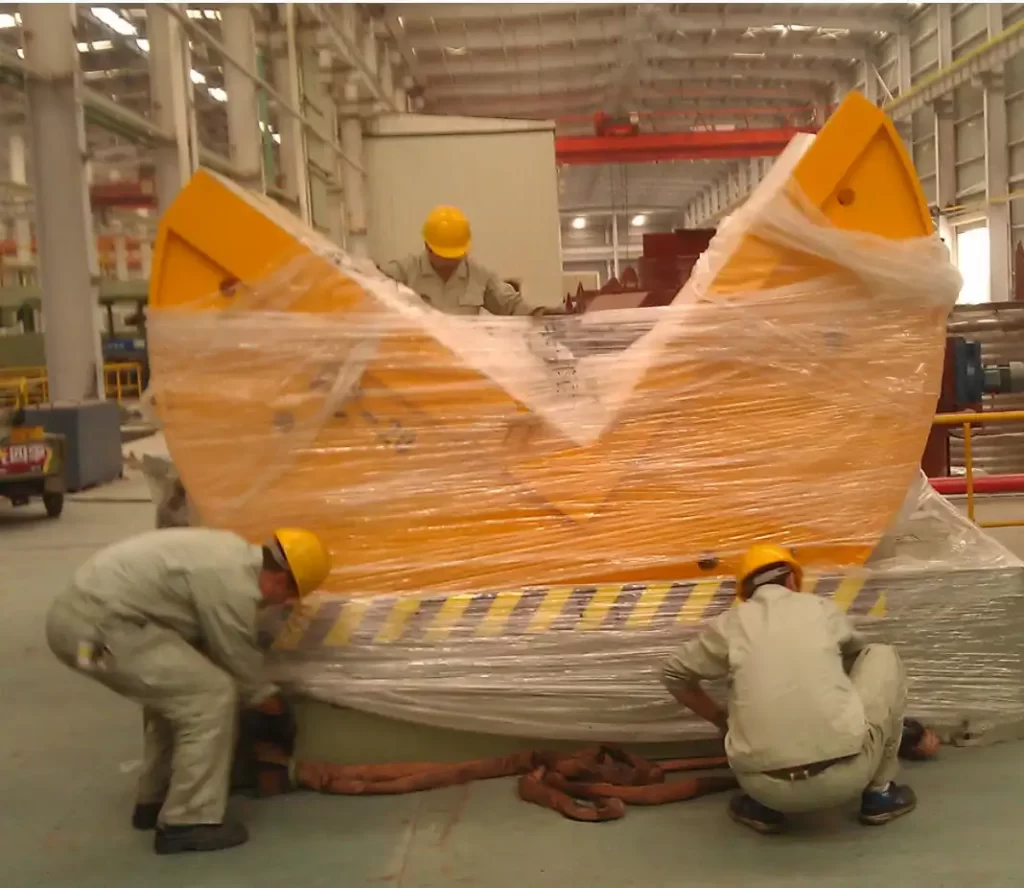
Staying safe on the factory floor is not just a good idea; it is a must. Especially when we talk about big machines like upenders that handle massive loads. If you are keen to understand the core parts of machine safety, and how these smart systems guard against harm, then keep reading. I will share my insights from years in this industry.
What are the core risks when using heavy-duty upenders?
Using heavy machinery like upenders means dealing with big weights and moving parts. This brings serious safety challenges. Think about a huge steel coil, perhaps 10 tons or more, being tilted from flat to upright. If something goes wrong during this process, the results can be catastrophic. The main risk is always to the people working near these machines.
The biggest dangers come from a few key areas. First, there is the risk of crushing. When an upender moves a heavy load, any part of a person caught in that movement could be severely injured. Second, there is the risk of objects falling. If a coil is not secured properly, or if the machine fails, the heavy load could drop. This would cause massive damage or injury. Third, there is the danger from moving machine parts themselves. People might get limbs caught in gears, chains, or hydraulic systems if safety guards are not in place or are bypassed. These risks are very real in any factory setting, including those in the UK.

From my early days working on the factory floor, I saw firsthand how quickly things can go wrong. I remember working in a packing machine factory. There was a time when a worker almost had his hand caught in a moving part because a guard was not secured. That moment stuck with me. It showed me why robust safety measures are not just regulations; they are lifelines. Building my own factory later, prioritizing safety became a core principle. Michael, as a factory manager, knows this feeling well. He manages heavy metal processing. His biggest worries include worker injuries from manual handling of heavy items. He also worries about damaged products. The right equipment can solve these problems. It can make things much safer. It can also cut down on accidents. This means lower insurance costs. It also means fewer lost workdays. It also means better staff morale. These things all add up. They improve the bottom line.
Key Hazards with Heavy-Duty Upenders:
When we talk about heavy-duty upenders, the risks are clear and serious. Understanding them is the first step to preventing accidents.
- Crushing Hazards: This is the most common risk. Upenders handle massive weights. A worker’s body part caught between the moving machine and a stationary object, or between the machine and the load, can lead to severe injury or death. The force involved is immense. Even a small miscalculation or an unexpected movement can have terrible consequences.
- Falling Object Hazards: When a heavy coil or load is being tilted, there is always a risk it could slip or fall if not properly secured. This can happen due to equipment malfunction, operator error, or improper loading. A falling coil can crush anything in its path, including people, other equipment, or the factory floor itself. The kinetic energy of a falling object weighing several tons is destructive.
- Shearing and Pinch Point Hazards: Upenders have many moving parts: hinges, gears, hydraulic cylinders, and pivot points. These create pinch points where body parts, especially hands and fingers, can get caught and crushed or severed. Shearing hazards occur where two parts move past each other, creating a scissor-like action. Without proper guards and interlocks, these areas are extremely dangerous.
- Entanglement Hazards: Some upenders may have exposed drive mechanisms, chains, or rotating shafts. Loose clothing, long hair, or jewelry can become entangled in these parts, pulling a worker into the machinery. This can cause severe lacerations, broken bones, or worse. Proper guarding and lockout procedures are essential to prevent entanglement.
- Hydraulic System Failure: Upenders often use powerful hydraulic systems. A failure in these systems—like a burst hose, a leaking cylinder, or a loss of pressure—can cause the machine to drop its load suddenly or move uncontrollably. This creates an immediate and unpredictable danger to anyone nearby. Regular maintenance and robust design are important to prevent such failures.
- Electrical Hazards: Like all industrial machinery, upenders have electrical components. Faulty wiring, uninsulated parts, or power surges can lead to electric shocks or fires. Proper grounding, circuit protection, and clear emergency stop buttons are crucial. Workers must be trained on electrical safety procedures.
- Human Error: Even with the safest machines, human error remains a factor. This includes bypassing safety features, poor communication, lack of training, or fatigue. Safety interlocks help mitigate human error by preventing dangerous actions, but comprehensive training and a strong safety culture are also vital. For Michael, reducing reliance on manual processes directly cuts down on human error risks, which is why automation with built-in safety is so appealing.
| Hazard Type | Description | Potential Injury | Mitigation through Safety Interlocks |
|---|---|---|---|
| Crushing | Body part caught between moving machine and load/structure. | Severe fractures, internal injuries, fatality | Prevents operation if danger zone is entered. |
| Falling Objects | Load slips or falls from machine. | Crushing, impact injuries, fatality, property damage | Ensures load is secured before movement, stops if unstable. |
| Shearing/Pinch Points | Body part caught in moving machine parts (hinges, gears). | Lacerations, amputation, broken bones | Locks access until movement stops. |
| Entanglement | Clothing/body part caught in rotating shafts or chains. | Lacerations, sprains, broken bones, strangulation | Restricts access to moving parts during operation. |
| Hydraulic Failure | Sudden loss of hydraulic pressure causing uncontrolled movement. | Impact injuries, crushing | Monitors pressure, prevents operation if low. |
How do different types of safety interlocks actually work?
Safety interlocks are the silent guardians of industrial machines. They are not just simple switches. They are carefully designed systems that ensure machines operate only when all safety conditions are met. This stops accidents before they can happen. Understanding how they work is key to appreciating their value.
There are several types of safety interlocks. Each type uses a different method to sense if a safety condition is met. The most common type is a physical interlock. This involves a guard or door that must be closed for the machine to run. If the guard is opened, the interlock immediately stops the machine. Other types include magnetic interlocks, which use magnets to detect if a guard is in place, and light curtains, which create an invisible barrier that stops the machine if broken by a person. These systems are vital in places like the UK, where strict safety rules apply to machinery.

When I was setting up my own packing machine factory, choosing the right safety systems was one of my top priorities. I knew from my time as an employee that cheaping out on safety was not an option. It was clear to me that investing in robust interlocks would not only protect my workers but also prevent costly downtime. A machine that is often stopped due to accidents or safety breaches costs more in the long run. Michael, in his metal processing plant, faces similar issues. He knows that machine downtime means huge losses. Investing in proper interlocks means fewer unexpected stops and a more reliable operation. It gives him peace of mind.
Common Types of Safety Interlocks for Upenders:
Understanding the different types of safety interlocks helps in choosing the best protection for specific hazards on an upender. Each type has its own way of ensuring the machine is safe to operate.
- Guard Interlocks (Mechanical/Physical): These are perhaps the most common. A physical guard, like a gate or a door, covers a hazardous area. The interlock ensures the machine cannot start or run if the guard is open. If the guard is opened while the machine is running, the interlock immediately cuts power and stops the dangerous movement. This works by a key system or a plunger that physically prevents operation when the guard is not in place. For example, a heavy gate around the upender’s tilting area would have an interlock that stops all movement if the gate is opened.
- Solenoid Locking Interlocks: These interlocks are often used when access to a hazardous area must be prevented until the machine has completely stopped. Unlike simple guard interlocks, a solenoid locking interlock keeps the guard locked until the dangerous motion (e.g., the upender finishing its tilt cycle and the coil being stationary) has ceased. This prevents operators from opening a guard too early and reaching into a still-moving machine. These are crucial for machines with inertia or slow deceleration times.
- Non-Contact Interlocks (Magnetic or RFID): These systems do not require physical contact between the guard and the sensor. Magnetic interlocks use magnets on the guard and sensors on the machine frame. When the guard is closed, the magnetic field is detected, allowing operation. RFID (Radio-Frequency Identification) interlocks use coded signals. The sensor only allows operation if it detects the correct code from the actuator on the guard. These are often used where dirt or debris might interfere with mechanical switches, providing a more reliable and tamper-resistant solution. They are good for environments with lots of metal dust or oil, common in Michael’s factory.
- Light Curtains and Laser Scanners: These are advanced optical safety devices. A light curtain projects a field of infrared beams. If any beam is broken by a person or object entering the protected area, the machine immediately stops. Laser scanners work similarly, creating a two-dimensional detection zone around the machine. If someone enters this zone, the scanner triggers a safety stop. These are excellent for safeguarding large, open access areas where physical guards are impractical, such as the loading or unloading zone of a large upender. They provide a flexible and robust perimeter safety solution.
- Emergency Stop (E-Stop) Buttons: While not strictly an “interlock” in the traditional sense, E-stop buttons are crucial safety devices. They provide an immediate, fail-safe way for operators to shut down the machine in an emergency. E-stops override all other controls and initiate a rapid, controlled stop of all hazardous motion. They are typically red, mushroom-shaped buttons placed in easily accessible locations around the machine. Even with robust interlocks, an accessible E-stop is always a necessary backup.
- Safety Mats: These pressure-sensitive mats are placed on the floor around the machine. If an operator steps onto the mat, it registers pressure and sends a signal to stop the machine’s dangerous functions. Safety mats are useful for defining safe working zones and ensuring that no one is present in a hazardous area before machine operation.
The core principle behind all these interlocks is to make sure that a machine’s dangerous actions are stopped, or cannot start, if a person is in a risk zone. This is a critical point for factory managers like Michael. He needs solutions that reduce manual handling. He wants to improve worker safety. Interlocks directly address this need. They create a safer work environment. This then helps reduce those high insurance costs and employee turnover that he mentioned as a big challenge.
Why are these safety features important for your factory’s bottom line?
Investing in safety features like interlocks for heavy-duty upenders might seem like an added cost at first glance. However, it is a smart financial decision for any factory. Safety directly impacts a company’s financial health. It is not just about avoiding fines or meeting regulations. It is about protecting your profits.
When a factory has strong safety measures, it experiences fewer accidents. Fewer accidents mean less downtime for investigations and repairs. It also means lower medical costs and workers’ compensation claims. Think about it: an injured worker needs time off. This reduces your workforce. You might even have to hire and train someone new. This all costs money. A safer factory also has better employee morale. Workers feel valued and protected. This leads to higher productivity and lower employee turnover. For factory managers like Michael, who constantly battles cost control and efficiency bottlenecks, safety interlocks offer a clear return on investment.

I have seen businesses grow because they put safety first. When I established my own factory, I made sure safety was integrated into every process. It was not an afterthought. This approach helped me gain financial independence. It also helped many of my clients grow their businesses too. They saw that a safe factory is an efficient factory. When you have reliable, safe equipment, your production lines run smoother. There are fewer unexpected stops. This directly impacts your output and delivery times. Michael’s current packaging process relies too much on manual labor. This causes slow speeds and low efficiency. It also creates a high risk of injury. By automating with safe equipment, he can solve these problems. He can boost output. He can also save money.
The Financial Impact of Robust Safety Interlocks:
The tangible and intangible benefits of investing in proper safety interlocks translate directly into a stronger financial position for your factory.
- Reduced Accident Costs: This is the most direct benefit. Every accident in a factory incurs significant costs:
- Direct Costs: Medical expenses for injured workers, workers’ compensation claims, legal fees, repair or replacement of damaged equipment, and increased insurance premiums. For a large factory, a single severe accident can amount to hundreds of thousands of pounds. Michael faces high insurance costs due to current safety risks; reducing accidents directly lowers these.
- Indirect Costs: Lost production time during accident investigation and cleanup, decreased morale among workers, loss of reputation, cost of hiring and training replacement workers, and potential fines from regulatory bodies like the HSE in the UK. These indirect costs often far outweigh the direct costs.
- Increased Uptime and Productivity: Safety interlocks prevent the machine from operating in unsafe conditions. This means fewer unexpected shutdowns due to accidents or safety breaches. When a machine runs consistently and safely, production schedules are met, and overall output increases. Michael’s challenge is efficiency bottlenecks from manual processes; automated upenders with interlocks directly address this by ensuring smooth, continuous operation without safety-induced delays.
- Lower Insurance Premiums: Insurance companies often offer lower premiums to businesses that demonstrate a strong commitment to safety and have a low accident rate. Investing in certified safety equipment like interlocked upenders can be a strong argument for reducing your factory’s liability and workers’ compensation insurance costs over time.
- Improved Employee Morale and Retention: When workers feel safe and know that their employer prioritizes their well-being, morale improves. They are more likely to be engaged, productive, and less likely to look for work elsewhere. High employee turnover is costly due to recruitment and training expenses. A safer workplace reduces turnover, saving the factory money in the long run. Michael mentioned high employee turnover as a challenge; better safety directly impacts this.
- Enhanced Reputation and Brand Image: A factory known for its strong safety record is viewed more positively by clients, suppliers, and the community. This can lead to new business opportunities, easier recruitment of top talent, and stronger partnerships. No customer wants their product handled in an unsafe environment.
- Compliance and Reduced Fines: Regulatory bodies, like the Health and Safety Executive (HSE) in the UK, have strict rules about machine guarding and safety. Non-compliance can lead to hefty fines, legal action, and even forced shutdowns. Robust safety interlocks ensure your factory meets these legal requirements, avoiding costly penalties and legal complications.
- Reduced Product Damage: While not always direct, a safer working environment often correlates with fewer instances of product damage. When workers are not rushing due to unsafe conditions or operating faulty equipment, they handle products more carefully. This reduces scrap and rework, saving material costs and improving customer satisfaction, addressing Michael’s concern about product damage during internal transfer.








