
How do models of orbital stretch wrapper compare in speed and film savings?
You know the feeling. You are pushing your factory’s limits. You watch your production line humming along, making good products. Then, it hits a wall at the very end: packing. Manual processes are slow. They are also dangerous. They cost you money every single day, not just in labor but in damaged goods and frustrated customers. I have seen this problem hundreds of times, from my first days on the factory floor to running my own successful packing machine business. This bottleneck steals your profits and stops your growth.
Different models of orbital stretch wrappers offer varied levels of speed and film savings based on their design, automation features, and film application technology. Entry-level machines focus on basic wrapping and provide modest speed and savings. More advanced, high-performance models integrate features like motorized pre-stretch and automatic film handling. These machines significantly boost wrapping speed and cut film consumption by optimizing tension and overlap. This balance between upfront investment and long-term operational savings is key for any factory manager looking to improve their end-of-line processes.
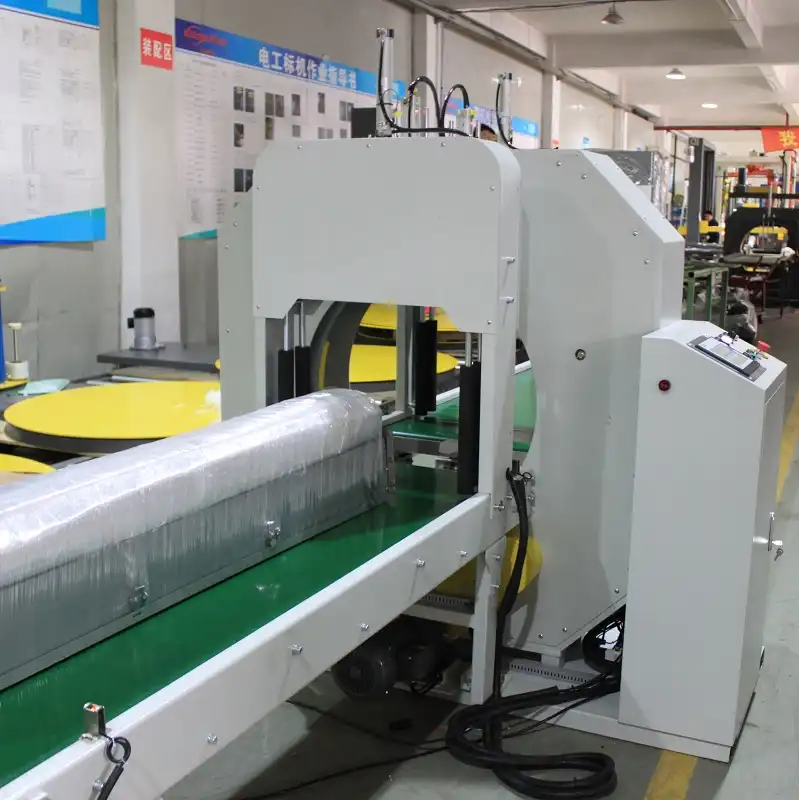
This challenge is real. It is about more than just buying a machine. It is about finding the right solution. It is about understanding how each feature impacts your bottom line and your team’s safety. Let’s break down these machines. We will look at what truly separates them when it comes to wrapping speed and how much film they can save you. This understanding will help you make a smart choice for your factory.
How do different orbital wrapper designs impact wrapping speed?
Is your current packing process lagging behind your production? Are you constantly battling to get products out the door fast enough? This slow pace does not just delay shipments. It also makes your entire operation less competitive. It puts extra pressure on your team, leading to mistakes and more costs. I have walked through countless factories, like those in Mexico dealing with heavy steel coils, where this exact issue holds them back.
The core design of an orbital stretch wrapper significantly dictates its operational speed. Entry-level models typically use simpler friction-wheel drives or manual film application, which limits their wrapping cycles per minute. More advanced, high-speed machines incorporate robust belt-driven or chain-driven systems. They also feature larger, higher RPM rings and fully automated film cutting and clamping mechanisms. These design choices enable them to handle higher volumes and maintain consistent, rapid wrapping cycles, reducing bottlenecks in the packing process.

When we talk about the speed of an orbital wrapper, we are looking at how many products it can wrap in an hour. This speed is critical for factories that move a lot of volume. My experience has taught me that even a small increase in speed can lead to huge gains over time. It can change your delivery times and improve your customer satisfaction.
Key Design Elements Affecting Speed
- Ring Diameter and Rotation Speed:
- The size of the ring and how fast it spins directly impacts wrapping speed. Larger rings can wrap bigger products. Faster rotation means more film layers applied in less time. However, there is a balance. Very high speeds require robust machine construction to prevent vibration and wear. My clients often ask about this balance for their heavy steel coils or wire bundles. They need speed but also stability for heavy loads.
- Basic machines might have slower, fixed speeds. Advanced models often have variable speed controls. This lets you adjust the wrapping speed based on your product and film.
- Drive System Type:
- Friction Wheel Drive: These are common in entry-level machines. They use friction to turn the wrapping ring. They are simple and cost less. However, they can be less consistent at high speeds or with very heavy loads. Speed is usually moderate.
- Belt or Chain Drive: Higher-end machines often use belt or chain drive systems. These provide more power and smoother operation. They can handle higher speeds and heavier products more reliably. This design ensures consistent wrapping, even under continuous use in demanding environments. This is vital for operations like those in metal processing plants that run 24/7.
- Automation Features:
- Automatic Film Clamping and Cutting: In basic models, an operator might need to manually attach and cut the film. This slows down the process. Fully automatic machines clamp the film at the start and cut it at the end without human help. This saves significant time per cycle.
- Conveyor Integration: Many advanced orbital wrappers are part of a larger conveyor system. Products move in and out of the wrapper automatically. This eliminates manual loading and unloading, making the entire packing line much faster. When I helped my clients set up their packing lines, seamless integration was always a top priority for maximizing throughput.
- Programmed Wrapping Cycles: Modern machines allow you to save different wrapping programs. You can choose the right program for each product type. This quick changeover saves time and reduces errors. It ensures consistent wrapping quality at speed.
- Product Handling:
- The way products enter and exit the wrapper also affects speed. Integrated infeed and outfeed conveyors make the flow smooth. Manual loading and unloading slow things down. For heavy items like steel coils, this automated handling is not just about speed. It is also about worker safety, a major concern for factory managers.








