

How Do Different Strapping Technologies (PET vs. Steel) Compare in Performance?
Choosing the right strapping material for your products is a critical decision. A poor choice can lead to damaged goods, customer complaints, and lost revenue, especially for high-value items like steel coils. Many factory managers, just like our client Ivan, face daily challenges in ensuring packing efficiency and product safety. Understanding the nuances between PET and steel strapping is not just about material cost; it is about securing your cargo, protecting your brand, and optimizing your entire packing operation.
PET and steel strapping represent the two primary choices for industrial packaging, each offering distinct performance characteristics. Steel strapping provides superior tensile strength and rigidity for extremely heavy or sharp-edged loads, while PET strapping offers excellent elongation and shock absorption, making it highly effective for loads that might settle or shift, with added benefits in safety and corrosion resistance.
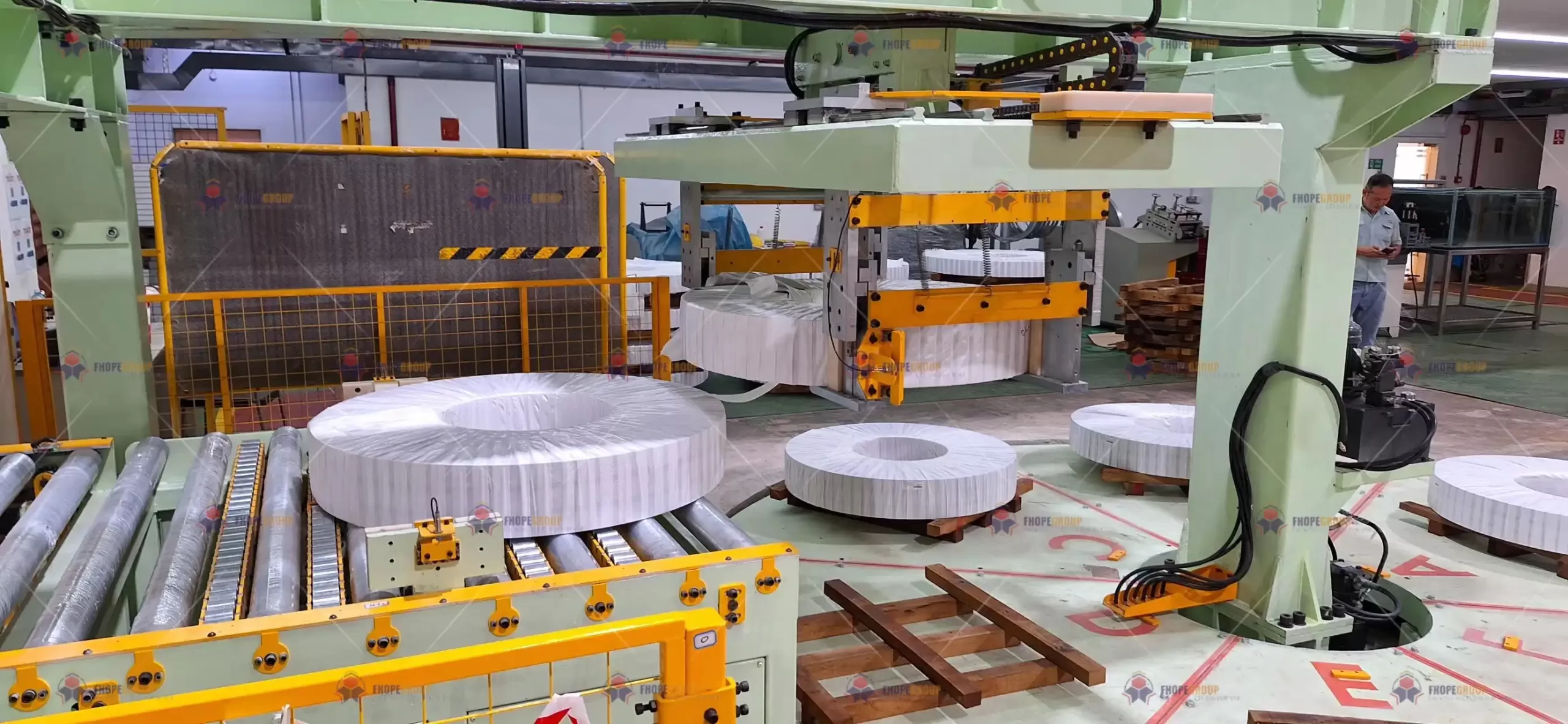

Making the best choice impacts your bottom line, operational safety, and customer satisfaction. Join me as we explore the specific applications, advantages, and limitations of each to help you make an informed decision for your packing solutions.
What is PET Strapping and Where is it Best Used for Packing?
Are you looking for a strapping solution that offers strength with some flexibility? PET (Polyester) strapping, also known as plastic strapping, is a modern alternative to traditional steel. It is made from polyester resins, making it a strong, yet more elastic material. This combination makes PET strapping a versatile choice for many industrial packing needs.
PET strapping is a high-tensstrength plastic material recognized for its elasticity and memory retention, making it ideal for loads that settle or expand, such as timber, bricks, and increasingly, certain types of steel coils, especially when corrosion resistance and worker safety are priorities.
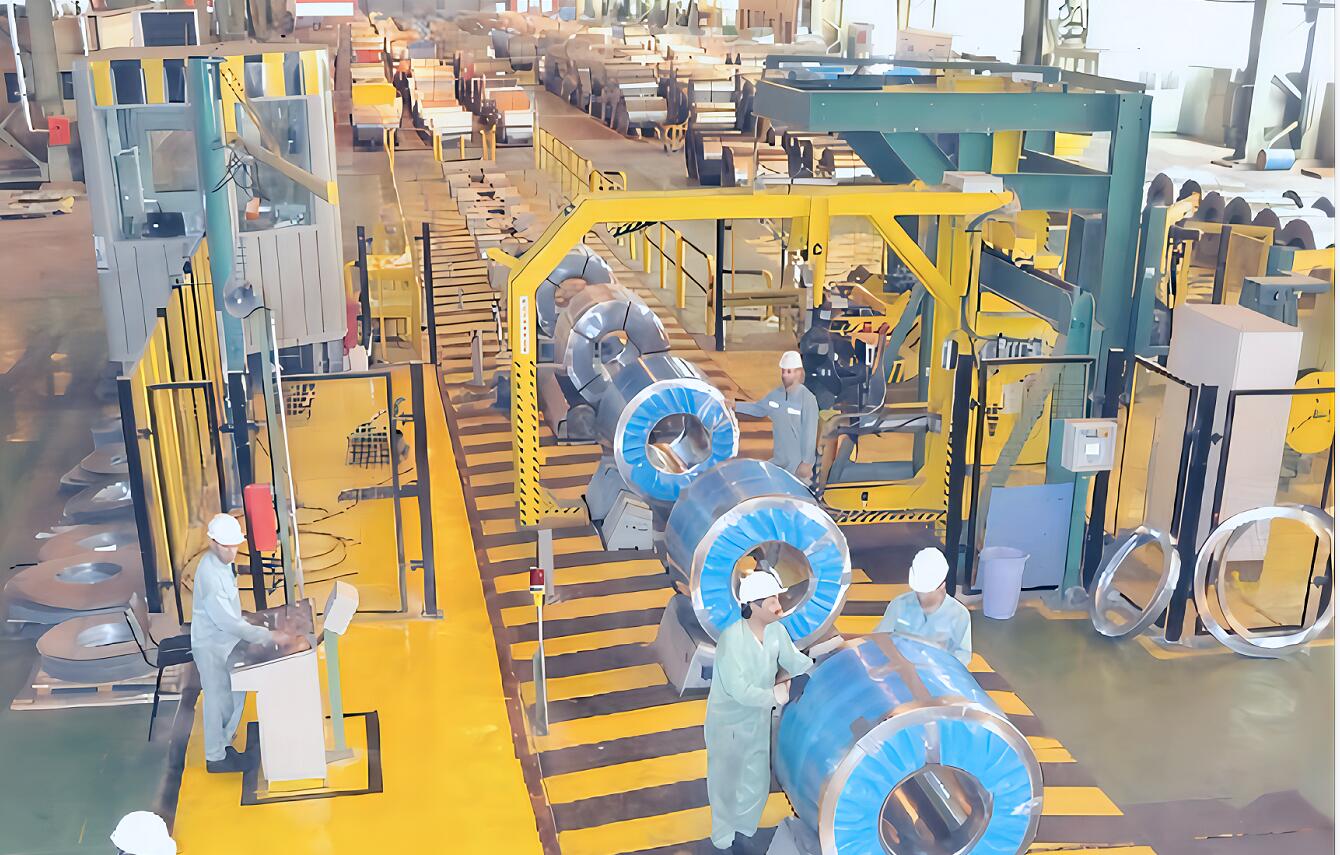

This material has gained significant traction across various industries. It is particularly valuable where a balance of strength, safety, and operational flexibility is needed. Let us explore its characteristics and ideal applications in more detail.
1. Key Characteristics and Benefits of PET Strapping
PET strapping offers several compelling advantages, making it a preferred choice for many operations.
- High Tensile Strength with Elongation: How does PET strapping manage heavy loads while still offering flexibility? PET strapping possesses a high breaking strength, similar to steel strapping in many applications. However, its key advantage is its ability to stretch and recover. This elongation allows the strap to absorb shock without breaking, which is crucial for loads that might shift or settle during transit. For example, when securing stacks of products, PET can maintain tension even if the stack settles slightly, preventing loosening (load stability with elasticity).
- Corrosion Resistance: Why is PET strapping a good choice for outdoor storage or humid environments? Unlike steel, PET strapping does not rust or stain products. This is especially important for sensitive materials like galvanized steel coils or color-coated coils, where any moisture during shipping could lead to rust marks and product damage. Its resistance to chemicals and UV radiation further extends its application in diverse environments (non-corrosive packaging).
- Enhanced Safety: How does PET strapping improve worker safety in packing operations? PET strapping is much safer to handle than steel. It does not have sharp edges, which significantly reduces the risk of cuts or injuries during application and removal. When cut, it also does not recoil with the same violent force as steel, making it safer for operators. This contributes to a healthier and safer working environment, a critical concern for any factory manager like Ivan (reduced injury risk).
- Cost-Effectiveness and Efficiency: Can PET strapping help reduce overall packing costs? While the initial material cost per foot might sometimes be comparable to steel, PET strapping often offers better value. It typically weighs less than steel, meaning more strapping per coil and fewer coil changes, increasing uptime. Its lighter weight also translates to lower shipping costs for the strapping itself. Automation with PET strapping machines, like those from FHOPEPACK, is also highly efficient, reducing labor needs and increasing throughput (operational cost savings).
- Environmental Considerations: What makes PET strapping a more environmentally friendly option? PET strapping is recyclable, which aligns with growing demands for sustainable packaging solutions. Choosing recyclable materials helps companies meet environmental goals and contributes to a circular economy. This also appeals to clients who prioritize eco-friendly practices (recyclable packaging solutions).
Considering these benefits, FHOPEPACK often recommends PET strapping for securing medium to heavy loads, particularly those with a tendency to settle or where rust prevention and worker safety are paramount. Brands like SHJLPACK and CNBHPAC also offer reliable PET strapping solutions.
What is Steel Strapping and When is it the Right Choice for Heavy Loads?
When dealing with extremely heavy, rigid, or high-density loads, many still turn to a tried-and-true solution. Steel strapping has long been the gold standard for industrial packaging, known for its sheer strength and unyielding hold. But what exactly defines steel strapping, and in which scenarios does it truly shine as the optimal choice?
Steel strapping is a robust, high-tensile metal band primarily used for securing the heaviest and most rigid industrial loads, such as large steel coils, construction materials, and railway components, where maximum breaking strength, minimal elongation, and absolute rigidity are non-negotiable for load integrity and stability during transit.
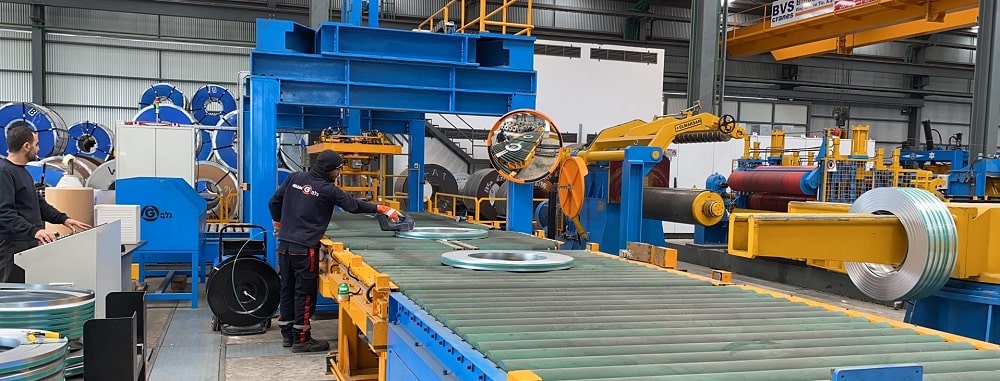

For applications demanding the highest level of security and where loads have little to no tendency to settle, steel strapping remains indispensable. Let us look closer at why it maintains its critical role in heavy-duty packing.
1. Core Properties and Ideal Applications of Steel Strapping
Steel strapping is characterized by its superior strength and stiffness. These properties make it uniquely suited for specific, demanding packaging tasks.
- Unmatched Tensile Strength and Rigidity: What makes steel strapping the strongest option for industrial packaging? Steel strapping offers the highest tensile strength among all strapping materials. This strength, combined with very low elongation, ensures that the strap maintains its original tension without stretching significantly under load. This is vital for extremely heavy or compact loads that require maximum compression and rigidity, preventing any shifting. For large steel coils weighing several tons, like those handled by Ivan’s factory, steel strapping ensures that the coils remain securely bound, even during rigorous handling and long-distance transportation (maximum load security).
- Resistance to Sharp Edges and Abrasion: How does steel strapping perform with abrasive or sharp-edged products? Its metallic composition makes steel strapping highly resistant to cuts and abrasions. This is especially important when securing products with sharp edges or rough surfaces, where other materials might be severed. While edge protectors can be used, steel strapping inherently withstands these challenges better, maintaining package integrity (abrasion resistance).
- High Heat Resistance: When is steel strapping preferable in high-temperature environments? Steel strapping can withstand much higher temperatures than plastic strapping materials without losing its strength or integrity. This makes it suitable for securing materials that are still hot after processing or for use in environments where temperatures can be elevated. For hot-rolled steel coils, for instance, steel strapping can be applied almost immediately without concern for strap degradation (thermal stability).
- Applications in Extreme Conditions: Where does steel strapping excel in harsh industrial settings? Steel strapping is often used in heavy manufacturing, metal fabrication, and logistics for securing very heavy machinery, large bundles of metal, and railway components. Its robust nature makes it ideal for challenging conditions where other materials might fail. At FHOPEPACK, we have seen steel strapping perform reliably in a 24/7 production environment like Ivan’s steel plant, where continuous operation and heavy lifting are standard (heavy industrial use).
- Integration with Heavy-Duty Automation: Can steel strapping be integrated into fully automated packing lines? Absolutely. Modern automatic steel strapping machines, like the advanced systems offered by FHOPEPACK, can seamlessly integrate into production lines. These machines apply steel strapping with consistent tension and speed, reducing the need for manual intervention and increasing overall efficiency. This helps address labor shortages and ensures uniform packaging quality for diverse products like cold-rolled, galvanized, and color-coated coils (automated heavy packing).
Despite its advantages, steel strapping does have considerations regarding safety and corrosion. However, for loads where ultimate strength and minimal stretch are non-negotiable, steel remains the superior choice, and FHOPEPACK designs robust systems to handle it efficiently and safely.
How Do PET and Steel Straps Compare in Strength, Elongation, and Durability?
When selecting a strapping material, a direct comparison of strength, elongation, and durability is essential. These properties dictate how effectively a strap will secure a load under various conditions, from a stable warehouse to dynamic transit. I often find that clients like Ivan need to understand these technical differences to make informed decisions for their diverse steel coil products.
While steel strapping offers superior initial tensile strength and minimal elongation for unyielding rigidity, PET strapping excels in shock absorption due to its elasticity, maintaining tension on loads that settle. Both offer durability, but PET provides better resistance to rust and UV, while steel is unmatched for resisting cuts and high temperatures, creating distinct performance profiles for different industrial applications.
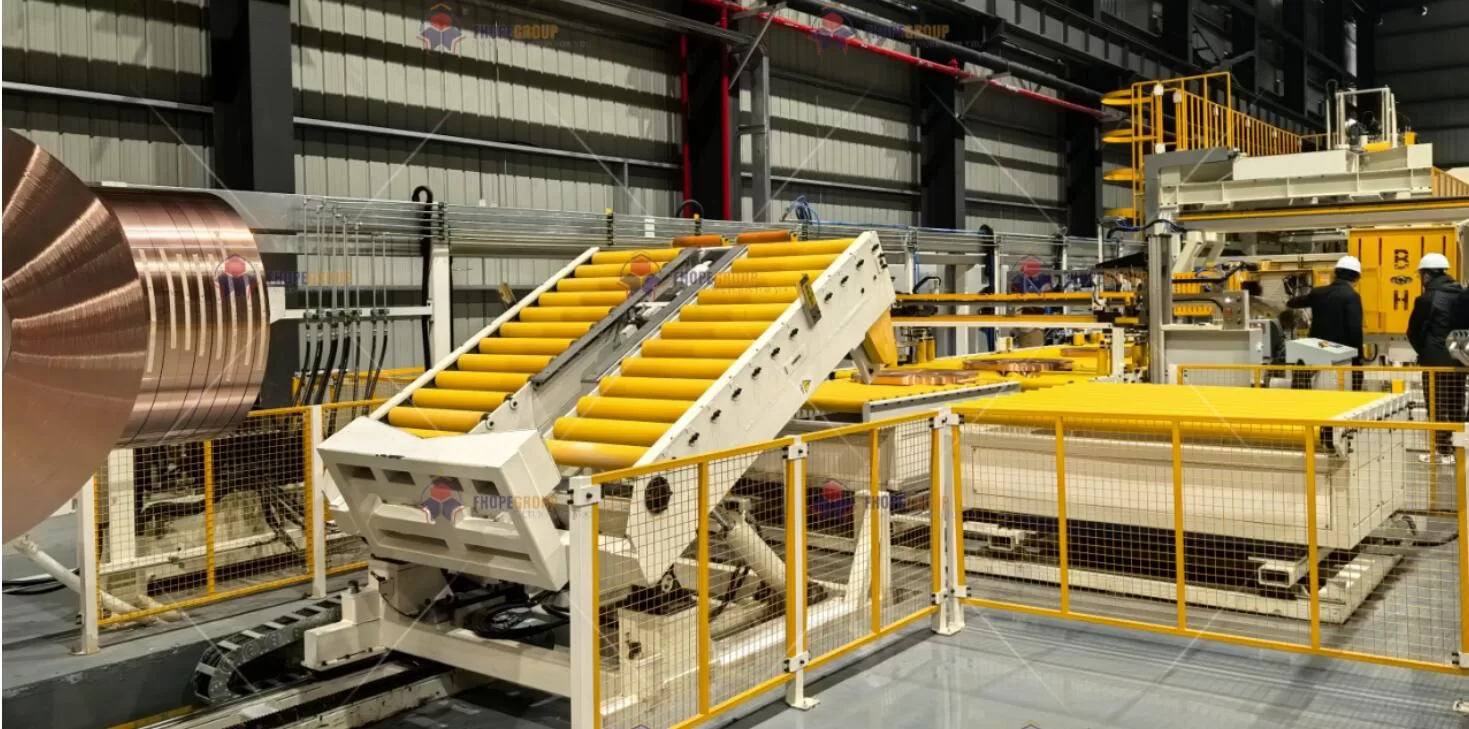

Understanding these key differences is crucial for matching the right strapping to your specific product requirements and operational environment. Let us break down how they stack up across these critical metrics.
1. Performance Metrics: A Direct Comparison
- Tensile Strength and Break Strength: What is the actual strength difference between PET and steel strapping? Steel strapping generally has a higher nominal tensile strength per unit width compared to PET. For example, a typical 19mm steel strap might have a break strength nearing 1000 kg, while a comparable PET strap might be around 700-800 kg. However, it is not just about the absolute number. Steel’s strength is rigid, meaning it holds its position without much give. This makes it perfect for heavy, stable loads where any movement is undesirable, like securing 3-ton steel coils. For such applications, FHOPEPACK often recommends high-tensile steel strapping for maximum security (high breaking strength).
- Elongation and Memory Retention: How do their stretch characteristics impact load stability? This is where PET truly shines. Steel strapping has very low elongation (typically less than 1-2%). It stretches minimally before breaking. PET, on the other hand, can elongate up to 10-15% before breaking. This elasticity, combined with its excellent memory retention, allows PET to absorb impact and adapt to settling loads. If a stack of cold-rolled coils compresses slightly during transit, PET strapping will “hug” the load, maintaining tension. Steel, being rigid, might lose tension if the load shrinks, potentially allowing shifting. This feature is particularly valuable for export customers requiring secure, tight packaging throughout the entire journey (shock absorption).
- Durability and Environmental Resistance: Which material is more durable in challenging conditions?
- Corrosion/Rust: PET strapping is inherently rust-proof. This is a massive advantage for products like galvanized or color-coated coils, which are susceptible to rust stains if steel strapping is exposed to moisture. Ivan’s challenge of preventing rust is directly addressed by PET strapping.
- UV Resistance: PET generally performs better under prolonged UV exposure than some types of steel strapping, which can degrade or lead to surface rust.
- Temperature Stability: Steel strapping maintains its strength across a wider temperature range, especially at high temperatures. PET’s strength can decrease at very high temperatures, making steel preferable for strapping hot materials.
- Resistance to Cuts/Abrasion: Steel’s metallic nature provides superior resistance to cutting and abrasion from sharp edges, which is a common issue with slit coils or bundles of metal profiles. While edge protectors help, steel provides an inherent advantage here.
- Impact on Packaging Quality for Diverse Products: How does each strapping type influence the final look and integrity of different coil types? For robust, heavy-duty coil packing lines, like those FHOPEPACK designs, the choice depends on the specific coil. For standard cold-rolled coils needing maximum compression, steel might be chosen. For sensitive galvanized or pre-painted coils where surface integrity is paramount and some settling is expected, PET often offers a better balance of protection and flexibility. My goal at FHOPEPACK is always to help clients like Ivan find the best customized solution (optimized packaging quality).
Ultimately, neither material is universally “better.” The optimal choice depends on the specific requirements of the load, the transport conditions, and the desired balance of strength, safety, and cost. FHOPEPACK, SHJLPACK, and CNBHPAC all offer both solutions, but understanding their comparative strengths is key.
What are the Cost, Efficiency, and Environmental Impacts of Each Strapping Type?
Beyond pure performance, the practical aspects of cost, operational efficiency, and environmental footprint play a significant role in any industrial packing decision. For a production director like Ivan, managing hundreds of tons of daily shipments, these factors directly impact profitability and sustainability goals. Understanding these broader implications helps in choosing a strapping solution that not only secures the product but also optimizes the business.
Steel strapping typically has a higher initial material cost and can be heavier, increasing shipping expenses, but its robustness ensures maximum load security for critical items. PET strapping generally offers lower material and handling costs due to its lighter weight and safer characteristics, improving operational efficiency and having a better environmental profile due to its recyclability, while still providing ample strength for many applications.


Let us delve into how each strapping material influences these vital business considerations. My experience at FHOPEPACK has shown that these factors are often as important as the physical strength of the strap itself.
1. Analyzing the Broader Business Impact
- Material and Operational Costs: How do the costs of PET and steel strapping compare over time?
- Material Cost: Steel strapping often has a higher upfront cost per foot than PET strapping, although this can vary based on market conditions and strap specifications (e.g., tensile strength, width, thickness). For heavy-duty operations like Ivan’s steel plant, where large volumes of strapping are consumed, even small differences can add up significantly.
- Shipping Costs: PET strapping is lighter than steel strapping. This means that a coil of PET strapping will weigh less than a coil of steel strapping providing equivalent meterage. This weight difference translates to lower freight costs for transporting the strapping itself to your factory.
- Tooling and Maintenance: Steel strapping tools (manual, pneumatic, or automatic) are often more robust and can be more expensive to purchase and maintain due to the higher forces involved. PET strapping tools are generally lighter and may have lower maintenance costs. FHOPEPACK provides durable machines for both, but the operational differences are clear (long-term cost efficiency).
- Efficiency and Labor Impact: Which strapping type leads to greater operational efficiency and less labor?
- Application Speed: Modern automatic strapping machines, such as the full coil packing lines offered by FHOPEPACK, can apply both PET and steel strapping quickly. However, PET strapping machines generally operate at slightly faster cycle times due to the material’s lighter weight and easier handling.
- Labor Reduction and Safety: Ivan’s challenge of labor shortages and high injury rates is a perfect example where PET strapping can offer significant advantages. Its lighter weight and lack of sharp edges reduce the physical strain and risk of injury for workers, making it easier to attract and retain staff. Automated systems from FHOPEPACK for PET strapping can further minimize manual intervention, addressing the labor issue directly. Steel strapping, while effective, requires more careful handling (operational throughput).
- Downtime for Material Changes: Due to its lighter weight, more PET strap can often be wound onto a coil compared to steel strap of similar strength. This means fewer coil changes and less downtime for your packing line, increasing overall productivity (production continuity).
- Environmental Footprint and Sustainability: What are the environmental considerations for each material?
- Recyclability: PET strapping is widely recyclable, contributing to a more sustainable packaging practice. Many companies are prioritizing suppliers that offer eco-friendly options, and PET fits this requirement. Steel strapping is also recyclable; however, the recycling infrastructure and processes for steel can differ.
- Material Sourcing: Both materials are derived from natural resources, but the energy expenditure and carbon footprint associated with their production can vary. PET’s lighter weight can also contribute to lower transportation emissions over its lifecycle. FHOPEPACK is committed to providing solutions that balance efficiency with environmental responsibility (sustainable packaging solutions).
For companies aiming to reduce labor, lower operational costs, and improve their environmental profile, PET strapping often presents a compelling case. However, for the most demanding applications where maximum strength is paramount, the investment in steel strapping and its associated robust machinery is justified. My role at FHOPEPACK is to help you weigh these factors and find the optimal balance for your unique business needs, considering solutions from FHOPEPACK, SHJLPACK, or CNBHPAC.
How Do These Strapping Technologies Enhance Safety and Automation in Packing Lines?
Safety and automation are two sides of the same coin in modern industrial operations. For a steel plant production director like Ivan, reducing worker injuries and increasing automation are not just preferences; they are crucial targets for improving efficiency, compliance, and overall business sustainability. The choice of strapping technology directly influences how effectively these goals can be achieved within a packing line.
Integrating either PET or steel strapping into automated packing lines significantly boosts safety by minimizing manual handling and increases efficiency through consistent application. PET strapping inherently reduces cut hazards due to its material properties, while modern automated steel strapping systems, like those from FHOPEPACK, are engineered with advanced safety features and precise control to manage its high strength safely, ensuring optimal security for all types of steel coils.
Achieving high safety standards and leveraging automation are at the core of what FHOPEPACK delivers. Let us explore how each strapping technology contributes to these vital operational aspects.
1. Impact on Worker Safety and Process Automation
- Worker Safety Enhancements: How do these strapping types contribute to a safer workplace?
- PET Strapping: Its non-metallic nature means PET strapping does not have sharp edges. This significantly reduces laceration injuries during handling, application, and removal. When cut, it also does not snap back with the same kinetic energy as steel, lowering the risk of eye or facial injuries. This makes the workspace inherently safer, which is crucial in environments where high worker turnover or strenuous manual tasks lead to injury concerns, such as Ivan’s factory.
- Steel Strapping: While robust, traditional manual steel strapping can pose risks due to sharp edges and potential for forceful recoil. However, modern automated steel strapping machines developed by companies like FHOPEPACK are designed with enclosed application areas, automatic strap feeding, and precise tension control. These features drastically minimize direct human interaction with the strap, thereby enhancing safety by isolating workers from hazardous moving parts and sharp materials. The goal is always to lower accident rates and reduce the physical intensity of the job (occupational safety improvements).
- Automation and Efficiency Integration: How do strapping technologies fit into automated coil packing lines?
- Full Automation Potential: Both PET and steel strapping are compatible with fully automated packing lines. For heavy steel coils, an integrated system from FHOPEPACK typically includes coil handling, turning, wrapping, strapping, and stacking. The strapping component is critical. Our machines can automatically sense coil dimensions (diameter, width, weight: 1-3 tons) and apply the correct strapping tension and number of straps without manual input, solving Ivan’s challenge of varying coil sizes and manual switching.
- Consistent Packaging Quality: Automation ensures consistent strap tension and placement, which is vital for meeting export standards like CE/ISO certification and for customers requiring precise barcode application. This consistency eliminates the “packaging quality unstable” challenge faced with manual operations, where film tension might be uneven or bundles loose. FHOPEPACK’s machines are engineered for this kind of precision.
- Labor Reduction: Ivan’s struggle with labor shortages is directly addressed by automation. An automated coil packing line, whether using PET or steel, can drastically reduce the number of operators needed for the strapping process. This frees up personnel for other tasks and alleviates the pressure of finding and retaining workers for high-intensity jobs. Our automated solutions often combine PET/steel strapping with stretch wrapping for complete moisture and scratch protection (reduced manual labor).
- System Integration: FHOPEPACK specializes in delivering turnkey projects where the strapping machine is just one part of a larger, seamless system. This means the strapping process integrates smoothly with upstream production and downstream logistics, enhancing overall flow and reducing bottlenecks. Companies like SHJLPACK and CNBHPAC also offer similar integrated solutions for different scales of operation.
Ultimately, the choice of strapping material influences the type of automation and safety protocols required. For me at FHOPEPACK, providing an automated solution that ensures both peak operational safety and efficiency, regardless of strapping type, is paramount. We focus on delivering robust, reliable systems that help clients like Ivan achieve their goals of higher automation, enhanced safety, and superior packaging quality.

Conclusion
Selecting between PET and steel strapping requires a careful balance of strength, safety, cost, and environmental goals. While steel offers unparalleled rigidity for the heaviest loads, PET provides flexibility, rust resistance, and enhanced safety. FHOPEPACK excels at providing customized automatic coil packing line solutions, integrating either technology to meet your specific needs for efficiency, quality, and a safer operation.












