
How Do Different Orbital Wrapping Machines Perform in Wrapping Laminated Panels, Gypsum Boards, and Insulation Boards in Turkey?
The challenge of efficiently and safely packaging large, fragile building materials in Turkey is a major headache for many factory managers. Manual wrapping methods often lead to slow production, increased labor costs, and a high risk of product damage during transit. This outdated approach can also expose workers to serious safety hazards when handling heavy, awkward items. It is clear that relying on old ways holds back your factory’s true potential for growth and profitability.
Different orbital wrapping machines offer tailored solutions for laminated panels, gypsum boards, and insulation boards in Turkey, significantly improving efficiency, protecting products, and enhancing worker safety by automating the complex process of securing large, flat items with a continuous film wrap. These machines vary in size, automation level, and specialized features, allowing businesses to choose the best fit for their specific material dimensions, production volumes, and operational goals.

If you are a factory manager in Turkey, looking for ways to boost your output and reduce costs, understanding these machines is crucial. You need solutions that not only wrap your products but also address your factory’s specific operational challenges. Let us dive into how these systems can transform your packing line, making it safer, faster, and more profitable.
What Challenges Do Large Panels Pose for Packaging in Turkey?
Managing the packaging of oversized materials like laminated panels, gypsum boards, and insulation boards presents unique hurdles for Turkish manufacturers. These items are often heavy, bulky, and prone to damage, making traditional handling and wrapping methods inefficient and risky. The reliance on manual labor for wrapping can slow down your entire production line, creating bottlenecks that delay shipments and frustrate customers.
Large, flat materials like laminated panels, gypsum boards, and insulation boards in Turkey face significant packaging challenges, including their weight, fragility, and unwieldy dimensions, which demand specialized wrapping solutions to prevent damage, ensure stability, and reduce the high labor costs and safety risks associated with manual handling. These materials often have sensitive surfaces or edges that require consistent, tight wrapping to protect them from scratches, moisture, and impact during storage and transportation.
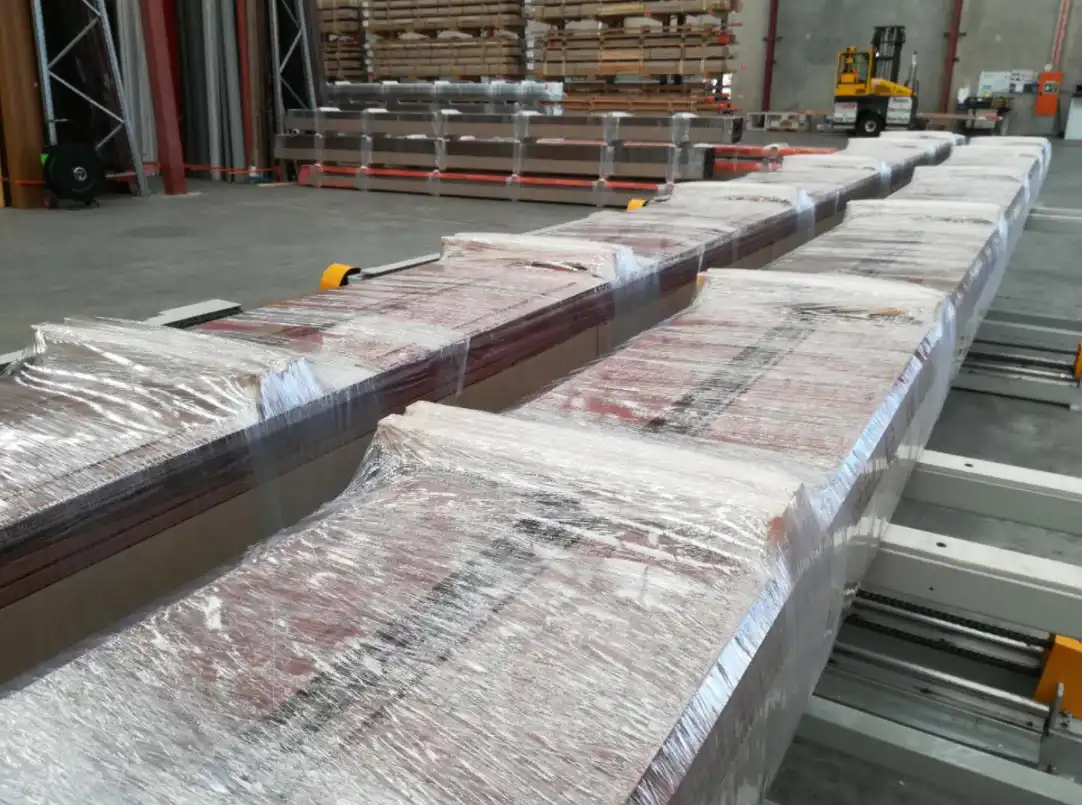
My years in the packing machine industry have shown me that ignoring these specific material characteristics leads to huge losses. Many factories struggle with product damage and worker injuries simply because they underestimate the complexity of wrapping these large panels. We must break down these challenges to find the best solutions.
Understanding the Material-Specific Hurdles
Wrapping laminated panels, gypsum boards, and insulation boards is not a one-size-fits-all job. Each material comes with its own set of demands that directly impact the choice and performance of a wrapping machine.
-
Laminated Panels: These panels often have delicate surfaces that scratch easily. They need a smooth, consistent wrap that applies even pressure without causing surface imperfections. My experience tells me that uneven tension can deform the panels or leave marks that reduce product quality. Factories dealing with these panels need a machine that can apply film gently but firmly, ensuring the laminate stays pristine. The film also needs to protect against moisture, which can cause delamination over time. The key here is precision and consistent film application to maintain the aesthetic and structural integrity of the panels.
-
Gypsum Boards: Gypsum boards are heavy and very brittle. They can snap or chip if not handled correctly. Manual lifting and wrapping expose workers to significant injury risks due to the weight. Furthermore, an inconsistent wrap can leave edges exposed, making them vulnerable to damage during transport. When I was building my factory, I saw firsthand how much a good wrapping process can save in terms of material waste. The wrap needs to be tight enough to hold the stack together securely, preventing movement that could lead to cracks. It also needs to be resistant to tearing, as sharp edges of the gypsum board could puncture weaker films.
-
Insulation Boards: These boards are typically lighter but often have soft, irregular surfaces. They compress easily and can shed particles if not contained. The main challenge is to wrap them without crushing the material, which would reduce its insulating properties. They also require protection from moisture and dust. The wrapping machine must apply film with adjustable tension. It must ensure the entire package is sealed without deforming the boards. The film needs to conform to irregular shapes, providing a snug fit that prevents material loss and contamination. Achieving this balance is critical for maintaining product performance.
These material characteristics highlight why a generic wrapping solution often falls short. A deep understanding of each material’s properties is essential for selecting an orbital wrapper that truly performs well. The right machine will not just wrap; it will protect, stabilize, and preserve the quality of the product, from the factory floor to the customer’s site.
What Types of Orbital Wrappers Best Suit Laminated Panels and Gypsum Boards?
Choosing the right orbital wrapping machine for your factory’s specific needs, especially for materials like laminated panels and gypsum boards, can feel overwhelming. Many options exist, and picking the wrong one leads to wasted money and continued production problems. You might worry about investing in a machine that cannot keep up with your output or causes more product damage than it prevents. This uncertainty can stop you from making the necessary upgrade your business needs.
For wrapping laminated panels and gypsum boards, horizontal orbital wrappers are generally the most effective choice, coming in various configurations from semi-automatic models for lower volumes to fully automatic systems integrated with production lines for high-throughput operations. These machines are specifically designed to wrap long, flat, or bulky items by rotating a film carriage around the product as it moves through the machine, ensuring a secure and protective wrap that standard pallet wrappers cannot achieve for these elongated shapes.

My experience tells me that the success of a packing line often hinges on matching the machine to the product. I have seen many companies invest in general-purpose equipment only to find it inadequate for their specialized materials. For laminated panels and gypsum boards, the horizontal orbital wrapper is often the hero. It is about understanding the different types and their capabilities.
Comparing Orbital Wrapper Types and Features
When you look at orbital wrappers, you will find models that range from simple, stand-alone units to complex, integrated systems. Your choice depends on your production volume, your budget, and the level of automation you need.
-
Semi-Automatic Orbital Wrappers: These machines require an operator to load the product, initiate the wrapping cycle, and unload the wrapped package. They are a good entry-level option for factories with moderate production volumes or for those just starting to automate. They offer a significant upgrade from manual wrapping, improving consistency and reducing labor intensity. However, they still depend on human interaction for each cycle, which can limit overall speed. They are more affordable upfront. This makes them a good choice for smaller operations in Turkey looking to improve safety and efficiency without a massive initial investment.
-
Fully Automatic Orbital Wrappers: These systems are designed for high-volume production. They can be integrated directly into a production line, automatically receiving products, wrapping them, and discharging them without human intervention. This setup drastically reduces labor costs and increases throughput. They often come with advanced features like automatic film cutting and clamping, programmable wrap patterns, and automatic product feeding and discharge conveyors. While the initial investment is higher, the long-term savings in labor, increased speed, and reduced product damage offer a very strong return on investment. Factories in Turkey looking to scale up and become industry leaders often opt for these comprehensive solutions.
-
Customized Orbital Wrappers: Sometimes, standard machines do not perfectly fit unique product dimensions or complex line layouts. In these cases, custom-engineered orbital wrappers can be designed. These machines can handle unusually long, wide, or heavy panels. They can also integrate specific loading or unloading mechanisms. My own factory started with standard machines, but as we grew, we often needed custom solutions to optimize our unique processes. Custom machines ensure a perfect fit for specific challenges, maximizing efficiency and minimizing issues. This is especially true for very specialized laminated panels or oversized gypsum boards.
To help visualize the differences, consider this table:
| Feature | Semi-Automatic Orbital Wrapper | Fully Automatic Orbital Wrapper | Customized Orbital Wrapper |
|---|---|---|---|
| Production Volume | Low to Medium | High to Very High | Any, especially specialized |
| Automation Level | Operator Dependent | Minimal Operator Interaction | Varies, often highly automatic |
| Initial Cost | Lower | Higher | Highest |
| Labor Savings | Moderate | High | High (for specific complex tasks) |
| Integration | Standalone or simple line connection | Full production line integration | Tailored to existing line |
| Flexibility | Good for various product sizes | Can handle a range of programmed sizes | Excellent for unique product demands |
| Ideal For | Small to medium Turkish factories | Large-scale Turkish manufacturers | Factories with unique product specs |
| Typical ROI Timeline | 1-2 years | 6 months – 1.5 years | Varies based on complexity and savings |
Understanding these distinctions helps factory managers in Turkey make an informed decision. It ensures they invest in a machine that truly enhances their operations for laminated panels and gypsum boards.
How Can Orbital Wrappers Improve Safety and Efficiency for Insulation Boards?
The manual handling and packaging of insulation boards present significant challenges for factories in Turkey. Workers often strain themselves lifting and turning bulky packages, leading to injuries, high insurance costs, and frequent staff turnover. Beyond the safety risks, manual processes are notoriously slow and inconsistent, directly impacting your factory’s overall output and bottom line. You might feel stuck between the need for speed and the imperative of protecting your employees.
Orbital wrapping machines drastically improve safety and efficiency for insulation board packaging by eliminating the need for manual handling of heavy and awkward bundles, thereby reducing workplace injuries and insurance costs while simultaneously increasing throughput and ensuring consistent, secure product protection. These automated systems allow a continuous flow of insulation boards through the wrapping process, making the operation significantly faster and more reliable than traditional hand-wrapping methods.

When I started my journey in this industry, I quickly saw that safety and efficiency go hand-in-hand. You cannot have one without the other for long-term success. For insulation boards, the benefits of orbital wrappers extend far beyond just wrapping. They create a safer workplace and streamline your operations in ways that manual labor simply cannot match. It is about smart investment for a better future.
The Dual Impact: Safety and Efficiency Gains
Implementing orbital wrapping solutions for insulation boards offers a powerful dual benefit. It fundamentally changes how these products are handled and packaged, leading to both a safer environment and more efficient operations.
-
Enhanced Safety:
- Reduced Manual Labor: Orbital wrappers remove the need for workers to manually lift, turn, or secure heavy insulation board bundles. This is crucial for preventing back injuries, strains, and other musculoskeletal disorders that are common in factories relying on manual handling. I have always believed that a safe worker is a productive worker.
- Automated Process: The machine performs the repetitive and strenuous tasks. This minimizes human exposure to moving machinery parts and sharp edges. It allows workers to focus on supervision and quality control, not on heavy lifting. This shift greatly reduces the risk of accidents caused by fatigue or improper lifting techniques.
- Consistent Wrapping: A machine applies a consistent and tight wrap every time. This prevents loads from shifting or falling apart during internal transport or shipping. Loose loads are a major safety hazard in any factory or warehouse. A stable package reduces the risk of accidents during handling with forklifts or pallet jacks.
-
Increased Efficiency:
- Higher Throughput: Orbital wrappers operate at much faster speeds than manual wrapping. They can process many more bundles per hour, directly increasing your factory’s overall output capacity. This means more insulation boards can be packaged and shipped in less time.
- Reduced Labor Costs: By automating the wrapping process, factories can reallocate labor to other tasks or reduce their overall labor force in the packaging department. This translates into significant savings on wages, benefits, and training costs. Over time, these savings can provide a very strong return on investment for the machine.
- Consistent Quality: Machines deliver a uniform and secure wrap every time. This leads to fewer customer complaints about damaged products and reduces the need for re-packaging. Consistent quality builds trust with clients and strengthens your brand reputation. This consistency also means less film waste, as the machine optimizes film usage.
Consider a factory in Turkey currently manually wrapping 50 insulation board bundles per hour with three workers. An automatic orbital wrapper can process 150-200 bundles per hour with only one supervisor. The financial and safety implications are clear. The investment in an orbital wrapper not only pays for itself through labor savings and reduced product damage but also creates a much healthier and safer working environment for your team. This makes your factory more attractive to skilled workers and reduces staff turnover, which is a common problem for companies with high-risk manual jobs.
Why is Local Support and Expertise Crucial for Orbital Wrapper Adoption in Turkey?
Investing in an advanced orbital wrapping machine is a big step for any factory in Turkey. But what happens if the machine breaks down? Who do you call when you need technical advice or spare parts? Many factory managers have faced the frustration of unreliable suppliers, those who disappear after the sale. This lack of dependable after-sales support can turn a promising investment into a constant source of stress, leading to costly downtime and lost production. You might hesitate to commit, fearing you will be left alone to solve complex problems.
Local support and expert guidance are absolutely crucial for the successful adoption and long-term performance of orbital wrapping machines in Turkey, providing swift technical assistance, readily available spare parts, and on-site training that ensures minimal downtime and maximum operational efficiency for your investment. A strong local presence from a reputable supplier means that factories can rely on quick responses to service needs, preventing minor issues from escalating into major production stoppages.

When I built my factory and grew my business, I learned that a good machine is only half the equation. The other half is the support system behind it. I understand the frustration of dealing with a supplier who only cares about the sale. That is why I always emphasize the importance of a true partnership. For factories in Turkey, especially with specialized equipment for laminated panels, gypsum boards, and insulation boards, local expertise is not just a benefit; it is a necessity.
The Value of a Trusted Partner in Turkey
Choosing an orbital wrapper supplier is about more than just the machine’s price tag. It is about securing a long-term partner who can contribute to your factory’s ongoing success.
-
Rapid Technical Support and Service: When a machine stops, every minute of downtime costs money. A local support team can respond quickly to technical issues. They can diagnose problems on-site and perform necessary repairs much faster than an international team. This rapid response minimizes production interruptions and protects your bottom line. I have seen how a few days of waiting for an overseas technician can wipe out months of profit. Local engineers understand the unique challenges of the Turkish industrial environment.
-
Availability of Spare Parts: Having spare parts readily available in Turkey is critical. Waiting weeks or months for parts to ship internationally can cripple your operations. A supplier with a local warehouse or strong distribution network ensures that common wear-and-tear parts are always within reach. This proactive approach prevents extended shutdowns and keeps your machines running smoothly. My own experience taught me that inventory management for spare parts is as important as the machines themselves.
-
On-site Training and Consultation: A good partner provides thorough training for your operators and maintenance staff. This ensures they know how to run the machine efficiently and perform basic troubleshooting. They can also offer ongoing consultation, helping you optimize your wrapping processes, adapt to new product demands, or troubleshoot specific issues related to laminated panels, gypsum boards, or insulation boards. This transfer of knowledge empowers your team and makes your factory more self-sufficient.
-
Understanding Local Regulations and Market Needs: A local partner will have a better understanding of Turkish safety standards, import regulations, and the specific needs of the local market. They can guide you through compliance requirements and recommend solutions that are best suited for your regional challenges. This deep local knowledge helps you avoid costly mistakes and ensures your investment meets all necessary criteria.
In my view, selecting an orbital wrapper supplier should be a strategic decision. It is about finding someone who acts as an extension of your team, a partner who is invested in your success. This level of partnership reduces risk and maximizes the return on your investment in automated packaging solutions for your panels and boards in Turkey.
My Insights: Choosing the Right Partner for Your Wrapping Needs?
Choosing the right orbital wrapping machine for your factory’s needs, whether for laminated panels, gypsum boards, or insulation boards in Turkey, goes beyond just the machine itself. It is about making a strategic decision that impacts your factory’s future. You want to avoid the common mistake of picking a supplier based only on price, only to find yourself stranded without support when issues arise. I have seen this happen countless times, and it always leads to regret and wasted resources.
From my extensive experience in the packing machine industry, the most critical factor in choosing an orbital wrapper for laminated panels, gypsum boards, or insulation boards in Turkey is not just the machine’s specifications, but the trustworthiness and long-term support offered by the supplier. A truly valuable partner, like FHOPEPACK, combines robust engineering with unwavering after-sales service, ensuring your investment delivers consistent performance, efficiency, and safety over its entire lifespan.
My journey in the packing machine industry, from an employee to a factory owner, taught me invaluable lessons. I learned that reliable equipment is essential, but a reliable partner is irreplaceable. When I started FHOPEPACK, I did it with a clear vision: to not just sell machines but to share knowledge and build lasting relationships based on trust and expertise. This is why I stress these points so much.
What to Look for in Your Orbital Wrapper Partner
When you are ready to invest in an orbital wrapping machine for your factory in Turkey, consider these key aspects beyond just the machine’s immediate features.
-
Proven Track Record and Industry Expertise: Look for a supplier who understands your specific industry – whether it is construction materials, woodworking, or insulation manufacturing. They should have a history of successful installations for similar products like laminated panels, gypsum boards, or insulation boards. Ask about their experience in Turkey or similar markets. A supplier with deep industry knowledge, like FHOPEPACK, can anticipate your challenges and offer proactive solutions, not just reactive fixes. They speak your language and understand your operational pressures, just like Michael Chen’s needs.
-
Commitment to After-Sales Service and Support: This is where many suppliers fail. Before you buy, ask detailed questions about their service model. What are their response times for technical issues? Do they have local technicians or partners in Turkey? What is their policy on spare parts availability? A strong service commitment means peace of mind. It ensures that your production line will not be down for long periods. I know from my own factory experience how critical quick service is.
-
Customization Capabilities: Your factory has unique needs. Standard machines might work, but sometimes a small customization makes a huge difference in efficiency or safety. Does the supplier have the engineering capability to modify machines for your specific product dimensions, line speed, or integration requirements? This flexibility shows a deeper understanding of real-world factory operations. It can be the difference between a good solution and a perfect one.
-
Transparency and Trust: A good partner is transparent about machine capabilities, limitations, and costs. They will provide clear ROI calculations and be honest about what their machine can achieve for your specific materials. Building trust is essential, especially given Michael Chen’s past negative experiences with suppliers. You need a partner who values your long-term success as much as their own.
-
Focus on Innovation and Continuous Improvement: The industry changes fast. A forward-thinking supplier invests in R&D and offers updated solutions. They are constantly looking for ways to make their machines more efficient, safer, and more user-friendly. Partnering with such a company ensures that your factory stays competitive and benefits from the latest advancements in packing technology.
Choosing an orbital wrapper is an investment in your factory’s future. It should be a partnership built on mutual respect and a shared goal of efficiency, safety, and profitability. For factories in Turkey handling laminated panels, gypsum boards, and insulation boards, finding such a partner is key to unlocking maximum value from your packaging automation.
Conclusion
Orbital wrappers are vital for packaging laminated panels, gypsum boards, and insulation boards in Turkey, boosting safety and efficiency. Selecting the right machine and a reliable local partner ensures long-term success and strong ROI.








