
How do coil wrapping machines improve efficiency in India’s steel manufacturing plants?
You know the feeling, right? That constant pressure to ramp up production, cut costs, and keep your team safe, all while battling the daily grind on the factory floor. I have been there myself, starting from the ground up in a packing machine factory. I saw firsthand the bottlenecks and risks that old methods created. Now, many years later, after building my own successful factory, I know that modern solutions can truly transform a business. This is especially true for steel manufacturing plants in India, where the demand for speed and reliability is higher than ever.
Coil wrapping machines greatly improve efficiency in India’s steel manufacturing plants by automating the packing process, which reduces manual labor, increases throughput, enhances worker safety, and protects valuable products during transit. These machines ensure faster operations and lower operational costs, directly addressing critical production challenges faced by the industry.
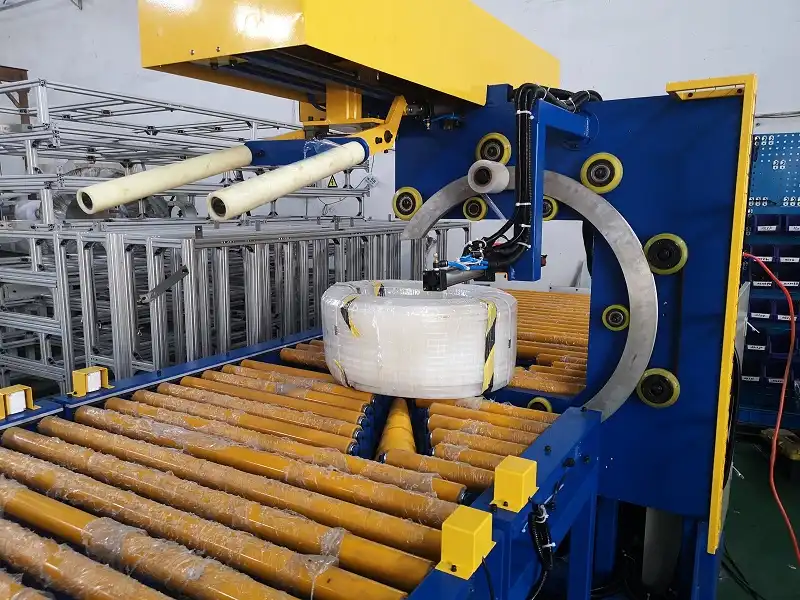
If you are a factory manager, an operations director, or just someone looking to optimize your steel coil packing lines, you understand the importance of every minute and every rupee. I want to share my insights with you. We will look at how modern coil wrapping technology can solve your biggest efficiency puzzles and drive real growth for your business.
1. How do coil wrapping machines streamline production flow and boost output?
Are you tired of watching your production lines slow down at the very last step? Many Indian steel manufacturers face this exact problem. Manual coil packing is a major bottleneck. It slows down the entire delivery process. This creates delays and missed opportunities.
Coil wrapping machines streamline production by automating a critical part of the process. They integrate directly into existing lines. This allows for continuous wrapping without human intervention. The result is a significant increase in the speed at which coils move from production to dispatch. This boosts overall output.

When I first started in this industry, I saw how much time workers spent wrestling with heavy coils. They used simple hand tools for wrapping. This was not just slow; it was inconsistent. Today, advanced coil wrapping machines change everything. They use smart technology to wrap coils quickly and uniformly. This means no more waiting. Coils move off the line, get wrapped, and are ready for shipment in record time. This continuous flow helps eliminate those frustrating end-of-line bottlenecks. It makes sure that your plant’s overall productivity reaches new levels. I have seen clients transform their operations. They went from struggling with delivery deadlines to consistently exceeding them. It comes down to smart automation.
The Impact of Automation on Throughput
Modern coil wrapping machines bring several benefits to production flow. These machines work much faster than human workers. They complete wraps in minutes. This means more coils are processed per hour. It directly increases the plant’s overall output capacity.
- Faster Cycle Times: Manual wrapping can take a long time, especially for large or heavy coils. An automated machine finishes the job in a fraction of that time. This shortens the time each coil spends in the packing area. It speeds up the entire production cycle.
- Reduced Waiting Periods: In many plants, coils pile up at the packing station. This creates a backlog. Coil wrapping machines eliminate this problem. They ensure a steady flow. Coils move from the production line to the machine, get wrapped, and then go to storage or dispatch. There is no waiting.
- Consistent Performance: Humans get tired. They can make mistakes. Machines work with the same speed and precision every single time. This ensures consistent packing quality and speed, all day, every day. It removes variability from the packing process.
- Integration with Production Lines: Modern wrapping machines are designed to integrate seamlessly. They connect with conveyors and other handling equipment. This creates a fully automated end-of-line solution. This integration means less manual handling. It means fewer chances for delays between stages.
Here is a table showing the direct impact on efficiency:
| Aspect | Manual Packing | Automated Coil Wrapping Machine |
|---|---|---|
| Speed | Slow, dependent on worker stamina | Fast, consistent high-speed operation |
| Throughput | Limited by labor availability and skill | High, continuous flow, significantly increased |
| Consistency | Varies with worker, prone to errors | High, uniform wrap quality and speed |
| Bottlenecks | Frequent, especially at end-of-line | Minimized, smooth transition to dispatch |
| Integration | Poor, requires manual transfer between stages | Seamless with conveyors, part of automated line |
This shift from manual to automated packing helps plants meet higher demand. It also improves delivery times. This can give businesses a competitive edge in the market. I have seen it time and again. Investing in the right technology pays off by unlocking a plant’s full production potential. This is a critical step for any steel manufacturer looking to scale operations and improve their bottom line.
2. How do these machines make steel plants safer for workers?
Is worker safety a constant concern in your factory? Heavy steel coils and wires are dangerous to handle. Manual packing methods often put your team at high risk. This leads to accidents and injuries. This is a problem that I have seen in many places. It affects both workers and the business.
Coil wrapping machines significantly improve worker safety by eliminating the need for manual handling of heavy and awkward coils. They take over hazardous tasks like lifting, moving, and securing materials. This greatly reduces the risk of back injuries, crush incidents, and other workplace accidents. This makes the factory a much safer place for everyone.
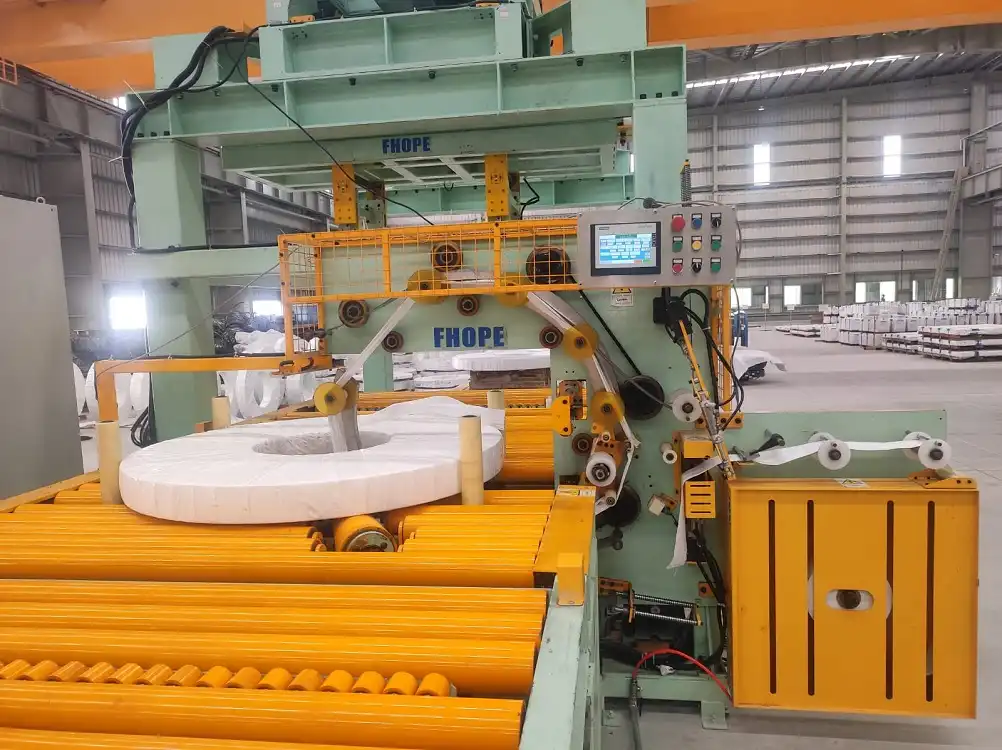
I remember one client who was constantly dealing with high insurance costs. They also had a high turnover rate because of workplace injuries. Their workers had to manually lift and turn massive steel coils for wrapping. This was not only inefficient but also incredibly dangerous. After they installed a horizontal coil wrapping machine, everything changed. The machine handled the heavy lifting and turning. This allowed workers to operate it from a safe distance. Suddenly, their injury rates dropped. Their employees felt safer and more valued. This shows that automation is not just about speed. It is also about creating a better, safer work environment for the people who make your business run.
Eliminating Manual Handling Risks
The core benefit of coil wrapping machines for safety is their ability to take over tasks that are inherently risky for humans. When workers handle heavy steel coils by hand, many dangers exist.
- Reduced Lifting and Carrying: Steel coils are extremely heavy. Manually lifting or moving them can cause severe back injuries, sprains, and muscle strains. Automated machines use conveyor belts, rollers, and mechanical arms. These features handle the weight. Workers no longer need to exert themselves physically.
- Protection from Pinch Points and Crushing Hazards: Coils can shift or roll unexpectedly. This creates pinch points. It also creates crushing hazards. When workers are close to the coils, they are at risk. Machines keep workers away from these danger zones. They do the wrapping automatically.
- Fewer Repetitive Strain Injuries: Manual wrapping often involves repetitive motions. These motions can lead to carpal tunnel syndrome or other musculoskeletal disorders over time. Automated machines perform these repetitive tasks. This protects workers from long-term injuries.
- Stable and Secure Wrapping: Hand wrapping can be unstable. It might lead to coils unwrapping during transport or storage. This creates a hazard. Machines apply a tight, consistent wrap. This secures the coil. It reduces the chance of accidents caused by loose packaging.
Consider the common risks faced by workers in manual coil packing and how automation mitigates them:
Manual Packing Risks and Machine Solutions
- Risk: Musculoskeletal Injuries (MSIs)
- Description: Strains, sprains, and chronic pain from lifting, bending, and repetitive motions with heavy coils.
- Machine Solution: Automation takes over physical handling. Workers supervise from a safe control panel.
- Risk: Crush Injuries
- Description: Limbs or body parts getting caught between heavy coils or between coils and machinery.
- Machine Solution: Workers are not in the immediate vicinity of moving coils. Safety sensors stop machines if an obstruction is detected.
- Risk: Falls and Slips
- Description: Workers might trip over loose wrapping material or slip on uneven surfaces while maneuvering coils.
- Machine Solution: The machine manages the wrapping material in an organized way. The floor area around the machine is clearer.
- Risk: Product Damage During Handling (leading to re-work hazards)
- Description: Coils can roll or fall during manual manipulation. This requires re-work, which adds more time to risky operations.
- Machine Solution: Coils are securely held and moved precisely by the machine. This reduces damage and the need for hazardous re-work.








