
How Colombian Exporters Use Coil Wrapping Machines to Protect Coils During Shipping?
I remember the early days, working in a packing machine factory. I saw firsthand the struggle of businesses trying to get their products to market without damage. If you are an exporter, especially in places like Colombia, sending heavy coils across long distances, you know this struggle well. The fear of damaged goods, the lost profits, and the unhappy clients can keep you up at night. Manual packing is slow, expensive, and frankly, risky for your workers. You need a better way.
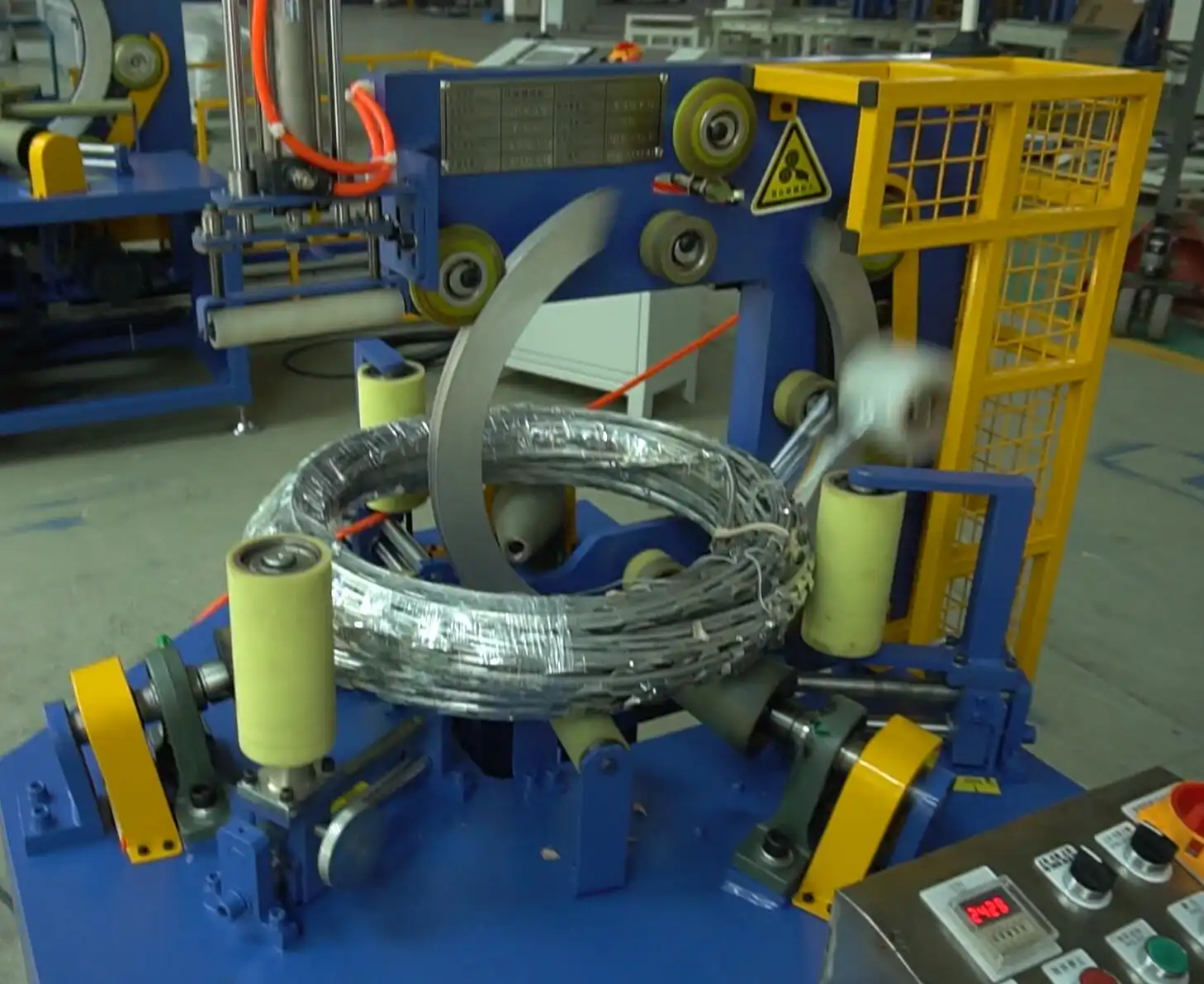
Colombian exporters protect coils during shipping by using specialized coil wrapping machines. These machines apply a tight, multi-layered wrap of stretch film, often combined with VCI paper or other protective materials, creating a robust barrier. This barrier defends coils against moisture, dust, corrosion, and physical impact. It ensures products arrive at their destination in perfect condition, which reduces claims and improves client satisfaction.
You might be thinking, “Is this just another piece of equipment?” From my experience building and running packing machine factories, I can tell you it is much more. It is about transforming your export process, protecting your hard-earned reputation, and ultimately, boosting your bottom line. Let us dive into how this technology can change your export game, just as it has for many of my clients.
1. What Challenges Do Colombian Exporters Face When Shipping Heavy Coils?
Imagine you are a factory manager in Colombia, preparing a shipment of valuable steel coils for a client across the ocean. You know the journey is long and harsh. Every bump, every change in humidity, is a threat to your product. Are you tired of dealing with customer complaints about damaged goods or the high costs of manual packing? It is a common problem, and it directly impacts your business’s financial health and reputation.
Colombian exporters shipping heavy coils face critical challenges. These include exposure to high humidity leading to corrosion, physical damage from handling and transit impacts, and the inefficiency and safety risks associated with manual packaging processes. These issues can result in significant financial losses, unhappy customers, and operational bottlenecks.

The global market demands perfection. When coils leave your factory, they embark on a journey filled with potential hazards. These hazards are not just minor inconveniences. They can lead to major financial losses and damage your business relationships. I have seen this firsthand.
The Harsh Realities of Global Shipping
Shipping heavy coils, especially from a humid region like Colombia, brings specific environmental challenges.
- Humidity and Moisture: Coils often travel through varied climates. This exposes them to high humidity. Condensation can form inside packaging. This leads to rust and corrosion, which degrades the product quality.
- Physical Impact and Abrasions: During loading, unloading, and transit, coils are subjected to bumps, shocks, and vibrations. These impacts can cause dents, scratches, or deform the coil edges. This makes the product unusable or reduces its value.
- Dust and Dirt Contamination: Open storage or imperfect packaging allows dust, dirt, and other contaminants to reach the coil surface. This can affect the material finish or require extra cleaning at the destination.
- Long Transit Times: The longer the journey, the more prolonged the exposure to these damaging elements. This increases the risk of product degradation before it reaches the customer.
Manual Packing: A Costly Gamble
Many factories still rely on manual methods for packing. While it seems cheaper upfront, it carries hidden costs.
- High Labor Costs: Packing heavy coils by hand needs many workers. These are ongoing costs that eat into your profits. My own factory once faced this. We saw significant savings after automating.
- Safety Hazards: Lifting and manipulating heavy coils is dangerous work. Workers face a high risk of injuries. This leads to higher insurance premiums, lost workdays, and employee turnover. As a factory owner, I prioritize my team’s safety.
- Inconsistent Packaging Quality: Human error is a factor. One worker might wrap a coil differently from another. This leads to inconsistent protection. Some coils might be well-protected. Others might be vulnerable. This inconsistency is a major risk.
- Slow Production Speed: Manual packing is inherently slow. It creates a bottleneck at the end of your production line. This slows down your overall output and affects delivery times.
Product Damage: More Than Just a Scratch
When a coil arrives damaged, it is never “just a scratch.” The consequences are far-reaching.
- Financial Losses: Damaged products mean rework, returns, or outright rejection by the customer. This translates to direct financial loss for your company. You bear the cost of the damaged product and its shipping.
- Customer Dissatisfaction: Clients expect to receive products in perfect condition. Damaged goods lead to complaints, loss of trust, and potentially, lost future business. Your reputation as a reliable supplier takes a hit.
- Insurance Claims and Headaches: Dealing with insurance claims for damaged goods is a time-consuming and frustrating process. It diverts resources from your core business operations.
These challenges are real for Michael Chen and other factory managers. They need solutions that are both effective and efficient.
2. How Does a Coil Wrapping Machine Actually Protect Coils During Transit?
You have seen the problems. Now, let us talk about the solution. Many people simply think a machine just wraps things up. But for heavy coils, it is far more strategic. Are you wondering about the actual mechanics behind how these machines provide such robust protection? It is not just about covering the coil. It is about creating a secure, multi-layered defense.
A coil wrapping machine protects coils by creating a continuous, tight, and uniform barrier around the entire coil. It uses stretch film, often combined with rust-inhibiting VCI paper or other materials. This multi-layered wrap effectively shields coils from moisture, dust, and physical abrasion. It also prevents corrosion and keeps the coil stable during handling and transit, significantly reducing damage risks.

When I first started FHOPEPACK, I knew the core value had to be reliable protection. Our machines are designed with this in mind. They are not just about speed. They are about ensuring your product arrives as perfectly as it left your factory.
Creating an Impenetrable Barrier
Coil wrapping machines are engineered to apply protective layers with precision.
- Stretch Film Application: The machine uses a specialized stretch film. This film is highly durable and resistant to punctures and tears. It wraps around the coil under tension. This creates a tight, overlapping seal. This seal prevents moisture, dust, and debris from reaching the coil surface. The stretch film also provides UV protection, which is vital for coils stored outdoors for short periods.
- Integration of VCI Paper: For steel and other ferrous metals, corrosion is a major enemy. Many coil wrapping machines integrate Volatile Corrosion Inhibitor (VCI) paper. This paper is dispensed automatically during the wrapping process. VCI chemicals vaporize and create a protective atmosphere inside the packaging. This inhibits rust formation on the metal surface. It works even if there are small breaks in the film.
- Other Protective Materials: Depending on the coil type and shipping conditions, other materials can be added. This includes anti-slip sheets between layers of coils or additional cushioning. The machine ensures these materials are applied correctly and consistently.
Securing Against Physical Impact
Protection goes beyond just surface coverage. It is about structural integrity.
- Tensioned Wrapping: The machine applies film with controlled tension. This tension pulls the layers tightly against the coil. This prevents the outer layers of the coil from shifting or unraveling. A stable coil is less prone to damage from external forces.
- Conforming to Shape: The stretch film conforms to the exact shape of the coil. This creates a custom fit. This snug fit reduces any internal movement of the coil layers. It also prevents the coil from impacting itself during vibrations.
- Enhanced Stability: A properly wrapped coil is more stable. This makes it safer to handle with forklifts or cranes. It is also more secure when stacked or loaded onto trucks and ships. Reduced movement during transit means less chance of crushing or abrasion.
The Science Behind Proper Wrapping Tension
The right tension is key. Too loose, and the protection is weak. Too tight, and the film can tear or deform the product.
- Consistent Tension Control: Our machines feature advanced tension control systems. These systems maintain a constant film tension throughout the wrapping cycle. This ensures every part of the coil receives uniform protection.
- Optimal Stretch Percentage: The film is stretched to its optimal percentage. This maximizes its strength and tear resistance. This also makes the film more cost-effective as you use less material for the same level of protection.
- Preventing “Telescoping”: For certain types of coils, improper wrapping can lead to “telescoping,” where the inner layers slide out. A well-designed wrapping machine with proper tension control prevents this. It keeps the coil structurally sound.
By combining these elements, a coil wrapping machine offers comprehensive protection. It goes far beyond what manual methods can achieve. This ensures your valuable coils from Colombia arrive safely, ready for your customers.
3. Can Automating Coil Packaging Truly Boost Your Export Efficiency and Reduce Costs?
You are constantly under pressure to increase output and control costs. Michael Chen, you mentioned efficiency bottlenecks and the need for ROI. So, can investing in an automated coil wrapping machine truly deliver these benefits? Is it really worth the capital expenditure for a factory like yours? From my time running a factory, I know that smart investments in automation pay back quickly and significantly.
Automating coil packaging significantly boosts export efficiency and reduces costs by increasing packing speed, minimizing labor requirements, and drastically cutting product damage. This leads to higher throughput, lower operational expenses, and improved customer satisfaction. The return on investment for such machines is typically fast, proving their value in enhancing overall factory profitability.

When I set up my own packing machine factory, I was always looking for ways to improve efficiency. Manual processes are often the biggest bottleneck. Automating these steps was key to our growth. It can be key to yours too.
Speeding Up the Production Line
Automation eliminates the slow, variable nature of manual work.
- Higher Throughput: Automated machines can wrap coils much faster than a team of workers. This means more coils are packed per hour or day. This directly addresses efficiency bottlenecks at the end of the line.
- Consistent Cycle Times: Machines operate with predictable cycle times. This allows for better production planning and scheduling. You know exactly how long each coil will take to pack.
- Continuous Operation: Unlike human workers, machines do not need breaks or get tired. They can run continuously, maximizing output during shifts. This is a game-changer for meeting tight deadlines.
Significant Labor Savings
This is where a big part of the cost reduction comes from.
- Reduced Headcount: An automated coil wrapper can replace several manual laborers. This reduces your direct labor costs.
- Redeployment of Staff: The workers who were manually packing can be redeployed to other, more skilled tasks within the factory. This optimizes your workforce and makes your operations more efficient overall.
- Lower Training Costs: While machine operators need training, the ongoing training for manual packing techniques, especially for new hires, is reduced.
Here is a simple comparison:
| Feature | Manual Packing | Automated Coil Wrapping |
|---|---|---|
| Speed | Slow, varies by worker | Fast, consistent |
| Labor Needs | High, multiple workers | Low, 1-2 operators |
| Safety | High risk of injury | Low risk, controlled environment |
| Consistency | Varies, prone to human error | High, uniform quality |
| Material Usage | Often wasteful, inconsistent | Optimized, precise |
| Cost | High ongoing labor, damage costs | High initial, low running, less damage |
Reducing Material Waste and Damage
Automation brings precision that manual work cannot match.
- Optimized Film Usage: Automated machines use exactly the right amount of film for each coil. They stretch it efficiently. This minimizes waste compared to manual wrapping, where excess film is often used.
- Consistent Protection: Every coil receives the same high level of protection. This dramatically reduces the chance of damage during transit. It means fewer customer complaints and fewer costly rejections.
- Less Product Loss: By preventing damage to coil edges or surfaces, you protect the value of your product. This reduces scrap rates and increases your saleable inventory.
Calculating Your Return on Investment (ROI)
The investment in an automated machine needs to make financial sense.
Let us look at a hypothetical scenario for a medium-sized factory like Michael’s:
Annual Cost Savings Estimate:
| Cost Category | Manual Packing Annual Cost (Estimate) | Automated Packing Annual Cost (Estimate) | Annual Savings (Estimate) |
|---|---|---|---|
| Labor | $150,000 (3 workers x $50k/year) | $50,000 (1 operator x $50k/year) | $100,000 |
| Product Damage | $80,000 (claims, rework, lost sales) | $10,000 | $70,000 |
| Packaging Material Waste | $30,000 (excess film, paper) | $15,000 | $15,000 |
| Insurance/Safety | $20,000 (injury claims, higher premiums) | $5,000 | $15,000 |
| Total Annual Cost | $280,000 | $80,000 | $200,000 |
If a coil wrapping machine costs, for example, $150,000, then with annual savings of $200,000, the ROI period would be less than a year. This is a very compelling case for automation. The numbers speak for themselves. This investment not only cuts costs but also improves reliability and quality.
4. Why Is Choosing the Right Packing Machine Partner Crucial for Long-Term Success?
You have heard about the benefits. You are considering making an investment. But, if you are like Michael Chen, you have also dealt with equipment suppliers who just want to sell a machine and then disappear. This experience makes you cautious. So, why is finding a real partner, not just a vendor, so critical for your factory’s long-term success? It is because a machine is only as good as the support and expertise behind it.
Choosing the right packing machine partner is crucial for long-term success because they offer more than just equipment. A true partner provides deep industry expertise, custom solutions, reliable after-sales support, and training. This ensures your investment genuinely solves your challenges, minimizes downtime, and helps your business grow, avoiding the pitfalls of unsupportive vendors.
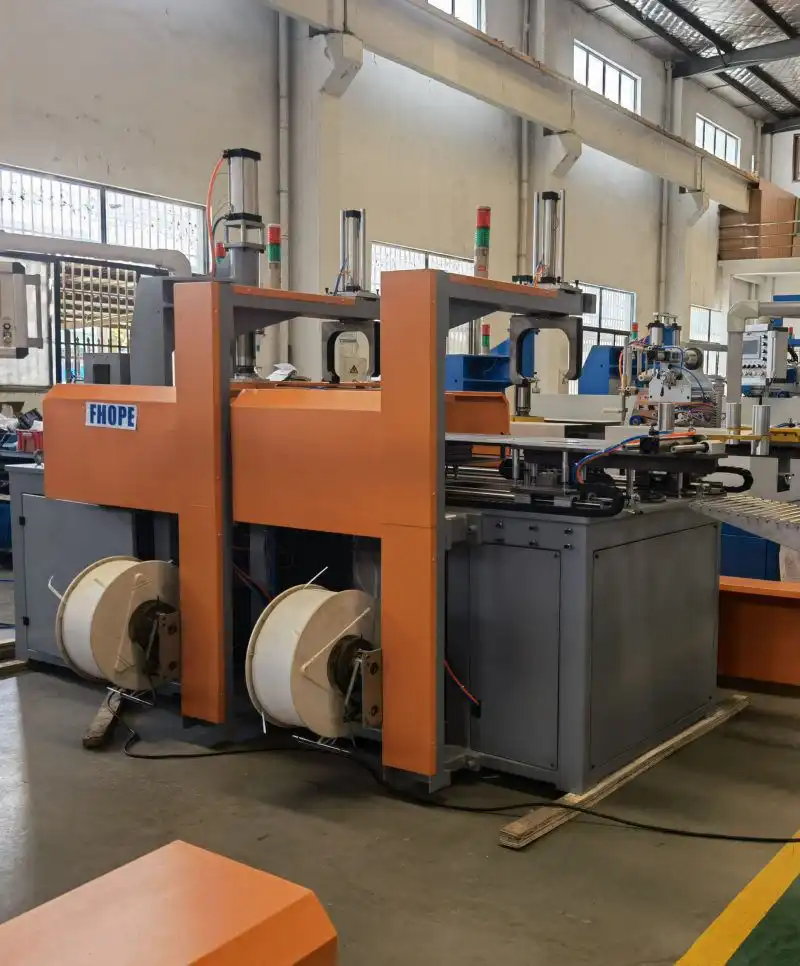
When I built my packing machine factory, I learned the hard way about what makes a good partner. It is not just about the sale. It is about understanding the client’s operation, offering solutions, and being there when things go wrong. That is the FHOPEPACK philosophy. We are here to help you master your packing machine needs, not just sell you one.
Beyond Just Buying a Machine
A machine is a tool. A partner helps you use that tool effectively.
- Understanding Your Unique Process: Every factory is different. A good partner takes time to understand your specific production line, coil types, volume, and shipping routes from Colombia. They do not offer a generic solution. They offer one tailored to your needs.
- Custom Solutions and Integration: Sometimes, an off-the-shelf machine is not enough. A partner can customize equipment to fit your factory layout or integrate it seamlessly with your existing production line. This avoids costly modifications later.
- Expert Insights and Best Practices: A partner with deep industry experience can offer advice on best practices for coil protection. They can share insights on the latest materials or techniques. This expertise is invaluable.
The Importance of After-Sales Support
This is often the biggest differentiator.
- Reliable Maintenance and Spare Parts: Machines, even the best ones, sometimes need maintenance or spare parts. A good partner provides quick access to parts and skilled technicians. This minimizes downtime and keeps your operations running smoothly.
- Technical Assistance and Troubleshooting: When an issue arises, you need fast support. A reliable partner offers prompt technical assistance. They can help troubleshoot problems remotely or send engineers to your site.
- Operator Training: Proper training ensures your team can operate the machine safely and efficiently. A good partner offers comprehensive training programs. This empowers your employees and maximizes your investment.
FHOPEPACK’s Philosophy: Partnership for Growth
This is where my personal journey comes in. I started as an employee, then built a successful factory. I know the pressures Michael Chen faces.
- From Factory Floor to Founder: My path gave me a unique perspective. I have been on the factory floor. I have managed operations. I understand the challenges of increasing output, managing costs, and ensuring safety. This is why FHOPEPACK focuses on practical, reliable solutions.
- Solving Real-World Problems: We do not just sell machines. We solve problems. We look at your production bottlenecks, your safety concerns, and your efficiency gaps. Then, we propose solutions that truly address those issues.
- Investing in Your Success: When you partner with FHOPEPACK, you are investing in a relationship. We are dedicated to helping your business grow. We want you to achieve financial independence, just as I did through this industry. We do this by providing equipment that delivers measurable ROI.
What to Look For in a Packaging Machine Supplier
When evaluating potential partners, consider these key criteria:
| Criterion | Why it Matters |
|---|---|
| Industry Experience | Deep understanding of coil packing challenges and solutions. |
| Customization Capability | Ability to adapt machines to your specific needs. |
| After-Sales Support | Prompt technical assistance, spare parts availability. |
| Training Programs | Comprehensive training for your operators and maintenance staff. |
| Proven Track Record | Testimonials, case studies, long-term client relationships. |
| Focus on ROI | Clear demonstrations of how their solution saves you money. |
| Safety Standards | Adherence to international safety regulations for equipment. |
Choosing the right partner is an investment in your factory’s future. It ensures that your automated coil wrapping machine truly becomes a tool for long-term growth and success.
Conclusion
Coil wrapping machines are vital for Colombian exporters to protect coils during shipping. They automate packaging, boost efficiency, and drastically cut costs and damage. Partnering with experts like FHOPEPACK ensures optimal solutions and long-term success.








