
How Coil Wrapping Machines in Chile Ensure Dust and Moisture Control for Coils?
Are your valuable steel coils leaving your factory in Chile vulnerable to rust and contamination? Do you see dust settling on freshly processed products, or worse, signs of moisture damage before they even reach your customers? This is not just a cosmetic issue. It means costly rejections, unhappy clients, and a direct hit to your bottom line. I have seen firsthand how easily environmental factors can compromise a perfectly good product, especially in demanding industrial settings. Today, I want to talk about a powerful solution. This solution helps protect your investment.
Coil wrapping machines ensure dust and moisture control for coils in places like Chile by creating a tight, protective barrier around the product. These machines use specialized films and advanced wrapping techniques. This prevents airborne particles, humidity, and rain from reaching the metal surface. This keeps coils clean, dry, and free from corrosion during storage and transport.
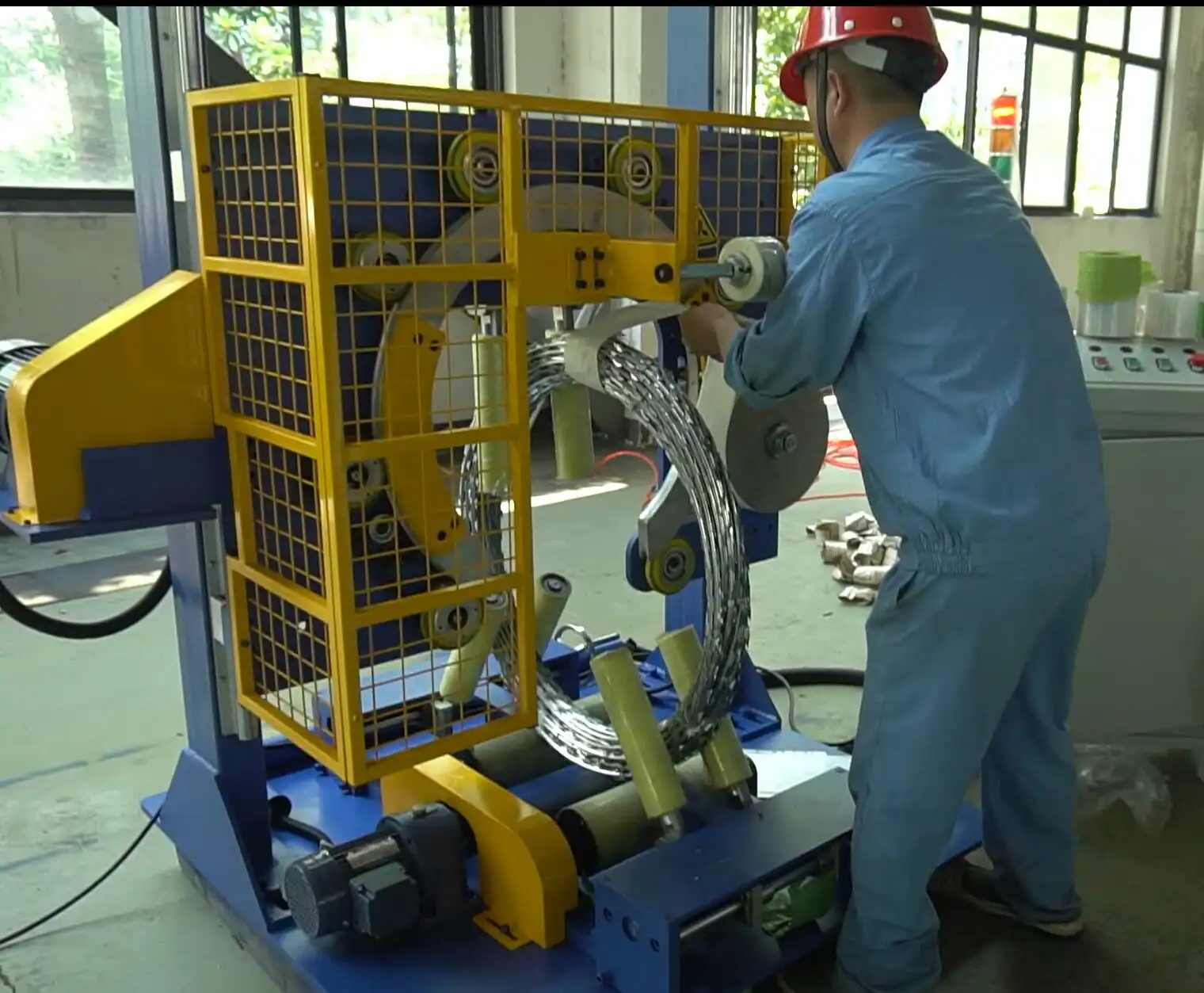
You know that maintaining product quality is key to factory success. Many factory managers, like my friend Michael Chen, face these exact challenges daily. He told me about the constant battle against the elements. If you want to understand how this technology works, stay with me. We will explore how these machines offer a robust shield. We will also see how they transform your operational efficiency.
1. How does the harsh environment in Chile directly impact unwrapped steel coils?
You work hard to produce high-quality steel coils or wire in Chile. But does the environment outside your factory undo all that effort? Are you dealing with the effects of corrosive sea air or dusty inland conditions on your products? I know the frustration. Your finished goods should be perfect. Yet, without proper protection, moisture and dust can start damaging them right after production. This harms your reputation and creates unnecessary waste. It is a constant battle. We need to understand the specific environmental threats first. This helps us see why robust protection is not just an option. It is a necessity.
The harsh environment in Chile directly impacts unwrapped steel coils by exposing them to high humidity, coastal salt spray, and pervasive dust. These elements cause surface oxidation, rust formation, and abrasive damage. This significantly degrades product quality. It shortens shelf life and leads to customer rejections. This is a critical challenge for many manufacturers.

Chile has a diverse geography. This means different environmental threats exist for metal products. Along the long coastline, factories deal with corrosive sea air. This air carries salt particles. These particles land on steel surfaces. They speed up the rusting process. Even a small amount of salt can start corrosion very fast. Inland areas, especially in the north, have very dry conditions. However, these areas also have a lot of dust. This dust can be abrasive. It can scratch the surface of coils. It can also trap moisture if humidity rises. This creates a hidden risk. My early years in the packing industry taught me the true cost of these environmental attacks. I saw clients lose significant value because their finished products were exposed for just a few days. This taught me that packaging is the last, but most critical, line of defense.
Consider a typical metal processing plant near a port in Chile. Imagine newly finished coils waiting for shipment. Without proper wrapping, the salty sea breeze constantly hits them. Within hours, tiny spots of rust can appear. These spots grow larger over time. The coil’s value decreases. This is a big problem. I have seen many factories struggle with this. They invest heavily in production quality. Then they lose that quality during storage or transport. It feels like throwing money away. Michael Chen’s concerns about product loss resonate deeply with my own experiences. He cannot afford to see his hard work wasted before it even leaves the dock.
Here are some key environmental factors in Chile that threaten unwrapped coils:
- High Humidity: Many parts of Chile experience high humidity. This is especially true near the coast. Moisture in the air condenses on cooler metal surfaces. This creates a thin film of water. This film promotes oxidation. This leads to rust. This process can happen quickly, even indoors if ventilation is poor.
- Salt Spray: Coastal regions are prone to salt spray. Salt acts as an electrolyte. It accelerates electrochemical corrosion. This makes rust form much faster. Even small salt deposits can cause significant damage. These particles can travel many kilometers inland from the coast.
- Dust and Particulates: Factories, roads, and mining operations create a lot of dust. This dust can settle on coils. It can be abrasive. It can cause micro-scratches. These scratches can become starting points for corrosion. Dust also traps moisture against the metal. This makes the problem worse. In arid regions, fine dust is a constant battle.
- Temperature Fluctuations: Day-night temperature changes can cause condensation. This happens when warm, moist air cools rapidly. This creates an ideal environment for rust. This is a common issue when coils are moved from a warm production area to a cooler storage facility.
These factors combine to create a challenging environment for metal manufacturers in Chile. My experience in the packing machine industry taught me this. You cannot just rely on good manufacturing. You must also protect the product after it is made. This is where proper packaging becomes crucial. It is about preserving the hard work and investment. It also ensures customer satisfaction. A factory’s reputation depends on consistently delivering perfect products.
2. What specific features of coil wrapping machines provide superior protection against elements?
We just talked about the harsh conditions. Now, how do we actually fight them? Are you still using old-fashioned methods that leave gaps and vulnerabilities in your coil protection? Inadequate wrapping means your fight against dust and moisture is already lost. It means damaged goods, unhappy customers, and lost profits. I have seen many companies invest in basic wrapping. But they then face the same problems again and again. It is frustrating to spend money and not solve the core issue. Let us look at what makes modern coil wrapping machines truly effective. These machines offer a superior shield.
Coil wrapping machines provide superior protection through several specific features. These include tension-controlled film application for a tight, overlapping seal. They use durable stretch film or VCI (Volatile Corrosion Inhibitor) film. This film creates a barrier against dust and moisture. Advanced models also offer automatic centering and precise wrapping patterns. This ensures complete coverage. This system prevents external contaminants from reaching the coil surface. It also protects against humidity changes.

When I first started my journey in the packing machine industry, I quickly learned something. Not all wrapping is equal. A truly effective coil wrapping machine goes beyond simply putting plastic around a coil. It integrates technology and design to create an almost impenetrable barrier. This barrier protects products from the moment they leave the production line until they reach the final destination. This is important for factories in Chile. They deal with challenging conditions. My goal has always been to engineer solutions that offer maximum protection. I have seen how a well-designed wrap can prevent thousands of dollars in losses.
One critical aspect is the film application process. Our machines use a pre-stretch system. This stretches the film before it even touches the coil. This makes the film stronger. It also uses less material. The film is applied with consistent tension. This creates a very tight, smooth wrap. There are no loose areas or wrinkles where moisture or dust can sneak in. This precision is vital. It creates a complete seal around the entire coil. This consistent tension is also important for the structural integrity of the package. It prevents the film from tearing or loosening during handling and transport.
We also consider the type of wrapping material. For some clients, standard stretch film is enough. But for others, like Michael Chen’s factory, VCI film is a game-changer. VCI stands for Volatile Corrosion Inhibitor. This film releases a protective vapor. This vapor settles on the metal surface. It stops corrosion. It is like an invisible shield inside the package. This is particularly useful for long-term storage or sea shipments. These are common for factories in Chile. Choosing the right film type is a decision made in close consultation with the client, considering their specific product and shipping routes.
Here is a breakdown of key features that ensure superior protection:
| Feature | How It Protects Against Dust | How It Protects Against Moisture | Benefit for Chilean Factories |
|---|---|---|---|
| Tension Control System | Creates a tight, smooth surface with no gaps for dust penetration. Improves package integrity. | Prevents water ingress by forming a secure, non-porous barrier. Stops condensation inside. | Essential for coastal areas with high humidity and dusty regions. Ensures robust protection. |
| Adjustable Overlap Rate | Ensures no exposed areas for dust to accumulate on the coil surface. Provides full coverage. | Provides a continuous, sealed barrier, eliminating points of entry for water. Reduces rust risk. | Critical for dusty inland regions and protecting against unexpected rain during transport. |
| Compatibility with Specialized Films | Accommodates VCI films and other anti-dust layers, providing a physical barrier against all particulates. | Works with impermeable films, including VCI. VCI adds chemical protection against rust, even if moisture is present. | Adapts to varied climates (coast/desert) and specific product needs for enhanced protection. |
| Automatic Centering & Alignment | Ensures even wrap distribution around the coil. This prevents parts of the coil from being under-protected. | Prevents uneven coverage and weak spots in the wrap, which could allow moisture to enter. | Guarantees consistent quality and protection across all coils, regardless of size or shape variation. |
| Automatic Film Cutting & Sealing | Neatly seals the end of the wrap. This prevents any loose edges where dust could gather or enter. | Prevents water from wicking into the package through unsealed edges. Maintains barrier integrity. | Protects against rain and ensures the package remains sealed even under harsh conditions. |
| Integrated Strapping/Banding | Holds the wrapped film tight against the coil. This prevents the film from shifting. It adds package stability. | Adds structural integrity to the sealed wrap. This helps maintain the moisture barrier during handling. | Secure packaging for long-distance transport and rough handling, preventing film damage. |
These features do not work alone. They work together. They form a comprehensive protection system. This means your products leave your factory in Chile in the same condition they were made. This is the promise of modern coil wrapping technology. It is a promise I have worked to deliver for many years. My aim is always to help clients achieve this level of reliability.
3. How do automated coil packaging lines boost efficiency and safety for manufacturers?
Are your factory workers still manually handling heavy coils for wrapping? Is your current packing process a bottleneck, slowing down your entire production line and risking injuries? Manual labor for heavy, repetitive tasks is not just slow. It is dangerous. It leads to high labor costs, frequent work-related injuries, and inconsistent packaging quality. Michael Chen specifically mentioned these safety and efficiency nightmares. These issues prevent your business from growing. Automated coil packaging lines offer a clear path forward. They boost efficiency and safety in powerful ways.
Automated coil packaging lines boost efficiency by significantly increasing throughput. They reduce the time needed for wrapping and handling. They improve safety by removing human interaction with heavy, moving coils. Robots and machines perform tasks like loading, wrapping, and strapping. This minimizes manual effort and eliminates the risk of human error or injury. This results in faster operations, lower labor costs, and a much safer work environment for manufacturers.
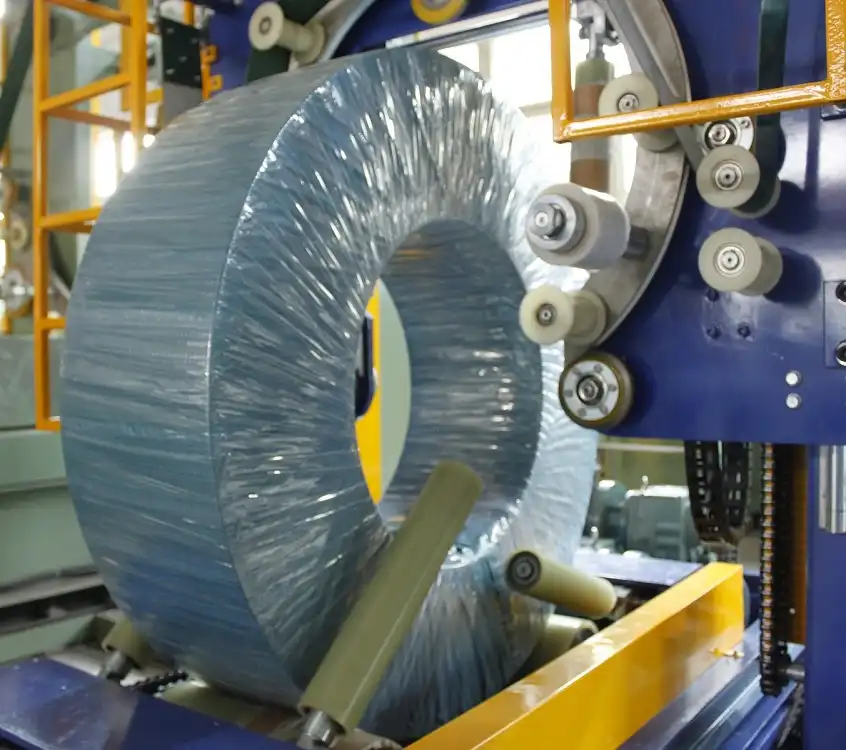
When I first started working in a packing machine factory, I saw the hard work involved. Workers had to move massive coils. They often used simple, sometimes unsafe, methods. This was before automation became widely accessible. I remember seeing how much effort it took. And the constant risk of injury. This experience drove my passion. I wanted to create better, safer solutions. For me, safety was never just about regulations. It was about protecting people. It was about creating better working lives.
For a factory manager like Michael, safety is not just a regulatory concern. It is a human one. It affects morale, insurance costs, and employee retention. Automated lines address this directly. Heavy lifting, twisting, and repetitive motions are replaced by machines. This means fewer strains, fewer crushed fingers, and fewer serious accidents. This is a huge benefit for any heavy manufacturing environment in Chile. I have seen factories transform their safety records after adopting automation. They report fewer incidents and higher employee satisfaction. This creates a much better workplace culture.
Beyond safety, the efficiency gains are transformative. Imagine a bottleneck at the end of your production line. You produce coils quickly. But packing them takes too long. This slows everything down. Automated lines eliminate this. They work at a consistent, high speed. They can often keep up with the fastest production rates. This ensures a smooth flow from production to dispatch. This also allows factories to meet tighter deadlines and increase overall output. It turns a previous weakness into a major strength. My own factory benefited greatly from automating our packing processes. We saw immediate improvements in both speed and quality.
Here is how automated coil packaging lines bring significant improvements:
- Increased Throughput Capacity: Manual wrapping is inherently slow and inconsistent. An automated machine can wrap a coil in mere minutes, operating continuously with precision. This drastically increases the number of coils you can process daily. It can often double or triple your packing output, aligning with high-volume production lines. This means higher overall factory output and greater capacity to meet market demand.
- Substantial Reduction in Labor Costs: While there is an initial investment in equipment, automation significantly cuts down on the need for manual labor in the packing area. Instead of multiple workers performing strenuous tasks, a few operators can supervise the automated line. This frees up your workforce for more skilled, less hazardous roles. Over time, the savings on wages, benefits, and injury-related costs are substantial, improving your factory’s profitability.
- Enhanced Worker Safety Environment: This is one of the most compelling benefits. Heavy coils are moved safely by conveyors, automated transfer carts, or robotic systems. The wrapping itself is performed by machines. Workers oversee the process from a safe distance, away from heavy moving parts. This eliminates the risk of sprains, strains, crushing injuries, falls, and other accidents commonly associated with manual handling of large, heavy objects.
- Consistent and High-Quality Packaging: Human operators can get fatigued, leading to variations in wrapping tension, overlap, and overall quality. Machines, however, apply film with the exact same tension, overlap, and pattern every single time. This ensures every coil receives the same high level of consistent protection. This reduces product damage during transport and storage and enhances customer satisfaction.
- Lower Product Damage Rates During Handling: Manual handling increases the risk of dropping, bumping, or otherwise damaging coils, which can cause costly edge damage, dents, or surface scratches. Automated systems move coils smoothly and precisely throughout the packaging process. This significantly reduces the chances of damage, resulting in fewer customer complaints, less product rejection, and reduced scrap material.
- Optimized Material Usage: Automated wrappers are engineered for precision. They calculate and apply the exact amount of film needed for each coil, with minimal waste. Manual wrapping often leads to overuse of film or inconsistent application, resulting in material waste. This precision in automation saves on material costs over the long run, further improving ROI.
These benefits are not theoretical. They are real-world improvements I have helped factories achieve. For a manager like Michael Chen, these improvements translate directly into a healthier bottom line and a more reliable, safer operation. This is why I believe in this technology so much. It is about smart growth and protecting both product and people.
4. Why is choosing a trusted expert vital for long-term success in industrial packaging?
You are ready to invest in automation. But how do you choose the right supplier? Are you worried about getting stuck with equipment that underperforms or a partner who disappears after the sale? Michael Chen shared his past frustrations. He dealt with suppliers who only cared about the sale. Poor after-sales service and ill-fitting solutions cost him dearly. A wrong decision here can set your factory back years. It can waste huge amounts of capital and time. My journey, from an engineer to factory owner, taught me this. Choosing a true expert is not just about buying a machine. It is about building a partnership. This partnership ensures long-term success.
Choosing a trusted expert is vital for long-term success because they provide more than just equipment. They offer deep industry knowledge, tailored solutions, and reliable after-sales support. An expert understands your unique operational challenges, like those in Chile’s heavy manufacturing. They guide you to the right technology. They ensure proper installation, training, and ongoing maintenance. This maximizes your investment’s ROI and helps your business grow sustainably.

My career began on the factory floor. I was an employee. Later, I built my own successful packing machine factory. This path gave me a unique perspective. I have been on both sides. I know what it feels like to be a client seeking solutions. I understand the pressures Michael Chen faces. I also know what it takes to design and deliver reliable machinery. This hands-on experience taught me that good equipment is only half the battle. The other half is the support and expertise behind it. This is why, with FHOPEPACK, I am dedicated to sharing knowledge and building strong partnerships. It is my way of giving back to an industry that has given me so much.
Many suppliers just want to sell a machine. They might offer a low price. But they do not understand your specific needs. They might not be there when you need service. This is a common story. I hear it from factory managers all the time. This is a big reason why Michael Chen is cautious about new partners. He has faced these issues. This is why FHOPEPACK focuses on being a knowledge-sharing platform first. We want to empower you. We want to help you make informed decisions. We want to be a partner, not just a vendor. We aim to earn your trust through genuine expertise and commitment.
Here are key reasons why an expert partner is indispensable for your industrial packaging success:
- Tailored and Optimized Solutions: Every factory is unique. An expert partner invests time to truly understand your specific production lines, the exact dimensions of your coils, the challenging environmental conditions in Chile, and your budget constraints. They do not force a generic product. Instead, they design and recommend a customized packing line. This is precisely tailored to meet your exact operational requirements and future growth plans. This ensures the equipment genuinely solves your problems and integrates seamlessly.
- Deep and Practical Industry Knowledge: An expert has accumulated experience from numerous installations across various industries. They understand the nuances of coil packing, steel wire packing, and the complexities of heavy manufacturing logistics. They can anticipate potential challenges you might not even foresee. This deep, practical knowledge is invaluable in avoiding costly mistakes and optimizing your entire packaging process from the outset.
- Seamless System Integration: New equipment must fit perfectly into your existing factory layout and production flow. An expert partner provides comprehensive planning for this integration. They ensure the new packing line integrates smoothly with your current production processes. This minimizes disruption, reduces installation time, and maximizes efficiency from day one, leading to quicker ROI.
- Comprehensive Training and Support: Buying a sophisticated machine is one thing; knowing how to operate and maintain it effectively is another. A trusted expert provides thorough, hands-on training for your operating and maintenance staff. This empowers your team to use the equipment safely, efficiently, and to troubleshoot minor issues. This ensures your investment performs at its peak potential for years.
- Reliable and Responsive After-Sales Support: Machines are complex and require maintenance; sometimes, repairs are necessary. A true partner offers quick, effective, and accessible after-sales service. This includes readily available spare parts, expert technical assistance, and rapid troubleshooting. This commitment to ongoing support minimizes costly downtime and keeps your production running smoothly, addressing a major concern for managers like Michael Chen.
- Foundation for Long-Term Business Growth: An expert aims for a long-term relationship. They want to see your business grow and succeed. They offer ongoing advice, system upgrades, and support as your needs evolve. They become a trusted resource and a strategic partner. This builds confidence and provides critical peace of mind, knowing your packaging operations are in capable hands.
For Michael Chen and other factory managers in Chile, this means securing an investment that truly pays off. It means having a partner who understands your goals. It means someone who is committed to your success, helping you navigate the complexities of industrial packaging. That is the kind of partnership I aim to build through FHOPEPACK. It is how we ensure your factory’s future is secure and prosperous.
Conclusion
Automated coil wrapping machines are essential for dust and moisture control. They boost efficiency and safety. Partnering with experts ensures long-term success. This protects your product and grows your business.








