

How Coil Wrapping Machine in Canada Supports Factories Meeting Global Export Standards?
You manage a factory in Canada. You see coils and wire moving through your facility every day. You know the pressure to get products out, to hit targets, and to make a profit. But what happens when manual packing slows everything down? What happens when workers get hurt from lifting heavy materials? What happens when your valuable products get damaged before they even leave your building? These problems do not just hurt your bottom line; they can stop you from competing on a global stage.
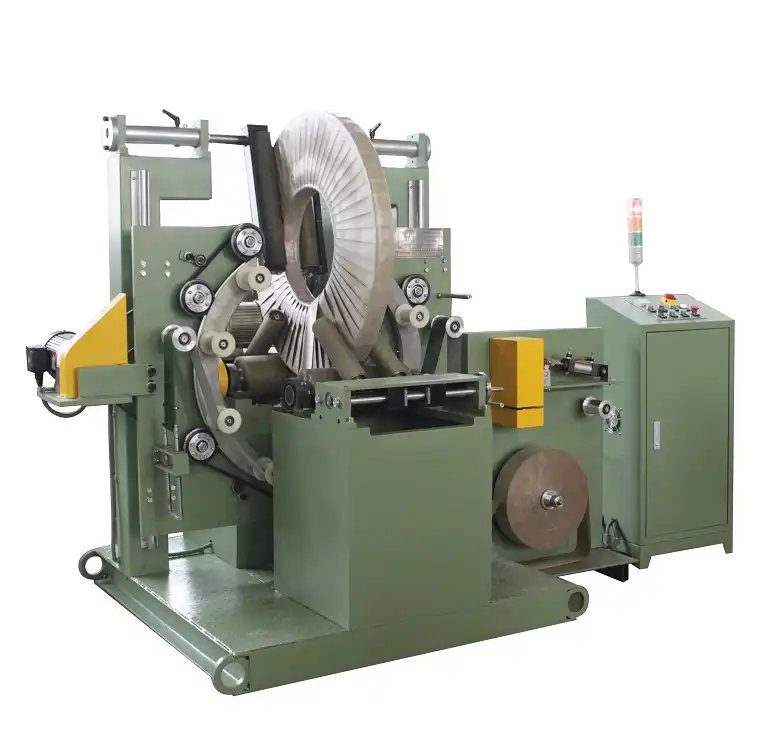
A coil wrapping machine in Canada supports factories meeting global export standards by automating the packing process. This automation protects products better, speeds up operations, reduces labor costs, and makes the workplace safer. It helps Canadian manufacturers produce high-quality, consistently packed goods ready for any international market. It also ensures packaging meets the strict demands of global shipping and customs.
I understand these challenges well. When I started my journey in the packing machine industry, I saw factories struggling with these exact issues. I built my own factory focusing on efficient and safe operations. Now, I share what I learned. Let us dive into how the right coil wrapping machine can change your Canadian factory for the better and help you win in the global market.
1. How do Coil Wrapping Machines Enhance Product Protection for International Shipping?
Are you losing money because your coils arrive damaged? Do you worry about customer complaints from overseas? Product damage during transit is a silent killer of profits and reputation. It can make clients lose trust, and it can cost you repeat business. This is a common problem for factories that still rely on old packing methods.
Coil wrapping machines enhance product protection for international shipping by applying a consistent, tight, and multi-layered wrap around coils. This uniform packing creates a strong barrier against moisture, dust, and physical impact. It keeps the product stable during loading, transit, and unloading. It ensures that goods arrive at their destination in the same condition they left your Canadian factory, meeting the high standards expected by global buyers.
In my experience, even a small scratch or dent on a coil can lead to a rejected shipment. When you ship products across borders, they go through many stages. They get moved, loaded onto ships or trucks, and might sit in different climates. Manual wrapping often leads to uneven tension or gaps in the protection. This makes coils vulnerable. An automated machine solves this. It ensures every part of the coil receives the same level of care. This is a must for Canadian companies looking to export their goods.
The Role of Consistent Wrapping in Damage Prevention
Consistent wrapping is key. Imagine a steel coil. Its edges are fragile. If not wrapped properly, they can bend or get scratched. This means a lower quality product. An automatic machine applies film or paper evenly. It stretches the material to the right tension. This creates a tight, protective layer. This layer protects against many threats.
- Moisture and Rust: Water is a big enemy for metal products. A tight wrap creates a seal. It stops moisture from getting to the coil surface. This prevents rust, which is crucial for steel and other metals.
- Dust and Dirt: During shipping, products can get dirty. A proper wrap keeps dust out. This maintains product cleanliness. It means less cleaning for the customer.
- Physical Impact: Coils move during transport. They can bump into other cargo. A strong wrap acts as a cushion. It absorbs minor impacts. This reduces dents and abrasions.
- UV Radiation: Some products are sensitive to sunlight. Wrapping can offer UV protection. This prevents material degradation, especially for specialized coatings.
- Internal Movement: The wrapping holds the coil layers tightly. This stops internal shifting. It maintains the coil’s shape and integrity.
Consider a simple comparison:
| Feature | Manual Coil Wrapping | Automated Coil Wrapping Machine |
|---|---|---|
| Consistency | Varies by operator, often uneven | Highly consistent, uniform tension and overlap |
| Protection | Gaps, loose areas, potential for exposure | Tight, multi-layered, comprehensive barrier |
| Speed | Slow, labor-intensive | Fast, continuous operation |
| Material Use | Often wasteful, hard to optimize | Optimized, precise material application |
| Quality Control | Subjective, prone to human error | Objective, repeatable, meets set standards |
| Safety | High risk of injury from heavy lifting and maneuvering | Low risk, operators stand clear of heavy loads |
This consistent protection is not just about avoiding damage. It is about building a reputation. When your Canadian factory consistently delivers perfect products, you gain trust. This trust is priceless in global markets. It leads to more orders and stronger client relationships. This is how you make sure your products always meet international quality standards.

2. Can these Machines Truly Boost Production Efficiency and Cut Labor Costs in Canadian Factories?
Is your packing line a bottleneck? Do you feel like you are throwing money away on overtime or extra staff just to get coils packed? Many factory managers face this. Manual packing is slow. It takes many people. This costs a lot and slows down your whole operation. Your production capacity is only as fast as your slowest process.
Yes, coil wrapping machines truly boost production efficiency and cut labor costs in Canadian factories. They automate a labor-intensive task, allowing for faster packing cycles and higher throughput. One machine can replace several workers, freeing them for other tasks or reducing overall labor needs. This leads to significant savings in wages, benefits, and training. It also removes production bottlenecks, ensuring a smoother flow of goods from the factory floor to the shipping dock.
When I was running my packing machine factory, I learned that efficiency is not just about speed. It is also about consistency. A manual process can be fast sometimes, but it is hard to keep that speed all day, every day. People get tired. An automated machine does not. It works at the same high speed, all the time. This means you can plan your production better. You can promise delivery dates with more confidence. For Canadian factories, this means a competitive edge in global markets where timely delivery is critical.
How Automation Transforms Your Packing Line
Automation changes everything on your packing line. It takes away the need for repetitive, manual work. This frees up your team. They can do more skilled jobs. This is good for your workers and for your business.
- Increased Speed: Machines wrap coils much faster than people. They can handle many coils per hour. This means you produce more in less time. Your output goes up.
- Reduced Labor Dependency: With an automatic machine, you need fewer people on the packing line. This reduces your payroll costs. It also makes your business less reliant on finding and keeping workers for these strenuous jobs.
- Consistent Throughput: Machines work without breaks. They do not get tired. This means a steady flow of packed coils. You avoid slowdowns and bottlenecks. Your production line keeps moving smoothly.
- Optimized Material Usage: Automatic wrappers use film or paper precisely. They reduce waste. This saves money on packing materials. Over time, these small savings add up to big numbers.
- Scalability: If your Canadian factory grows, an automated system can handle increased demand. It is easier to add more machines or run existing ones for longer shifts than to hire and train many new manual laborers.
Let us look at a potential ROI (Return on Investment) example for a Canadian factory:
Scenario: Manual vs. Automated Coil Packing
| Factor | Manual Packing (Current) | Automated Packing (With Machine) |
|---|---|---|
| Workers Needed per Shift | 4 | 1 (for supervision/loading) |
| Average Wage (CAD/hr) | $25 | $30 (for skilled operator) |
| Coils Packed per Hour | 10 | 40 |
| Annual Labor Cost | 4 workers 8 hrs $25/hr * 250 days = $200,000 | 1 worker 8 hrs $30/hr * 250 days = $60,000 |
| Annual Output | 10 coils/hr 8 hrs 250 days = 20,000 coils | 40 coils/hr 8 hrs 250 days = 80,000 coils |
| Product Damage Rate | 2% | 0.5% |
| Estimated Damage Cost | 2% 20,000 coils $100/coil = $40,000 | 0.5% 80,000 coils $100/coil = $40,000 |
| Total Annual Savings | (From reduced labor + reduced damage) | $140,000 (labor) + $0 (damage difference assuming same absolute cost) = $140,000 |
This simple example shows big savings. The reduction in labor cost is clear. The increased output means you can take on more orders. The lower damage rate means fewer rejected shipments and happier customers. All these factors combine to make a strong case for automation. For Canadian factories, this is not just about saving money. It is about becoming more powerful in the global market.


3. What Role do Automated Coil Wrappers Play in Improving Workplace Safety Standards?
Do you constantly worry about your workers getting hurt? Are your insurance costs rising because of workplace injuries? Manual handling of heavy coils is dangerous. It leads to back injuries, crushed hands, and other serious accidents. For factory managers like Michael, safety is a huge concern. It affects your team, your budget, and your peace of mind.
Automated coil wrappers play a crucial role in improving workplace safety standards by greatly reducing the need for manual handling of heavy and awkward coils. They remove workers from dangerous areas of the packing process, minimizing risks of strains, sprains, and crushing injuries. This leads to fewer accidents, lower insurance premiums, and a healthier, more productive workforce. For Canadian factories, meeting strict safety regulations is not just good practice; it is a legal and ethical requirement.
I have seen firsthand the risks on a factory floor. When I ran my own factory, worker safety was always a top priority. Moving heavy steel coils or wire bundles by hand is a recipe for disaster. One wrong move can lead to a serious injury. An automated system changes this completely. It takes the heavy lifting out of human hands. It creates a safer environment for everyone. This is not just about rules. It is about caring for the people who work for you.
Minimizing Risks through Smart Automation
Smart automation removes the human element from the most dangerous tasks. It makes the packing process much safer. This is good for your workers and good for your business’s reputation.
- Reduced Manual Handling: The biggest benefit is less direct interaction with heavy coils. Machines load, position, and wrap. Workers mostly supervise. This prevents injuries from lifting, twisting, or pushing heavy items.
- Elimination of Pinch Points: Manual wrapping can expose hands and arms to pinch points. Automated machines keep workers away from moving parts during operation. Safety sensors also stop the machine if a person gets too close.
- Ergonomic Improvements: Repetitive motions cause strain. Manual wrapping involves many such movements. Automation removes these tasks. This lowers the risk of musculoskeletal disorders for your team.
- Consistent Safety Procedures: Machines follow the same safety protocols every time. There is no guesswork. This reduces the chance of accidents due to human error or shortcuts.
- Compliance with Regulations: Canadian workplaces have strict safety rules. Automated equipment helps factories meet these rules more easily. This avoids fines and legal problems. It shows you care about your team.
Here is a quick look at how safety improves:
- Injury Type:
- Strains/Sprains: Often from lifting and awkward movements.
- Crushing Injuries: From heavy objects falling or shifting.
- Cuts/Lacerations: From sharp coil edges or packing materials.
- Impact of Automation:
- Reduced Strains/Sprains: Machines do the heavy lifting.
- Eliminated Crushing Risks: Workers are kept out of harm’s way.
- Fewer Cuts/Lacerations: Machines handle materials with precision.
- Consequences of Manual Work:
- Higher worker’s compensation claims.
- Increased insurance premiums.
- Lost workdays.
- Lower employee morale.
- Benefits of Automation:
- Lower incident rates.
- Reduced operational costs.
- Higher employee satisfaction.
- Stronger company reputation.












