
How Can Seamless Integration with MES/ERP Improve Coil Upender Efficiency in Mexico?
Factories in Mexico, especially those dealing with heavy materials like steel coils or wire, face constant pressure. You are likely battling slow, manual processes, which create bottlenecks. These issues don’t just slow down production; they also put your workers at risk and can damage your valuable products. The frustration of these inefficiencies can feel overwhelming, impacting your bottom line and reputation.
By integrating coil upenders with your Manufacturing Execution System (MES) or Enterprise Resource Planning (ERP) software, you transform them from simple machines into smart, connected tools. This integration provides real-time data, automates decision-making, and optimizes material flow, leading to significant boosts in efficiency, enhanced safety, and reduced product damage across your Mexican operations.

You might be thinking this sounds like a complex upgrade. But what if this seamless integration is exactly what your factory needs to unlock its true potential? Let me share what I have learned from years in this industry, from working on the factory floor to building my own successful packing machine business.
Can MES/ERP Integration Really Eliminate Manual Bottlenecks in Coil Handling?
Are you tired of your production line grinding to a halt at the packaging stage? Manual handling of heavy coils or molds is slow, inconsistent, and often the biggest bottleneck in a metal processing factory. This inefficiency costs you valuable production time and delays customer deliveries, putting immense pressure on your entire operation.
Integrating your coil upenders with MES or ERP systems directly addresses these bottlenecks by automating data exchange and optimizing the entire material flow. This means real-time tracking, automated work orders, and predictive maintenance, all working together to ensure coils move smoothly and quickly through your production, eliminating the manual slowdowns that plague many factories in Mexico.
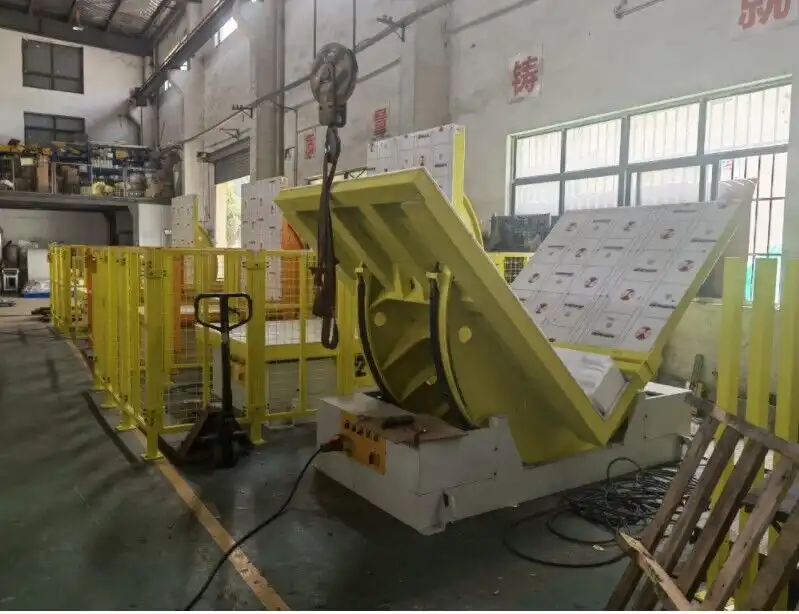
From my early days working in a packing machine factory, I saw firsthand how even the most advanced machines could be bottlenecked by manual processes around them. Later, when I started FHOPEPACK, I realized that true efficiency comes from looking at the entire process, not just one machine. Manual coil handling, especially for large steel coils or heavy molds, is a prime example of where human intervention slows everything down and introduces errors. Imagine a factory in Monterrey trying to meet tight export deadlines with workers manually flipping heavy steel coils. It is not sustainable.
Integrating coil upenders with MES or ERP systems means a lot more than just connecting wires. It is about creating an intelligent ecosystem where machines and data work together. This system can automatically schedule upender operations based on production queues. It can send alerts if a machine is running slow or needs attention. This removes the need for human input at every step, which is where bottlenecks often form.
How Data Flow Transforms Coil Handling
When your upender is part of your MES/ERP, it is not just a piece of equipment; it is a data point.
- Real-time Production Data: The upender reports its status directly to the system. Is it running? Is it idle? How many coils has it processed? This data is instantly available, allowing managers to see bottlenecks as they form, not after they have impacted production. This means you can react quickly.
- Automated Work Order Generation: The MES can automatically trigger the upender to prepare for the next coil based on the production schedule. No more waiting for an operator to manually input the next task. This ensures a continuous flow.
- Inventory Management: When a coil is upended and ready for the next stage, the system updates inventory levels. This avoids errors in stock counts and ensures that the right materials are always available where they are needed. This is critical for managing expensive raw materials in Mexico’s manufacturing sector.
| Feature | Manual Process Drawback | MES/ERP Integrated Upender Benefit |
|---|---|---|
| Speed | Dependent on operator availability and physical effort. | Automated task scheduling, faster processing cycles. |
| Accuracy | Prone to human error in tracking and handling. | Data-driven operation, precise positioning, reduced errors. |
| Visibility | Limited real-time insight into upender status. | Full real-time operational dashboard for managers. |
| Resource Use | Higher labor costs, potential for under/overutilization. | Optimized labor allocation, efficient machine utilization. |
| Throughput | Varied, often inconsistent due to human factors. | Consistent, predictable high throughput, eliminating stalls. |
This level of integration is what truly separates a modern, efficient factory from one struggling with legacy processes. It is about working smarter, not just harder. I have helped many clients in the coil packing and steel wire packing industry achieve financial independence through such improvements, and it always starts with understanding and optimizing the flow.
Does Smart Upender Integration Truly Reduce Workplace Accidents and Improve Worker Safety?
Are you constantly worried about the safety of your workers, especially those handling heavy and awkward steel coils or molds? Manual lifting, flipping, and positioning of these massive items are incredibly dangerous. The risk of crush injuries, strains, and falls is high, leading to frequent accidents, rising insurance costs, and valuable employee turnover.
Smart integration of coil upenders with your central management systems drastically reduces the need for manual interaction with heavy loads. By automating positioning, transferring, and even basic diagnostics, these systems remove workers from hazardous zones. This fundamentally improves workplace safety, lowers accident rates, and protects your most valuable asset: your people, particularly important in a country like Mexico where industrial safety is a key concern.

I remember one incident early in my career, not directly with an upender, but involving manual handling of a heavy component. A worker strained his back severely. It was a wake-up call for me. The cost was not just in medical bills, but in lost productivity, low morale, and the emotional toll on the team. When I started my own factory, safety was always at the forefront. I saw how even a simple piece of equipment could become dangerous if not used correctly or if workers were put in harm’s way. This is why automated solutions are not just about efficiency; they are deeply about human well-being.
Integrating upenders means the machine does the heavy, dangerous lifting and positioning, minimizing human contact with the actual coil or mold during the most hazardous parts of the process. The MES/ERP system can control the upender remotely, allowing operators to oversee operations from a safe distance. This is a game-changer for industrial safety.
Enhancing Safety Through Automated Processes
Safety is not an afterthought; it should be built into every process.
- Reduced Manual Intervention: This is the most direct benefit. Workers are no longer needed to manually push, pull, or adjust heavy coils. The upender, guided by the system, handles the precise rotation and positioning. This dramatically cuts down on sprains, crushes, and slips.
- Predictive Maintenance for Safety: An integrated system can monitor the upender’s performance and predict potential mechanical failures before they happen. Early alerts mean you can perform maintenance proactively. This prevents unexpected breakdowns that could lead to dangerous situations, like a coil dropping due unexpectedly.
- Controlled Access and Interlocks: MES/ERP systems can enforce strict safety protocols. For instance, the upender might not operate unless safety gates are closed, or if a worker is detected within a certain proximity. This level of control adds layers of protection that manual systems cannot offer. It builds a safer environment.
| Safety Aspect | Manual Handling Risk | MES/ERP Integrated Upender Benefit |
|---|---|---|
| Injury Type | Back strains, crush injuries, cuts, slips, falls. | Significantly reduced direct contact with heavy loads. |
| Worker Exposure | High, constant exposure to heavy, moving objects. | Minimized, often remote operation from safe zones. |
| Risk Factors | Human error, fatigue, poor technique, unpredictable loads. | Automated, consistent operations, minimizing human factors. |
| Compliance | Challenging to consistently enforce safety rules. | Automated adherence to safety protocols via system logic. |
| Downtime Reason | Accidents leading to investigations and lost time. | Proactive maintenance preventing unsafe equipment operation. |
For factory managers like Michael in Mexico, ensuring worker safety is paramount. It is not just about compliance; it is about creating a trustworthy environment for your employees. My goal at FHOPEPACK has always been to provide solutions that not only boost output but also protect the people who make that output happen.
How Can Integrated Upenders Deliver Clear ROI and Minimize Costly Product Damage?
Are your profit margins eroding due to damaged products and surprisingly high operational costs? Manual handling of steel coils and wire is not just inefficient and dangerous; it often leads to scuffs, dents, and deformities on your valuable products. These damages result in customer complaints, returns, and significant financial losses, turning a potentially profitable batch into a liability.
By investing in MES/ERP integrated coil upenders, you are not just buying equipment; you are securing a clear return on investment (ROI). These systems drastically reduce product damage through precise, automated handling, minimizing human error. They also cut down on labor costs, optimize energy use, and extend equipment life, all of which contribute directly to a healthier bottom line and a stronger competitive edge for your factory.
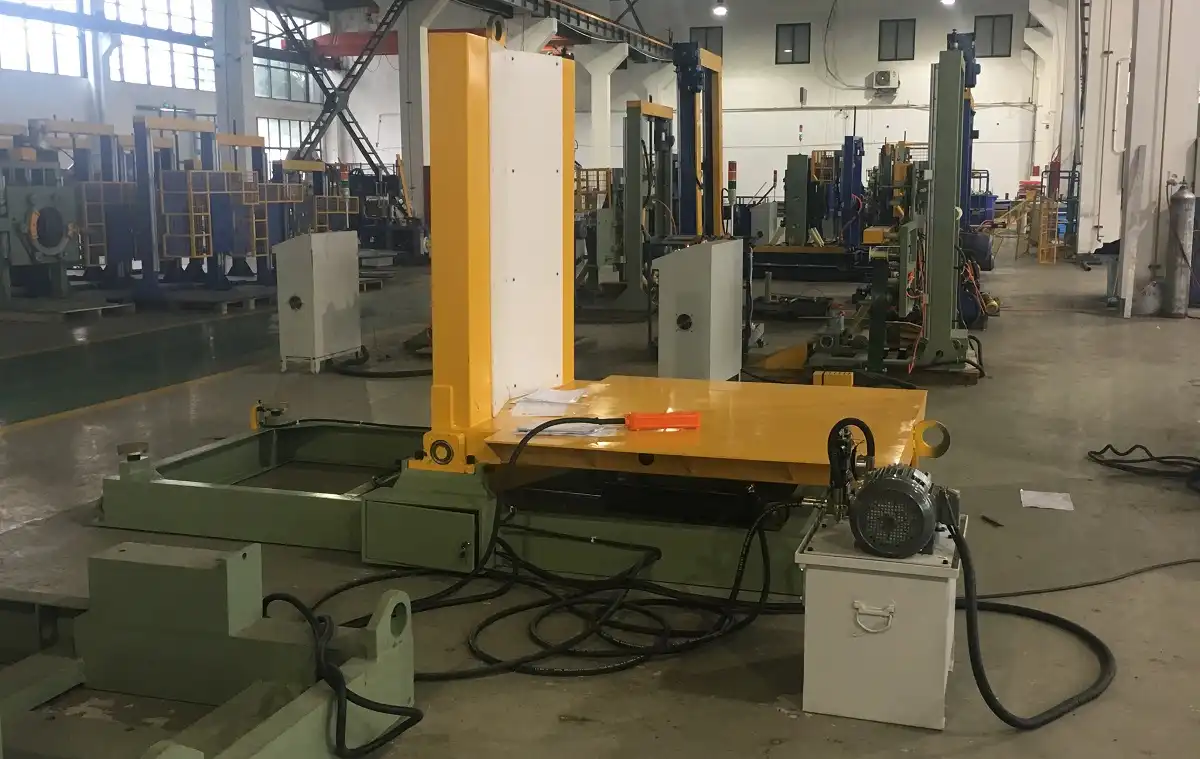
I have seen countless times how even small instances of product damage add up. A scratched coil edge here, a dented surface there – it might seem minor, but it can turn a satisfied customer into a former one. When I was building my packing machine factory, every dollar counted. I quickly learned that preventing losses was just as important as generating sales. It is much cheaper to prevent damage upfront than to deal with a return or a damaged goods claim. Especially in heavy industries like steel and wire, where raw materials are expensive, protecting the product during every stage, including upending and packing, is non-negotiable.
Integrating your upenders with your MES/ERP system provides a level of control and precision that manual handling simply cannot match. This precision directly translates into less waste, fewer reworks, and ultimately, a higher quality product delivered to your customers. Think of it: no more dropped coils, no more uneven flips, no more accidental collisions because an operator misjudged a distance. The system guides the process.
Driving Profitability Through Precision and Automation
Every factory manager in Mexico is looking for ways to boost profitability.
- Reduced Product Damage: Automated upending ensures consistent, gentle handling of coils. This reduces the risk of impact damage, surface abrasions, and deformation that often occur during manual or semi-manual operations. Fewer damaged products mean fewer customer complaints and no need for costly reworks or write-offs.
- Optimized Resource Allocation: MES/ERP integration helps in better scheduling and utilization of the upender and associated labor. This means you use less energy, and your workers can focus on higher-value tasks, instead of repetitive, hazardous lifting. It ensures your equipment runs only when needed, reducing wear and tear.
- Extended Equipment Lifespan: When an upender is part of an integrated system, its usage can be tracked and optimized. Predictive maintenance, informed by data from the MES, ensures timely servicing, preventing catastrophic failures and extending the operational life of the equipment. This reduces capital expenditure over time.
| ROI Aspect | Manual Handling Cost | MES/ERP Integrated Upender Benefit |
|---|---|---|
| Product Loss | High due to damage during handling. | Near-zero due to precise, automated, gentle handling. |
| Labor Costs | High due to manual labor for heavy lifting/positioning. | Reduced by automation, allowing labor reallocation. |
| Energy Usage | Potentially inefficient due to inconsistent operation. | Optimized by demand-driven, scheduled operation. |
| Maintenance Costs | Reactive, higher costs from unexpected breakdowns. | Proactive, lower costs from planned preventative servicing. |
| Customer Satisfaction | Low due to damaged deliveries and delays. | High due to on-time delivery of pristine products. |
My experience running a successful packing machine factory taught me that every penny saved on waste or inefficiency is a penny earned. For Michael, a factory manager in Mexico, the ROI from such an investment is not just hypothetical. It is a tangible outcome that directly impacts the financial health of his plant. It gives him more control and peace of mind.
My Insight: Why Is Choosing the Right Technology Partner as Crucial as the Coil Upender Itself?
Have you been burned by equipment suppliers who promise the world but disappear after the sale? Many factory managers, especially in competitive markets like Mexico, have faced this frustration. You might have purchased a machine only to find the after-sales support lacking, the integration difficult, or the supplier simply not understanding your real production challenges.
Finding a partner like FHOPEPACK means securing not just an advanced coil upender, but also deep industry expertise and a commitment to your long-term success. My journey from an employee to a factory owner has given me a unique perspective. I understand your production bottlenecks, your safety concerns, and your need for clear ROI. We provide tailored solutions and ongoing support, ensuring your investment truly solves your problems and helps your business grow.
This is where my personal journey really comes into play. When I was an employee, I saw how important reliable equipment and good support were. When I built my own factory, I lived the challenges of selecting the right machinery and getting it to work seamlessly. I learned that a good machine is only as good as the support and understanding behind it. Many suppliers are just interested in making a sale. They do not truly understand the day-to-day pressures of a factory manager in Mexico, like Michael. They do not grasp the ripple effect of a single machine’s inefficiency or breakdown on an entire production line.
At FHOPEPACK, we believe in being a true partner. This means understanding your specific operations, your unique challenges with coil packing or steel wire packing, and your long-term goals. It means guiding you through the integration process and being there for support long after the installation. This philosophy is born from my own journey of achieving financial independence through the packing machine industry and now wanting to give back.
The Value of a Knowledgeable Partner
Choosing a supplier is a strategic decision, not just a procurement one.
- Deep Industry Understanding: A true partner understands the nuances of coil handling, the specific challenges of different materials, and the environmental factors in your region, like Mexico. They do not just sell a product; they provide a solution that fits your unique operational context.
- Customized Solutions, Not Just Products: Every factory is different. A good partner will work with you to understand your MES/ERP system, your existing infrastructure, and your specific bottlenecks. They will then recommend or even customize an upender integration that genuinely addresses your needs, rather than pushing a one-size-fits-all product.
- Reliable After-Sales Support: The true test of a partner comes after the sale. Is technical support readily available? Are spare parts easy to obtain? Can they offer guidance on optimizing the integrated system? For factories in Mexico, timely support can prevent costly downtime.
- Proven Track Record and Trust: Look for a partner with a history of successful integrations and satisfied clients. My goal with FHOPEPACK is to build that trust by sharing expertise and demonstrating a genuine commitment to client success, helping them grow their businesses just as I grew mine.
- Long-Term Vision: A good partner is not just thinking about the current sale. They are thinking about how your investment will support your growth for years to come. They can offer insights into future automation trends and how to adapt your current setup. This long-term perspective is invaluable for strategic planning.
This approach is what allowed me to grow my own factory and what I now bring to FHOPEPACK. For Michael, finding a supplier who acts as a trusted advisor, not just a vendor, is the key to making an investment that truly pays off. It is about building a relationship where both parties are invested in success.
Conclusion
Integrating coil upenders with MES/ERP transforms efficiency, safety, and profitability. This strategic investment provides real-time control, prevents damage, and protects workers, offering tangible ROI for factories in Mexico.








