
How Can an Orbital Wrapping Machine Improve Dust and Moisture Protection for Spanish Steel Pipes and Tubes?
Imagine your steel pipes or tubes arriving at a customer’s site. They look great, but wait, there are signs of rust or dust accumulation. This is a common problem I have seen many times. It can lead to customer complaints and lost business. You work hard to make quality products. You need them to stay perfect until they reach their final destination.
An orbital wrapping machine significantly improves dust and moisture protection for steel pipes and tubes by creating a tight, overlapping, and continuous film layer around the product. This robust barrier effectively seals out environmental contaminants like dust, dirt, and water, which are common causes of damage during storage and transit for products like those made in Spanish factories.

Keeping your steel products safe from dust and moisture is not just about appearances. It is about protecting your reputation and your bottom line. We will look at why traditional methods often fail. Then we will see how orbital wrapping machines offer a better way. I will also share my thoughts on how this technology helps businesses grow.
Why is Traditional Packing Failing to Protect Your Steel Products from Dust and Moisture?
Are you still relying on old packing methods for your steel pipes and tubes? Many factories do. They often use manual wrapping or simple covers. This can seem cost-effective at first. But these methods often create bigger problems in the long run. They just do not provide the protection your valuable steel needs.
Traditional packing methods, such as manual stretch wrapping or simple tarp covers, often fail to protect steel pipes and tubes from dust and moisture because they create inconsistent, loosely sealed, or incomplete barriers. These methods are prone to human error, leave gaps where contaminants can enter, and do not offer the consistent tension or material overlap needed for effective environmental sealing.
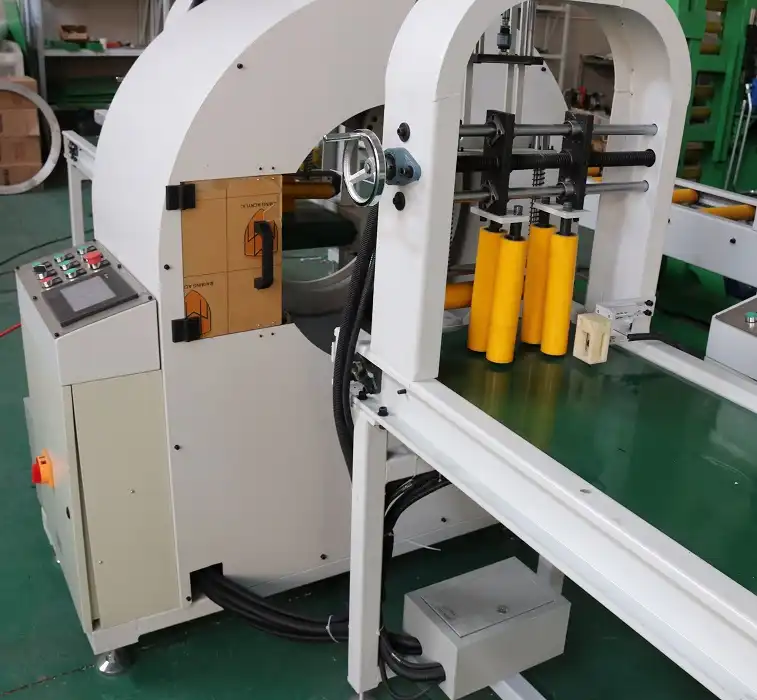
I have seen countless factories struggle with this. When I first started in the packing machine industry, manual work was everywhere. People wrapped coils by hand. They covered steel bundles with whatever was available. This led to many issues. Damage meant rework. It meant angry customers. It also meant a lot of wasted time and money. We need to understand why these old ways fall short. This helps us see the real value of modern solutions.
The Shortcomings of Manual and Basic Packing Solutions
Manual packing often has many drawbacks. It is not as effective as automated systems. I will explain these problems in more detail.
-
Inconsistent Coverage: When people wrap by hand, the tension and overlap of the film vary. Some parts of the product get thick film. Other parts get thin film or even no film at all. This creates weak spots. Dust and moisture can easily get into these weak areas. For steel products going to Spain, or anywhere with long transit times, this is a big risk. The film might tear. It might come loose. Then the steel underneath is exposed.
-
Reliance on Human Labor: Manual packing is slow. It needs many workers. These workers can get tired. They can make mistakes. They also face safety risks. Lifting heavy rolls of film or moving around large steel pipes is dangerous. When I ran my factory, I always worried about worker safety. Injuries mean lost time and higher insurance costs. This affects the whole business. Also, finding skilled labor for packing can be hard. Training new staff takes time.
-
Material Waste: Manual wrapping often uses more film than needed. Workers might overwrap some areas. They might use more layers to feel “safe.” This wastes material. It also adds to your operational costs. Basic covers like tarps are not always reusable. They can get damaged easily. Then you have to replace them often. This increases material expenses.
-
Limited Protection: Most manual methods only offer basic protection. They might keep out some dust. They might shed some light rain. But they cannot stop all moisture. They cannot stop fine dust particles. They cannot prevent rust over long periods. Think about shipping steel across different climates. It needs robust protection. Manual methods often fail these tests. The result is often damaged goods. This harms your company’s image and your profits.
This table shows a clear comparison of traditional methods versus the demands of modern industry:
| Feature | Traditional Manual Packing | Modern Industry Needs for Steel |
|---|---|---|
| Dust Protection | Poor, inconsistent, gaps | Excellent, consistent, sealed |
| Moisture Barrier | Weak, prone to leakage | Strong, impermeable, long-lasting |
| Efficiency | Low, labor-intensive | High, automated, fast |
| Safety | High risk of worker injury | Minimal manual handling, safer |
| Material Usage | High waste, inconsistent | Optimized, reduced waste |
| Product Quality | Risk of damage, complaints | Consistent quality, fewer returns |
These problems show why relying on old packing methods is not sustainable. Especially for high-value products like steel pipes and tubes. We need solutions that are reliable, efficient, and safe. That is where new technology comes in.
How Does an Orbital Wrapping Machine Seal Out Dust and Moisture Effectively?
You need a solution that works. You need to keep your steel products safe from dust and moisture. This is where an orbital wrapping machine shines. It uses smart design and modern materials to create a superior protective barrier. It is much more than just a wrapping machine. It is a safeguard for your products.
An orbital wrapping machine seals out dust and moisture effectively by wrapping a stretch film around the product in a continuous, spiraling motion, creating multiple overlapping layers that form a robust, waterproof, and dust-tight seal. This automated process ensures consistent film tension and coverage, eliminating gaps and weak spots that traditional methods often leave, thus providing superior environmental protection for Spanish steel pipes and tubes.
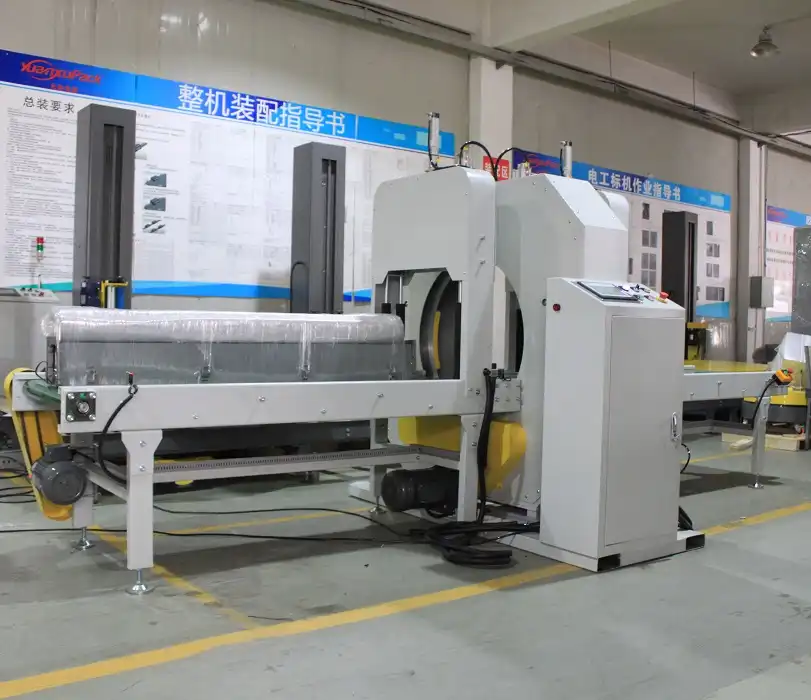
When I was building my packing machine factory, I knew we needed to offer solutions that truly solved problems. The market was full of basic machines. But customers like Michael Chen needed more. They needed machines that could handle tough industrial environments. They needed machines that could guarantee product integrity. Orbital wrappers were a key part of this vision. They bring a level of protection that manual methods simply cannot match.
The Mechanics of Superior Protection
Let us look at how an orbital wrapping machine actually works. This will help you understand its power. It is all about the details of its design and function.
-
The Horizontal Ring: The core of an orbital wrapping machine is a horizontal rotating ring. Your steel pipes or tubes pass through the center of this ring. As they move, the ring spins rapidly. It carries a roll of stretch film. This motion ensures that the film is wrapped around the product’s entire circumference. It does this evenly and consistently. This is very different from hand wrapping. There, the film often only covers the top or sides.
-
Continuous Overlap: As the product moves through the machine and the ring spins, the film layers overlap. Each new layer covers a part of the previous layer. This creates a strong, multi-layered barrier. It is like building a strong wall. Each brick overlaps the last one. This overlap is key. It prevents any gaps or holes. Dust cannot get in. Water cannot get in. This consistent overlapping creates a truly sealed package.
-
Stretch Film Properties: Orbital wrappers use special stretch film. This film is highly elastic. It clings tightly to the product. When stretched, it creates tension. This tension helps to hold the film firmly in place. It also makes the package more compact and stable. The film itself is usually water-resistant. Some films even have UV protection. This protects the steel from sun damage. The tight wrap prevents the film from flapping or tearing easily during transport.
-
Automated Consistency: Automation is a huge advantage. The machine applies the film with precise control. You set the tension. You set the number of layers. The machine does the rest. This removes human error. Every package gets the same high level of protection. This consistency is crucial for quality control. It also ensures that your products, whether going to Spanish shipyards or construction sites, always arrive in top condition. This is what builds trust with your customers.
This table highlights the key elements of an orbital wrapping machine’s protective power:
| Feature | How It Works | Benefit for Steel Products |
|---|---|---|
| Horizontal Ring Design | Wraps film around all sides of the product | Complete 360-degree coverage |
| Continuous Overlap | Each film layer covers part of the last | Forms a seamless, impenetrable barrier |
| Stretch Film Tension | Film is stretched tightly during application | Creates a secure, compact, and stable package |
| Automated Control | Consistent film application settings | Eliminates human error, ensures uniform quality |
| Material Properties | Water-resistant, sometimes UV-protected film | Prevents rust, corrosion, and sun damage |
These mechanisms work together to provide superior protection. They ensure your steel pipes and tubes are safe from dust and moisture. This means fewer complaints and happier customers.
What Are the Real Benefits of Better Protection for Your Steel Pipes and Tubes?
Investing in better protection for your steel products, like an orbital wrapping machine, does more than just keep them clean. It brings real, measurable benefits to your business. These benefits touch every part of your operation, from the factory floor to your financial reports. For factory managers like Michael, these are the tangible improvements that drive business growth.
Better protection for steel pipes and tubes, achieved through orbital wrapping, delivers significant benefits. It dramatically reduces product damage and associated losses, enhances customer satisfaction and trust, lowers handling and shipping risks, and ultimately improves a factory’s overall profitability by reducing rejections and warranty claims. This ensures that valuable Spanish steel products maintain their quality from production to end-user.

When I started my factory, I learned quickly that the best equipment paid for itself. It was not just an expense. It was an investment. I saw how clients who adopted better packing solutions reduced their losses. They also gained a reputation for quality. This led to more business. The gains were clear and directly impacted their financial independence.
The Tangible Returns of Enhanced Product Protection
Let’s break down the specific benefits you can expect from superior protection for your steel products.
-
Reduced Product Damage and Loss: This is perhaps the most direct benefit. Dust and moisture cause rust and surface damage on steel. This means product rejections. It means rework. It means products become unsellable. When you have a strong, sealed package, these issues largely disappear. Imagine if you reduced your product damage by even 5%. This would directly add to your profit margin. It means less waste. It means more usable product from every batch. This makes a big difference for any factory.
-
Increased Customer Satisfaction and Loyalty: Customers expect to receive products in perfect condition. When they open a package and find rust or dirt, it creates a bad impression. They might look for another supplier. When your Spanish steel pipes and tubes consistently arrive clean and undamaged, customers notice. They trust your brand more. This leads to repeat business. It also leads to good word-of-mouth referrals. A strong reputation for quality is priceless. It sets you apart from competitors.
-
Lower Insurance and Warranty Costs: Damaged goods during transit often lead to insurance claims. They also lead to warranty claims from customers. These claims cost money. They cost time. They also cause administrative headaches. By protecting your products better, you reduce these claims. This can lower your insurance premiums over time. It saves your team from handling many disputes. This translates to direct cost savings for your company.
-
Improved Brand Image and Market Competitiveness: A company that delivers pristine products builds a stronger brand. It shows you care about quality at every step. This can give you an edge in a competitive market. When you can promise and deliver undamaged goods, you stand out. This is true for local markets and for international exports, such as to and from Spain. It makes your products more attractive to buyers. It can also allow you to command better prices for your high-quality goods.
-
Streamlined Logistics and Storage: Well-wrapped products are easier to handle and store. They are less prone to damage during loading, unloading, and warehousing. This can speed up your logistics. It also reduces the need for special storage conditions to prevent rust. You can stack them more safely. This improves overall operational efficiency. It means less time spent fixing problems. It means more time spent on production and growth.
This table summarizes the tangible gains from investing in better product protection:
| Area of Impact | Before Enhanced Protection | After Enhanced Protection |
|---|---|---|
| Product Loss | High, due to rust and damage | Low, minimal damage and rejections |
| Customer Trust | Variable, depends on delivery state | High, consistent quality deliveries |
| Operational Costs | High due to claims, rework, waste | Lower, fewer claims and less waste |
| Brand Reputation | Good, but vulnerable to defects | Excellent, known for consistent quality |
| Market Position | Competitive, but can be challenged | Stronger, differentiated by quality |
The impact of better protection goes beyond simply wrapping a product. It fundamentally changes how your business operates and grows. It builds a foundation for long-term success.
Can Orbital Wrapping Machines Also Improve Safety and Efficiency in Your Factory?
When we talk about packing machines, many people only think about wrapping. But for factory managers like Michael, safety and efficiency are always top concerns. These are not separate issues. They are deeply linked to every process on the factory floor. The good news is, orbital wrapping machines do much more than just protect products. They transform your operations.
Yes, orbital wrapping machines significantly improve safety and efficiency in a factory by automating the strenuous and often dangerous task of manually wrapping heavy or bulky items like steel pipes and tubes. This automation reduces the risk of worker injuries, frees up labor for more skilled tasks, speeds up the packing process, and ensures consistent quality, directly addressing critical operational challenges faced by factories, including those in Spain.
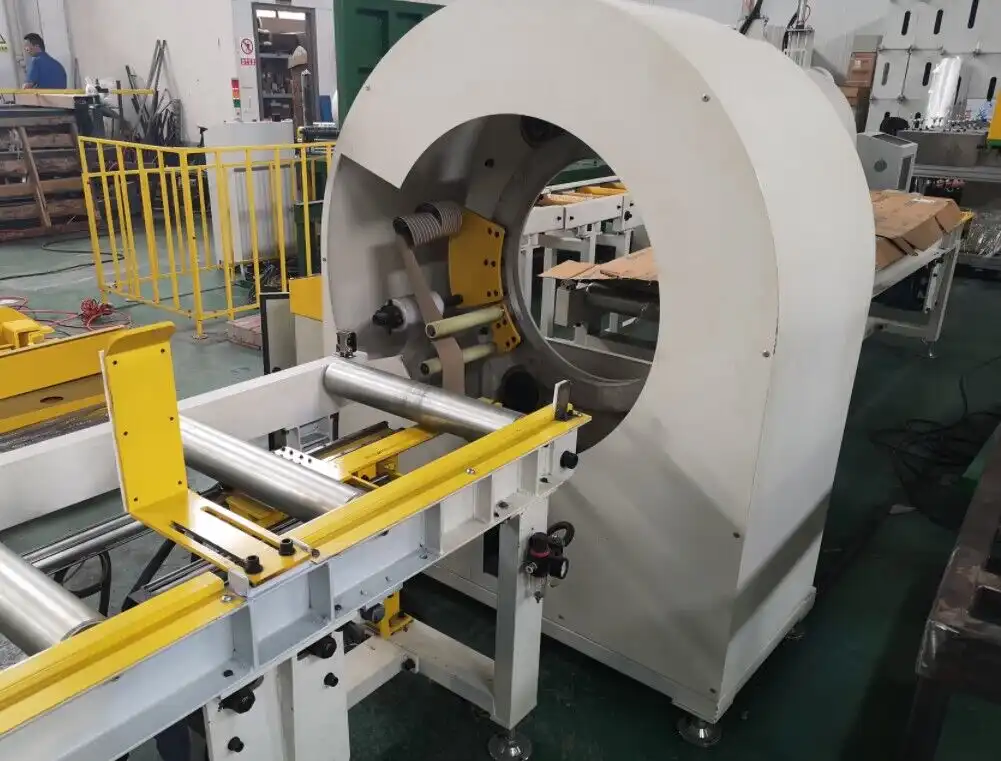
My journey in the packing machine industry started with understanding bottlenecks and dangers. I saw workers straining to move heavy items. I saw slow, manual processes holding back entire production lines. When I built my own factory, I made sure that every piece of equipment we designed or recommended had to deliver on these two fronts: safety and efficiency. It was not enough to just do the job. It had to do it better, faster, and safer.
Operational Transformations Through Automation
Let’s look at how orbital wrapping machines drive these key operational improvements.
-
Enhanced Worker Safety: Manual wrapping of large, heavy, or long items like steel pipes is risky. Workers might strain their backs. They might trip. They might get hit by moving parts. An orbital wrapping machine takes away most of this manual handling. Workers only need to load the product onto a conveyor or platform. The machine does the heavy, repetitive wrapping work. This dramatically lowers the risk of workplace injuries. This is a huge benefit for both employees and the company. Fewer injuries mean lower healthcare costs. It also means a happier, more stable workforce.
-
Increased Packing Speed and Throughput: Manual packing is slow. It limits how much product you can get out the door. Orbital wrapping machines work quickly and continuously. They can wrap many products per hour. This speed removes a major bottleneck at the end of your production line. You can move finished steel products faster. This improves your overall factory throughput. It means you can meet tighter deadlines. It also means you can take on more orders. This directly boosts your production capacity.
-
Consistent Quality and Reduced Rework: Machines are precise. They do not get tired. They apply the film with the same tension and overlap every time. This consistency leads to higher quality packages. It means less chance of product damage due to poor wrapping. Less damage means less rework. It means fewer rejections from customers. This saves time and resources that would otherwise be spent fixing mistakes. Quality becomes a reliable standard, not a variable.
-
Optimized Labor Allocation: When packing is automated, you need fewer people for that specific task. These workers can then move to other, more skilled jobs in the factory. This makes your workforce more productive. It helps you manage labor costs better. It means your valuable human resources are used where they add the most value. This is a smart way to run a modern factory. It lets your team focus on growth and innovation, instead of repetitive tasks.
-
Space Utilization: Manual wrapping can be messy. It can take up a lot of floor space with rolls of film and scattered materials. Automated orbital wrappers are often compact. They are designed to fit into a production line. This can help you use your factory space more efficiently. It makes the workspace cleaner and more organized. This also contributes to a safer and more productive environment.
Here is a quick look at the operational changes an orbital wrapper brings:
| Operational Area | Before Orbital Wrapping | After Orbital Wrapping |
|---|---|---|
| Safety | High risk of manual handling injuries | Significantly reduced worker injuries |
| Efficiency | Slow, bottleneck, inconsistent speed | High-speed, continuous, reliable |
| Labor Needs | High for repetitive packing | Reduced, redeployed to skilled tasks |
| Quality | Inconsistent, prone to human error | Consistent, high-quality output |
| Factory Flow | Disrupted by manual processes | Smooth, integrated, streamlined |
These improvements show that an orbital wrapping machine is not just a packing tool. It is a strategic asset. It helps you build a safer, more efficient, and more profitable factory.
My Insights: What I Learned About Protecting Products and Growing Businesses?
My journey in the packing machine industry taught me many things. I started from the ground up. I worked on the factory floor. I saw the challenges firsthand. Later, I built my own successful factory. This gave me a unique perspective. I learned that true success comes from solving real problems for customers. It also comes from building trust.
My biggest insight is that truly protecting products, like steel pipes and tubes from dust and moisture, is not just about the machine itself. It is about understanding the customer’s entire operation and offering a solution that drives their business growth by improving safety, efficiency, and product quality. This builds lasting partnerships, much like the successful ones I helped create for Spanish industries.
When I founded FHOPEPACK, my goal was always to share this knowledge. I achieved financial independence thanks to this industry. I also helped many of my clients grow their businesses. I want to give back. I want to share what I learned about effective packing and smart business choices.
The Bigger Picture: Beyond the Machine
It is easy to focus only on the machine itself. But I learned that the real value is in what the machine enables.
-
Understanding the Customer’s Pain Points: When a factory manager like Michael comes to me, he is not just looking for a machine. He has problems. He is worried about efficiency bottlenecks. He worries about safety risks. He worries about product damage and lost profits. My first step is always to listen. I need to understand his specific challenges. For example, if a Spanish steel factory struggles with rust, I know that moisture protection is critical. I need to know his specific products, his workflow, and his goals. This deep understanding allows me to recommend the right solution, not just any solution. It is about solving his problems.
-
The Power of Partnership, Not Just Sales: Many suppliers just want to sell a machine. They move on to the next customer. I learned that this approach does not build a sustainable business. Customers, especially those who have dealt with unreliable vendors, need a partner. They need someone who understands their industry. They need someone who can offer expert guidance. They need someone who provides good after-sales service. When I recommend an orbital wrapping machine, I do not just sell it. I explain why it is the right choice for their specific needs. I make sure they understand the ROI. I stay involved to ensure it helps them reach their goals. This builds trust. It builds long-term relationships.
-
Focusing on Return on Investment (ROI): Every investment a factory makes needs to show a return. This is especially true for equipment. For an orbital wrapping machine, the ROI is clear. It comes from reduced labor costs. It comes from less product damage. It comes from fewer customer complaints. It comes from faster production. I help my clients calculate this. I show them how the machine will pay for itself. This financial clarity helps them make confident decisions. It helps them justify the investment to their stakeholders. This is a critical part of business growth.
-
Continuous Improvement and Adaptation: The industry changes all the time. New materials come out. New technologies emerge. I believe in continuous learning. My journey from employee to factory owner taught me this. We must adapt. We must keep seeking better ways. This means staying updated on new film types. It means understanding new automation features. It means applying these insights to help clients. This mindset ensures that we always offer the best, most future-proof solutions. It is about helping businesses stay competitive, whether they are in Mexico, Spain, or anywhere else.
-
Giving Back to the Industry: The packing machine industry gave me so much. It gave me a career. It gave me financial freedom. It gave me the chance to help many people. Now, I want to give back. FHOPEPACK is my way of doing this. It is a platform to share knowledge. It is a place where I can help others understand packing machines better. I want to empower people. I want to help them make smart choices for their businesses. This is what truly drives me.
These insights show that my role, and the role of FHOPEPACK, goes beyond just selling machines. It is about building a community. It is about sharing expertise. It is about helping businesses thrive through smart packing solutions.
Conclusion
An orbital wrapping machine is vital for protecting steel pipes and tubes from dust and moisture. It dramatically boosts product quality, enhances safety, and improves factory efficiency. This investment leads to reduced losses and increased profits, helping businesses grow and succeed.








