
How Can a Steel Coil Strapping Line Support Lean Manufacturing?
Have you ever faced the frustration of production bottlenecks right at the finishing line? In the demanding world of steel manufacturing, efficiency is everything. I have seen firsthand how manual packaging can slow down an entire operation. This leads to wasted time, increased costs, and even jeopardized client relationships. This is a common challenge, especially in large steel mills where every minute counts. (production bottlenecks, manual packaging challenges)
A steel coil strapping line directly supports lean manufacturing by systematically eliminating various forms of waste (Muda) from the production process. It improves quality, ensures safety, and optimizes operational flow for steel mills worldwide. It transforms traditional, labor-intensive packaging into a streamlined, automated, and highly efficient operation that aligns perfectly with lean principles.

Understanding how this powerful technology integrates with lean principles can unlock significant value for your operations. Let’s dive deeper into the specific ways an automated strapping line can revolutionize your steel coil packaging and contribute to a truly lean manufacturing environment. (lean manufacturing environment, automated strapping line benefits)
How Does a Steel Coil Strapping Line Eliminate Waste (Muda) in Steel Production?
Are you tired of seeing valuable resources wasted in your steel coil packaging process? Many steel mills struggle with inefficiencies that drain profits and slow down delivery. From excessive motion to overproduction, traditional methods often create a cascade of non-value-added activities. (steel coil packaging inefficiencies, waste reduction)
A steel coil strapping line eliminates waste by automating repetitive tasks, reducing manual errors, optimizing material usage, and minimizing waiting times. It directly tackles the seven forms of Muda found in manufacturing.
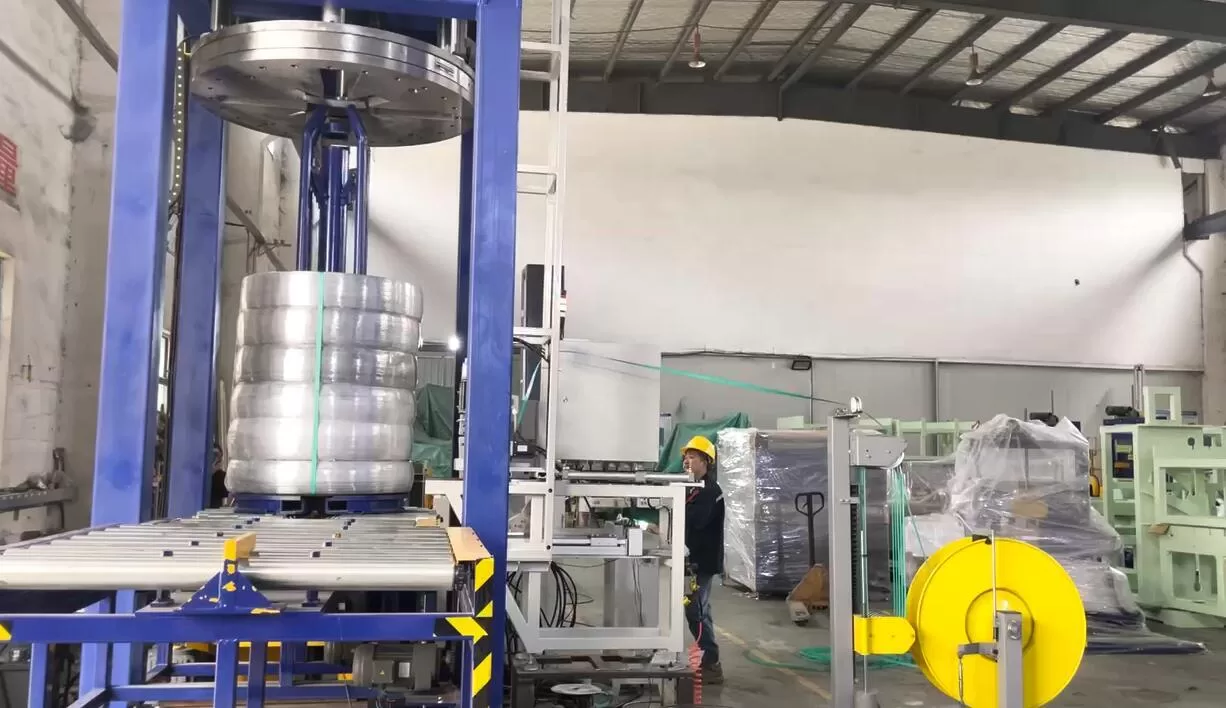
This automation is not just about moving faster. It is about working smarter. By understanding how a modern strapping line targets specific wastes, we can see its true potential for lean transformation. (lean transformation, modern strapping line benefits)
-
1. What are the common wastes addressed by an automated strapping line? An automated steel coil strapping line is a powerful tool for waste reduction in steel processing plants. My years in the packing machine industry, starting from the factory floor, showed me how much waste occurs in manual operations. It directly targets several key wastes (Muda) that plague steel mills, especially those dealing with high volumes of cold rolled, galvanized, or color-coated coils.
- Defects (不良): Manual strapping often leads to uneven tension, loose straps, or incorrect placement. This can result in damaged coils during transit, customer complaints, and costly reworks or returns. An automated system applies consistent tension and precise strap placement every time. This greatly reduces the chances of packaging defects. It helps meet strict export packaging standards, like CE/ISO certification, for global clients. (packaging defects, consistent tension, export standards)
- Overproduction (过量生产): While a strapping line itself does not cause overproduction, it helps manage flow. It can quickly process coils. This prevents bottlenecks that might tempt teams to produce more than needed downstream. This means coils are ready when demanded, supporting a pull-system approach. (managing flow, pull-system support)
- Waiting (等待): In manual setups, coils often wait for human operators to strap them, leading to idle time. An automated line works continuously. It integrates with the production flow. This minimizes waiting periods between the slitting or rolling process and final packaging. (minimizing waiting time, continuous flow integration)
- Non-Utilized Talent (人才浪费): Skilled workers are often used for repetitive, strenuous strapping tasks. Automating this frees them up for more complex, value-added roles. This could be machine maintenance, quality control, or process improvement. It makes better use of human capital. (skilled worker utilization, value-added roles)
- Transportation (搬运): While coils still need moving, an integrated line reduces unnecessary interim movements for strapping. It optimizes the flow from production to storage or loading. (optimized coil movement, reduced interim transport)
- Inventory (库存): By enabling faster, more reliable packaging, coils move through the system quicker. This reduces the need for large finished goods inventories awaiting packaging. Lower inventory means less capital tied up and reduced storage costs. (faster throughput, lower inventory costs)
- Motion (动作): Manual strapping involves extensive physical motion from workers. This is often repetitive and poses ergonomic risks. An automated line performs these actions precisely and tirelessly. This eliminates unnecessary human movement and associated fatigue or injury risks. (reduced human motion, ergonomic risks eliminated)
By addressing these wastes, a steel coil strapping line significantly improves the overall efficiency and lean profile of a steel manufacturing operation. It is a critical component for any steel mill aiming for operational excellence and maximum value creation for its clients. (operational excellence, value creation, steel mill efficiency)
Can Automated Strapping Lines Improve Steel Coil Packaging Quality and Consistency?
Are your current steel coil packaging methods leading to inconsistent quality? Are you receiving customer complaints about damaged or improperly secured coils? Maintaining consistent quality across hundreds of tons of daily output, especially for varied products like cold rolled, galvanized, and color-coated coils, is a major challenge for many steel mills. (inconsistent packaging quality, customer complaints, varied coil products)
Automated strapping lines dramatically improve steel coil packaging quality and consistency by applying uniform tension, precise strap placement, and ensuring consistent application of protective materials. This leads to reduced damage, enhanced product integrity, and compliance with strict export packaging standards like CE/ISO.
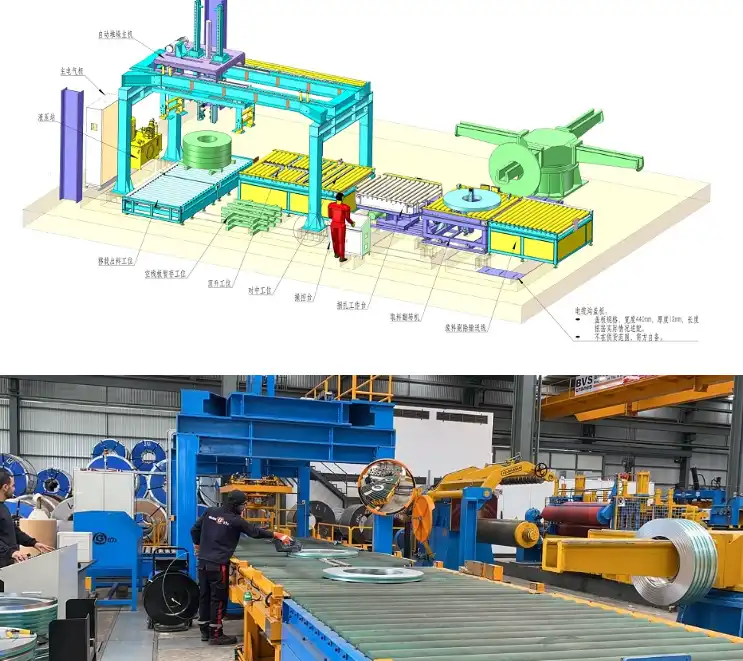
Achieving flawless packaging is not just about aesthetics. It directly impacts customer satisfaction and your bottom line. Let’s explore how automation makes this possible. (flawless packaging, customer satisfaction, automation benefits)
-
1. How do automated systems ensure superior packaging quality compared to manual methods? From my experience, watching manual processes at steel factories, I saw how hard it was to get consistent results. Human operators, even skilled ones, cannot match the precision of a well-engineered machine. This is where an automated strapping line shines.
- Uniform Tension and Secure Strapping: Manual strapping often results in varied tension, making some coils loose and prone to shifting. An automated system, like those offered by FHOPEPACK, applies precise and consistent tension across all straps. This ensures the steel coil is securely bundled, preventing loosening during transport and handling. It is critical for maintaining coil integrity from the factory to the client’s site. (uniform tension, secure bundling, coil integrity)
- Consistent Placement and Number of Straps: Machines are programmed for exact strap placement and the correct number of straps based on coil dimensions and weight. This consistency is vital for proper load distribution and preventing coil deformation. For Ivan Petrov, managing different coil diameters and weights (1-3 tons) is easy with a programmable system that adjusts automatically. (precise strap placement, load distribution, coil deformation prevention)
- Damage and Protection: High-quality packaging goes beyond just strapping. It includes protection against moisture, rust, and scratches. Automated lines can integrate with stretch wrapping or shrink wrapping systems to apply protective films uniformly. This ensures comprehensive protection. This prevents surface damage and corrosion, which is very important for valuable steel products like galvanized and color-coated coils. (moisture protection, rust prevention, scratch damage prevention)
- Compliance with Export Standards: For international shipping, compliance with standards like CE and ISO is mandatory. Automated systems are designed to meet these rigorous requirements. They often include features for automatic barcode labeling and tracking. This ensures full traceability and adherence to global trade regulations. This also boosts a steel mill’s reputation as a reliable supplier. (export compliance, CE/ISO certification, automatic barcode labeling)
- Reduced Rework and Rejections: When packaging quality is consistent, the number of reworks, returns, and customer complaints drops significantly. This saves money and time. It also strengthens client trust. A reliable strapping line is an investment in your brand’s reputation for quality. (reduced reworks, customer trust, brand reputation)
FHOPEPACK specializes in customized packing solutions that guarantee optimal packaging quality for varied steel products. This ensures your coils arrive in perfect condition every time. For operations where consistent quality is non-negotiable, an automated strapping line is the only way forward. (customized packing solutions, optimal packaging quality, consistent quality)
How Do These Systems Enhance Workplace Safety and Employee Productivity?
Is your steel mill facing challenges with high labor intensity and employee turnover in the packaging area? Manual handling of heavy steel coils poses significant safety risks. It can lead to injuries and a constant struggle to retain workers for strenuous tasks. This impacts overall productivity and morale. (labor intensity, employee turnover, safety risks, manual coil handling)
Automated steel coil strapping lines significantly enhance workplace safety by eliminating manual heavy lifting and hazardous tasks, reducing the risk of injuries. They also boost employee productivity by allowing workers to focus on supervision and skilled roles, rather than repetitive, physically demanding labor.
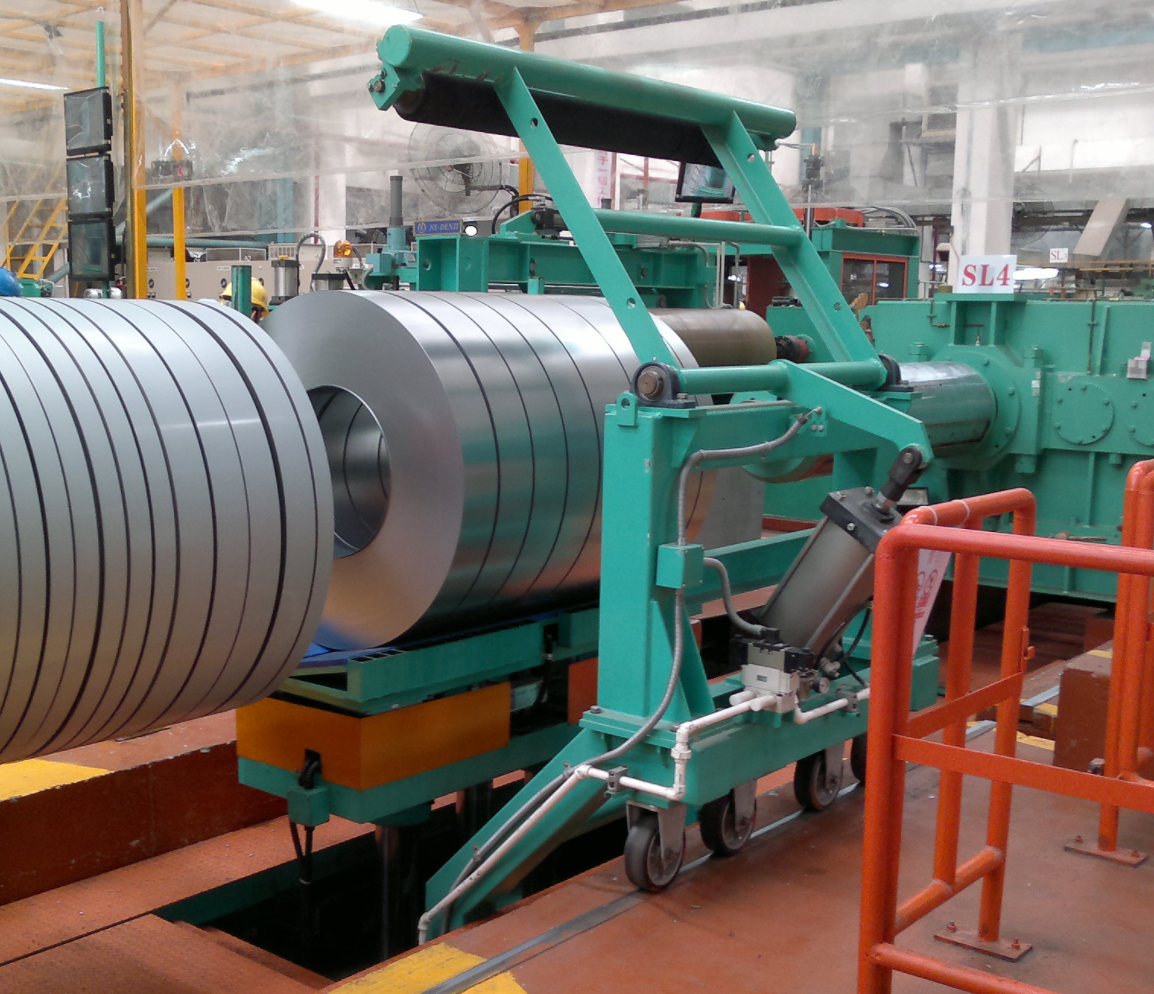
Improving safety and productivity goes hand-in-hand. When workers feel safe and their efforts are maximized, the entire operation benefits. Let’s see how automation achieves this. (workplace safety, improved productivity, automation benefits)
-
1. What are the key safety improvements and productivity gains from automated strapping? My journey from a factory employee to establishing FHOPEPACK taught me a core truth: a safe workplace is a productive workplace. Manual coil packaging, especially handling large steel coils (1-3 tons), is inherently risky. Automated strapping lines solve many of these problems.
- Elimination of Manual Handling Risks: The most significant safety benefit is the removal of humans from direct contact with heavy, moving coils. Automated systems take over tasks like lifting, turning, and positioning coils for strapping. This eliminates risks of crush injuries, strains, and accidents associated with manual overhead crane operation or forklift use in tight spaces. Ivan’s concern about lowering accident rates through mechanical replacement of manual lifting and turning is directly addressed here. (manual handling risks, crush injuries, overhead crane safety)
- Reduced Labor Intensity and Ergonomic Strain: Manual strapping and wrapping are highly repetitive and physically demanding jobs. They can lead to musculoskeletal injuries over time. Automated lines perform these tasks tirelessly. This dramatically reduces physical strain on workers. It improves their long-term health and job satisfaction. This also helps steel mills combat high worker turnover in these demanding environments. (labor intensity reduction, ergonomic strain, musculoskeletal injuries)
- Enhanced Operational Continuity: With fewer human-related accidents and less fatigue, the production line runs more smoothly and continuously. This minimizes unexpected stoppages due to injuries or lack of available personnel. It ensures consistent output, which is crucial for meeting tight delivery schedules in a 24-hour, two-shift production environment. (operational continuity, consistent output, 24/7 production)
- Redeployment of Skilled Labor: Instead of performing repetitive physical labor, skilled technicians can be reassigned to roles that add more value. These roles include machine supervision, maintenance, quality assurance, and process optimization. This makes better use of their knowledge and expertise. This shift helps address the issue of skilled labor shortages by utilizing existing talent more effectively. (skilled labor redeployment, value-added roles, effective talent utilization)
- Improved Employee Morale: A safer, more efficient work environment contributes to higher employee morale and engagement. Workers feel valued when their safety is prioritized and their skills are utilized in more meaningful ways. This can lead to better retention rates and a more motivated workforce overall. (employee morale, better retention rates, motivated workforce)
For steel mills like the one Ivan manages, investing in automated strapping systems from FHOPEPACK means investing in the well-being of your employees and the sustained productivity of your operations. Our solutions are designed to make steel coil packaging safer and more efficient. (employee well-being, sustained productivity, safe packaging solutions)
Do Automated Strapping Lines Support Continuous Flow and Just-in-Time Delivery?
Are your steel coil packaging operations creating bottlenecks that disrupt your production flow and delay customer shipments? In lean manufacturing, continuous flow and just-in-time (JIT) delivery are crucial for minimizing inventory and responding quickly to demand. Traditional packaging methods often hinder this vital flow. (packaging bottlenecks, continuous flow disruption, delayed shipments)
Automated strapping lines are vital for supporting continuous flow and just-in-time (JIT) delivery in steel mills. They integrate seamlessly into the production line, processing coils quickly and consistently. This eliminates bottlenecks, reduces lead times, and ensures coils are packaged precisely when needed for shipment, aligning perfectly with lean principles.

A smooth, uninterrupted flow from production to delivery is the hallmark of an efficient steel operation. Let’s see how automation helps achieve this. (efficient steel operation, uninterrupted flow, automation for JIT)
-
1. How do automated systems optimize material flow and enable JIT for steel coils? Achieving continuous flow in a steel mill, especially with hundreds of tons of daily output, is a complex challenge. My experience has shown me that the finishing line, particularly packaging, is often the last place to be optimized. This is where a fully automated coil packing line makes a big difference.
- Eliminating Bottlenecks: Manual packaging is often a bottleneck. It slows down the entire post-processing line. An automated strapping line operates at a consistent, high speed. It can keep pace with upstream processes like slitting or cold rolling. This ensures a smooth, uninterrupted flow of coils. It prevents backlogs and reduces work-in-process inventory. (packaging bottlenecks, high-speed operation, work-in-process reduction)
- Faster Throughput and Reduced Lead Times: The speed and efficiency of automated strapping mean coils are packaged much faster. This reduces the total time from production to shipment (lead time). Shorter lead times allow steel mills to respond more quickly to customer orders. This supports a true just-in-time production model. (faster throughput, reduced lead times, quicker customer response)
- Seamless Integration with Production Lines: Modern strapping lines, especially those designed by FHOPEPACK, are engineered for seamless integration. They can connect with coil handling systems, weighing scales, and labeling machines. This creates a fully automated flow from the moment a coil leaves the processing line until it is ready for dispatch. This integration minimizes manual intervention and optimizes material handling. (seamless integration, coil handling systems, optimized material flow)
- Support for Pull Systems: In a lean pull system, production is initiated by customer demand, not by forecasts. An efficient automated strapping line ensures that when a demand signal is received, coils can be packaged and shipped quickly. This avoids building up excess inventory. This flexibility is key for adapting to varying customer demands and different packaging specifications (PET/steel strapping, stretch wrapping). (pull systems support, flexible packaging, adapting to demand)
- Predictable Operations: Automation brings predictability. Machines have consistent cycle times. This makes scheduling easier and more reliable. This contrasts sharply with manual processes, which are prone to variability due to human factors like fatigue or skill differences. Predictability is a cornerstone of lean operations. (predictable cycle times, reliable scheduling, reduced variability)
By enabling continuous, synchronized operations and efficient material flow, automated strapping lines empower steel mills to embrace lean manufacturing principles fully. This results in faster deliveries, lower inventory, and a more responsive supply chain. (synchronized operations, efficient material flow, responsive supply chain)
How Do They Lead to Significant Cost Savings and Operational Efficiency for Steel Mills?
Is your steel mill constantly looking for ways to reduce operational costs without compromising output? High labor costs, material waste, and inefficient processes can significantly erode profitability. Many traditional packaging methods are resource-intensive and lack the efficiency needed for today’s competitive steel market. (operational costs, material waste, inefficient processes, competitive steel market)
Steel coil strapping lines lead to significant cost savings and operational efficiency for steel mills by reducing labor expenses, minimizing packaging material waste, improving equipment uptime, and enhancing overall production throughput. This results in a faster return on investment and increased profitability. 
Achieving peak operational efficiency is crucial for staying competitive. Let’s uncover the financial and operational advantages that automated strapping lines bring. (operational efficiency, competitive advantage, financial advantages)
-
1. What are the key financial and operational advantages of investing in automated strapping lines? When I founded FHOPEPACK, my goal was always to deliver real value and help clients grow their businesses. I know from my own factory experience that every saved dollar and every efficiency gain directly impacts the bottom line. Automated steel coil strapping lines offer a compelling case for cost reduction and operational excellence.
- Reduced Labor Costs: This is often the most immediate and significant saving. Automated systems reduce the need for multiple operators in the packaging area. This frees up personnel for other critical tasks. Given the challenge of labor shortages and high turnover in strenuous environments, this is a strategic advantage. It significantly lowers ongoing wage, benefits, and training expenses. (labor cost reduction, personnel reallocation, strategic advantage)
- Optimized Packaging Material Usage: Manual strapping can lead to inconsistent material usage, sometimes using too much or too little. Automated machines apply the exact amount of PET or steel strapping and wrapping film needed for secure packaging. This precision minimizes waste and reduces material purchasing costs over time. FHOPEPACK’s solutions are designed for optimal material efficiency. (material optimization, reduced waste, precise material application)
- Increased Throughput and Production Capacity: By eliminating bottlenecks and operating continuously (24/7), an automated strapping line dramatically increases the speed at which coils can be packaged and shipped. This higher throughput means you can process more coils in the same amount of time. This effectively increases your production capacity without expanding your factory footprint. (increased throughput, production capacity, higher processing speed)
- Lower Maintenance and Downtime (with reliable equipment): While any machine requires maintenance, a well-designed automated system offers high reliability and uptime. FHOPEPACK, along with other reputable providers like SHJLPACK and CNBHPAC, focuses on robust engineering. This minimizes unexpected breakdowns and associated downtime costs. Proactive maintenance programs ensure continuous operation. (high reliability, minimized downtime, continuous operation)
- Reduced Damage and Rework Costs: As discussed earlier, better packaging quality means fewer damaged coils. This translates directly into fewer customer returns, claims, and the high costs of reprocessing or replacing defective shipments. This protects your revenue and reputation. (reduced damage costs, fewer returns, revenue protection)
- Improved Energy Efficiency: Modern automated systems are designed to be energy-efficient. They use optimized motors and controls. This reduces energy consumption compared to older, less efficient manual handling equipment or sporadic operations. (energy efficiency, optimized motors, reduced energy consumption)
Investing in a customized automatic coil strapping line is a strategic move for any steel mill looking to gain a competitive edge. It provides a strong return on investment through significant cost savings and marked improvements in operational efficiency. (return on investment, cost savings, operational efficiency)
Conclusion
An automated steel coil strapping line is not just a piece of equipment; it is a strategic investment in lean manufacturing. It targets waste, improves quality, boosts safety, and optimizes flow for steel mills like Ivan Petrov’s. My experience at FHOPEPACK has shown that implementing a complete coil packing line drives efficiency, lowers costs, and ensures high-quality packaging for a truly competitive edge.








